

We’ve reached the timeline in the Drink Cart where we are talking about all-fiber insulation and the innovation of dyeing it pink so installers can tell it apart from the other stuff. Owens-Corning Fiberglas quietly discontinued it.
Until the installers kept asking for it.
Somehow a product that not a single human ever thought much about got a colour that nobody could forget.
THE CAT WAS BORN IN THE CREDITS
Before we get more into the insulation, let’s talk about the diamond at the center of the 1963 film, The Pink Panther. When held up to light, the diamond showed a leaping pink panther.
But then Blake Edwards thought that the opening credits needed a cartoon. So the animators turned the diamond into a cat in animated form.
They turned to David DePatie and Friz Freleng who had just opened their animation company months before. Freleng was the genius behind Bugs Bunny and Yosemite Sam. DePatie and the new studio paid the bills by making ad mascots like Charlie the Tuna and the Exxon tiger.
So it was almost preordained that the animated Pink Panther would go on to manifest itself as a real mascot selling stuff.
The movie is a classic, but the title sequence was so popular United Artists ordered a series of theatrical shorts. In 1964, The Pink Phink won the Oscar for animated short.
They tried to give him a voice in 1965. And even though it was the wildly talented and underrated Rich Little, he’s been silent ever since. The character got his own Saturday morning cartoon show in 1969.
THE MASCOT RENTAL
Then the advertising world called. In 1980 Roger Butler, an ad exec at Ogilvy & Mather, made the most logical ad decision of all time. He looked at a pink product and then a pink cat and put two and two together.
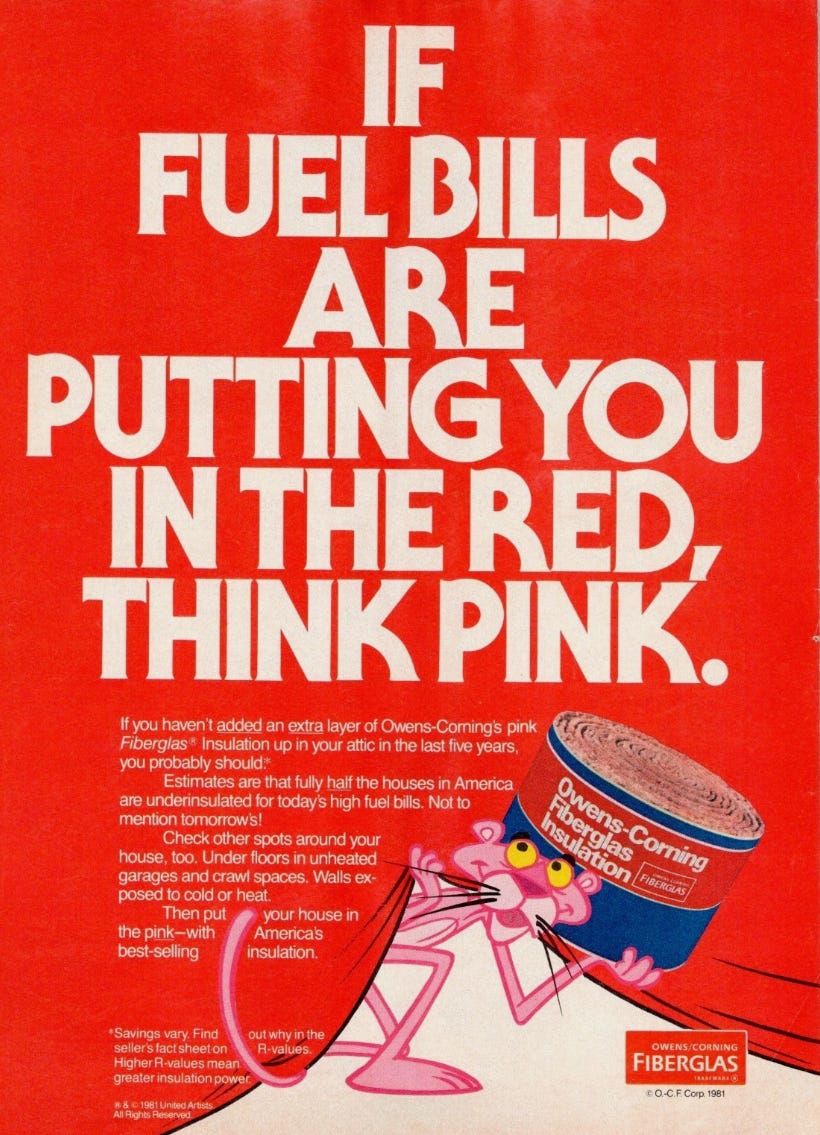
Owens Corning licensed the character and started selling beautifully pink insulation. And still do. They call him a “spokescat” now but he’s been at the game for 46 years. And they don’t own him. MGM still owns the Pink Panther and Owens Corning just rents him for insulation and building materials only.
SO THEY TRADEMARKED THE COLOUR INSTEAD
They couldn’t own the cat. So they wanted the colour.
So they applied to trademark the colour pink for insulation.
The Trademark Office said no. Colour isn’t a mark.
So they appealed. The court looked at 200 blocks of airtime across every major event from August 1980 to March 1981 and the survey showed that before the Pink Panther 41% of male homeowners could name Owens-Corning as the maker of pink insulation. By January 1981, it was 50%.
That was enough. On appeal the brand won the first single-colour trademark in American history and every other brand colour from Tiffany Blue to UPS Brown did the same.
They rented a cat and used him to buy a colour.
PENCILS DOWN
In a world of influencers, celebrities and memes, Owens Corning taught brands how to successfully borrow fame and lock in a colour.
But rentals do end. Celebrities do something comically stupid. The meme finally dies off. Then you wake up and the movie studio you’ve been paying for half a century is shilling pink paint or soda. But when you build a moat that is colour, nobody can take it away.
It’s not the impressions you’re buying but what the impressions get you that you can truly own. You don’t rent the arches from McDonalds or the blue box from Tiffany. You own them or you don’t.
MGM can pull the panther tomorrow. They can never pull the pink.
COCKTAIL OF THE WEEK: THE PINK LADY
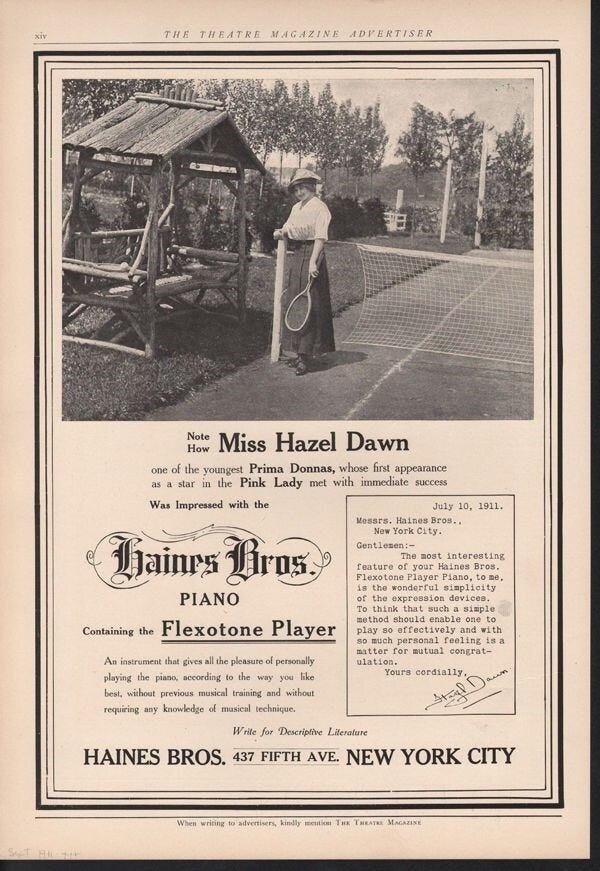
Legend has it that the very first Pink Lady was served to Broadway star Hazel Dawn on the opening night of her 1911 musical, The Pink Lady.
She would later tell a cocktail historian the surprise cocktail was Spanish anisette shaken with two kinds of bitters (Peychaud’s and Angostura). That cocktail did not take off but the name stuck.
In 1913 Jacques Straub, a Swiss bartender working in Louisville, printed the recipe that became a lasting cocktail. And you’ll remember Straub because he also gave us our Kentucky Colonel cocktail from our Colonel Sanders newsletter.
By 1930 the Savoy hotel tweaked it by dropping the hard to find in London applejack and adding egg white instead. That was the fluffy, pink version that we served up in The Keg on Sunday to 75-year-olds. It was always all about the colour.
The Pink Lady
1 1/2 oz gin
1/2 oz applejack
1/2 oz lemon juice
1/2 oz grenadine
1 egg white
Dry shake, then shake with ice, strain into a coupe. No applejack? Skip it and you’ve got a Clover Club’s less famous cousin.
The Drink Cart is the newsletter version of sitting at a really good bar with someone who thinks too much about advertising and won’t shut up about it. Subscribe to get it on Wednesdays and Fridays.
The Pink Lady sounds fabulous.