

Before we get into banks. Let’s start with weird brand names. Maybe that’s how we came up with Pound & Grain.
I’ve always loved Ruth’s Chris steakhouse. The most garbled name in steaks. A name that Ruth told Fortune she kinda hated, “’But we’ve always managed to work around it.’‘
People are still making the name work by a pretty lively market on eBay for vintage Ruth’s Chris match books.
The real story is that in 1965 Ruth Fertel mortgaged her house to buy a failing New Orleans steakhouse called Chris Steak House.
The steakhouse burned down in 1976. The contract she signed said the name couldn’t leave the original location. So she just jammed her name on the front and reopened it a block away only a week later.
Ruth’s Chris.
Her ad agency mostly ignored the name. They spent most of their time talking about the steak hitting 500-degree plates and coming from 1800-degree broilers.
The relationship between Ruth and the agency’s Lana Duke were so close they built a $600,000 mausoleum together.
The agency designed it and they threw a champagne party for 200 to bless it.
Adweek called it the one account that would never go up for review. And I now am taking requests from any of my clients to split a tomb together.
THE BANK NAMED AFTER A MATH PROBLEM
But an Ohio bank did this same thing in 1908. The wonderfully named Fifth National Bank and the Third National Bank of Cincinnati merged.
Neither side wanted to lose their name, so they just stacked ‘em up and made an improper fraction.
This is as comically simple as the origin for WD-40’s name. If you didn’t know it is simply the letters to represent Water Displacement - the original usage. The 40? Simply the number of tries it took Rocket Chemical to get the chemical mixture right in 1953.
I’ve said it before. And I’ll say it again. Dumb is the secret weapon in branding and advertising.
They figured out, like Ruth’s agency, that these names are cumbersome at best. So they hired famed Cincinnati Reds catcher Johnny Bench to be the face of everything.
When Bench made the Hall of Fame in 1989, the bank gave every employee a commemorative lapel pin. In Ohio 5/3 didn’t mean anything other than Johnny.
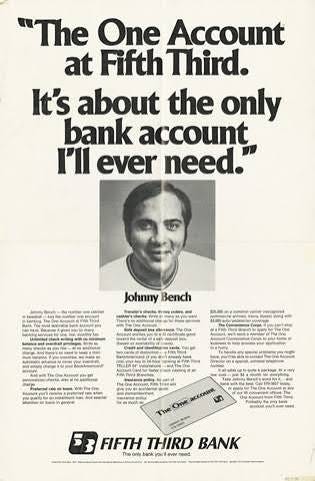
Since then the bank just started leaning into how silly the name is. By 2017 Pereira O’Dell started making ads promising, “This is banking a Fifth Third better.”
Then earlier this week they dropped the name on Detroit’s Comerica Park. The reaction was swift.
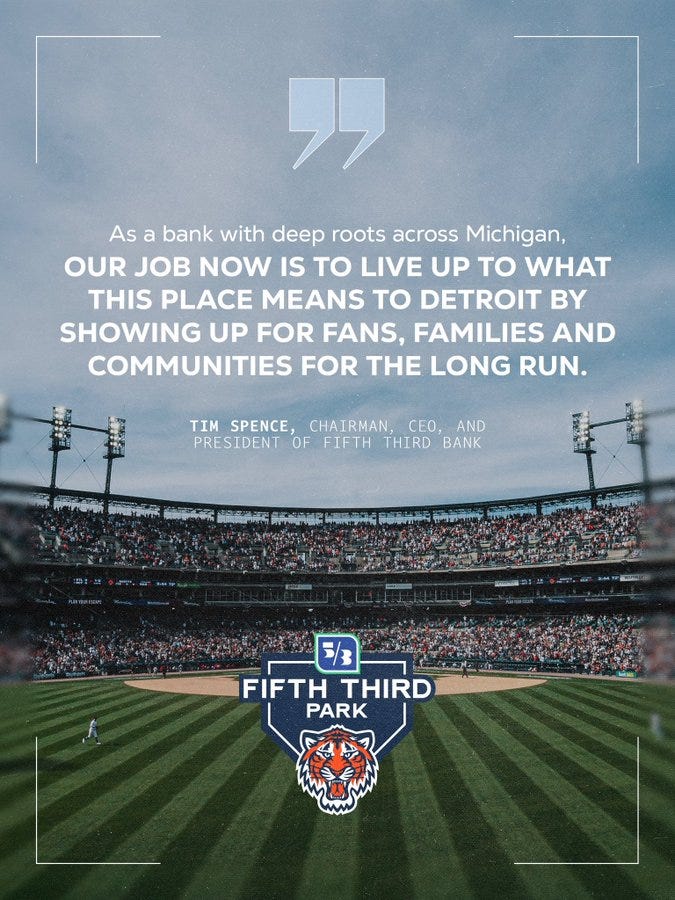
One fan remarked, “Always nice when a Rural Juror occurs in real life.” Another said, “The USA’s stupidest bank name will now be it’s stupidest ballpark name.” Some just said, “Disgusting.”
The bank didn’t buy the naming rights. They bought Comerica (another bank) for $10.9 billion and Fifth Third got the naming rights in the merger.
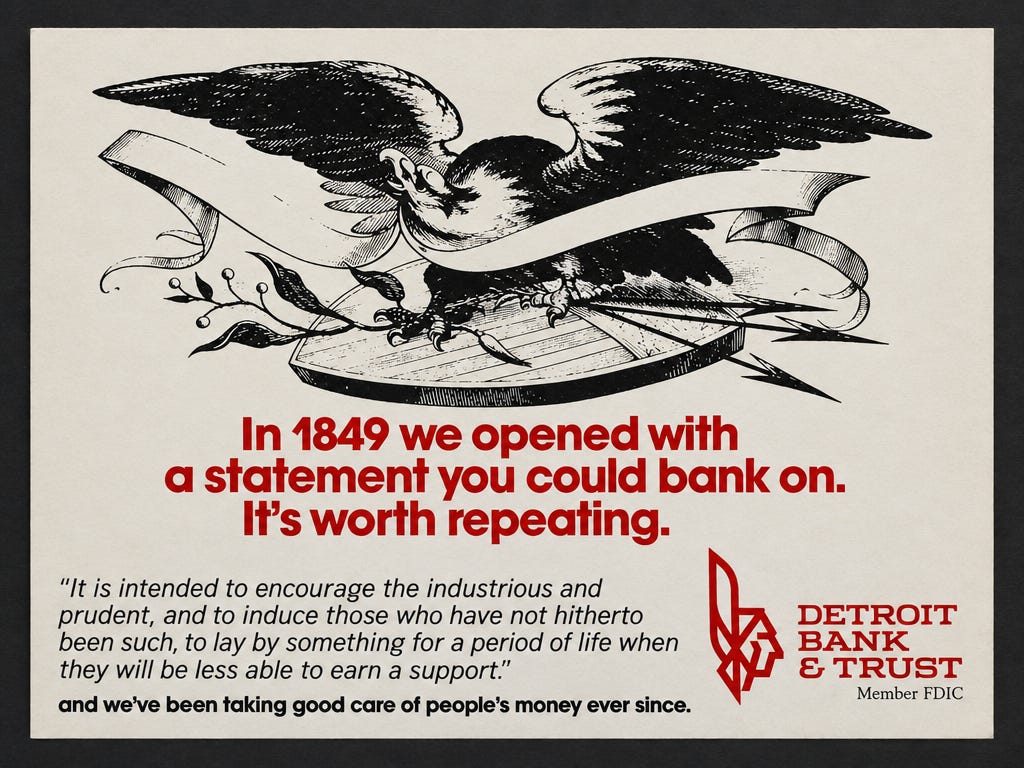
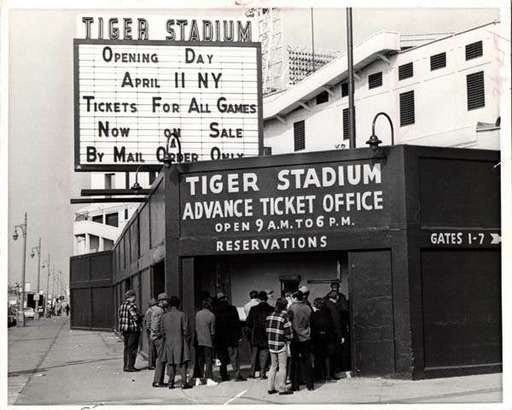
Comerica used to be The Detroit Bank & Trust (that’s the ad at the start of the newsletter). And you have to love this part. They swapped the local branding and use of Detroit for an invented word that sounded national. Then they moved to Dallas.
Stadium naming rights are the worst thing in branding.
The Chicago White Sox Comiskey became U.S. Cellular Field then Guaranteed Rate Field. Then the lender rebranded and it became the even dumber Rate Field
Louisville has the KFC Yum! Center. New Orleans has Smoothie King Center. Pittsburgh swapped the smartly named Heinz Field into Acrisure Stadium, an insurance company brand no one talks about or can pronounce.
There’s a stadium in the UK named The Home of the Set Fare Arena. Which is only weird if you remember it was previously called Tony Macaroni Arena for the Scottish-Italian restaurant chain. That sounds like something AI would create.
It could be worse, it could be Wankdorf Stadium.
Detroit will probably keep saying Comerica.
That means a city will stay loyal to a bank that dropped “Detroit” from its name and left town.
COCKTAIL OF THE WEEK: THE HUMMER
If you thought I wrote this to sneak baseball into this newsletter yet again, you are only partially right.
I just really wanted to talk about this drink’s origin story.
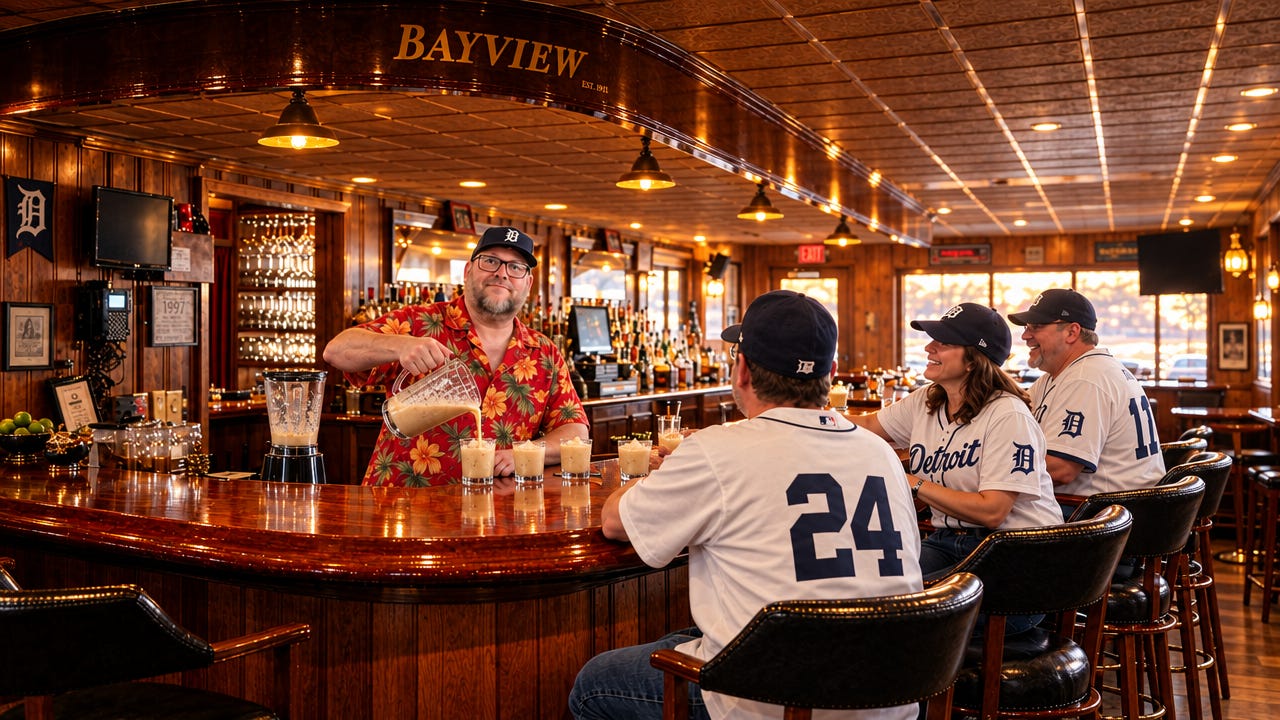
In 1967 a rookie bartender named Jerome Adams took over from a man who had tended bar at Detroit’s Bayview Yacht Club for nearly 30 years.
The regulars reminded Adams of this almost every shift. On a slow night in 1968, he threw rum, Kahlúa and vanilla ice cream into a blender and and found a winner.
A member had two and said they made him want to hum. Thus, the hummer was born. Although a London Chop House bartender disputes this story. It wouldn’t be a cocktail without a disputed origin.
Later that fall, the Tigers won the World Series.
Adams would bartend at the Bayview for 50 years.
The Hummer became the unofficial state drink.
It also would become the ridiculously large GM truck. No relation. Just funny.
The drink was invented by a new guy trying to live up to a legend. Fifth Third should order two of these.
The Hummer
1 oz white rum
1 oz Kahlúa
2 large scoops vanilla ice cream
2 ice cubes
Blend it until smooth and pour into a rocks glass. No Kahlúa? Any coffee liqueur works. Make a full pitcher and think about the original Tiger Stadium and how rad it looked.
The Drink Cart is the newsletter version of sitting at a really good bar with someone who thinks too much about advertising and won’t shut up about it. Subscribe to get it on Wednesdays and Fridays.
WD-39 just doesn’t have the same ring to it.
Smoothie King Center! That’s definitely my fave.