

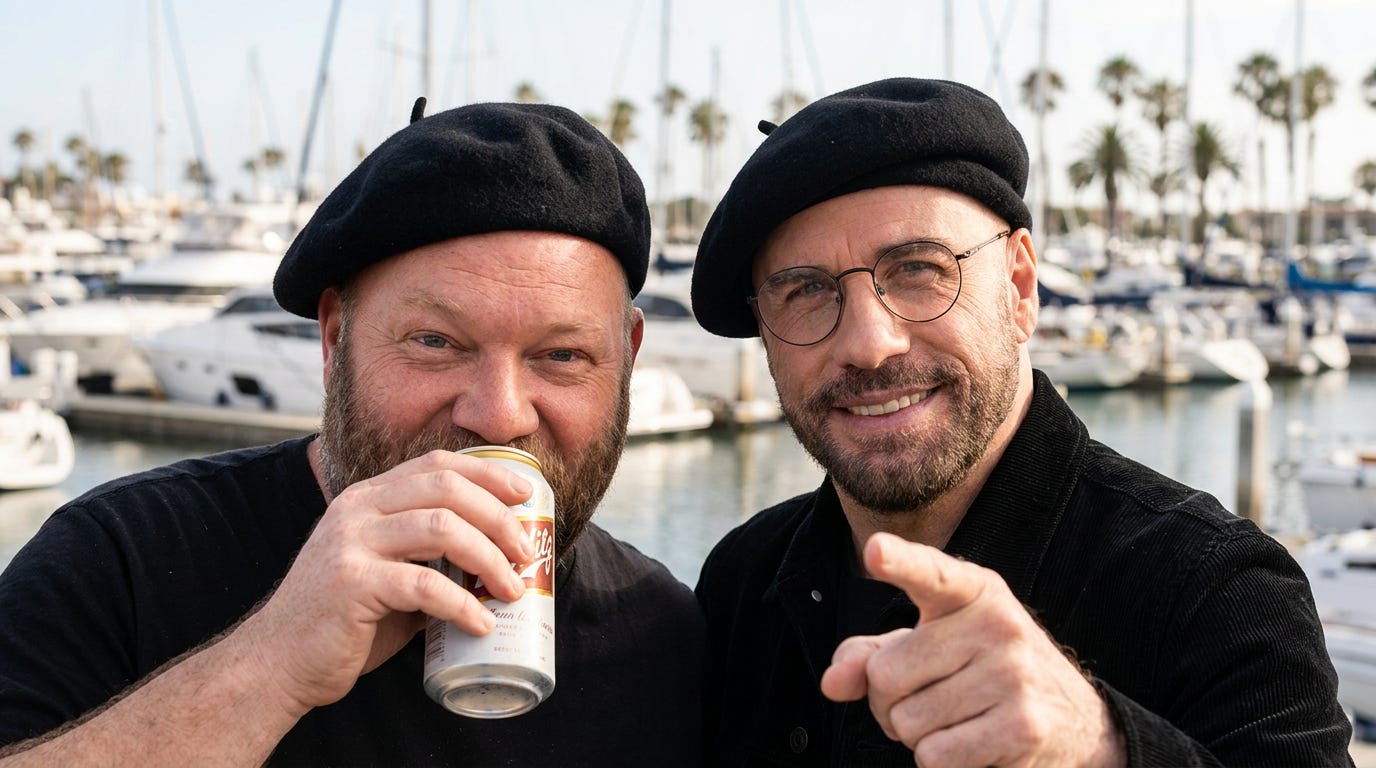
To anyone currently maintaining a private screenshot folder titled “Travolta Cannes Berets 2026” that has been growing by the hour — I see you. I am you.
The man wore a different beret every day at Cannes this week for his own directorial debut because, his words, “the old school directors wore berets and the glasses. And I thought, that’s what I’m doing.” Then he flew his own plane home.
Anyway. This week’s issue has nothing to do with that. Except for the beer. Oui.
—
The beer that made Milwaukee famous is dead.
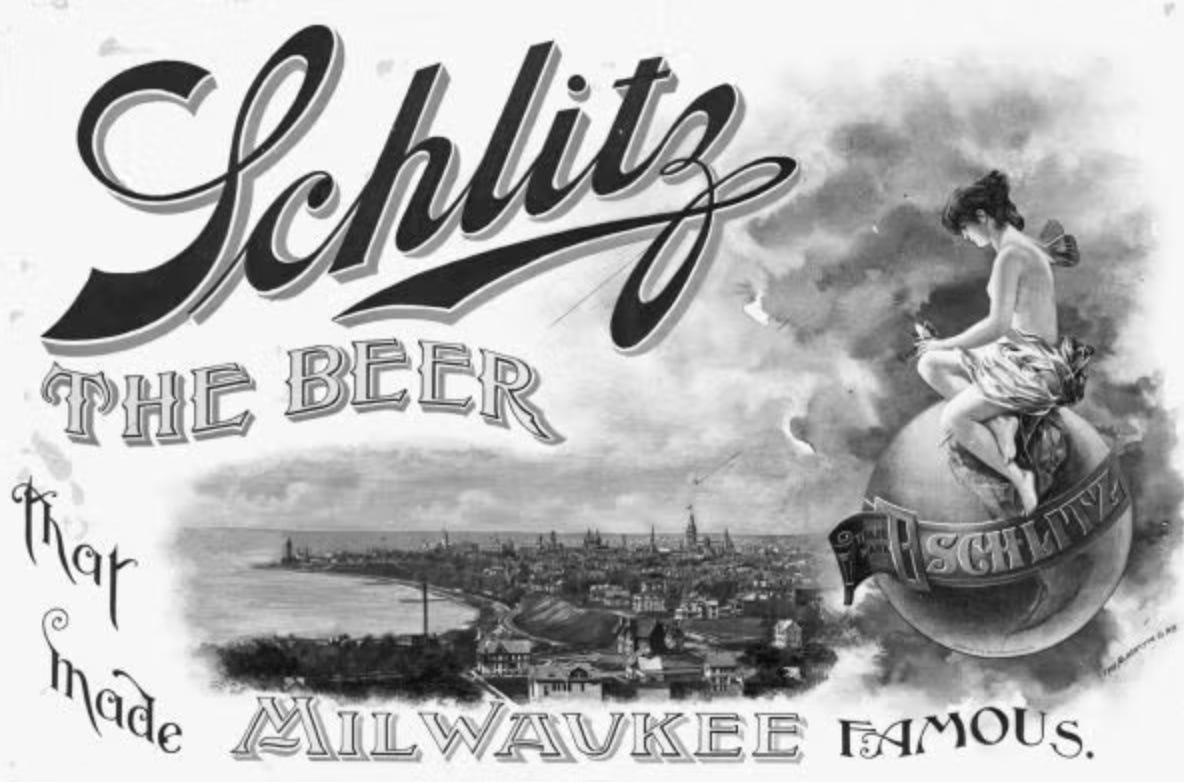
175 years. The biggest brewery in the world by 1902. Built the city’s identity. Built its fireworks. Built Summerfest. Built the bottling line you’ve seen a thousand times in the opening credits of Laverne & Shirley.
Done.
Wisconsin Brewing is pouring the last 80 barrels on May 23. After that, there is no more Schlitz.
Meanwhile, 800 miles north, the oldest company in North America is haunting a Canadian Tire as a $9,800 cedar canoe. Same week. Two ancient brands. Two different funerals.
This is what happens when nobody in the boardroom remembers what the brand was actually for.
The Bull
Schlitz had a mascot. Most people forget.
The Schlitz Malt Liquor Bull. A real 2,000-pound Brahma named Zane. Stand-in twin called Heckle. The Bull crashed through walls in ancient Rome, the Middle Ages, Robin Hood-era England, modern bars, modern nightclubs. Whatever the setting, the Bull was coming through it.
The commercials featured Gregory Hines, Richard Roundtree (yes, Shaft), Rufus Thomas, the Marshall Tucker Band, .38 Special, Kool and the Gang versus The Platters, the Four Tops. The full compilation is worth your Friday evening.
Schlitz Malt Liquor was marketed aggressively to Black audiences and the Bull ads ran heavily in that programming through the 70s.
The Bull is one of the great forgotten ad mascots of the era. He survives on the Schlitz Malt Liquor cans Pabst still puts out. Everything else around him is dying.
The Beer That Made Milwaukee Famous
Quick history. Schlitz didn’t start with Schlitz.
It started with August Krug, a Bavarian who opened a tavern brewery in Milwaukee in 1849. Schlitz was his bookkeeper. Krug died in 1856. Schlitz married Krug’s widow Anna and renamed the brewery the Joseph Schlitz Brewing Company.
What followed was absurd.
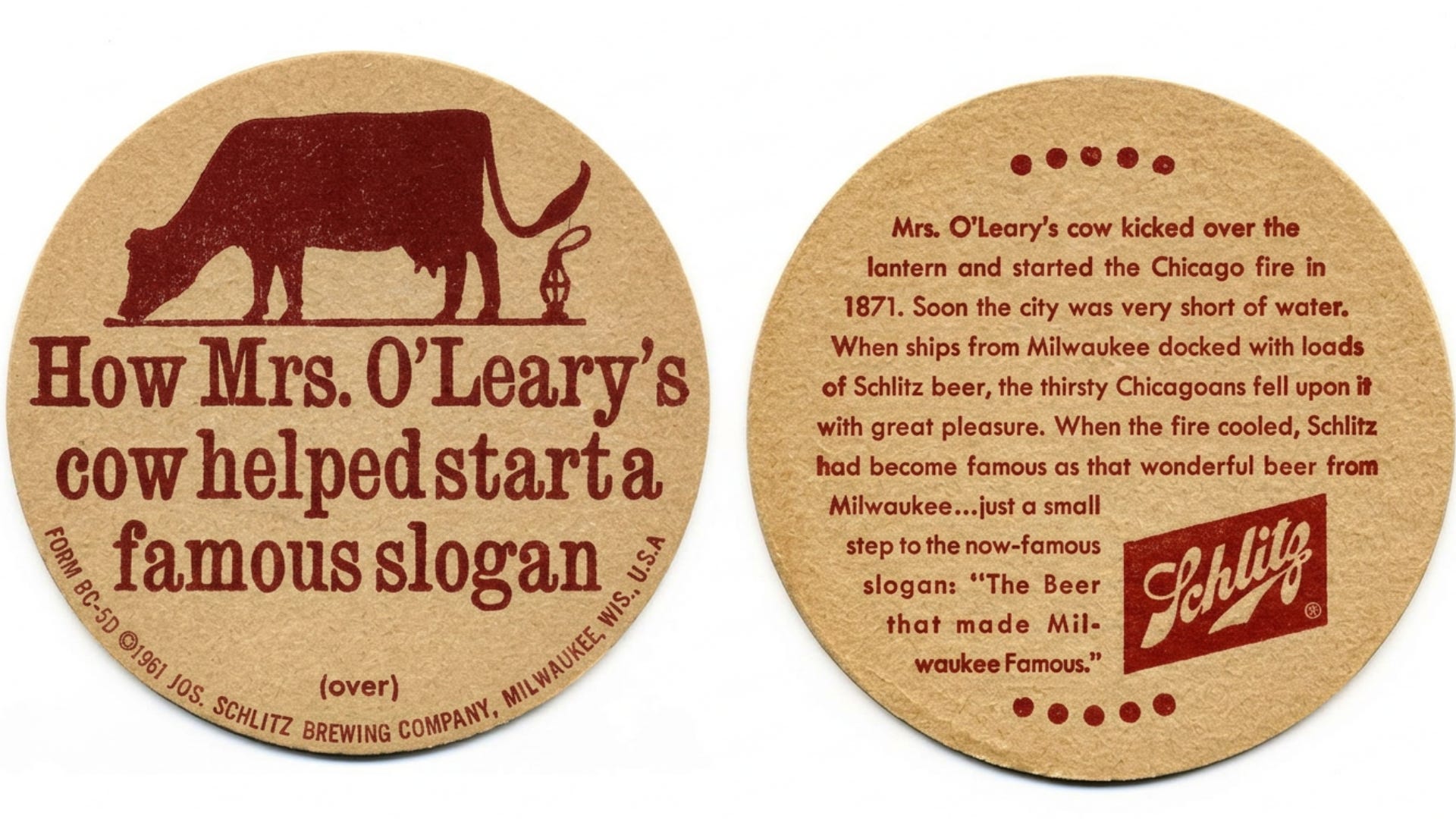
After the Great Chicago Fire of 1871 wiped out most of Chicago’s breweries, Schlitz shipped barrels south. Chicago discovered the beer. The slogan “The Beer That Made Milwaukee Famous” was registered in 1895. By 1902, Schlitz was the largest brewery in the world.
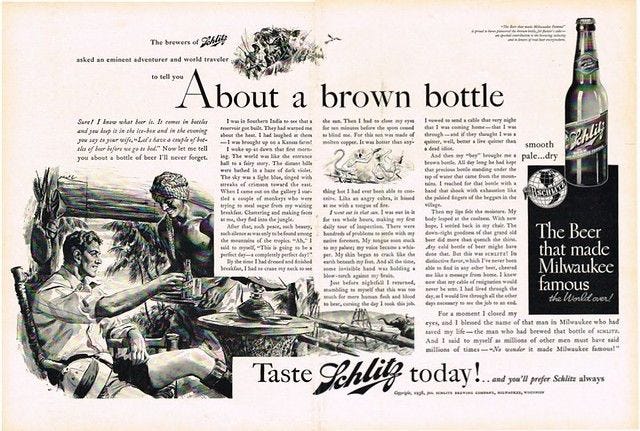
In 1912 they invented the brown bottle. The entire industry copied them.
At its peak, Schlitz produced 24 million barrels a year. The brand bankrolled Milwaukee’s Fourth of July fireworks. Founded what became Summerfest. Built Uihlein Hall at the Performing Arts Center.
Schlitz wasn’t a beer in Milwaukee. It was the city.
Slogan Cemetery
Schlitz cycled through a lot of slogans. Here they are, roughly in order of how confident the brand was when it wrote them.
“The beer that made Milwaukee famous.” 1895. The all-timer. A brand naming the city it built.
“The greatest name in beer.” 1940s. Not pretending it was a contest.
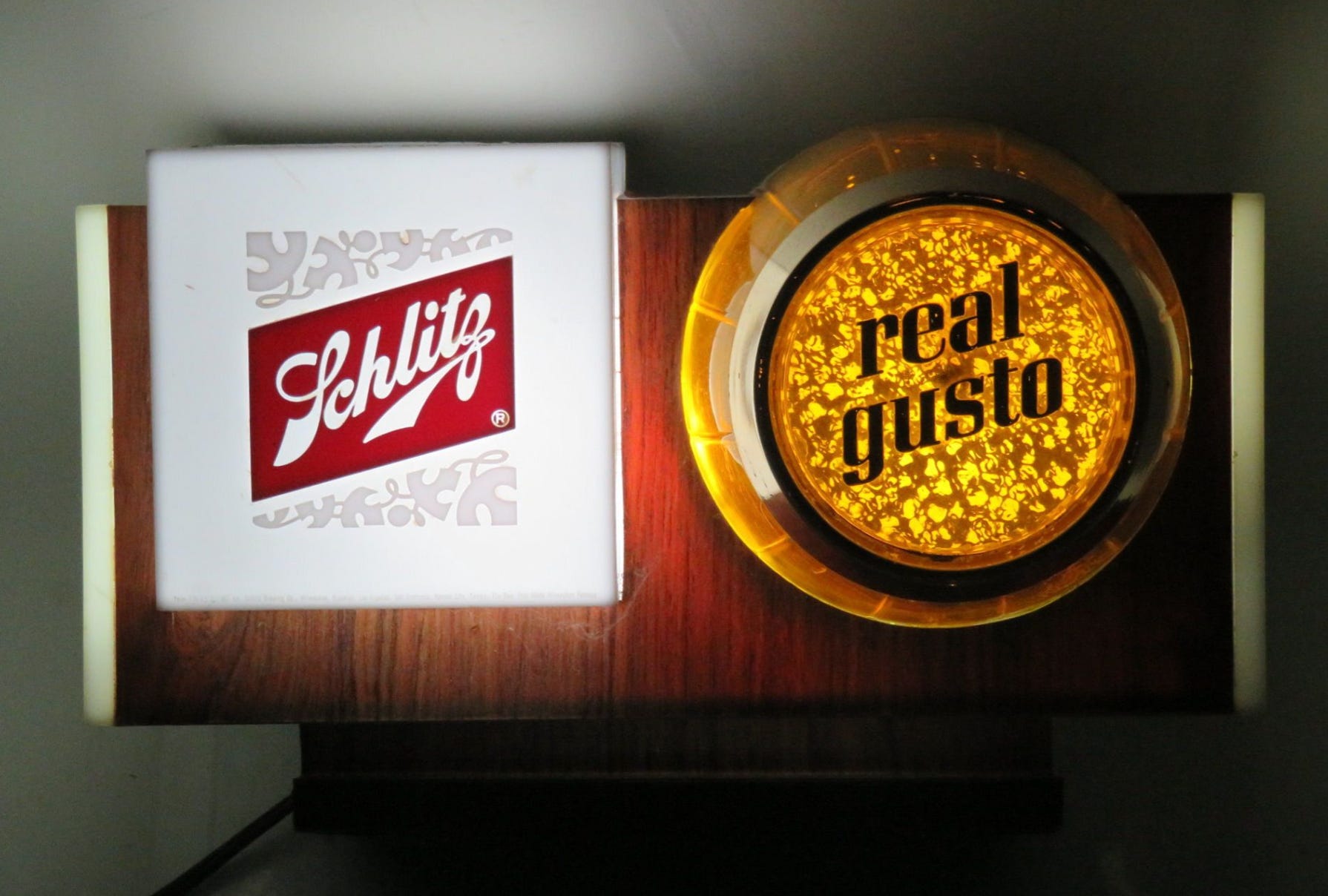
“Real gusto in a great light beer.” 1963. Gusto became the brand’s whole personality. The print campaigns from this era — sailboats, baseball gloves, brown bottles against blue sky — are still some of the best beer advertising ever made.
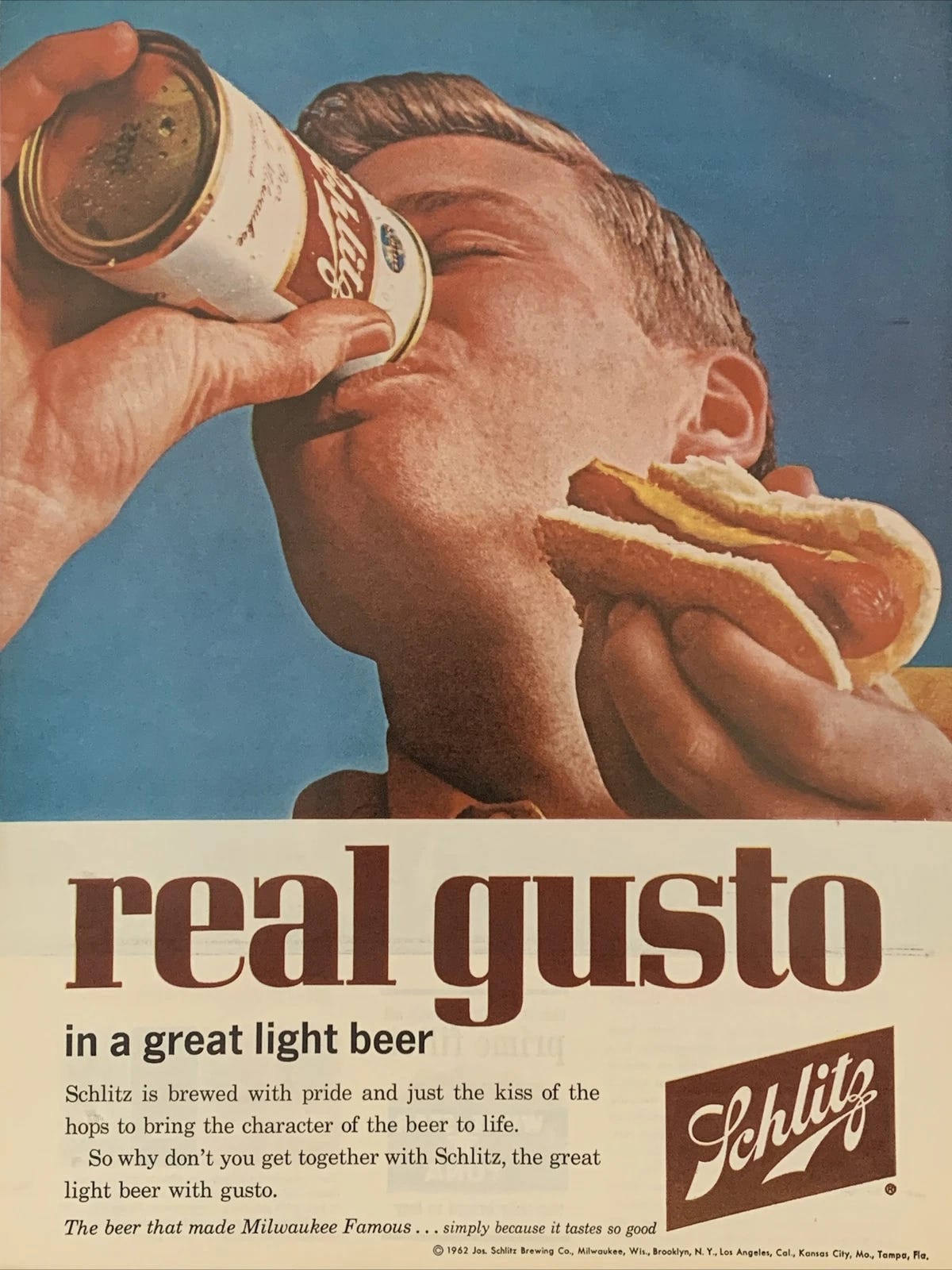
“When you’re out of Schlitz, you’re out of beer.” Mid-60s. Bartenders said it back to drinkers. The line that’s now literally true.
“Go for the gusto.” 1971. Full version: “You only go around once in life, so you have to grab for all the gusto you can get.” Peak Schlitz. A 1971 print ad: “You get no second chances. So you go for all the gusto there is.”
The brand was writing its own obituary three years before the recipe started killing it.
“No one does it like the Bull.” 1970s, Malt Liquor era. Confidence projected onto a Brahma because the lager couldn’t carry it anymore.
“When it’s right, you know it.” Late 70s. Defensive. Promising rightness instead of taste. The “you know it” doing the work the beer wasn’t.
“Schlitz Rocks America.” Early 80s. Desperation. A brand named after a 19th-century Bavarian brewer trying to convince you it rocks. It did not rock.
Eight slogans. One cause of death.
Drink Schlitz Or I’ll Kill You
In 1977, Schlitz hired Leo Burnett.
The same Leo Burnett that built the Pillsbury Doughboy. The Jolly Green Giant. Tony the Tiger. The Marlboro Man. Charlie the Tuna. The mascot factory at the peak of its powers.
Burnett came back with four TV spots. Each one featured a tough guy approached by an off-camera voice asking him to switch beers. The tough guys responded with threats. A boxer who looked like Muhammad Ali: “I’m gonna play Picasso and put you on canvas.” An outdoorsman threatened to sic an actual on-screen cougar on the narrator.
The audience didn’t like it. Hated it. The threats read as threats — directed at the viewer. The campaign got nicknamed “Drink Schlitz or I’ll Kill You” almost immediately.
Ad Age’s later summary: an ad showing a Schlitz drinker threatening to sic a cougar on an off-screen narrator backfired and was scrapped for a series of promotions built around a taste test.
Schlitz pulled it after ten weeks. Burnett got fired.
Leo Burnett built half the most-loved mascots in American advertising. They could not save Schlitz. Because Schlitz had already killed itself a decade earlier.
The Recipe That Killed The Beer
Here’s what actually happened. The only ad lesson that matters.
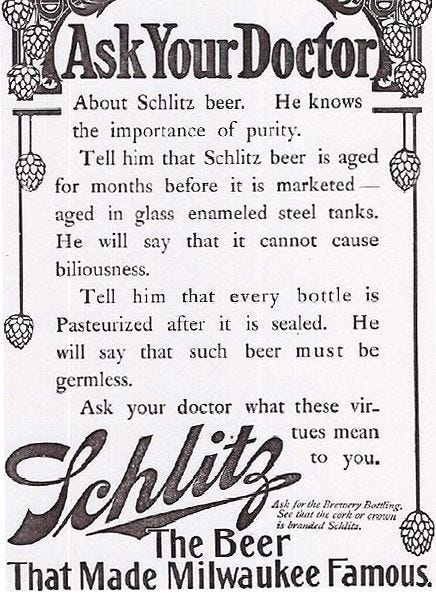
Sometime in the late 60s or early 70s, Schlitz executives decided to brew the beer faster and cheaper. They introduced something called Accelerated Batch Fermentation. Replaced malted barley with corn syrup. Tried silica gel to clear the cloudiness. Quietly retired “The Most Carefully Brewed Beer in the World.”
The taste changed. Drinkers noticed.
By 1976 the beer was looking flaky in the bottle. Perfectly safe to drink — just visibly cloudy. Schlitz tried to recall 10 million bottles and cans on the quiet. They got caught. The Burnett campaign was the next move. An ad campaign trying to fix a recipe problem.
It couldn’t.
By 1981 the Milwaukee brewery was closed. By 1982 the Uihlein family sold to Stroh for $500 million — a number that sounds big until you remember the brand had been worth several billion ten years earlier.
Stroh sold to Pabst in 1999. Pabst relaunched Schlitz in 2008 using a recovered version of the original 1960s recipe — the $3 dive-bar tallboy that drinkers at Wolski’s Tavern in Milwaukee have kept alive ever since.
The Show That Made Milwaukee Even More Famous
One thing nobody outside Milwaukee remembers.
The opening credits of Laverne & Shirley — Penny Marshall placing a glove on a bottle as it rolls down the line — is one of the most iconic sequences in 70s television. The show’s fictional Shotz Brewery was a direct riff on Schlitz. Same city. Same era. Name chosen specifically to evoke “the beer that made Milwaukee famous.”
The actual bottling line in those credits? Came from the real Schlitz brewery.
When Schlitz shut down the Milwaukee plant in 1981, Lakefront Brewery bought the bottling line and still operates it today. It’s a tour stop. They sing the theme song.
The most-watched opening credits sequence in 70s sitcom history was Schlitz equipment. The brand was so embedded in Milwaukee that even the fictional brewery had to be Schlitz.
The Last 80 Barrels
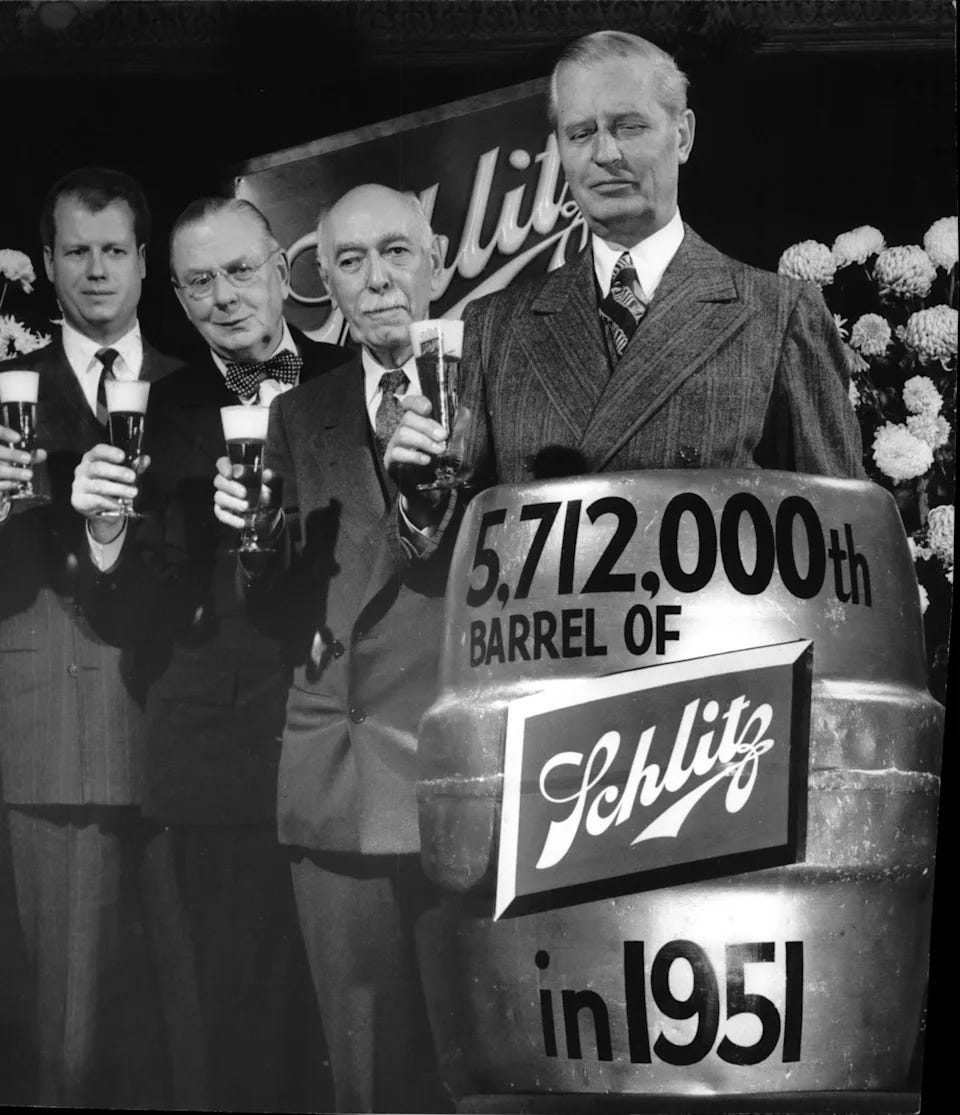
That’s the part you can still do something about.
Wisconsin Brewing’s brewmaster Kirby Nelson is brewing one last 80-barrel batch on May 23. He’s using 1948 brewing logs from the year Schlitz was the best-selling beer in the world. Six-row malted barley. 25% yellow corn grits. German Hallertau Mittelfrüh hops. Washington Cluster.
Nelson: “Things change, but Schlitz deserves better than just to be swept under the rug. It needs to go out with dignity and respect.”
After May 23, there is no more Schlitz.
Sean McCarthy at Wolski’s: “It’s like losing Harley-Davidson or Kohl’s.”
Meanwhile, In Canada
A different kind of dying.
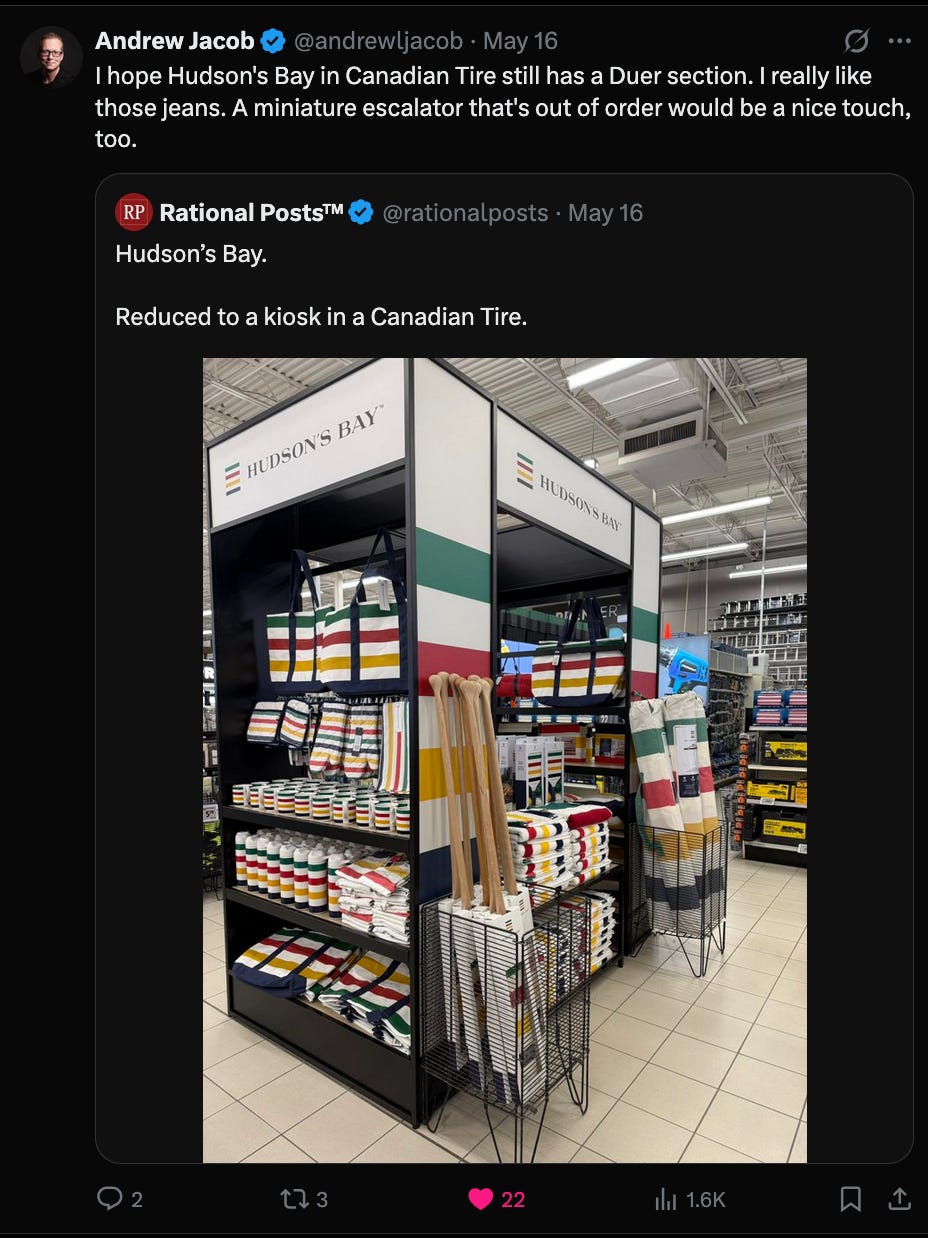
Up here, Hudson’s Bay isn’t being killed. It’s already dead. Now it’s haunting a retail chain that didn’t ask for it.
Founded in 1670. 356 years old. Older than the United States. Older than Canada by 197 years. The oldest company in North America.
Filed for creditor protection in 2025. Liquidated. Stores closed. The Bay as a retailer is gone.
This year, Canadian Tire bought the Hudson’s Bay IP for $30 million and turned the brand into a kiosk gift shop.
The Stripes Summer 26 collection launched May 1. Made with Publicis Toronto. “Make It Last” the brand promise. Thirty-two pieces. A $9,800 cedar canoe. A $530 king-sized point blanket. Pickleball paddles. Aprons. Tote bags. All four stripes. All sold next to brake fluid.
The Bay that explored half a continent now sells stripes-licensed kayak paddles next to the auto-parts aisle.
This isn’t a funeral. It’s a brand haunting.
AD LESSON
Brands don’t die from the outside. They die from a memo sent decades earlier that started with “we can save money here.”
The recipe change. The store closure. The supply chain swap. The “modernization” that strips out whatever made the thing the thing in the first place. By the time you’ve hired Leo Burnett to bring back the gusto, or Publicis to make it last — you’ve already lost.
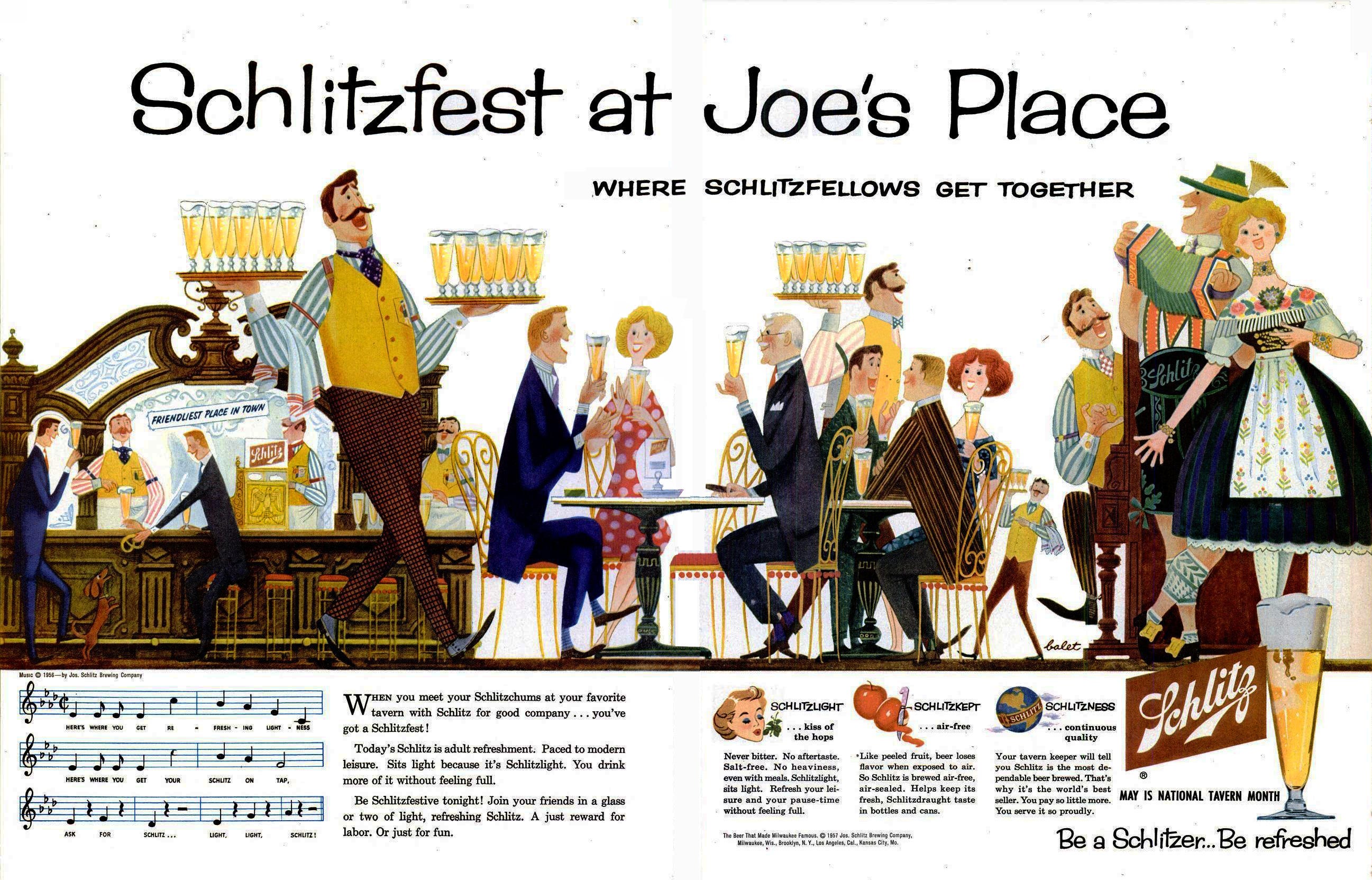
The work the agencies make in the final years of a brand is often the best work the brand has ever had. The Schlitz ads of the 60s are beautiful. Schlitzfest? Come on. The “Make It Last” Hudson’s Bay film seems beautiful even if it’s giving slop nostalgia vibes. Even Drink Schlitz Or I’ll Kill You is, in retrospect, magnificently weird.
Agencies do their best work trying to save things that can’t be saved. By then, the people who killed the brand are long retired. Sometimes long dead.
The agency is left holding the bag. Sometimes literally. A striped one.
COCKTAIL OF THE WEEK: THE BOILERMAKER
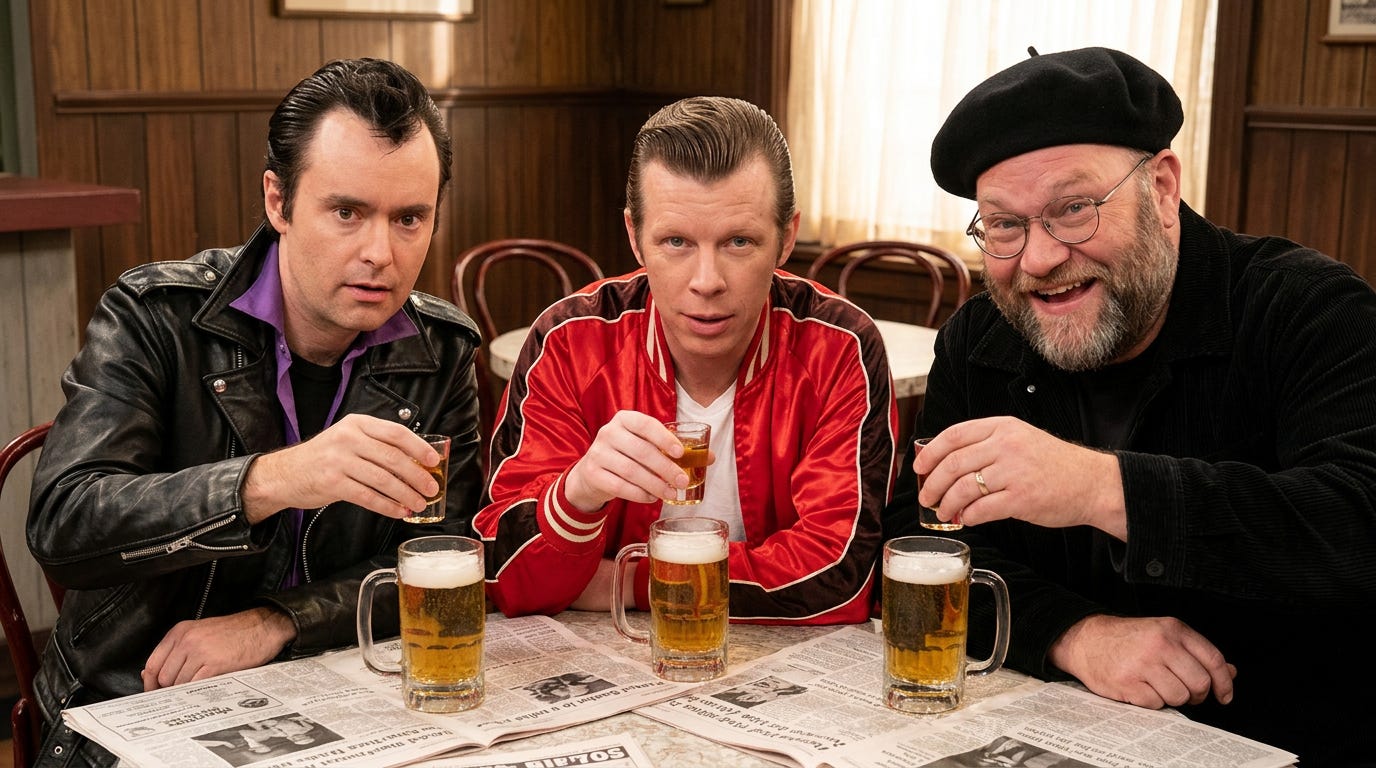
The Boilermaker is the drink of dive bars, train depots and Milwaukee taverns. A shot of whiskey or brandy. A cheap beer. That’s it. Imagine drinking one with Lenny and Squiggy.
No garnish. No technique. No “elevated take.” If you serve a Boilermaker with a chiffonade of mint and a smoked jalapeno rim, you should not be allowed to serve drinks.
The Wisconsin version uses brandy instead of whiskey because Wisconsin drinks half the brandy sold in America and refuses to explain why. The men and women holding wakes for Schlitz this weekend are ordering this drink right now, with what’s left of the supply.
1 shot brandy (Korbel if you’re being Wisconsin about it, orbourbon if you’re being more American about it)
1 can or bottle of cheap American lager (Schlitz if you can find it, any trash tallboy if you can’t)
Two methods. The civilized version: drink the shot, then drink the beer.
The depth charge version: drop the shot glass into the beer and drink the whole thing before the foam settles.
The depth charge is technically a different drink in some regions. In Milwaukee they don’t care what you call it.
Drink one this Friday for the beer that made Milwaukee famous.
Drink the second one over a striped blanket for the former company older than Canada. It’s medicine.
The Drink Cart is the newsletter version of sitting at a really good bar with someone who thinks too much about advertising and won’t shut up about it. Subscribe to get it on Wednesdays and Fridays.
Poor Hudson’s Bay. What a way to go…
Kool and the Gang versus The Platters!!! Who wins? All of us! Very cool.