

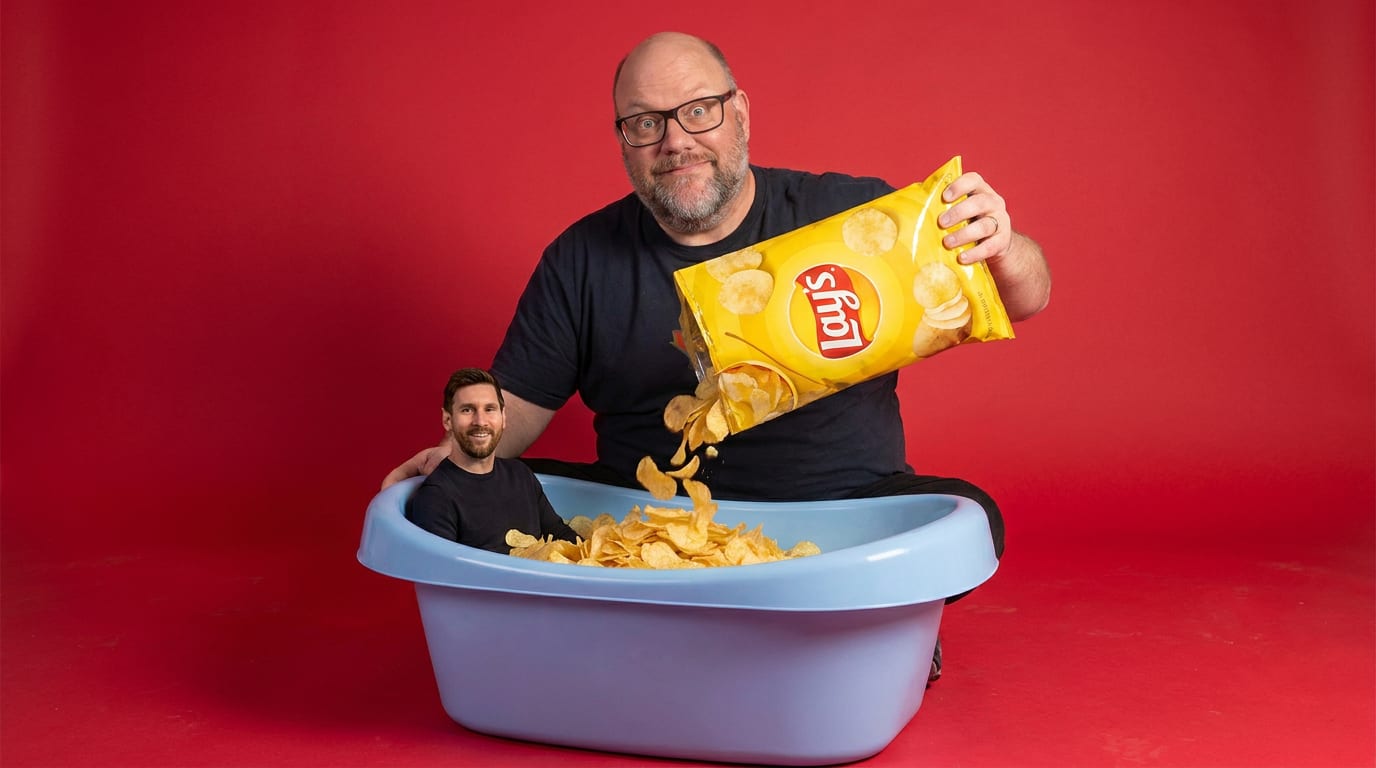
Spain beat Argentina 1-0 on Sunday. Extra time, Ferran Torres, MetLife Stadium. Messi walked off without the trophy, without the Golden Boot and without the Golden Ball. You can’t script it better.
This also means we can finally talk about the real tournament. The one Messi won months ago, before a ball was kicked.
Eighteen of the eighty major ad campaigns tested for this World Cup featured Lionel Messi. That’s 22 percent. Nearly a quarter of the tournament’s creative output bet on one 39-year-old man.
Here’s the thing nobody at those brands will say out loud.
He’s absolutely terrible at this.
THE MOST EXPENSIVE MAN TO EVER SAY NOTHING
Watch any Messi commercial. Actually watch one.
He doesn’t sell. He kind of appears. He looks slightly to the left of camera like he’s checking if his limo is here. Give him a line and he delivers it like a man reading his own deposition.
And brands pay a fortune for it.
Top-tier FIFA sponsorship runs 80 to 100 million dollars. Messi costs a GOAT premium on top. What are they buying? Certainly not a performer. They’re buying 632 million Instagram followers standing next to their logo for six seconds.
That’s not a pitchman. That’s a ghost billboard with a beard.
THE SUMMER OF MESSI, A GUIDED TOUR
The work is where it gets funny.
Michelob Ultra, “The Superior Match.” BBDO New York turns a hotel lobby into a pitch. Pulisic, Dest and Robinson against Messi, Lautaro and Nico Paz. Ochoa in goal. Cameos from Ronaldo Nazário, Alex Morgan and, for reasons known only to a creative deck somewhere, Billy Bob Thornton. (I know, I know he drinks the stuff in Landman but that still doesn’t mean you need to put him in this spot.)
Everyone gets to be funny. Pulisic talks. Thornton drawls. Messi’s job is to be Messi in the vicinity of the beer. The 15-second cutdown is called Lobby Nutmeg — other people dare each other while Messi executes one move in silence. The creatives know. They stopped writing him dialogue the way you stop assigning homework to the kid who isn’t going to do it.
And God bless the press release. Messi’s official quote: “I always have a great time on set with Michelob ULTRA.” I’ve never read a sentence that sounds more like it was generated by the licensing agreement itself. No human said that. Impossible.
Lay’s, “No Lay’s, No Game.” The official snack of the World Cup surrounds Messi with actual charisma — Beckham, Thierry Henry, Alexia Putellas, Suárez, in a full on Steve Carell spot. Same architecture: let the ensemble generate the entertainment, cut to Messi for the money shot holding the chips. Why is he even at a watch party? Was this foreshadowing?
In Adidas’, “Backyard Legends” Messi is helped by Chalamet, Bad Bunny, Yamal, Bellingham, Trinity Rodman. Everybody acts. Messi kind of appears.
You know the drill.
Every one of these campaigns is a machine built to extract value from a man who contributes nothing except existing somewhere near the product. The ensemble casts aren’t creative ambition. They’re compensation. Every Billy Bob Thornton is load-bearing creativity.
The industry has quietly engineered an entire genre of advertising around the fact that its most expensive asset cannot advertise. And I could do almost the same newsletter about Beckham.
Don’t flip the coaster just yet. The Messi ad back catalog is even better.
THE RÉSUMÉ NOBODY READS
Messi will appear next to absolutely anything.
2017: a blockchain phone. Sirin Labs, a startup whose paid Facebook post had Messi claiming he was “usually busy trying to decentralize defenses.” The phone was called the Finney. You’ve never met anyone who owned one.
Then the full crypto era. A reported 20 million from fan token firm Socios. The face of NFT game Sorare.
Then Saudi Arabia. Paid tourism ambassador since 2022 — a gig he took so seriously that PSG suspended him for skipping training to fly to Riyadh for promo events. Read that again. He got suspended from soccer for advertising. And you wonder why the world was cheering for Spain on Sunday?
And the crown jewel. In 2016 Messi and his father were caught up in some tax fraud allegations in Spain for hiding the income from his image rights. Shell companies in Belize and Uruguay, moving the money from his Adidas, Pepsi and Danone deals. The greatest athlete-endorser of his generation, with a little fraud on his endorsement income specifically.
Then the sports drink. Last year Prime sued Más+ by Messi and put the quiet part in a legal filing: Messi didn’t create the drink at all.
I. Am. Shocked. Their filing claimed the White Claw people showed up with a finished product and Messi licensed his name, image, signature and likeness.
Prime meant it as an insult. It’s the whole Messi Economy. He’s not a pitchman. He’s a rights package for you to mold or sell whatever you want.
The suits got dropped in January, presumably once everyone realized they were arguing about which beverage was more authentically fake.
THE LEGENDS TEST
Athletes selling out isn’t the crime. The crime is doing it this badly.
Michael Jordan is the standard. “Be Like Mike” worked because Jordan on camera was magnetic — the smile sold harder than the script. He carried a feature film. Jordan Brand became a multibillion-dollar annual business because the product was mythology you could wear. Jordan gave brands a performance. Messi gives them attendance.
Peyton Manning is the craftsman. A goofy quarterback who understood the assignment so completely he built a second career out of being good at commercials. Athletes can act, they just have to put in the work.
George Foreman is the honest version of the Messi model. Sold his name outright — Salton paid nine figures in 1999 for the grill rights and he made more from it than from boxing.
Pure licensing. But Foreman showed up grinning and flipped the burgers anyway. Messi runs the Foreman playbook while performing like he’s been waterboarded for 8 hours.
Now look at Messi. Stained by tax fraud. Shilling for a regime with a body count. Suspended by his own club for moonlighting. Not one major sponsor blinked.
Why? Nobody ever bought Messi’s character. There’s no image to crack. You can’t tarnish an empty billboard. Being an vanilla vessel turns out to be the ultimate brand safety.
And Ronaldo is the mirror. Equally shameless — the CR7 empire, the Binance ambassadorship that landed him in a class action, a museum about himself. But Ronaldo performs. He preens, he winks, he siuus.
He once moved two Coke bottles at a press conference and the internet credited him with vaporizing billions in market value. Probably coincidence. But Ronaldo generates moments. Messi generates presence. One of them is earning the check.
SUNDAY WAS THE STRESS TEST
Messi lost everything. Spain took the trophy. Mbappé took the Golden Boot, 10 goals to 8 — the second straight World Cup he’s snatched it at the death. Rodri took the Golden Ball.
Messi even briefly held the all-time World Cup scoring record mid-tournament, then lost that too when Mbappé passed him in the third-place game. A consolation match. Messi wasn’t on the field. He lost a record from his couch.
Eighty brands wrote a coronation and the tournament handed them a funeral.
So do we have to watch Messi ads for the rest of our lives? Yes. And that’s the point. The brands never bought the winning — nobody’s creative had a trophy clause. When you license a name, an image, a signature and a likeness, results are somebody else’s department. The monument doesn’t have to win. It has to stand there.
Meanwhile the actual best player of the tournament is Rodri — Ballon d’Or, World Cup, Golden Ball — and he fronts approximately nothing. The most valuable footballer on Earth is commercially invisible, and a 39-year-old who lost everything on Sunday is 22 percent of the ad break. One awards ceremony, and the case is closed: celebrity marketing divorced performance years ago.
Messi will do farewell-tour campaigns. Then legacy campaigns. Then anniversary campaigns. Then probably some sort of AI hologram double jubilee tour for the next 40 years.
This is how it ended.
The licensing entity doesn’t retire. It will just be remixed for all eternity.
COCKTAIL OF THE WEEK: SAVOY HOTEL SPECIAL COCKTAIL NO. 1
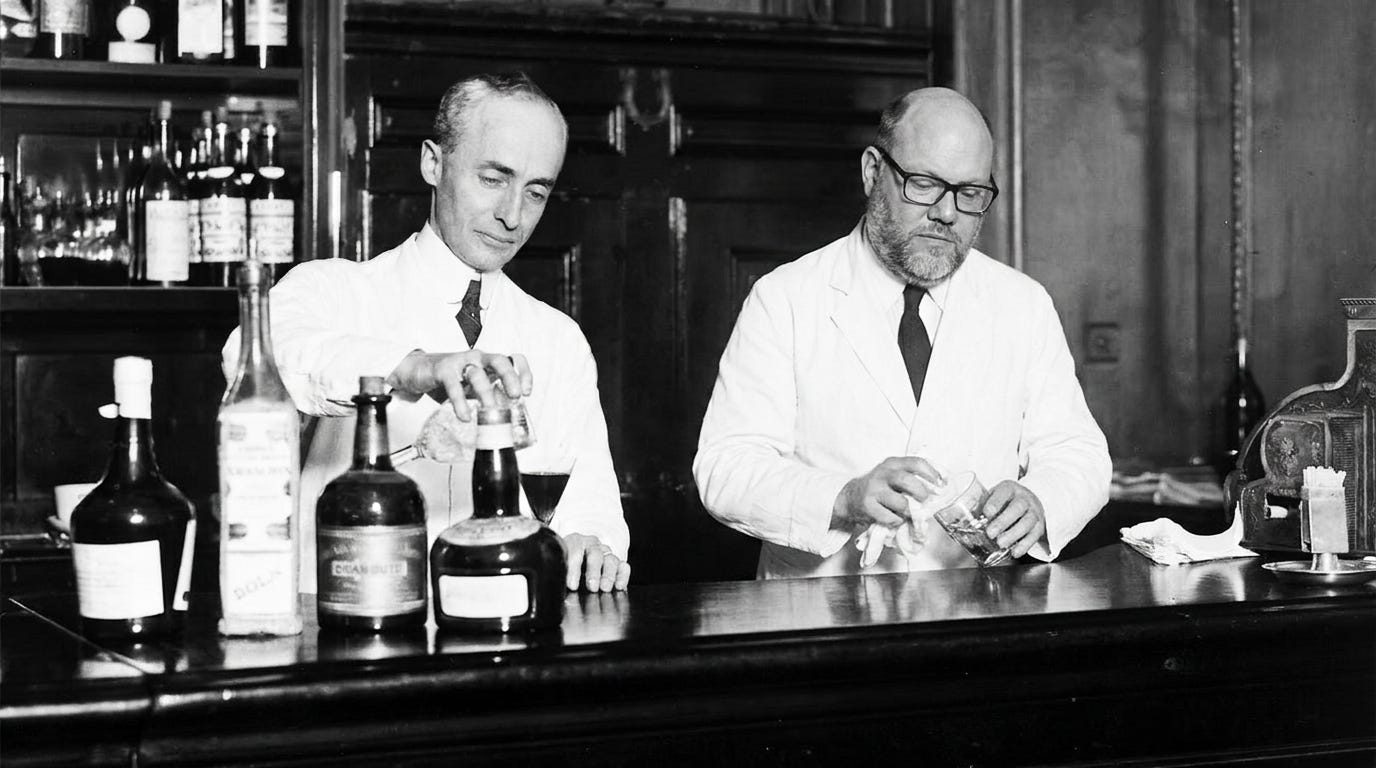
In 1920, Prohibition made America the one country on Earth where a great bartender couldn’t work. So Harry Craddock got on a boat.
He landed at the Savoy in London, took over the American Bar in 1926, and in 1930 the hotel asked him to write down what he knew. The Savoy Cocktail Book — 750 recipes, a shocking amount of apricot brandy, art deco borders, still in print a century later. Not a bad read.
But check your copy of the book. If it says Pernod instead of absinthe, you own the remix. Absinthe was banned or extinct for most of the 20th century, so later editions quietly rewrote Craddock’s book — absinthe swapped for Pernod, some drinks cut entirely.
The most important cocktail book ever written has been running silent product substitutions for 90 years. Perfect pour for an issue about a man whose entire career is a name licensed onto other people’s products. At least the Savoy put its name on something Craddock actually made.
Savoy Hotel Special Cocktail No. 1
2 oz dry gin
1 oz dry vermouth
2 dashes grenadine
1 dash absinthe
Shake with ice, strain into a chilled coupe. Express a lemon twist over the top and drop it in. I’m told that the grenadine should barely tint it — think rust-pink, not a kid’s Shirley Temple. Real grenadine, not that neon crap stuff. If your bar is still living in 1955, a rinse of Pernod does the job, and now you know why that substitution exists.
The Drink Cart is the newsletter version of sitting at a really good bar with someone who thinks too much about advertising and won’t shut up about it. Subscribe to get it on Wednesdays and Fridays.
22% of World Cup ads had Messi in them?! Wild.