
You have to imagine this newsletter taking place in an Irish pub. A full pint of Guinness is on the table, perfectly poured.
After a botched splitting of the G, you think about the most famous mascot in Irish beer.
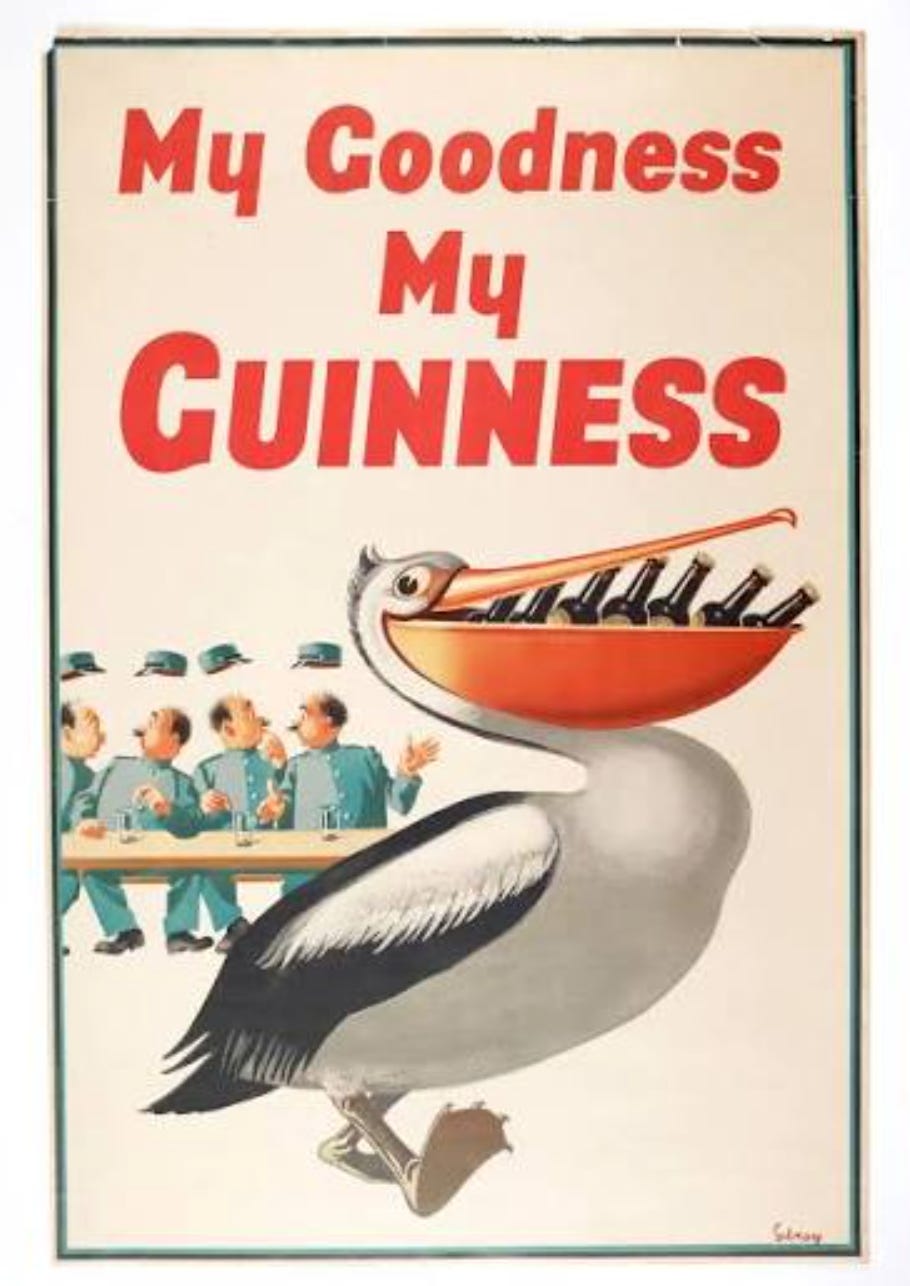
How the beer’s bird started as a pelican with seven pints and the people of Ireland barely knew their favorite beer had a mascot.
After another pint, you come to realize that the first use of the mascot was paired up with a borrowed American limerick and then a crime novelist turned the pelican into a toucan.
That toucan would go on to sell Guinness across the empire for the better part of 50 years. But that same bird never found a home in Ireland. To be fair the brand never published an ad on home soil until 1959. The brand believed the beer was so good, you didn’t need to.
This is the story of the Guinness Toucan.
170 YEARS WITHOUT AN AD
Everyone knows that Arthur Guinness started making beer at St. James’s Gate in 1759. But what they don’t know is that for the next 170 years the company didn’t advertise anywhere.
The brand and the beer were so strong that paying to advertise it was considered a waste of money.
Britain on the other hand? That was much harder. Guinness didn’t own any pubs so every pint needed someone to ask for it by name.
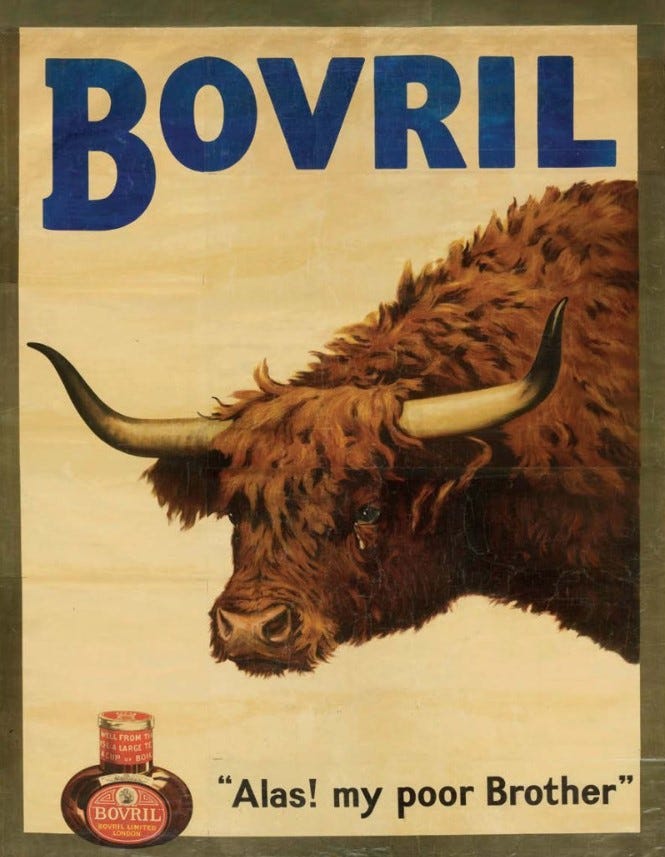
By the 1920s sales were flat. The company begrudgingly hired S.H. Benson, Britain’s largest advertising agency. The agency named for Samuel Herbert Benson had been around since 1893. They made their name advertising beef extract. Famously designing a poster for Bovril that showed a cow with the headline, “Alas! my poor Brother.”
The agency was all over animal advertising. To research, the agency basically went on a pub crawl. They asked people at pubs why they drank Guinness. The answers were all pretty much: because it’s good for you.
You can see where this is going.
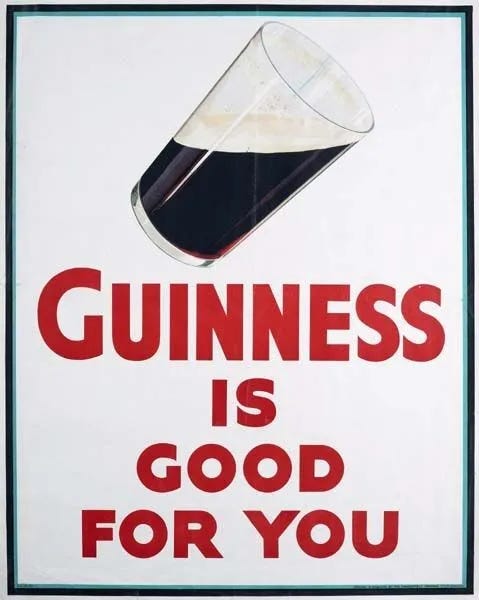
In 1929 they ran an ad that claimed the stout built strong muscles and enriched the blood. The ad ended on “Guinness is Good for You.”
At the time nobody thought this was a very good idea. But it ended up running for decades.
THE MAN WHO DREW THE GUINNESS ZOO
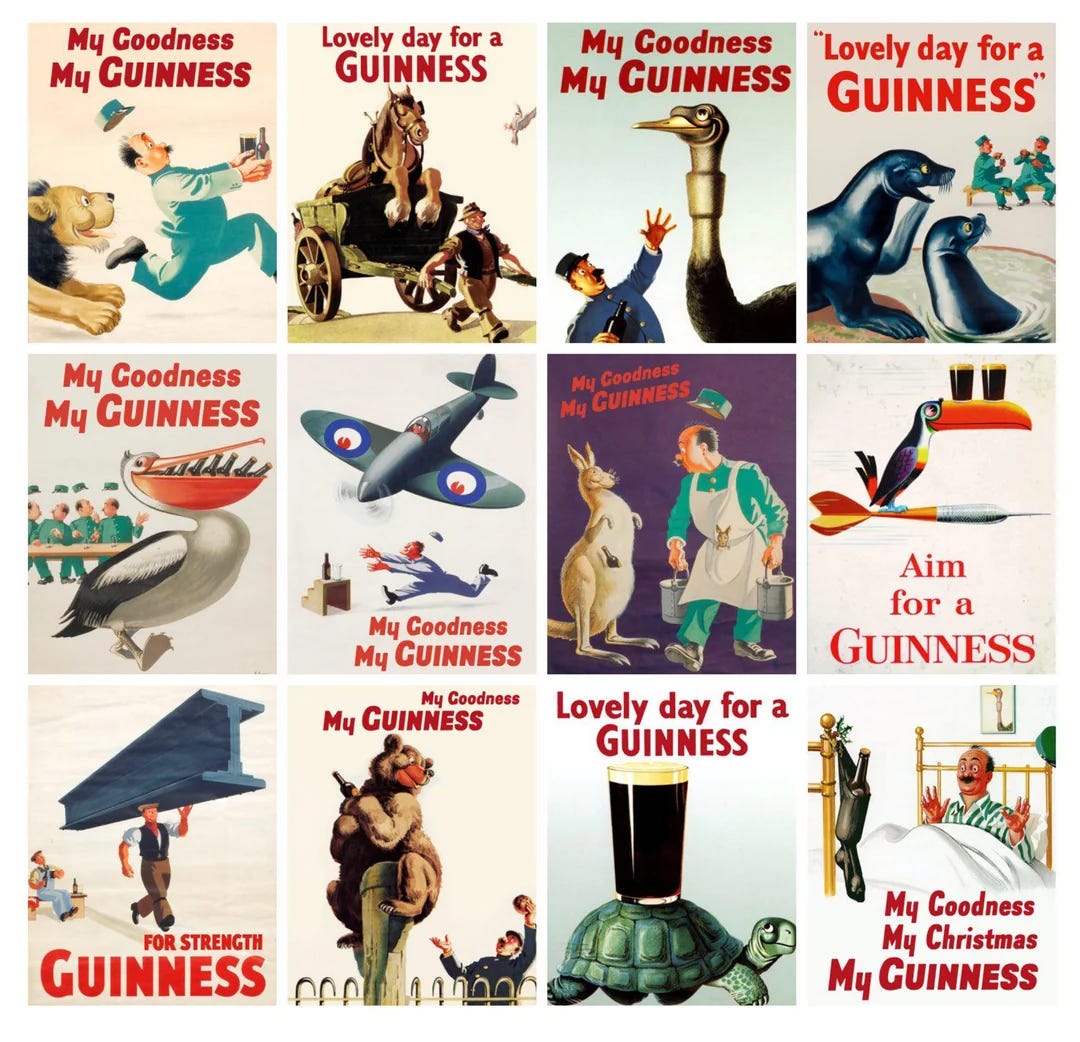
After a night out at Bertram Mills Circus in west London, John Gilroy was still thinking about a performing sea lion. He decided the animal was smart enough to balance a pint instead of just a ball. And that’s believed to be the first poster Gilroy made for the brand
Born in Whitley Bay in 1898, Gilroy’s art studies were interrupted by the First World War and time in the Royal Field Artillery. He came back from the war, finished his art studies and joined Benson’s.
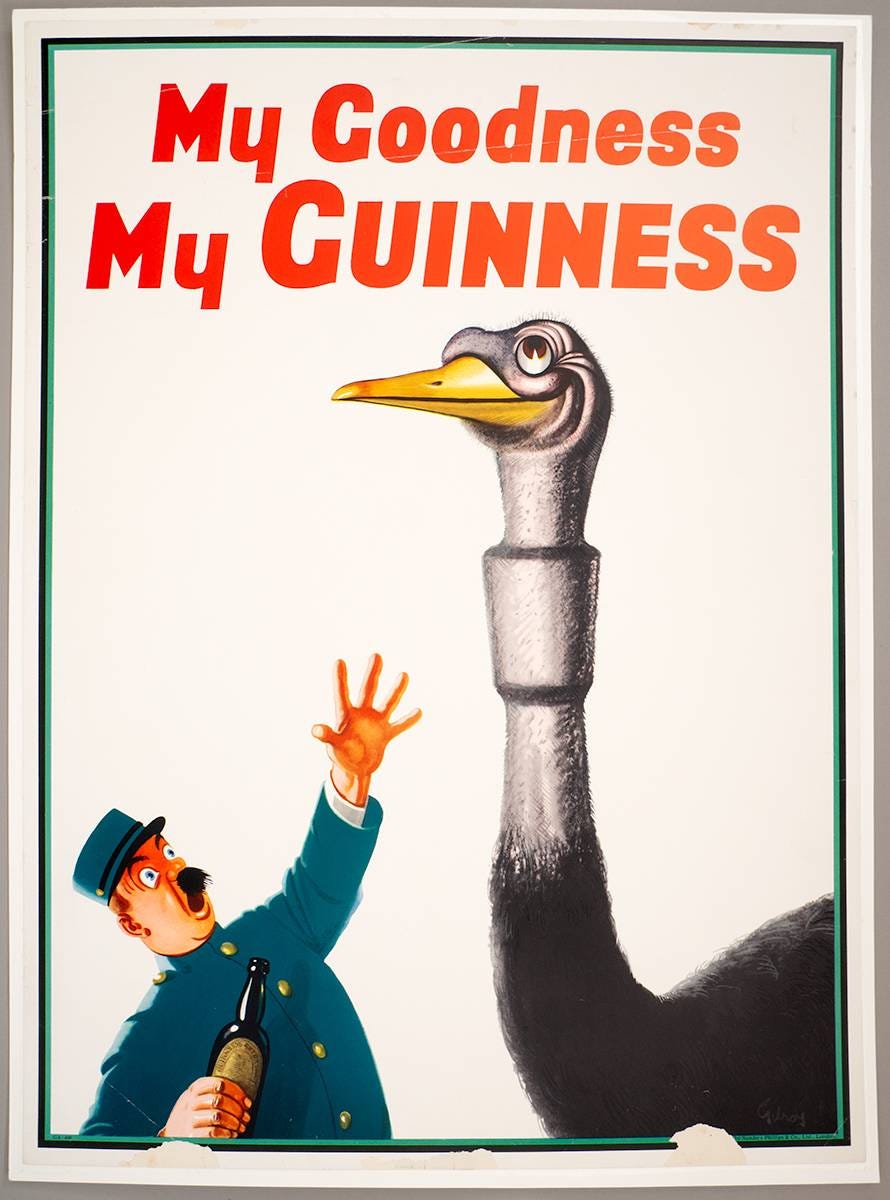
Gilroy would then build a virtual Noah’s ark of animals for the beer. An ostrich. A kinkajou. A gnu. A turtle with a pint on its shell telling you to have a Guinness when you’re tired.
The stark design and white background was designed to keep you focused on the animal. He would make more than 100 ads and nearly 50 posters over 35 years. When Benson’s finally lost the Guinness account in 1969, the brand paid him £2,000 a year for life because they felt they owed him so much.
This was a man who took billboards as seriously as I seem to take advertising nostalgia. “The hoardings are the museums of the masses,” he once said.
Of course, in the agency business you still scratch your head why they ever moved on from Gilroy and Benson’s despite all that.
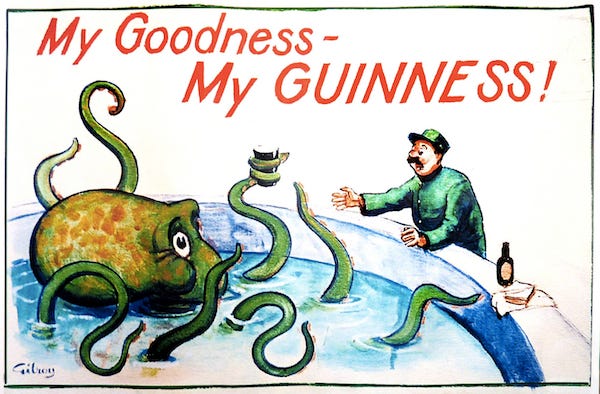
THE CRIME WRITER WHO (MAYBE) INVENTED THE TOUCAN.
The credit to the famous toucan goes to Dorothy L. Sayers. She earned a first-class degree in medieval French at Oxford in 1915 and had to wait until 1920, when she was among the first women Oxford let collect one.
And typical of university studies, she turned that degree into a junior copywriter job at Benson’s making £4 a week in 1922.
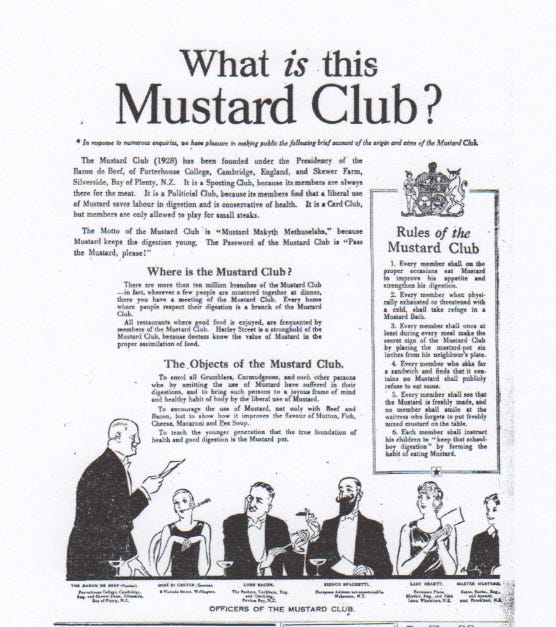
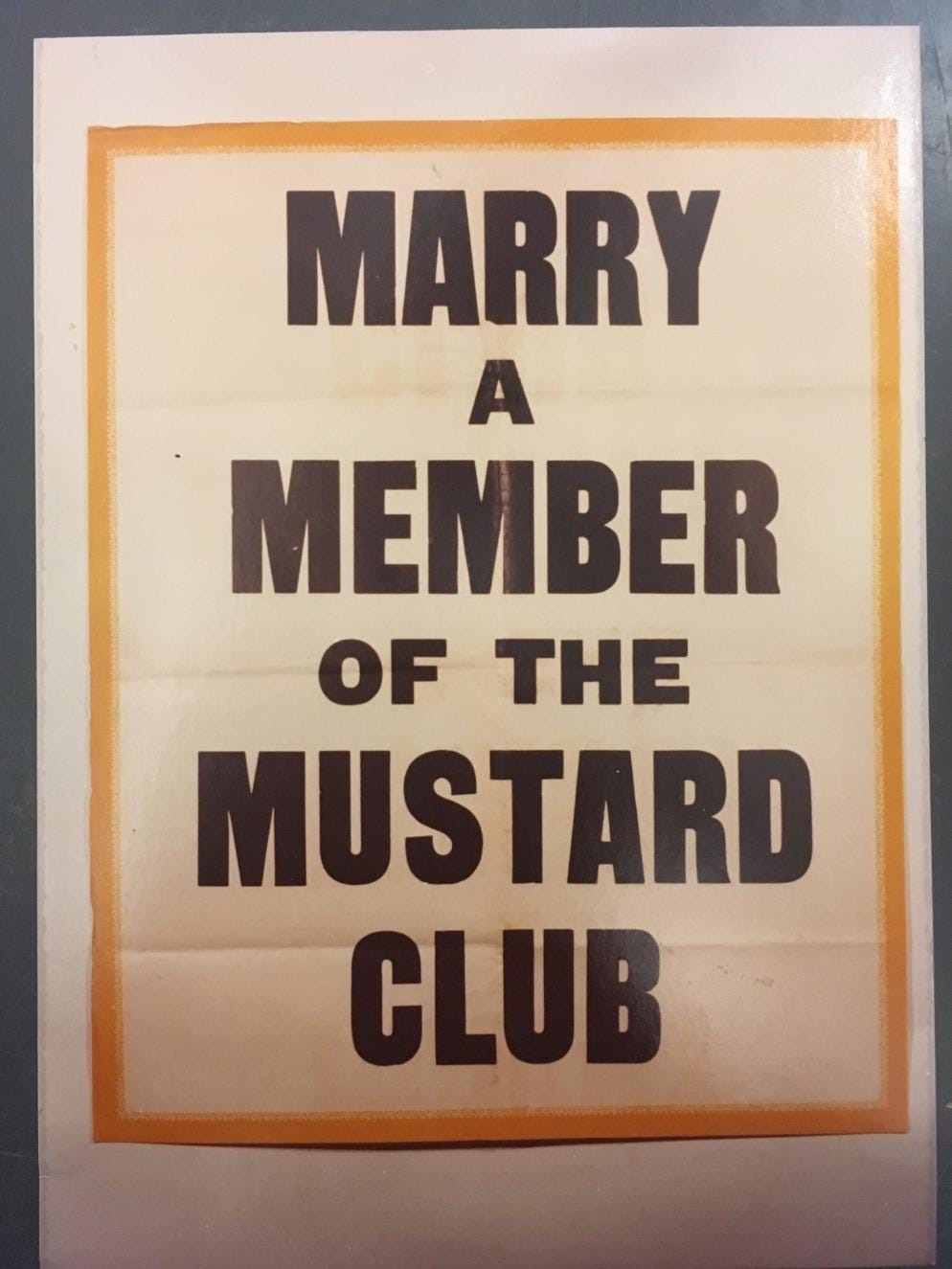
Despite the pay, she was very good at what she did. One of her early ad hits was inventing the Mustard Club for Colman’s mustard in 1926. A totally fake society with very clear rules, a newsletter, recipe books and a secret password: “Pass the mustard, please.” It was considered the agency’s biggest success up to that point. All by building a fandom for a condiment with no social media.
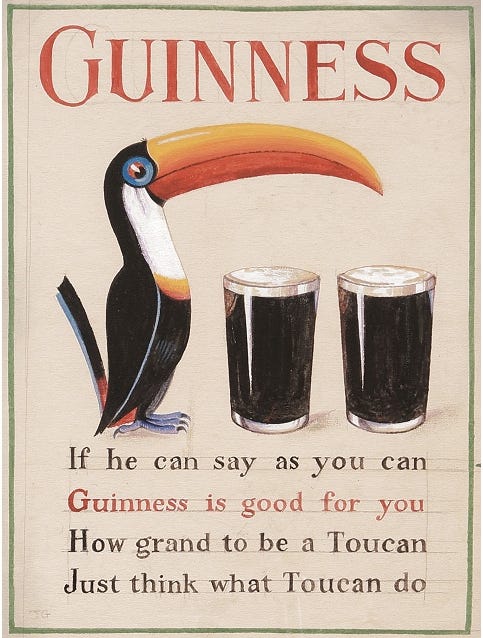
The legend has it that she took Gilroy’s pelican and swapped it for the toucan and then gave the bird two pints so it could deliver a more branded pun:
If he can say as you can
Guinness is good for you
How grand to be a Toucan
Just think what Toucan do
Guinness’s first draft ran with this rhyme:
A wonderful bird is the pelican
Its bill can hold more than its belly can
It can hold in its beak
Enough for a week
I simply don’t know how the hell he can
A riff on one of the most famous limericks in America. Funny story, even this limerick has a cocktail history of fake news. It’s usually credited to Dixon Lanier Merritt, a Nashville newspaperman who printed it in 1913 but said he didn’t write it. His exact words were “I never done it.” He figured it came from some unknown postcard poet.
The earliest known version ran in the Tampa Morning Tribune, credited to C. M. Marshton, a Chicago Record-Herald editor who wrote it on a postcard to his mother.
So the most famous mascot in Irish beer began as an English agency’s riff on a Chicago editor’s postcard, credited to a Tennessee newspaper guy and bird watcher who said he had nothing to do with it.
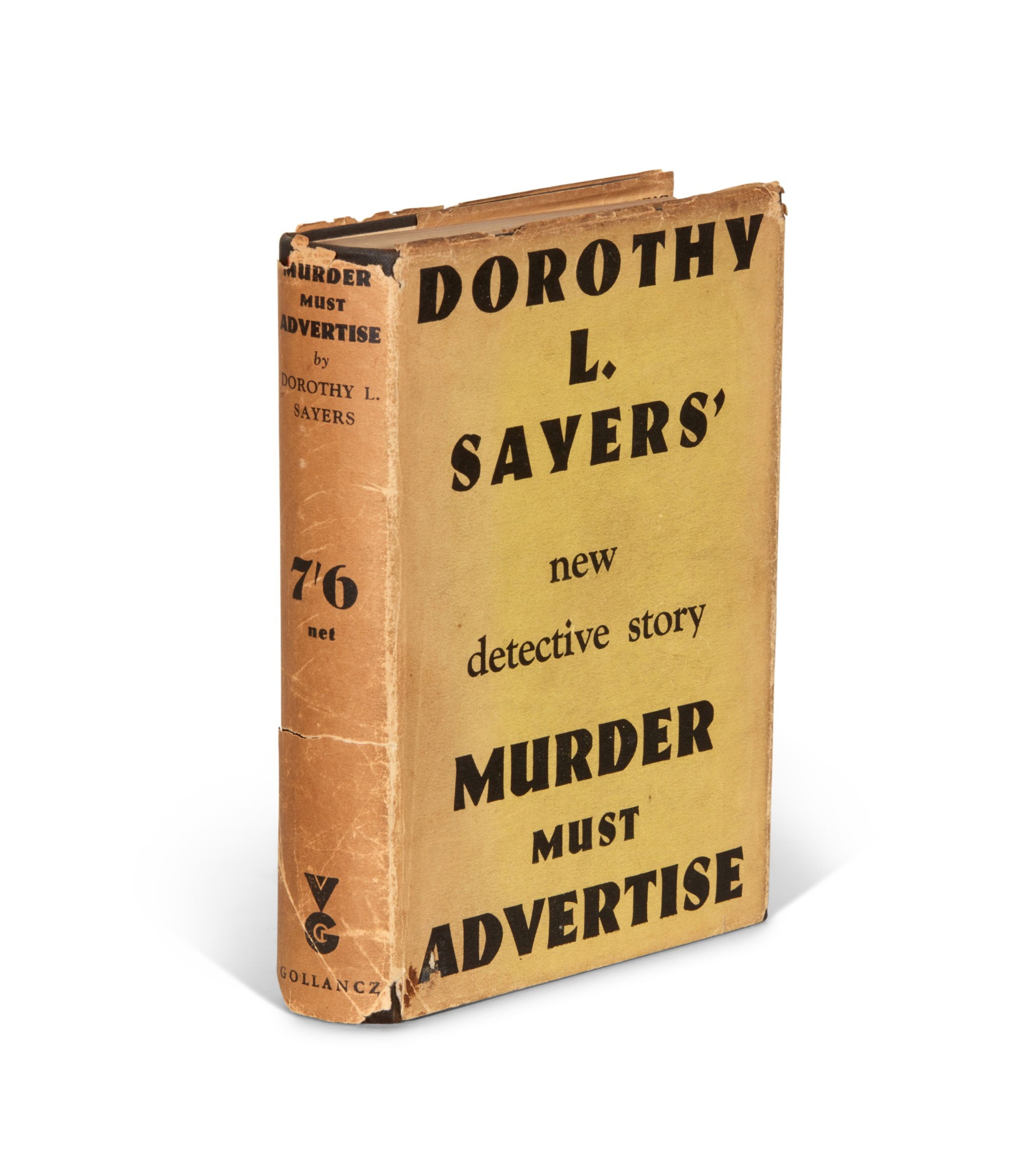
I say legend because Sayers left Benson’s in 1929 or 1931and the toucan didn’t appear until 1935, after she started making more money writing mystery novels. She wrote the agency into 1933’s Murder Must Advertise where Lord Peter Wimsey goes undercover as a junior copywriter at Pym’s Publicity, a very obvious take on Benson’s.
The novel’s story was about a copywriter who falls to his death down the agency’s iron spiral staircase. Benson’s had one just like it. The book quotes “Guinness is good for you,” and ends on the line “Advertise, or go under “
No one knows if she was still freelancing or she left an idea behind when she left. What we do know is that she wrote that we “have the kind of advertising we deserve”.
The toucans ended up going everywhere.
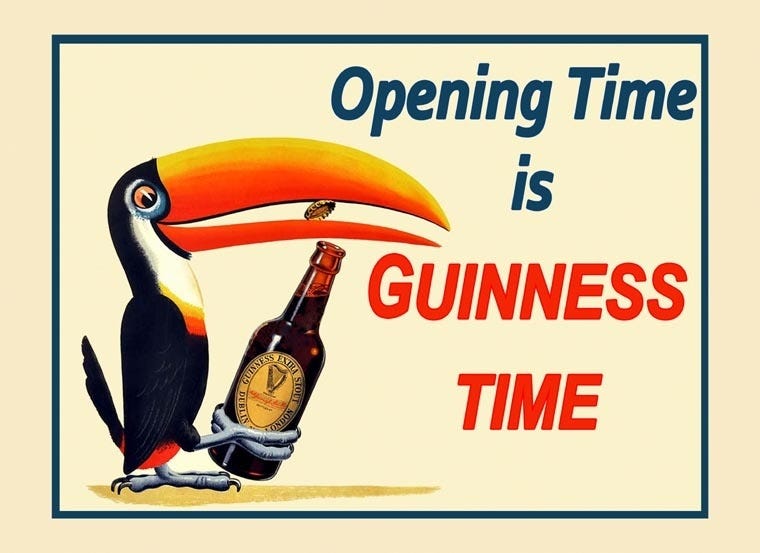
A pair of toucans sitting in a nest with two pints where the eggs should be. A toucan popping a bottle open with its beak under “Opening time is Guinness time.” A toucan on a weathervane above a town square.
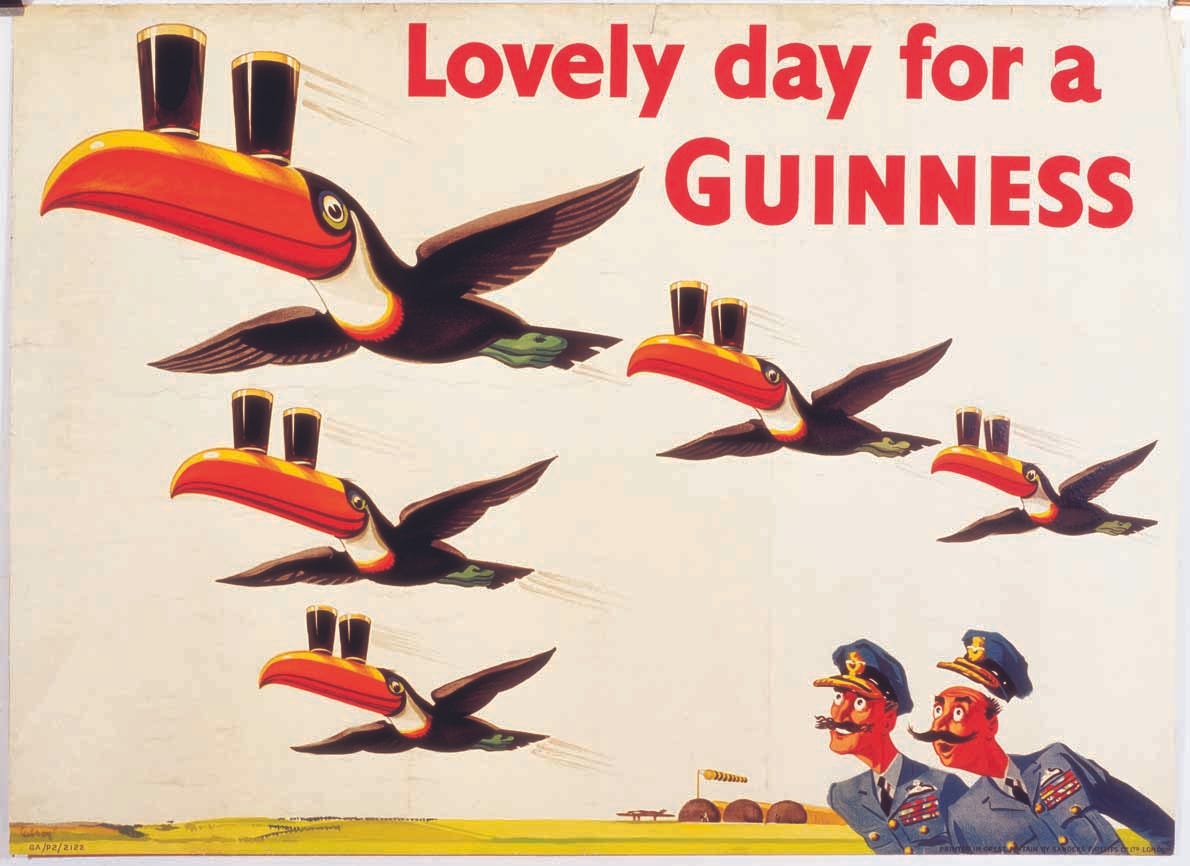
During the war, a squadron of toucans flying in formation over an RAF airfield, two pints apiece, while a pair of mustached officers stare at them in shock.
COCKTAIL OF THE WEEK: THE WILDE OSCAR
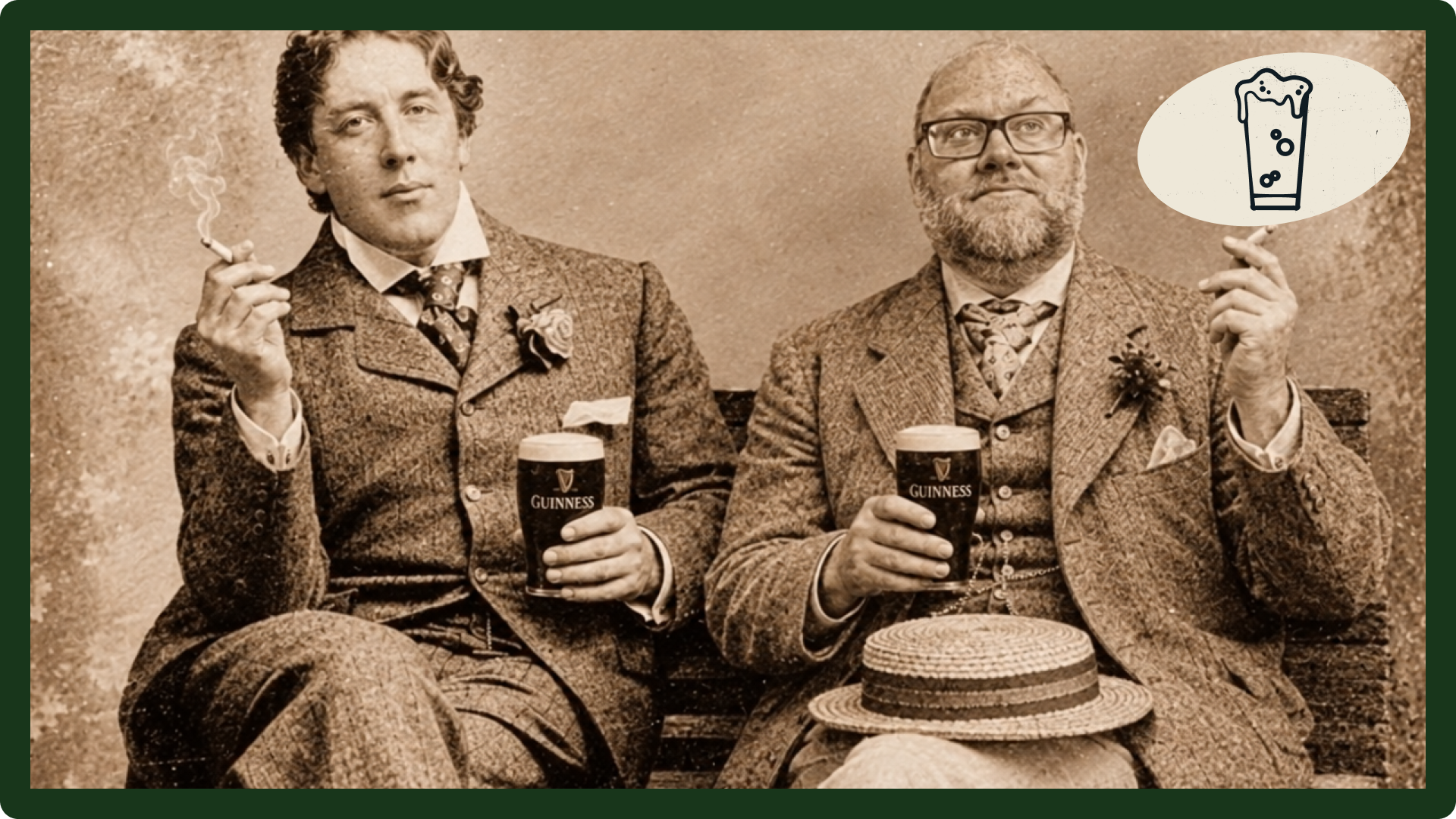
The Wilde Oscar is the brewery’s house Old Fashioned.
It was included in a set of 2015 St. Patrick’s Day cocktails that Guinness said were inspired by the stories and adventures of an Irish barman in New York named Anthony Malone.
It’s named after the incomparable Oscar Wilde.
This is also the tenth Old Fashioned variant this newsletter has included. Wilde said he could resist everything except temptation. Same.
The Guinness does more than you’d expect. One ounce of stout turns a bourbon Old Fashioned roasty and a little chocolatey, like somebody spilled an espresso in it and you decided not to say anything.
1 1/2 oz bourbon (or Irish whiskey if you want to get cute)
1 oz Guinness (Extra Stout or Draught)
1/2 oz rich simple syrup
1 dash bitters (Guinness says botanical, Angostura works)
Stir with ice in a mixing glass and strain over a big cube. Garnish with a large orange peel and a cherry.
And if you want something even stranger, Jamaica has been drinking something called Guinness Punch since the colonial era: Guinness, condensed milk, nutmeg and usually rum. I refused to make this.