

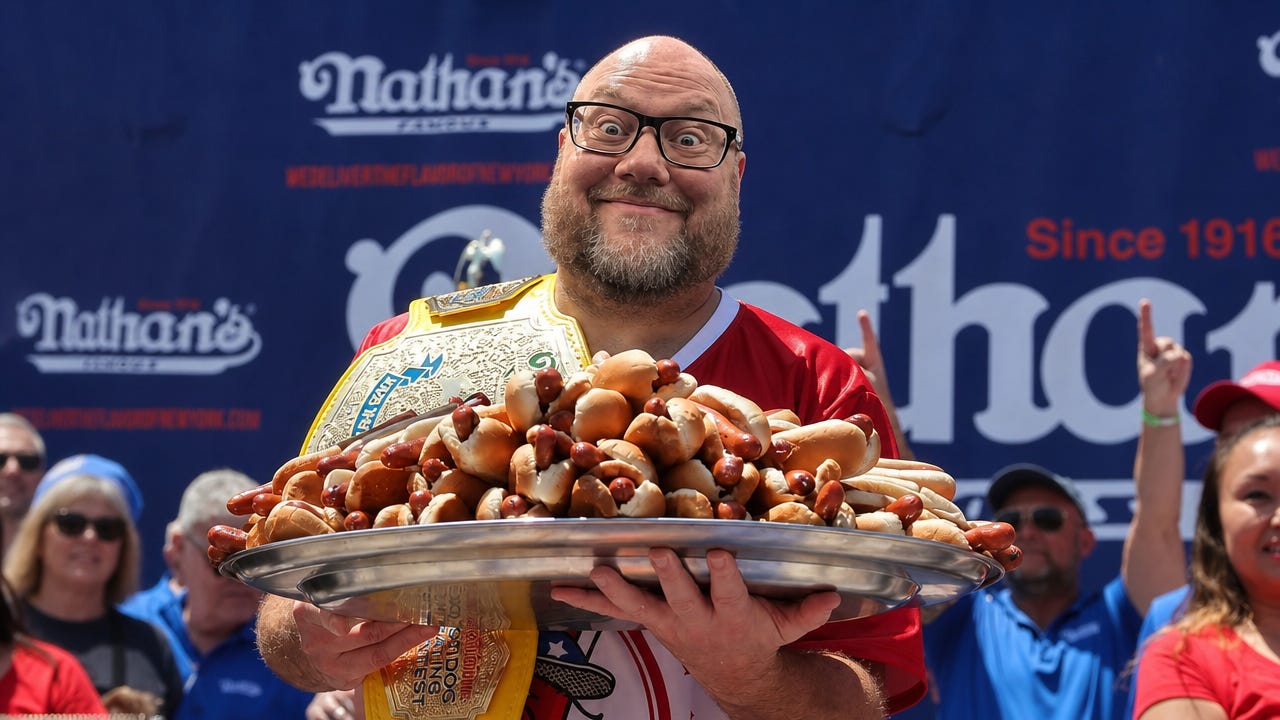
Every Fourth of July, somewhere around 150 million hot dogs get eaten across America. The dirty secret is that almost everything you believe about them is a lie an ad man told you.
The annual hot dog eating contest isn’t a century-old tradition. The jingles you’ll catch yourself humming over the grill were written by amateurs and marketing executives who’d have been thrilled to know we still can’t get them out of our heads.
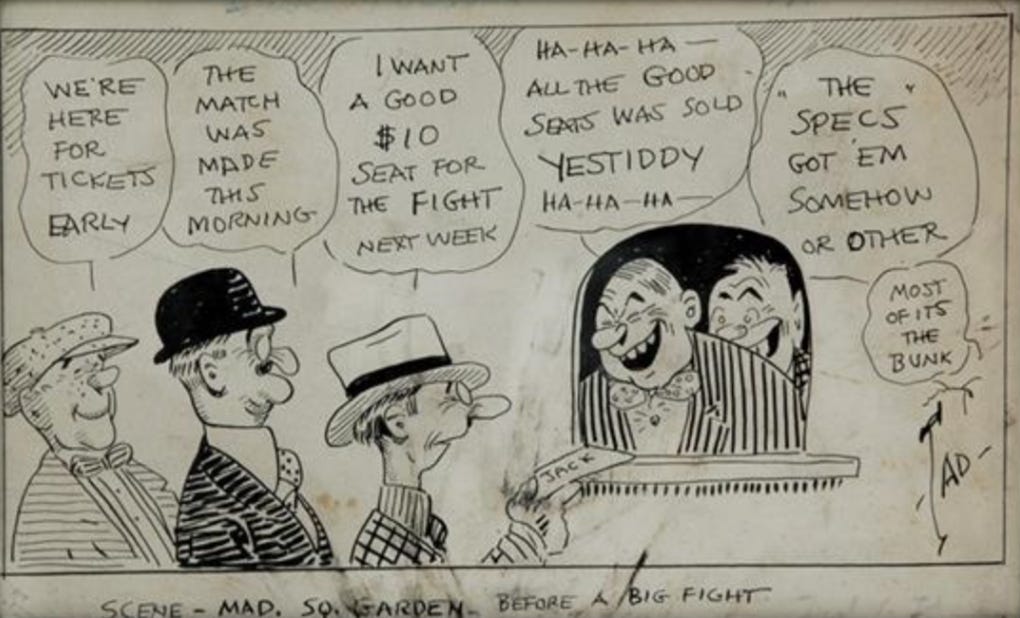
Even the name is a fib. The story that a sports cartoonist named Tad Dorgan (no one is named like this anymore) coined "hot dog" at a 1901 ballgame because he couldn't spell "dachshund" is completely bunk. The phrase was already kicking around college slang in the 1890s, and Dorgan didn't even start at the paper until 1903.
It’s time to fact-check the hot dog.
THE MOST PATRIOTIC TRADITION YOU KNOW WAS INVENTED BY TWO PR GUYS IN THE 1970s
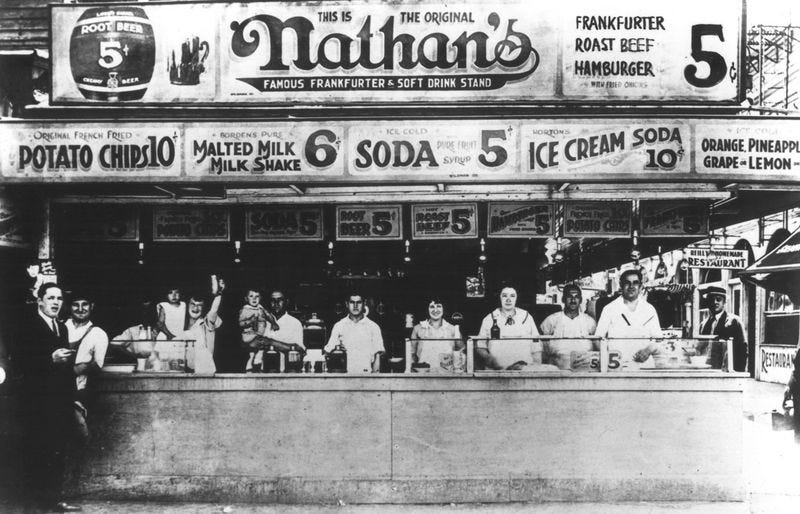
Here’s the Nathan’s Famous origin story you’ve heard. July 4, 1916. Four immigrants on the Coney Island boardwalk argue about who’s the most American.
They settle it the only sensible way, by eating hot dogs.
But it never happened. Not one bit of it.
The contest actually started in the early 1970s, and the whole 1916 backstory was fabricated by two press agents, Mortimer Matz and Max Rosey, who backdated it to make a brand-new stunt look like a sacred American institution. Matz later confessed in the most beautiful possible way: “In Coney Island pitchman style, we made it up.”
They invented the immigrants. They invented the patriotic argument. They even invented fake years the contest was supposedly canceled to make the fake history feel lived-in. Matz was a legendary New York flack who also dreamed up the idea of running the marathon through all five boroughs. Inventing traditions was the job.
The vivid detail everyone repeats — the four squabbling immigrants — wasn’t even in the original lie. That got added later by George and Richard Shea, the publicists who trained under Rosey and took the contest over in the ‘90s, building it into the ESPN spectacle it is now. A fake backstory, polished by a second generation of storytellers who knew a good fake backstory needs characters.
And it worked so completely that ESPN, the New York Times and the Washington Post all repeated 1916 as fact for decades. Nathan’s still runs the contest as a tradition “since 1916.” A lie told well enough became true through sheer repetition. Manufactured heritage is the oldest trick in advertising and it never stops working.
The founder was a hustler from the jump, too. When Nathan Handwerker opened in 1916 selling nickel dogs to undercut the fancier Feltman’s next door, customers worried cheap meat meant filthy meat.
So Handwerker hired college kids to dress as doctors and eat his hot dogs out front — figuring if physicians ate there on their lunch break, the dogs must be clean. Guerrilla marketing, 1916. The whole brand was built on a costume.
THE BEST JINGLE EVER WRITTEN CAME FROM A GUY WITH A BANJO-UKULELE AND ONE NIGHT TO DO IT
The Oscar Mayer Wiener song is the one everybody can sing, and it almost didn’t happen.
Richard Trentlage wasn’t some hobbyist. He was a working Chicago ad man who’d done time at McCann Erickson and spent his career writing jingles. But he heard about the Oscar Mayer contest the day before the deadline. He wrote the whole thing in about an hour at his typewriter.
He recorded the demo in his living room. His children sang it. His wife played the stand-up bass. He played a banjo-ukulele. Then he dropped the tape at the agency and didn’t hear anything for over a year.
Oscar G. Mayer himself had picked it and wanted those same kids on the real recording.
It ran for 47 years. Twenty-one countries. The company figures it sold enough hot dogs to get to the moon and back six times. Trentlage went on to write “Buckle up for safety,” V8’s “Wow, it sure doesn’t taste like tomato juice” and “McDonald’s is your kind of place.”
The man who dashed off the most durable jingle in American history was a craftsman who could do it again on command.
A FOUR-YEAR-OLD AND A MARKETING VP MADE SOMETHING THAT OUTLIVED EVERY SERIOUS AD OF ITS DECADE
“My bologna has a first name” wasn’t written by a songwriter either. It was written by Jerry Ringlien, Oscar Mayer’s own VP of marketing. A “meat executive” if you will. That would be a hell of a Linkedin profile. Ringlien would write one of the most permanent pieces of music in the country.
He fought for the iconic homemade kid-driven wiener demo tape with his fellow execs to test it instead of tossing it. Yep, the rare marketing guy with the ear to know when the homemade version was the magic.
Tthe version you know exists by accident. The commercial was supposed to feature a group of kids. With time left at the shoot, the director asked if any one of them could sing it solo, start to finish. A four-year-old named Andy Lambros stepped up, nailed it in one take holding a fishing rod and a sandwich, and that take became the ad.
There’s even a name for why it won’t leave your head. A marketing professor told NPR the bologna song sits in a register between speaking and singing, and its tiny musical wrongness is exactly what jams it into your memory. The imperfection is the hook. Oscar Mayer brought it back in 2024 and gave people free groceries for singing it.
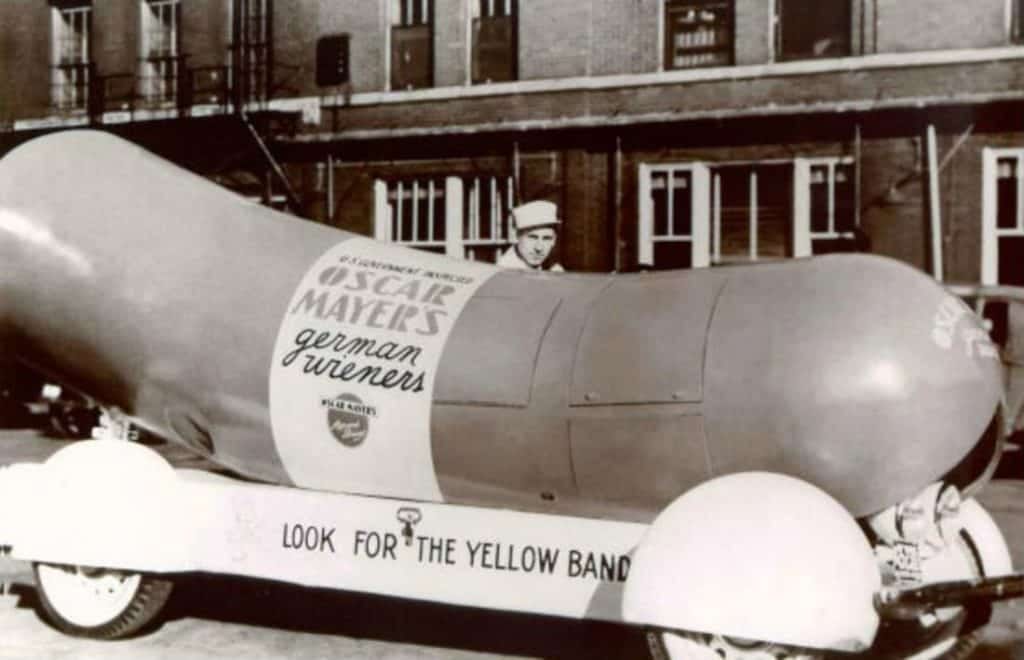
While we’re here, we should mention the Wienermobile. Oscar Mayer has had a 27-foot hot dog on wheels rolling around America since 1936, when Carl Mayer built the first one to haul a costumed “Little Oscar” between grocery stores.
It still tours today, driven by recent college grads with the official job title “Hotdoggers.” A company built a fleet of giant drivable sausages and made getting the keys a coveted entry-level gig. Total commitment to the dumbest possible vehicle, for almost ninety years.
BALL PARK BUILT AN ICON OUT OF THE WORST THING YOU CAN SAY ABOUT A HOT DOG
Here’s my favorite one. Ball Park’s “they plump when you cook ‘em” wasn’t strategy. It came out of a room.
An ad guy was grinding on the account, pushing Gus Hauff — the sausage maker who actually developed the franks — on what made them special, and Hauff just blurted out that they plump when you cook them.
The line everyone remembers wasn’t pitched in a deck. It got extracted from a frustrated maker who didn’t know he’d just written the campaign.
A hot dog that visibly swells in the heat. That’s water and filler expanding. It is, on paper, the least appetizing fact you could volunteer about a cheap wiener.
The agency put it to music, animated the dogs getting longer and higher and turned the single most unappetizing property of their product into one of the most beloved taglines in America.
Never forget to commit hard enough to the dumb thing and the dumb thing becomes the only asset that matters. (Dumb Ad Things should be a book)
THE PUREST IDEA IN THE HOT DOG STORY GOT A MAN ARRESTED
And then there are the Racing Sausages, where this whole theory stops being a metaphor and becomes a crime scene.
It started as a crude cartoon on the Milwaukee County Stadium scoreboard — a between-innings animation to sell concession-stand brats. Then a local designer named Michael Dillon built the costumes for real, put one on himself, and won the first live race in 1993 as the Bratwurst.
A scoreboard cartoon became five people in seven-foot foam meat suits sprinting across a Major League outfield. Fifteen other teams eventually copied it. They were trying to move brats.
Then July 9, 2003. Pirates first baseman Randall Simon leaned over the dugout rail and swung his bat at the Italian Sausage as she ran past. The costume — a 19-year-old named Mandy Block — went down, and took the Hot Dog down with her. Simon was handcuffed and hauled to the Milwaukee County Jail. He was fined $432 for disorderly conduct, fined another $2,000 by the league and suspended three games. He later mailed Block the bat, autographed.
A man was arrested for assaulting a sausage. There is a police report. The press called it Sausagegate. And the only person in the whole affair who kept her head was the woman who got clubbed in a meat costume — Block thought it was hilarious, said the whole thing was ridiculous, and walked away with scraped knees and a few marriage proposals in the mail.
Nobody set out to make any of it matter. It all does anyway.
AD LESSON
Sixty years of meat advertising all teach the same thing, and it’s the opposite of what wins awards.
Go look at the prestige work from any of these decades — the big swings, the ads the industry actually voted for.
Meanwhile a wiener song written in an hour, a bologna jingle by a marketing VP, a contest backdated by two pitchmen and a guy in a bratwurst suit are still in heavy rotation inside your skull. This was creative built by people who were close to the product, weren’t embarrassed by it and committed all the way to something small, specific and maybe a little bit dumb. Or in a few cases, completely made up.
Get specific and invent the legend and commit to it without blinking. They plump when you cook ‘em. Four immigrants in 1916 who never existed. This is what fuses to the culture and won’t scrape off.
If an idea feels a little too dumb, or a little too fake, to put in your case study, that’s usually the one that’ll outlive everything else you do. The embarrassment you feel is just taste trying to talk you out of the thing that works. Taste is overrated. Commitment isn’t.
So this Canada Day or Fourth of July, while you’re standing over the grill humming a fifty-year-old hot dog jingle you never agreed to learn, remember this. If it wasn’t dumb enough, you weren’t brave enough.
CANADA DAY COCKTAIL: THE 7 & 7, A DRINK THAT IS LITERALLY TWO BRAND NAMES STAPLED TOGETHER
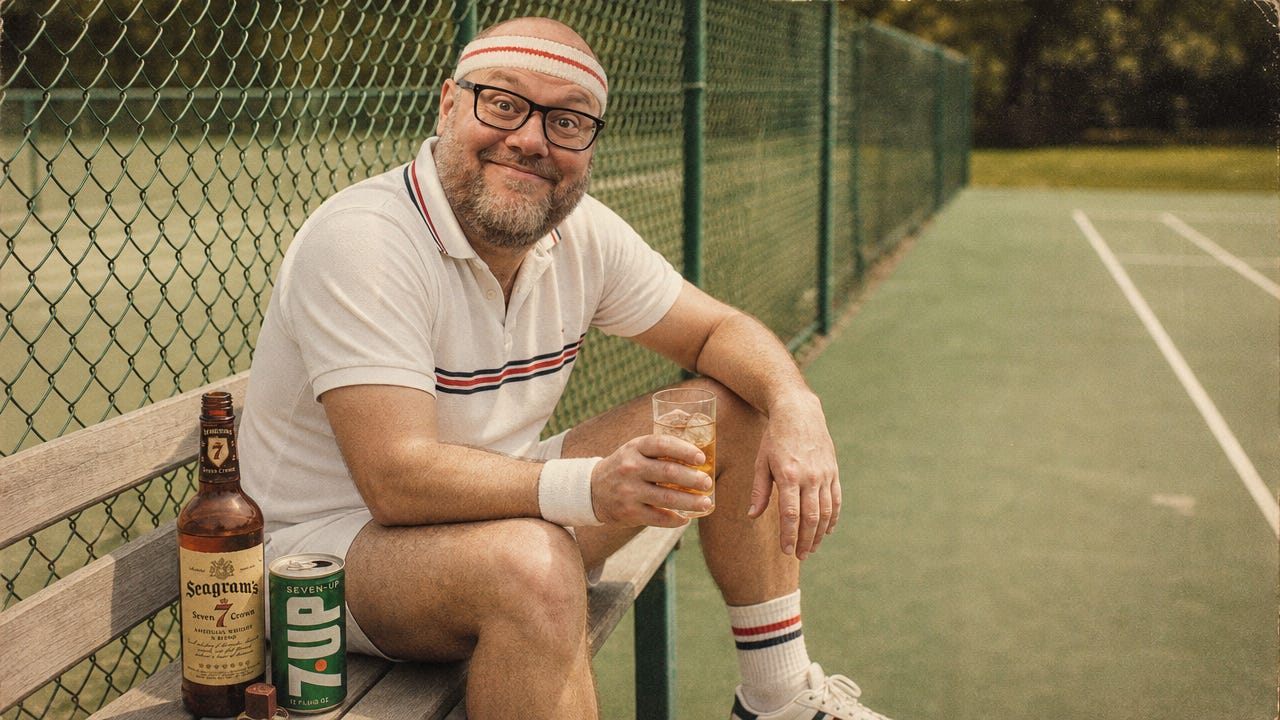
Happy Canada Day newsletter readers. Today we’re drinking a 7 & 7 — Seagram’s 7 and 7UP, tall over ice, lemon-lime fizz. About as summery and un-fussy as a glass gets.
Seagram’s distillery started in Waterloo, Ontario in 1857. Then a refugee’s son named Sam Bronfman bought it in 1928, stockpiled the largest private cache of aged whiskey in North America while waiting out Prohibition, and the day it ended built it into the biggest liquor company on earth out of Montreal. Seven Crown launched in 1934 and a massive marketing push made it one of the best-selling whiskeys in North America almost immediately.
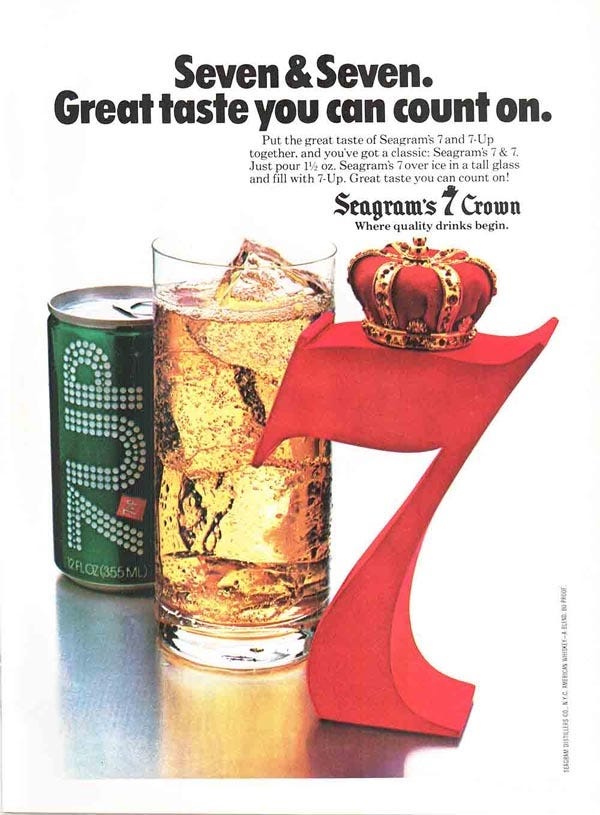
The drink itself is lore. The story goes that a distributor’s sales rep thought it’d be clever to link the 7 in 7UP with Seagram’s 7, and the 7 & 7 was born. A cocktail named after a pun between two products. It only exists because somebody in sales liked how the names lined up. A drink that’s pure marketing, with no craft underneath, that outlived basically every “serious” cocktail of its era and got an entire generation to order by brand name without thinking.
7 & 7
2 oz Seagram’s 7 (any blended whiskey works)
4–5 oz 7UP or Sprite
Build over ice in a highball. Lemon wedge. That’s it. That’s all you need to do.
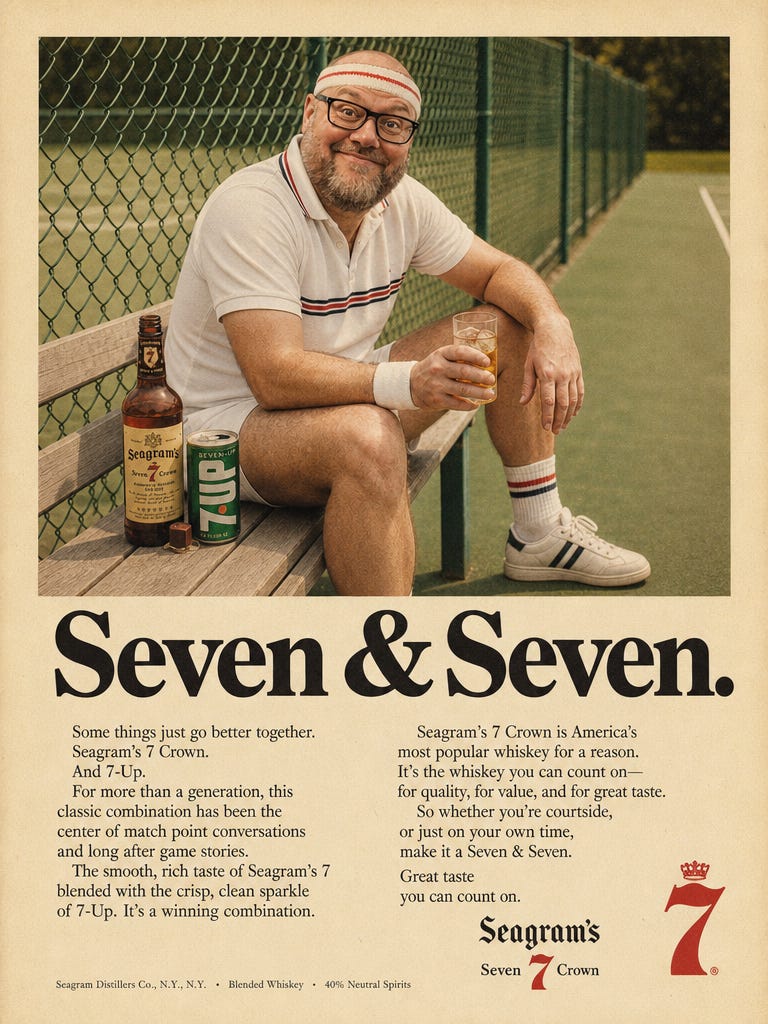
The Drink Cart is the newsletter version of sitting at a really good bar with someone who thinks too much about advertising and won’t shut up about it. Subscribe to get it on Wednesdays and Fridays.
Love the hot dog and lunch meat lore.