

Let’s start by digging through the ruins of civilization over on eBay.
It’s 2026, someone has the temerity to sell 100 sealed Max Headroom paper masks. Sure they’re official New Coke promo items from our high watermark of civilization. But $399.95 is absolutely bonkers.
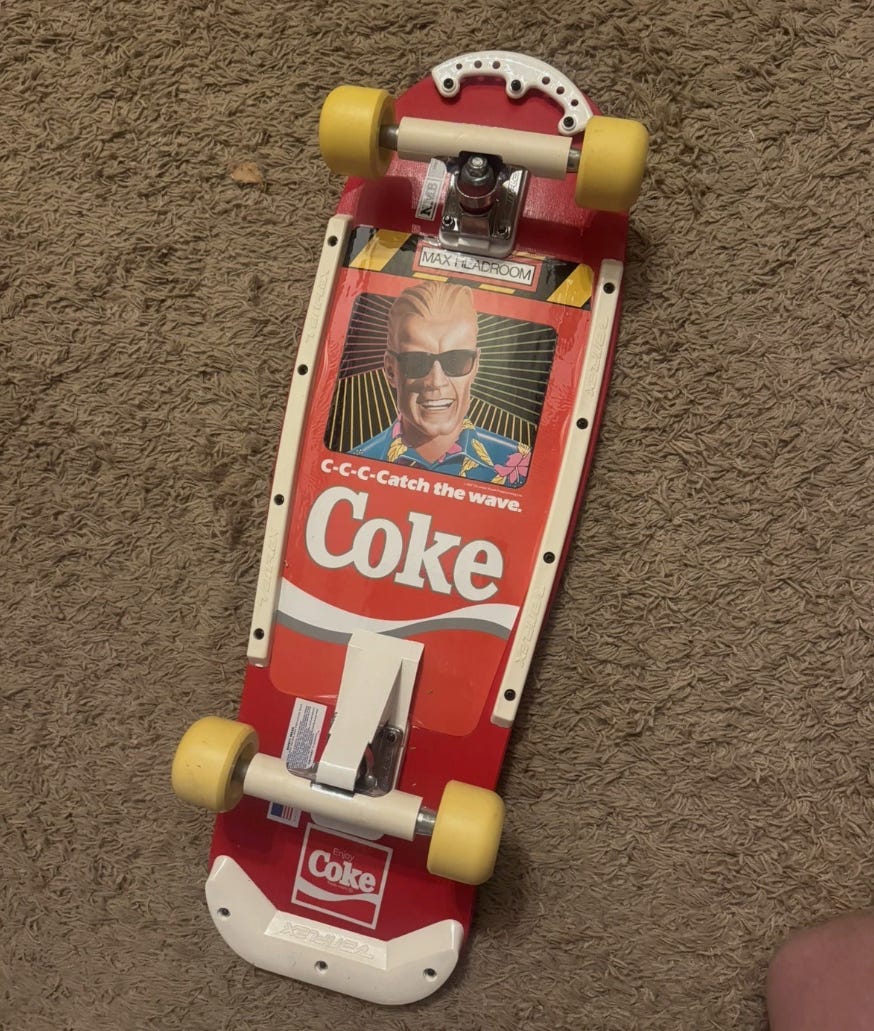
But a few more scrolls and you fall off your chair. There it is. A genuine 1987 “C-C-C-Catch The Wave” official Max Headroom Coke skateboard. Is it eleven hundred in Canadians dollars? Yes, yes it is.
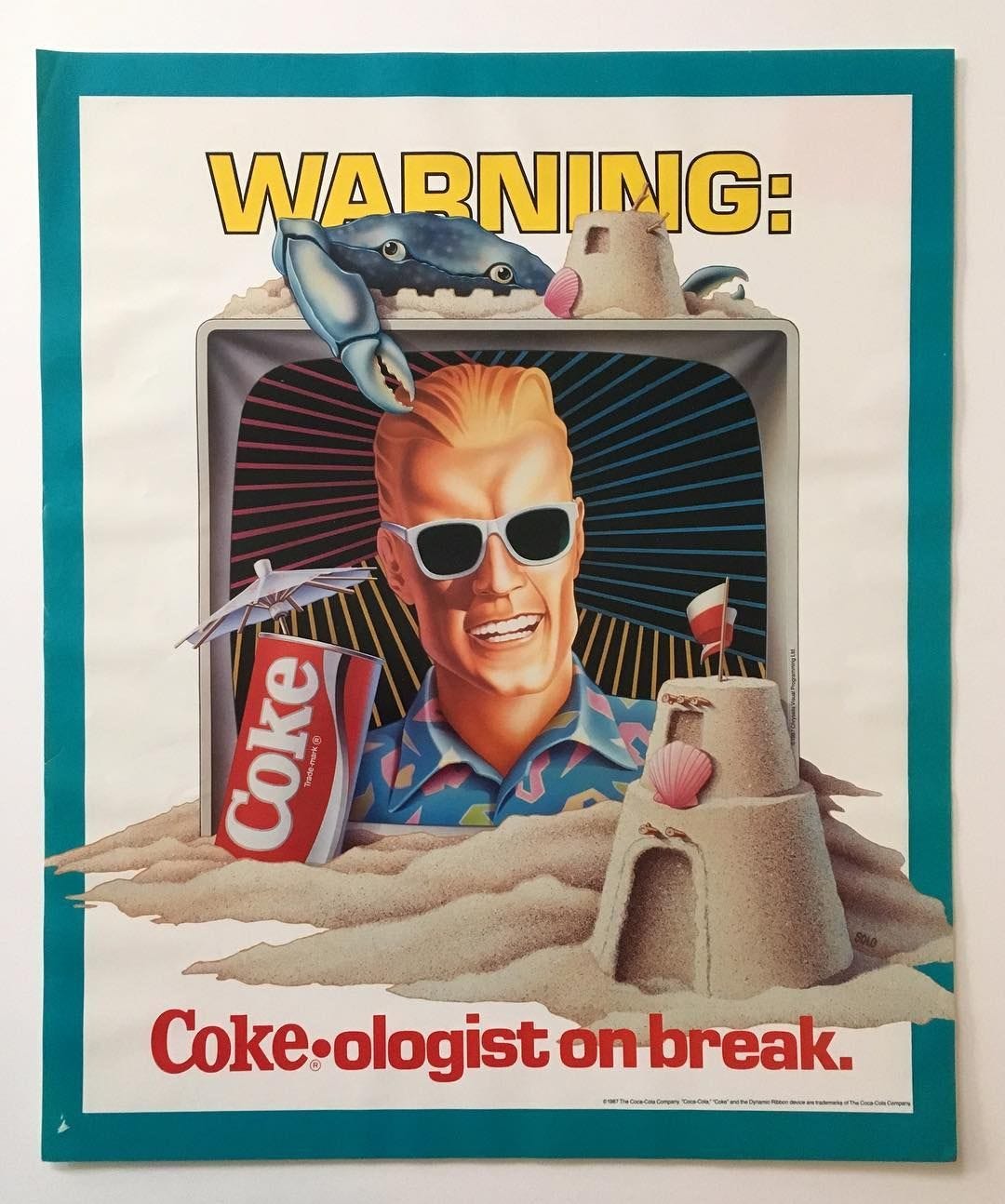
Keep scrolling. More my speed and budget is the poster of Max Headroom on a beach with the headline: WARNING: Coke-ologist on break.
The 80s were absolutely insane. And within this culture wreckage is the strangest chapter in Coca-Cola history when the brand tried for two years to out youth Pepsi with a fake computer character.
You’re probably wondering who Max Headroom is and what I’m talking about. But let me just say that by July 4th 1985, barely two months after launch, people were starting to hoard cans of the original Coke.
I remember that specifically while at Roche Harbor that summer. If you had a can of the original stuff, you were a demi-god.
Shortly after that, Coke caved and announced that Coca-Cola Classic was returning. The only problem? What do you do with all that new stuff?
C-C-C-CATCH THE WAVE
By 1986, New Coke was dying. Pepsi had strategically deployed Michael Jackson and Michael J. Fox. And if you can imagine, the new formula of Coke even makes future toxic star Bill Cosby walk from the Coke account.
Over at McCann, Arnie Blum goes for the “youts”. His take was that if the old formula was classic, the new formula was modern, hip and something your parents didn’t understand. And he needed a pitchman to beat MJ.
After seeing a tape of a British-made glitching, supposedly computer-generated talk show host, shared from rival agency BBDO, he’d found his man.
So then we see Max Headroom interviewing a Pepsi can about how it feels that more drinkers prefer Coke.
Within 30 days 76% of American teenagers can name him. The company’s hotline (imagine still having such a thing) takes more calls about Max than any other spokesperson in history.
There were questions, marriage inquiries and a line of merch that is still clogging up the pages of eBay 40 years later. Shirts, skateboards, posters, cups, watches.
The brand started calling fans Coke-ologists.
THE BIG LIE
But Max wasn’t computer-generated at all. There was no computer. Computers couldn’t even render a face in 1985.
Instead it was Canadian actor Matt Frewer in latex prosthetics, contact lenses and a full on fiberglass suit that all took nearly five hours to get right.
Even the glitches and stutters were actually just editing. Frewer for his part was sworn to secrecy, “That’s me, that’s me, it’s not a computer-generated man.”
The wildest part is that even people at actual computer graphics companies believed it was real.
There was an origin story movie that aired in England in April 1985. It told the story of a journalist fleeing corporate goons. He knocks himself out with a parking clearance sign that reads: MAX. HEADROOM: 2.3M.
Somehow his memories get downloaded into an AI that names him after the very last thing he saw. The creators also built him on the worst of American TV hosts desperate to seem young.
Young enough to land a Coke deal within a year.
MAXIMUM EXPOSURE
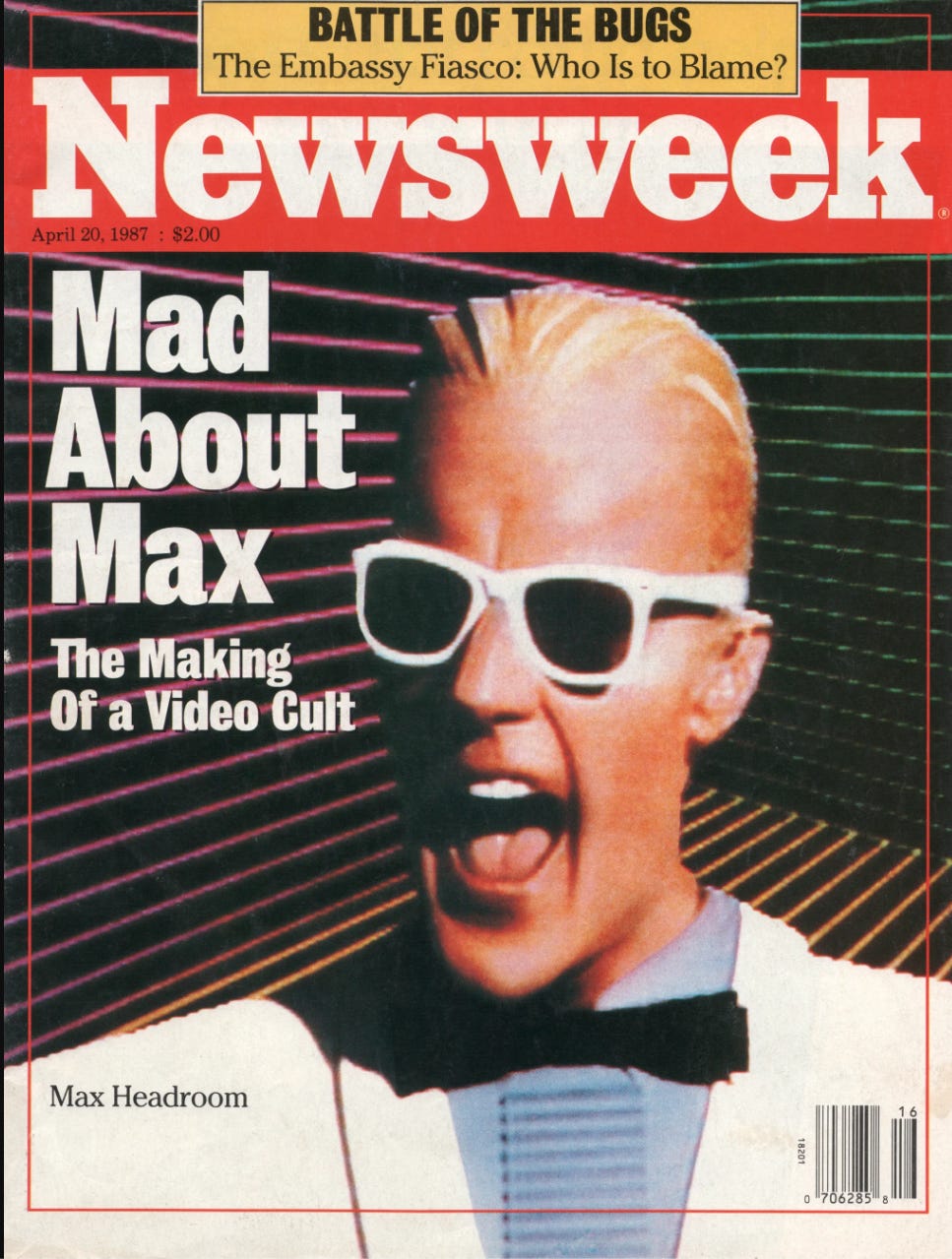
Then Max Headroom was everywhere.
The music video show. A hit single. Magazine covers. Interviewing Sting. Letterman.
Even a prime-time drama about evil TV networks who, and this is the best part, used compressed ads (literally called “Blipverts” that killed viewers.
The irony of a show paid for by advertisers about advertisers murdering people, starring a guy selling Coke in the ad breaks.
That is about as 80s as it gets. The show lasts two seasons.
The ads limped on into 1987 and then stopped. New Coke was dying.
THE HIJACKING
In Chicago on November 22, 1987 at 9:14 pm the WGN sports segment cut to black.
A man in a rubber Max Headroom mask appears, jerking around in front of a sheet of corrugated metal tilted to mimic Max’s background. No audio, just buzz. Engineers kill it in 30 seconds.
Then at 11:15 pm he’s back. This time on WTTW interrupting Doctor Who, and now the audio works outlining a distorted rambling about the Coke deal, and somehow finishes up with a fly swatter.
Both the FCC and FBI investigated but have never caught anyone capable of the expertise to hack a microwave transmitter with line of sight to the broadcast towers in Chicago.
So the fake AI was deepfaked live on air by a still at large anonymous imposter mocking his real sponsor before we ever knew what deep fakes even were.
It’s still the most famous unsolved broadcast intrusion in American television. I guess maybe those paper masks on eBay are underpriced.
PENCILS DOWN
In 1986 we had an AI spokesperson that was a human pretending to be a computer. And Coke made ads that required hours in make up and human creativity.
In 2026 the roles are reversed. Now our computers and AI are doing the work, and humans are pretending to do work. And Coke is using AI to generate holiday ads that seem decidedly slop-laden.
We’ve gone from science fiction to meat proxies in forty years.
People don’t really hate AI or AI in ads. They just hate being lied to about it. In 1986 we figured this out with latex and a few hours in the make up chair.
COCKTAIL OF THE WEEK: THE FUZZY NAVEL
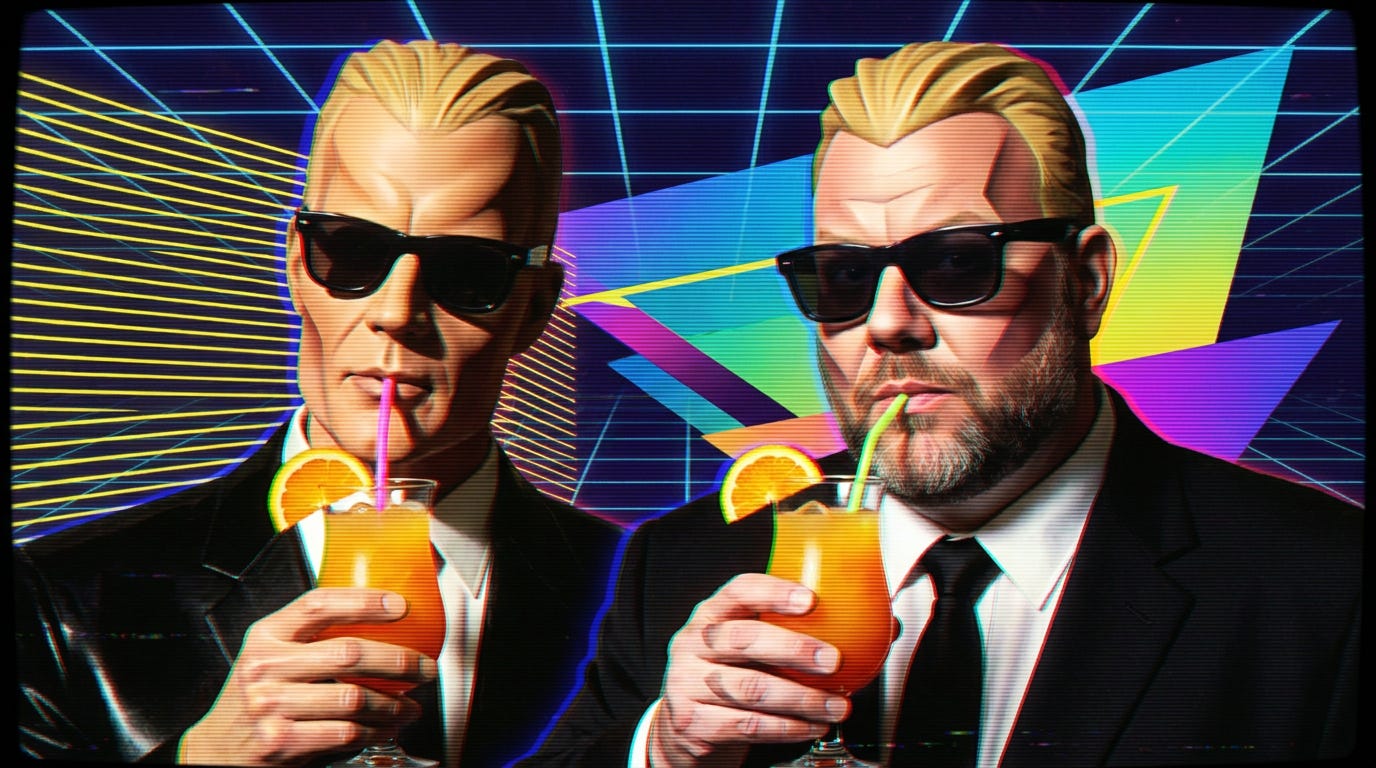
Here’s a perfectly 1980s cocktail. One with no real history, just marketing. Which makes it the perfect choice to drink this week.
In the fall of 1984, National Distillers launched DeKuyper Peachtree Schnapps. Yep, the first peach schnapps in America. Now they just needed a reason for anyone to drink it.
Depending on who you believe the drink was either named by Ray Foley, a New Jersey bartender and former joke writer for Johnny Carson working with an ad agency. Or it was born in a Madison Avenue boardroom not at a bar. And it was named fuzzy for the peach and navel for the orange. It thankfully had nothing to do with your bellybutton.
Like Max, this liquor absolutely dropped like a nuclear bomb on culture. It was the fastest-selling new alcohol since prohibition, dropping a million cases within that first year.
William S. Burroughs called it “the liquor industry’s equivalent of Michael Jackson’s Thriller.” He was not being kind.
So Coke was making fake AI computers to sell New Coke, the booze business was inventing and marketing them as fake classics. What was so remarkable about the neon-dripped 80s is that things burned so brightly they were gone by the end of the decade.
Sure, maybe people are out there ironically having a guilty pleasure Fuzzy Navel, but it’s surely more nostalgia-maxing than any real desire.
The Fuzzy Navel
3 oz peach schnapps
3 oz orange juice
Build over ice in a highball glass, stir, orange slice if you’re feeling bougie. Fun fact if you add an ounce of vodka this 80s abomination becomes a “Hairy Navel” and tastes like the 1986 Ryan Reynolds is currently traumatized about.
The Drink Cart is the newsletter version of sitting at a really good bar with someone who thinks too much about advertising and won’t shut up about it. Subscribe to get it on Wednesdays and Fridays.