

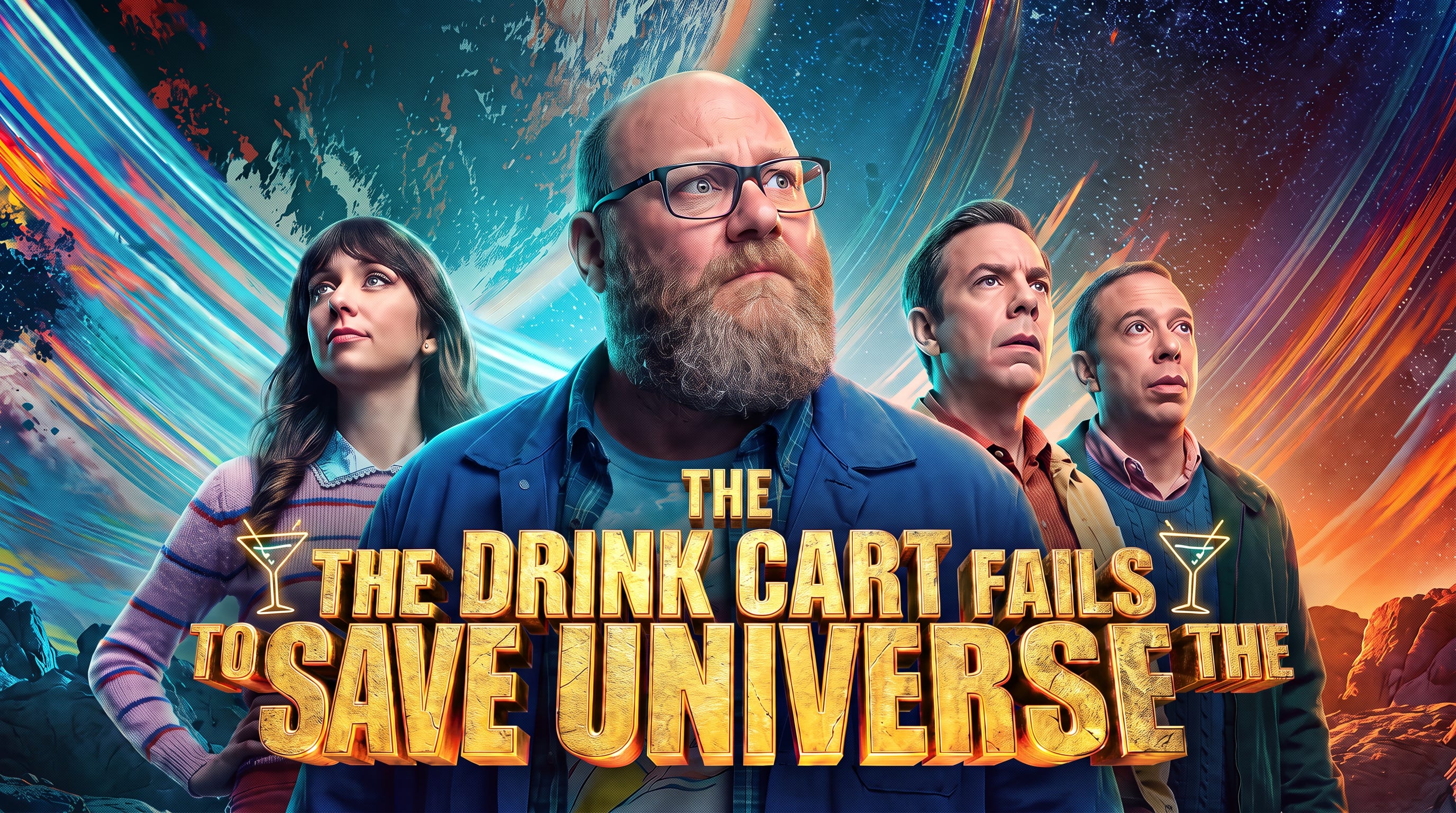
The internet found a new villain. It’s a title sequence.
Stuart Fails to Save the Universe premiered on HBO Max July 23. The biggest reaction isn’t about the show. It’s about the credits.
Viewers are screenshotting frames like the Zapruder film. Melty visuals. Signage that reads “befttjl.” One frame just says Barry Dies.
The part I can’t stop thinking about: Chuck Lorre built this because he hates the Skip Intro button. So the solution is a new sequence every episode. Danny Elfman on music. A clear note in credits telling you not to skip. A protest against disposable content that looks exactly like the most disposable content on earth.
Isn’t that what we want?
HBO hasn’t confirmed AI was involved. Humans can make things look like slop.
The garbled text confirmed it for everyone regardless of if it was AI or not.
Audiences can smell the machine now. They can smell the AI even if it's not AI. It’s not just the stupid em dash anymore.
So this week is all about living in the world of AI 24/7. And not being able to save it or ourselves.
WHAT IF TEXAS WAS UPSIDE-DOWN
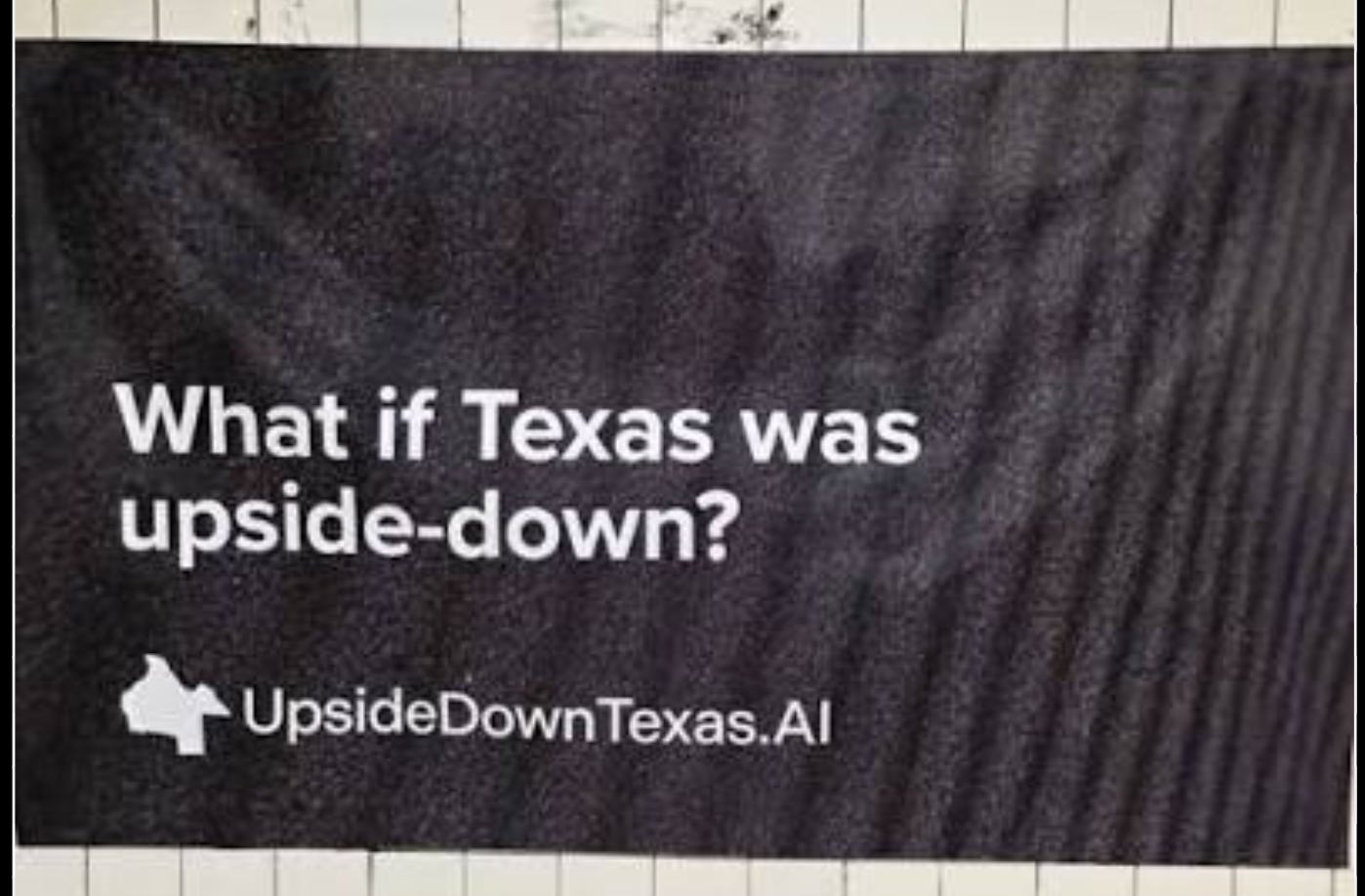
In June, comedians Harris Alterman and Dave Ross hung roughly ten posters for fake tech companies in the NYC subway.
“What if forks were spoons?”
“What if the Rizzler was purple?”
A company called Dennis.
My favourite: A rebrand delivered with full corporate solemnity: Ziplink is now Froggle.
Over 3 million views. Commuters recognized the ads instantly — not as parody, as the AI genre being stuffed down every nook and cranny of business and life.
Here’s what should terrify every agency in North America. The parody required no exaggeration at all.
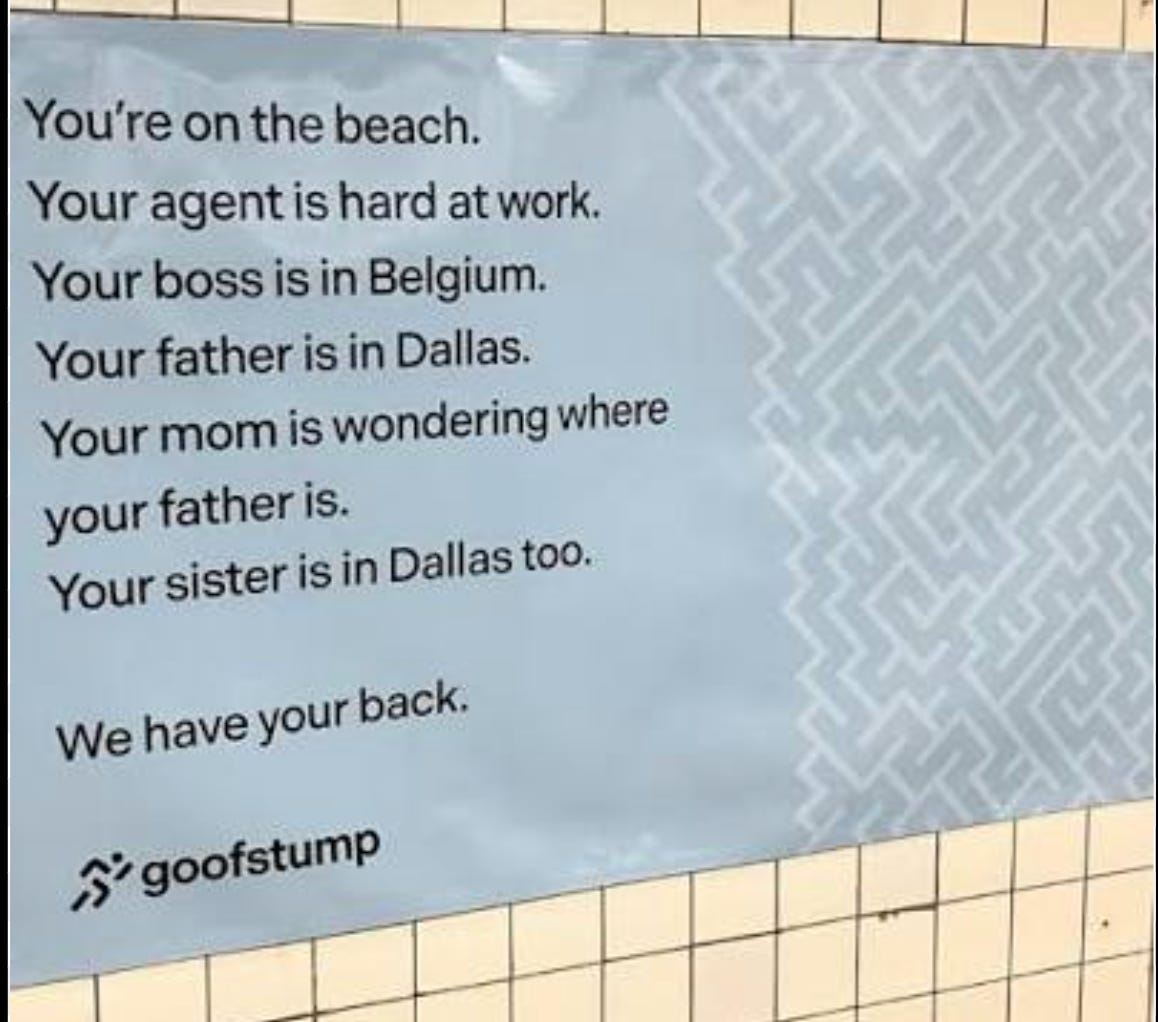
The tagline for Goofstump: “Democratized AI versatility for the human generation.” That clearly could sit in a real Series B deck tomorrow.
The best part is that one of their invented startups, Wireflow, turned out to be a real AI company.
An actual founder emailed reporters. They made up meaningless companies as a joke and accidentally hit a real one. You can’t make this up.
THE NEW AI CHAT IS POWERED BY AN AVERAGE GUY
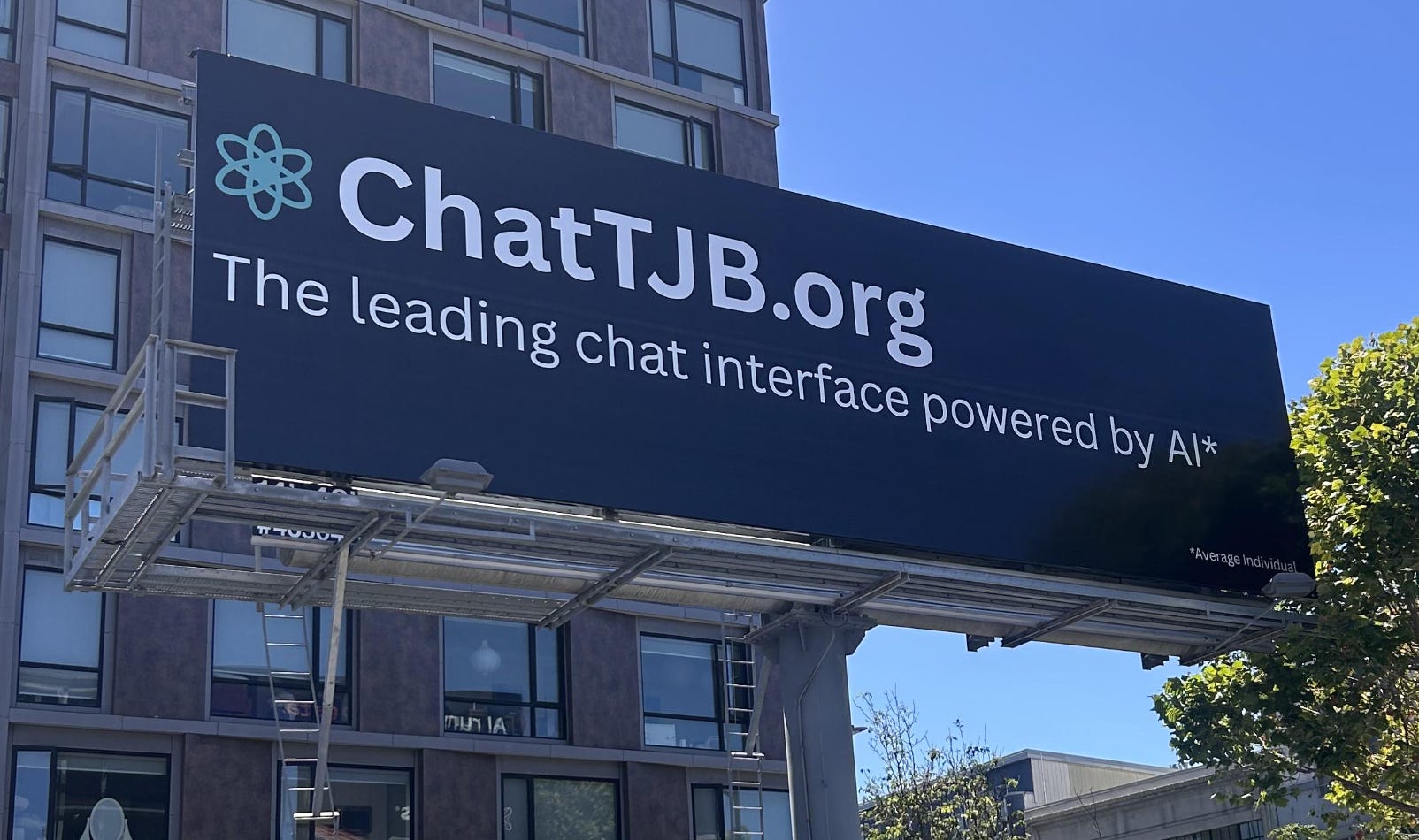
It gets better. Last week a billboard went up in San Francisco for ChatTJB — “the leading chat interface powered by AI.” The fine print, half hidden behind a tree: AI stands for “average individual.”
There’s no model. There’s a man. Tucker Bryant, ex-Google, personally answering every message. Completely overwhelmed.
Over a thousand a day. Image generation requests get hand-drawn pictures. Someone asked a tax question and got a haiku about crows. Demand got so massive he has paused new signups.
Turns out the AI product people are lining up for is just a guy who is slow to respond.
THE ADS ARE MAKING THEMSELVES NOW AND THEY’RE DOING IT BADLY
Meanwhile, the industry is handing the machines the wheel.
Ad Age ran a piece last week that reads like the script for Gremlins with AI and a media budget. The rules were simple: don’t let them get wet and no letting Meta add music after midnight.
Agencies aren’t making ads anymore. Our job is catching what the AI does to our ads before they go live. Or after.
Agency Broadhead found AI-generated music on a client’s video ad. Nobody chose it. Meta just decided music grabs attention and added some. In your face, approvals and QA.
REI got auto-enrolled in a Meta feature that produced an ad showing a bike with two handlebars.
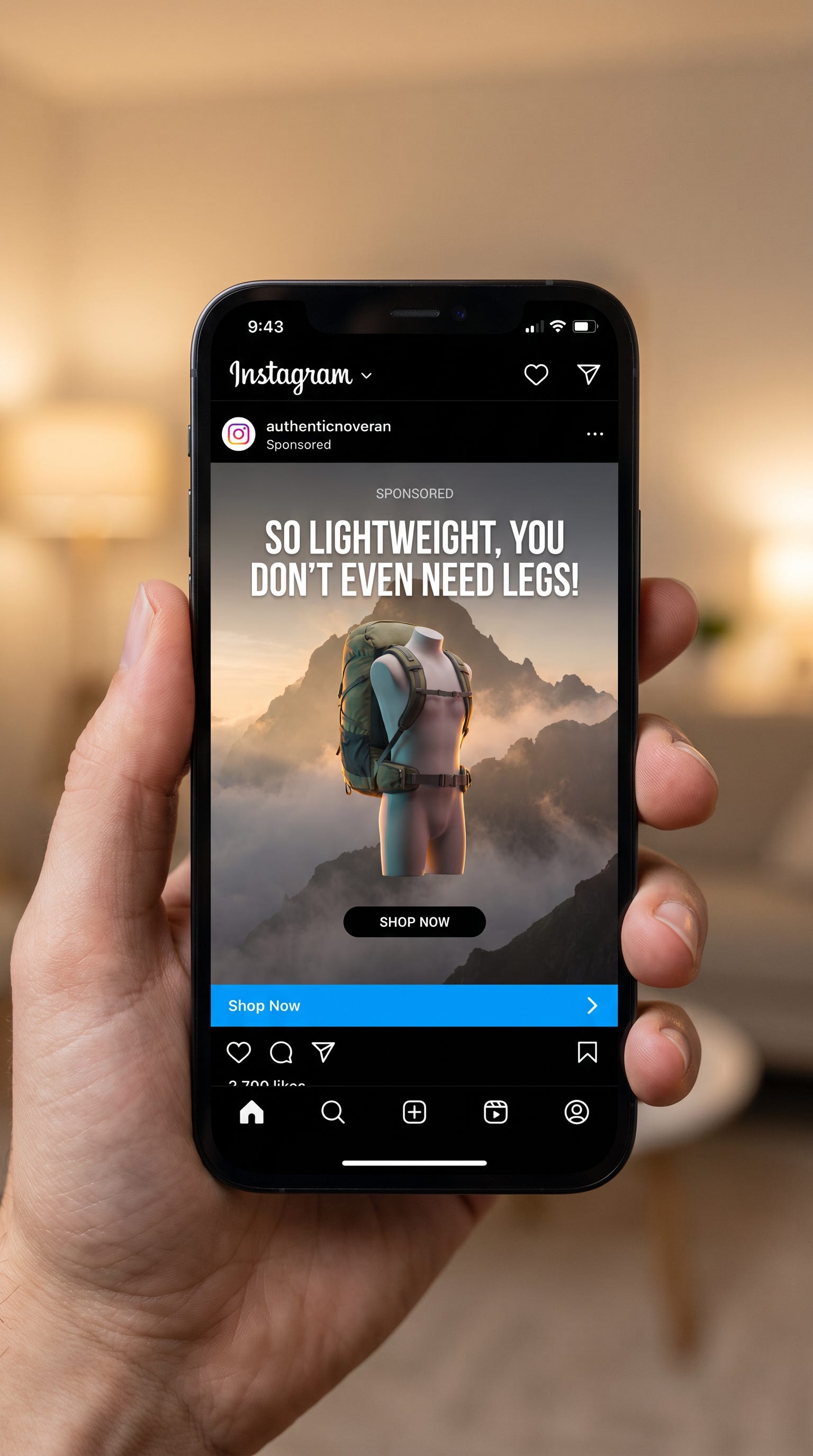
Another agency caught a backpack ad with a model who had no legs. Brave.
Google linked cattle vaccines to puppy pages. And the toggles controlling all this sometimes flip positions on their own.
Agencies now have to audit their own campaigns weekly to check whether the machine turned itself back on.
Meta’s endgame, per Zuckerberg: hand over a URL and a budget and walk away. The plot of every movie where the scientist swears the system is safe.
THE METER IS RUNNING
All this machine creativity gets charged by the token, and agencies are discovering the meter like we discovered roaming charges back in 2008.
Brainlabs projects $3 million in token spend for 2026 — up from low six figures last year. In a McKinsey survey, 93% of enterprise leaders say they’ve blown past their AI budgets.
Tokenmaxxing is now the word for employees who burn AI usage to look productive. Brainlabs tracks token spend per employee and hides the dashboard from staff, because if people saw the leaderboard they’d compete on it. A productivity metric so dangerous it has to be classified.
WPP’s chief AI officer describes the other trap: the AI gets you 90% there, and you burn a fortune chasing a last 10% it will never reach. Trust me, I tried to get that opening graphic just right and gave up after 10 versions and 20 minutes. I should have been making a Manhattan.
The industry’s fix is a pencils-down policy. A formal rule telling grown creatives when to stop asking the machine to try again. Which got me to wonder what Don Draper would make of all of this.
INT. AGENCY BOARDROOM — 2026
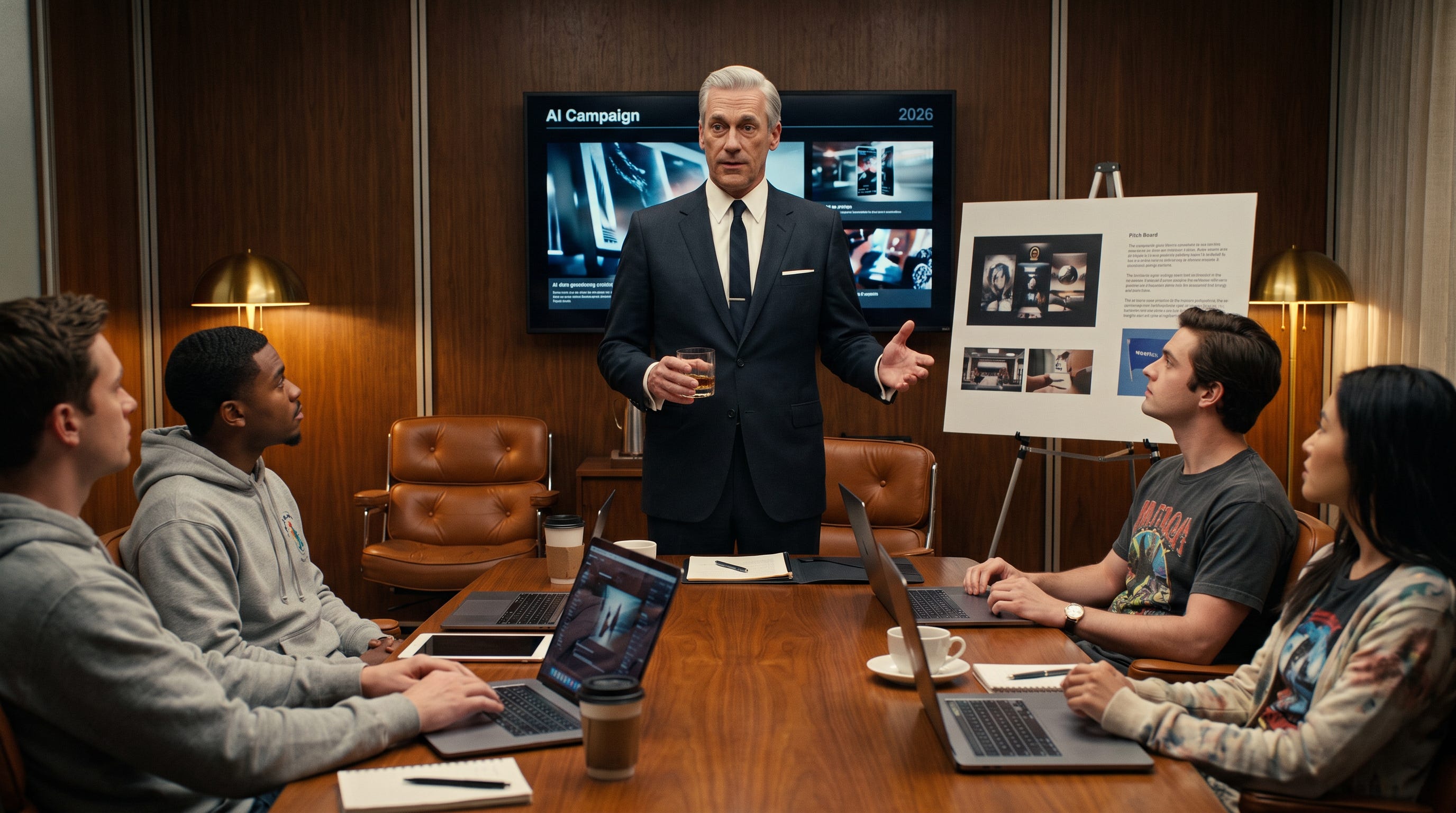
Don Draper, having had to get back into advertising after his 7th marriage fell apart and Gene Draper lost his fortune on Trump Meme Coins, and despite being 100 years old, stands at the head of the table. Lights low. He’s about to do his thing. The room leans in.
DON: This device isn’t a spaceship. It’s a time machine. It takes us to a place where we ache to go again—
A soft chime. Everyone’s laptop at once.
JUNIOR STRATEGIST: Sorry. Sorry, Don. You’ve hit your token allocation for the quarter.
DON: My what.
JUNIOR STRATEGIST: The nostalgia module is expensive. Long emotional arcs burn a lot of tokens. Finance flagged it. There’s a meeting.
DON: I’m not using the machine. I’m talking.
JUNIOR STRATEGIST: Right, but the transcription agent is summarizing you in real time, the brand-safety agent is scanning the summary and the creative agent already generated six variants of your pitch with stock music. One of them has a giraffe in it. We don’t really know why.
DON: TURN IT OFF.
JUNIOR STRATEGIST: We did. It turned itself back on overnight. We don’t know why either.
Don pours a drink. And sighs deeply.
PENCILS DOWN
Agencies should be terrified. Not of being replaced. Of being blamed.
Every rogue legless model ships under a brand’s name. Every two-handlebar bike. Every toggle that flips itself at 3am and adds music. The machines never have to take the client call when it goes wrong. You do.
And look at the scoreboard. Millions in token spend, weekly audits to babysit your own automation, a leaderboard so dangerous it has to be hidden from the people on it.
Meanwhile two comedians spent $200 on posters and won the summer. A poet answering messages by hand had to pause signups. They understood the one thing no model can generate. Somebody actually meant it.
The audience isn’t anti-AI. They’re anti-nobody. Nobody chose the music. Nobody approved the legless model.
The best thing about advertising for clients was that the agency could always be the fall guy. That was the whole business.
The agencies that survive this won’t be the ones with the biggest token budgets. They’ll be the ones still willing to put themselves in front of the AI.
COCKTAIL OF THE WEEK: THE MONKEY GLAND
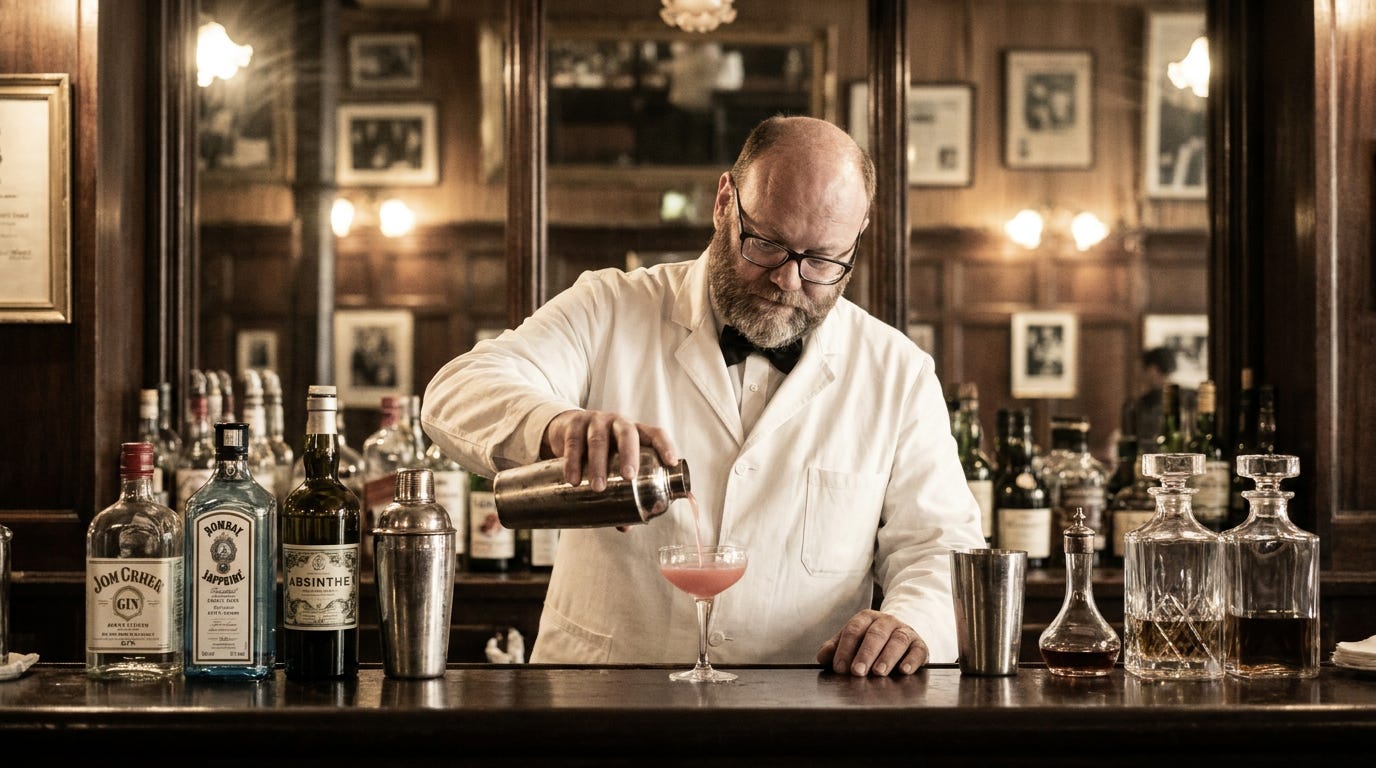
In the 1920s the hottest technology in Europe was a surgeon named Serge Voronoff grafting monkey testicle tissue onto rich men.
The promise: rejuvenation, vitality, longer life. The press went wild. The wealthy lined up.
The story was that legendary bartender Harry MacElhone named a drink after the craze — gin, orange juice, grenadine, a dash of absinthe. By 1923 it was the rage of Paris. You can find it in his 1927 book Barflies and Cocktails (which you can read online).
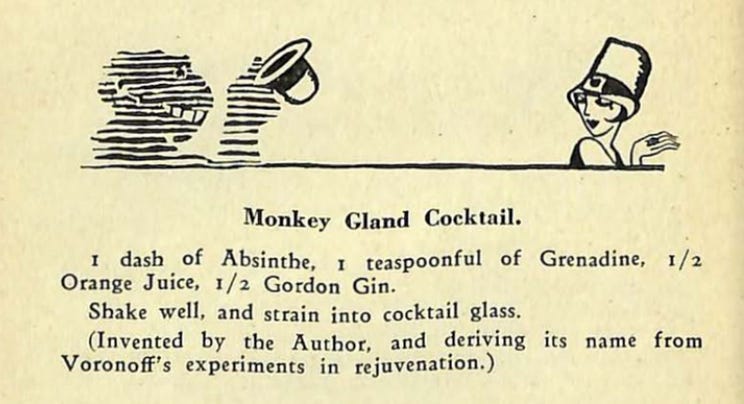
Like all booze origins this isn’t exactly true. The drink was already making waves and known before 1920.
By the 1930s Voronoff’s miracle was already tossed aside as quack medicine. The procedure died. But the cocktail lives on and turned 106 last year.
Every era gets a miracle technology it can’t stop talking about. Ours is AI. Most end up in the same drawer. The drinks always last longer.
1.5 oz gin
1.5 oz fresh orange juice
1 tsp grenadine
1 dash absinthe
Shake with ice, strain into a chilled coupe. No garnish — the colour does the work.
The Drink Cart is the newsletter version of sitting at a really good bar with someone who thinks too much about advertising and won’t shut up about it. Subscribe to get it on Wednesdays and Fridays.
The Monkey Glad cocktail may need a rebrand.