
Dear marketing fans, rival agencies chasing creamery accounts, city slickers cosplaying in fringe and anyone who secretly cried at a Hallmark cow joke.
I’m writing this newsletter under attack from Long Weekend’s bug bites. Strap in this might take a while to pull on the various threads to get to advertising. And even though I’m not getting into the branding of bug bite solutions, but that is a category waiting to be disrupted by a brand-first player. The packaging design is shockingly indifferent to humans.
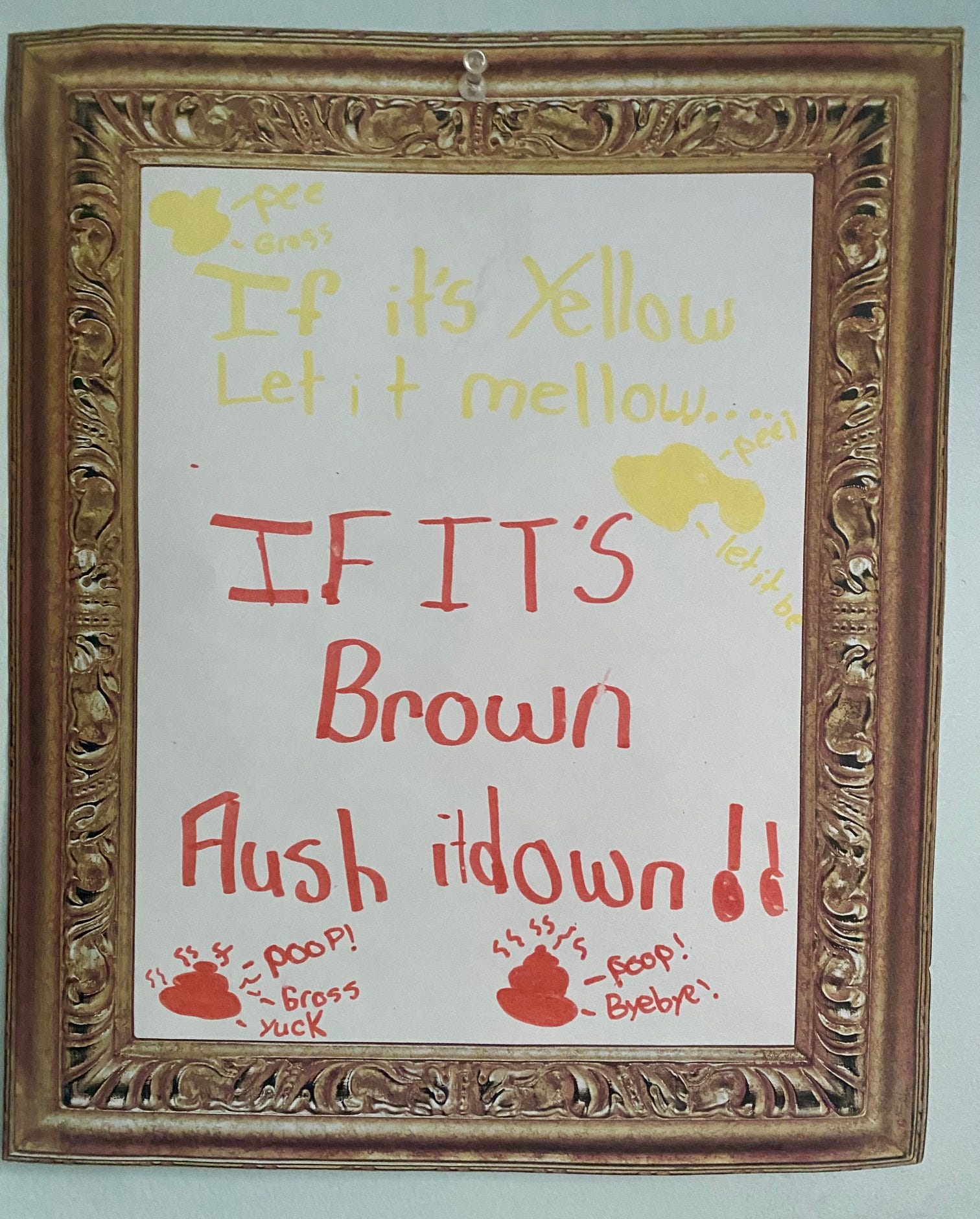
I spent the long weekend with friends in Norway Bay and Shawville, Quebec. Two small, mostly english speaking communities that are straight out of the central casting of the Hallmark universe. The kind of places where everyone knows everyone, old barns come standard, where only one traffic light exists and small town fairs with rowdy beer gardens actually still exist. The beer garden has the rules to go with it, but the only rules I’m still thinking about, and was the best piece of creative all weekend was this classic bathroom warning. Tell me this isn’t the clearest comms you’ve ever seen?
The Shawville Fair isn’t about the rides, poutine or the prize winning giant vegetables, it’s the people watching. You’ve got the locals: boots worn in from real work, hats faded through storms, swagger that doesn’t need an Instagram filter. A subset of these also seem to be trapped in some sort of 1990s fashion era, including the acid wash jeans.
Then you’ve got the weekend heroes—city folk in cowboy cosplay, fringe swishing like it’s auditioning for a social‑media reels. It’s this living double‑exposure: un‑scripted authenticity colliding with “country chic” for a weekend cameo. The fun isn’t picking sides, it’s watching them size each other up, like two herds circling the same watering hole.
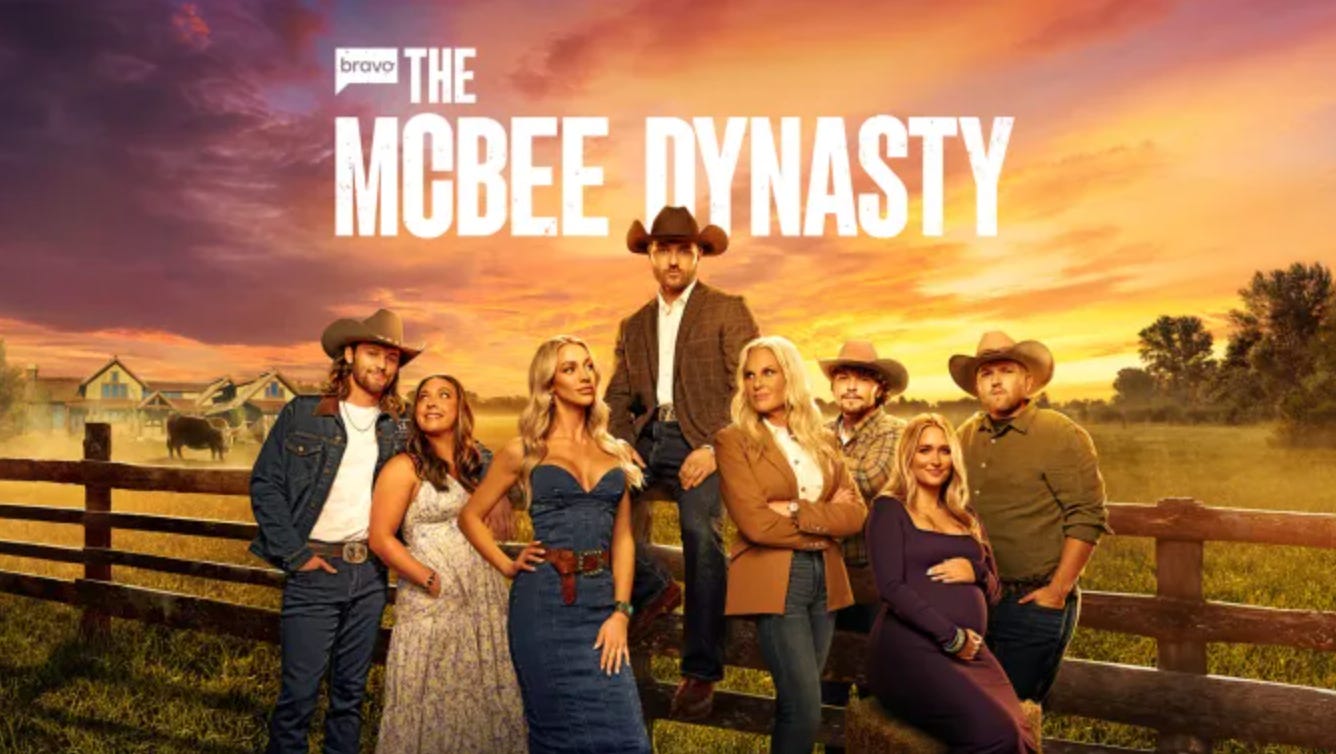
I was struck by all of this culture since I’d been watching Bravo’s The McBee Dynasty: Real American Cowboys, a reality‑TV mash‑up of Yellowstone and Real Housewives. It promises cattle deals and FBI probes, but most of the “cowboys” spend their time sipping iced vanilla lattes, going on babymoons and spiralling into panic attacks. As one review describes it, “This series is about an immature father and his four sons who are attempting to run a huge farm in Missouri.”
Their website shows a family in desperate need of an agency (protein bars, cowboy coffee, a carwash, jerky) all wrapped in bro-industrial complex logos that would get laughed out of even a pitch deck.
Which made the watching of Hallmark’s Double Scoop the perfect follow-up. Imagine two cutthroat ad execs, Nora and James, both sent by rival agencies to woo a small-town ice cream company with national distribution called Darlington Farms, in hopes of snagging the high-stakes account. Notice that each of them flies solo on this mission.
What starts as a corporate throwdown slowly melts into a summer-rom‑com full of fireflies, farm festivals and, of course, an endless stream of terrible cow jokes (“What do cows do for fun? They go to the moo-vies!”). Suddenly, the cosplay cowboys at Shawville start to look just like Nora and James. When the stakes shift from conquest to connection, you realize the heart of both stories isn’t who’s real, but who shows real heart.
Cut to the Ottawa River, where our friends’ boat sputtered to a stop. Classic: they’d run out of gas. We refilled it, but the engine still refused to turn over. Oh great, I’m floating down the river and I’m out of cocktails.
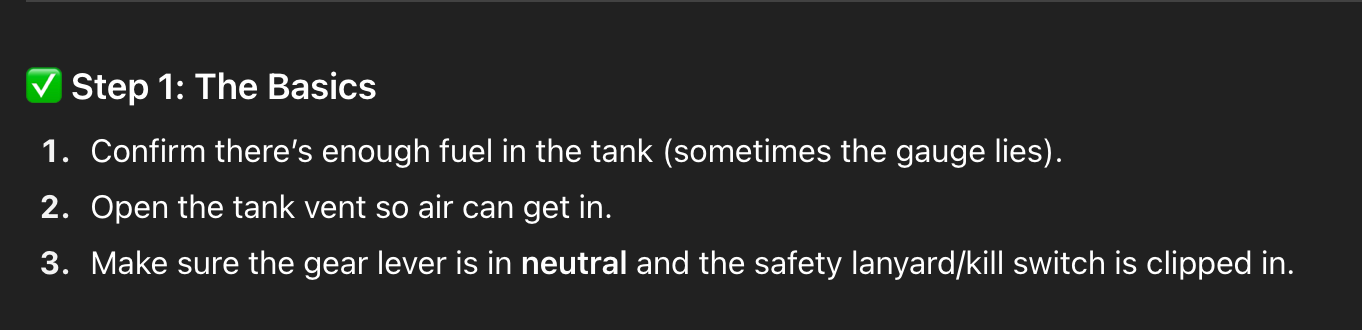
That’s when I pulled up ChatGPT. After a little back and forth, it served up a tidy checklist, starting with the obvious: check the fuel (done), open the tank vent (yep), then, step three: make sure the gear lever is in neutral and the safety lanyard/kill switch is clipped in.
Sure enough, it was that last part. As soon as we clipped it back in, the engine roared to life. The whole thing was hilarious because a group of functioning adults had been circling the problem, overthinking it, while an AI calmly walked us through the basics. No ego, no “I know boats better than you,” just steps. Sometimes the fastest way past human pride is a machine reminding you to clip the little red cord.
To summarize my cultural findings: I should never be trapped on a boat without AI, the Shawville Fair is mostly cosplay cowboys drinking White Claws, pitching ice cream on Hallmark sounds very complicated, Bravo’s McBees need a branding agency at the very least. And most of all, none of us would last five minutes on the Yellowstone ranch. John, Rip and Beth would eat us alive before the gravy on the poutine congealed.
Drink Cart Approved™ agency discussion topics
Pinterest, trends and the rise of the “Fisherman Aesthetic”.
Social media is looking more and more like TV.
Love this trailer for the new Dishoom in Glasgow with a very spy noir theme and illustrations.
All bars should be having this much fun.
Ad history: You Will, AT&T (1993)
The year is 1993. The future meant hiring Magnum P.I. to sell it back to us and hiring David Fincher to direct it. This series of ads showed off pretty much every innovation in tech that has come true.
Some scenes were literally shot to feel “futuristic,” which mostly meant fog machines and dry ice and moody lighting - why is the future always so dark? Were all these tech things in the creative brief? Or did the creative team time travel to figure it all out?
J Crew x Vans AI
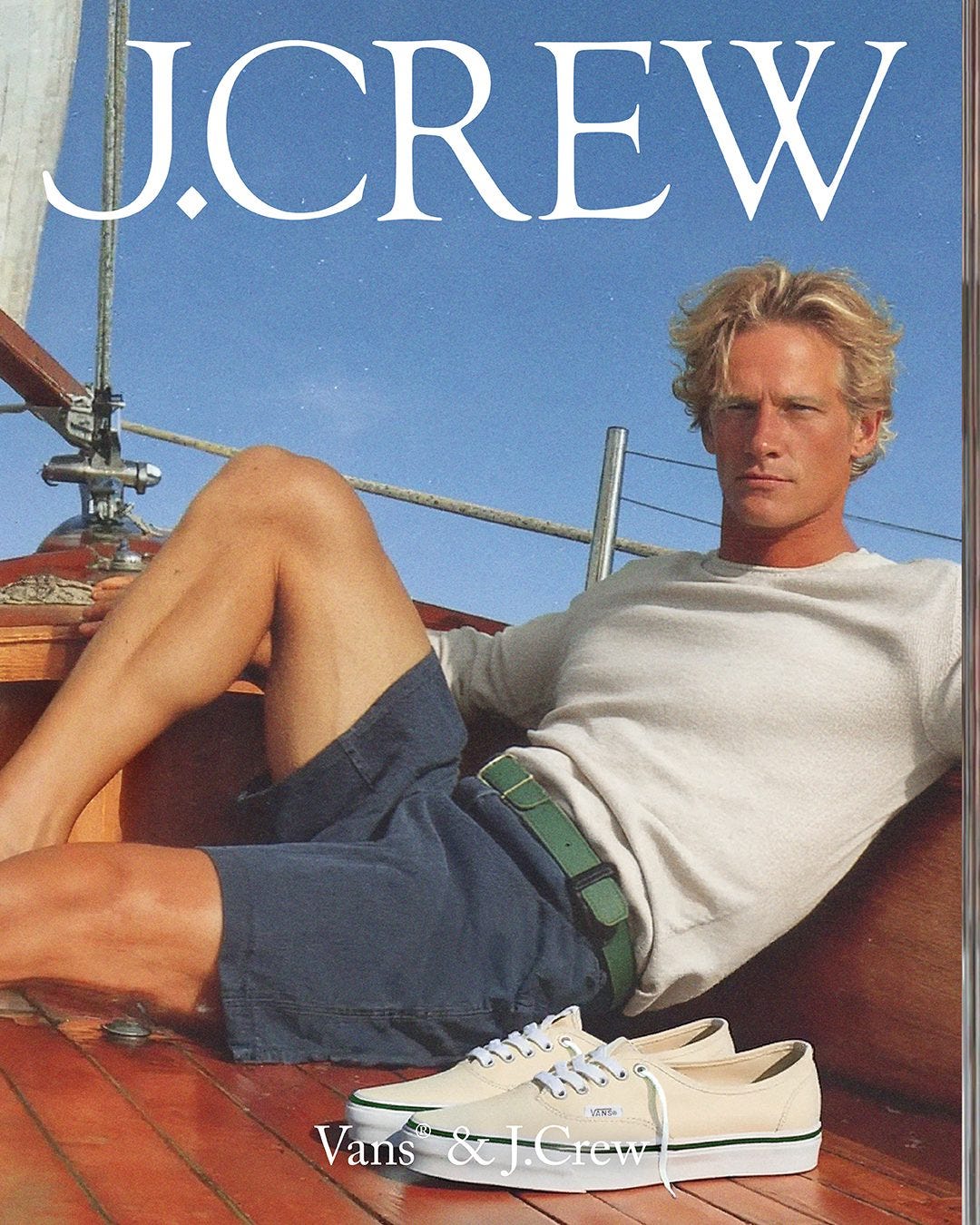
This week J.Crew teamed up with Vans on a collab that looked like business as usual: preppy-meets-yacht club with a vintage catalog vibe.
The catch? None of it was real. The entire campaign was AI-generated, a fact that only surfaced after Blackbird Spyplane called out the warped legs, weird boats and no fenders, odd cameras and bizarre rugby shirt patterns. The Cut piled on, noting J.Crew’s initial dodge when a shopper asked where to find a striped rugby: instead of admitting it was fake, the brand replied, “this is a vintage style.” Only after the blowback did captions get updated to read “Digital art by: @samfinn.studio,” crediting an “AI photographer.”
AI moodboards or storyboards are one thing, even AIing some background elements, but counterfeiting your own heritage catalog is quite another. The problem isn’t the tech, it’s the lie. That customer service reply of“this is a vintage style” is the retail equivalent of gaslighting. If you want to play with AI aesthetics, own it. Otherwise you’re not reviving the J.Crew archives, you’re just deleting trust one rugby shirt at a time.
Ad history: Bruins Hockey Rules (2009)
It had been a long time since I’d seen this old Boston Bruins campaign. There’s something about switching over to September that makes hockey seem relevant again.
These weren’t glossy campaign spots either. They were tough-love PSAs delivered with a roar. A mascot bear standing up in disbelief, enforcing “Never date within your division” like hockey gospel.
These are what happens when brand messaging goes primal in the best way. What makes them so compelling now is how they accidentally predicted the future too. They feel way less like early 2000’s ads and more like organic social made for 2025: short, blunt, ridiculous and endlessly shareable. Just a bear shaking its head at your life choices.
Ads that go hard
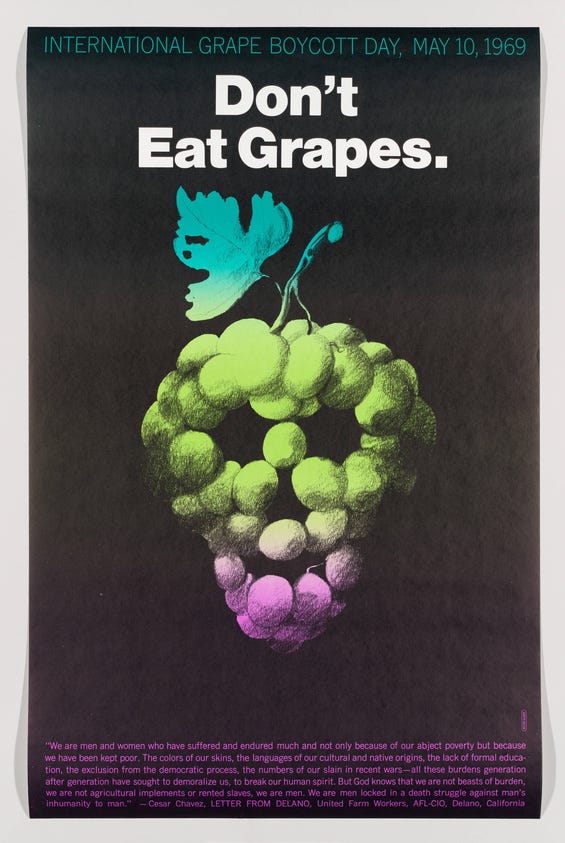
Sometimes the best ads are anti-ads. I’m never going to boycott grapes, but Milton Glaser’s 1969 Don’t Eat Grapes poster for the United Farm Workers looks like it could be an avant-garde wine campaign until you notice the grapes form a skull. The sell is simple: death, exploitation, boycott.
What makes it brilliant is how it hijacks the glossy layouts of the day. It borrows the style of magazine ads—clean headline, product shot—but flips the message. Instead of “Buy now,” it’s “Don’t.” Instead of luxury, it’s lethal.
Last call: The Drink Cart Toronto
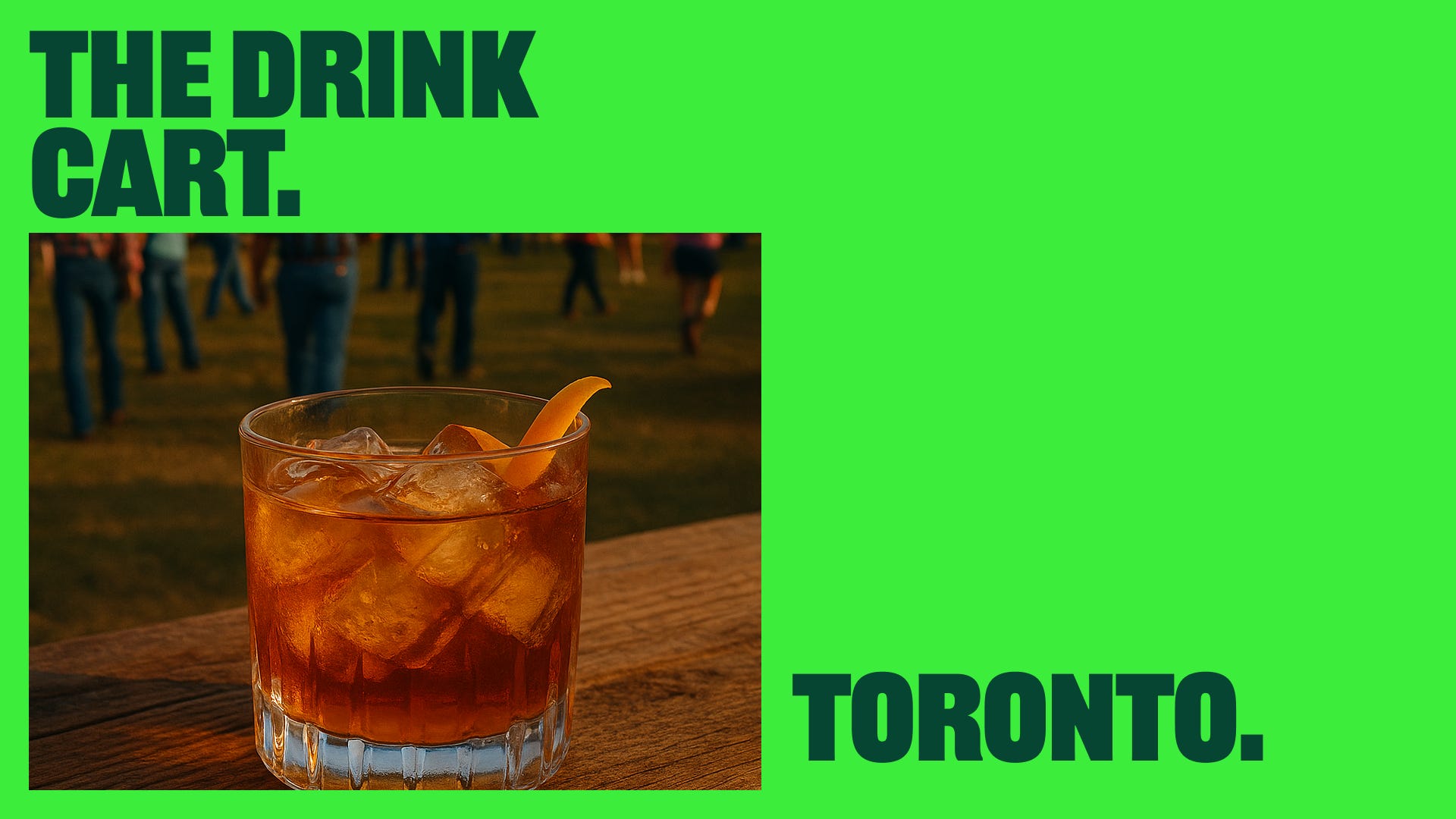
This of this classic like an Old Fashioned that studied for one semester abroad in Italy, then got roped into judging the large vegetables back in Shawville.
The earliest ancestor turns up in Robert Vermeire’s 1922 mixology handbook as the “Fernet Cocktail.” Equal parts rye (or cognac) and Fernet‑Branca, spiked with bitters and noted as “much appreciated by the Canadians of Toronto.” By the 1930s it had been officially renamed by William “Cocktail” Boothby and yes Billy C has the best nickname of all time.
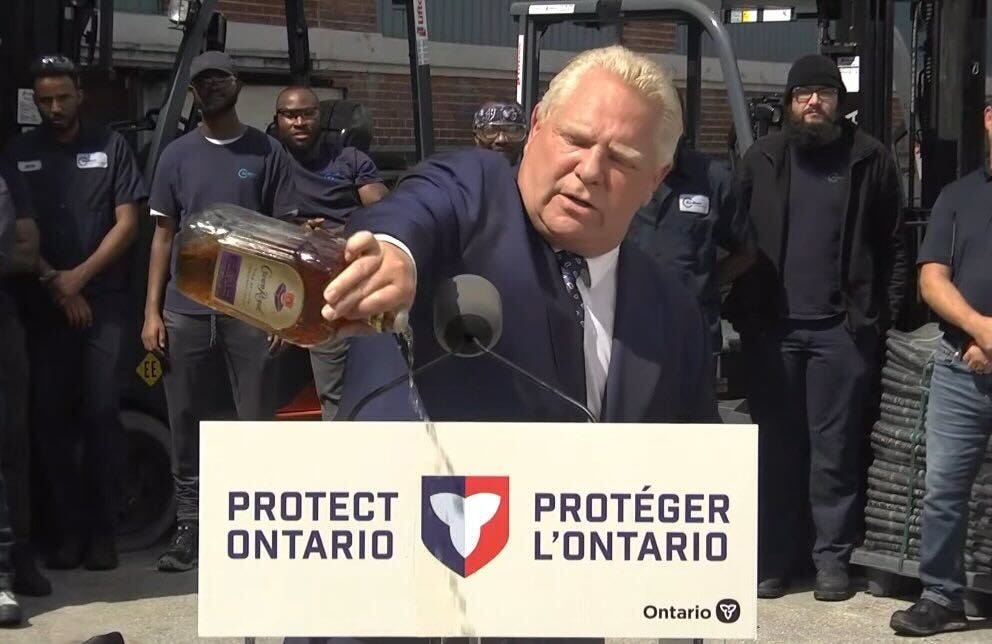
I’m sharing a rye based cocktail today because in cocktail news the premier of Ontario (who is already holding bourbon hostage from our shelves) is now pouring out rye because a company that owns Canada’s most famous rye, Crowne Royal, is moving the Ontario bottling plant. Never mind that all the Rye is actually made in Manitoba. Never mind that it is own by the British Corporation Diageo.
The whole thing is completely absurd. Doug Ford just hit performance politics S tier expert level: expert. We’re supposed to now boycott a Canadian whiskey. When does this ever end. I’m buying a bottle of Crowne and making Toronto’s for the rest of the week before Doug starts shotgunning maple syrup to prove his supply-chain loyalty.
Here’s my take on making fall in a rocks glass:
Toronto
2 oz Canadian rye whiskey
1/2 oz Fernet-Branca
0.25 oz simple syrup (1:1 sugar to water)
3 dashes Angostura bitters
Stir with ice, then strain and pour over fresh rocks.
Add that classic orange peel if you wish.
The Drink Cart is your weekly fuel for pop culture brains and ad junkies. A cocktail of ad insights and hot takes that feel like you’re hanging at your favourite dive bar after launching your latest campaign.