
Dear marketing purists, pumpkin spice sparkle obsessives, fans who pretend to “only like Taylor’s early stuff” and creatives who can’t leave well enough alone.
Wouldn’t it be nice if our only concern in agency land was picking a side on what we thought about brands who turned sparkling and orange to celebrate Taylor Swifts new album? Don’t know what I’m talking about?
Don’t worry, Chloe Perkins did us all a solid by gathering just a quarter of what she saw brands do in one helpful social grid.
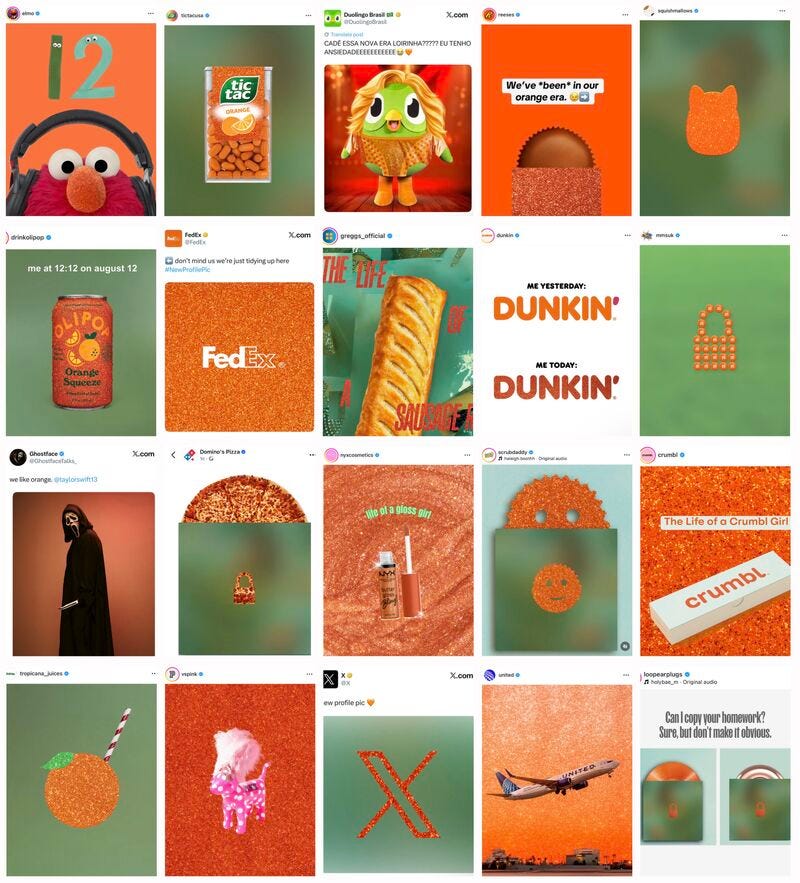
Marketers have two clear paths when trends like this start happening.
Vibe Marketers: The “awwww, isn’t it cute, aren’t we all having fun together, what great vibes we’re having for the Swifties” crew.
Cold Shower Marketers:These are the people who, when brands are drunk on vibes and orange glitter, they pour the ice water and unleash hot takes on Linkedin.
People like Kieran Hughes who drop hot takes like: “Taylor Swift changed her Instagram colour and 50 brands lost their minds. This is not strategy.”
Probably hundreds of brands but point taken. Linkedin statements like that are cat nip for Vibe Marketers. Keyboards are smashed, posts rage shared and comments drop offering up nuggets like, “My God, when did our industry become so overtaken by the fun police?”
Not the fun police! But let’s not sugarcoat it. Sometimes the cold shower isn’t just necessary, it’s the only thing separating “brand building” from a “hello fellow kids” convention. Now I say that as someone who literally wrote a POV for a client this week about the WNBA adult toy fiasco for their social team. Probably my finest hour.
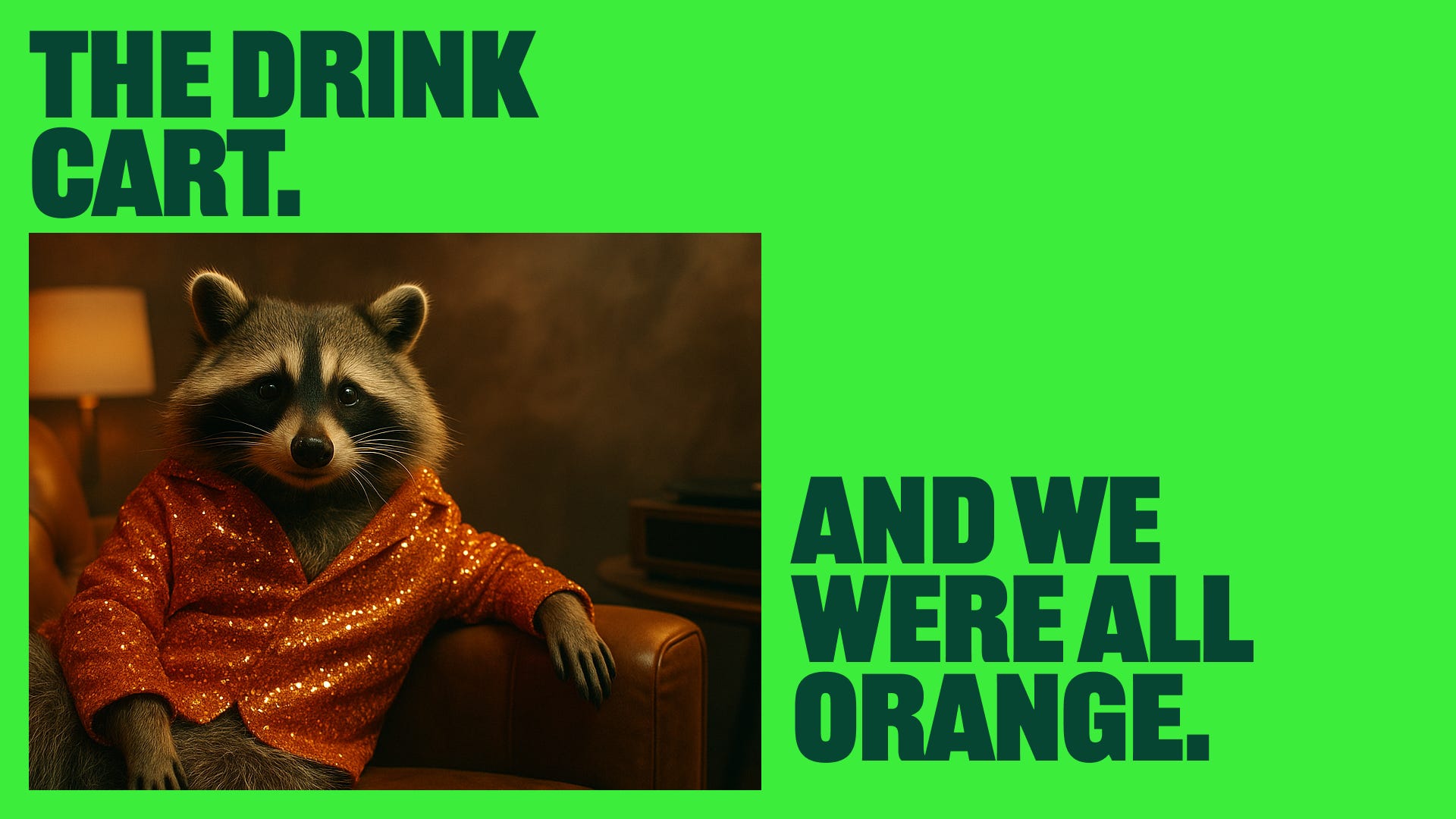
So if your big idea is “make our logo pumpkin-spice sparkle adjacent because Taylor breathed near it” or “better jump on the WNBA toy mess for no reason whatsoever,” you’re not marketing, you’re fighting over clout scraps like a raccoon in a dumpster. A well dressed racoon to be fair. Again, I for one, am glad I’ve managed to include raccoon content in this newsletter again.
Cracker Barrel, Hold My Barrel
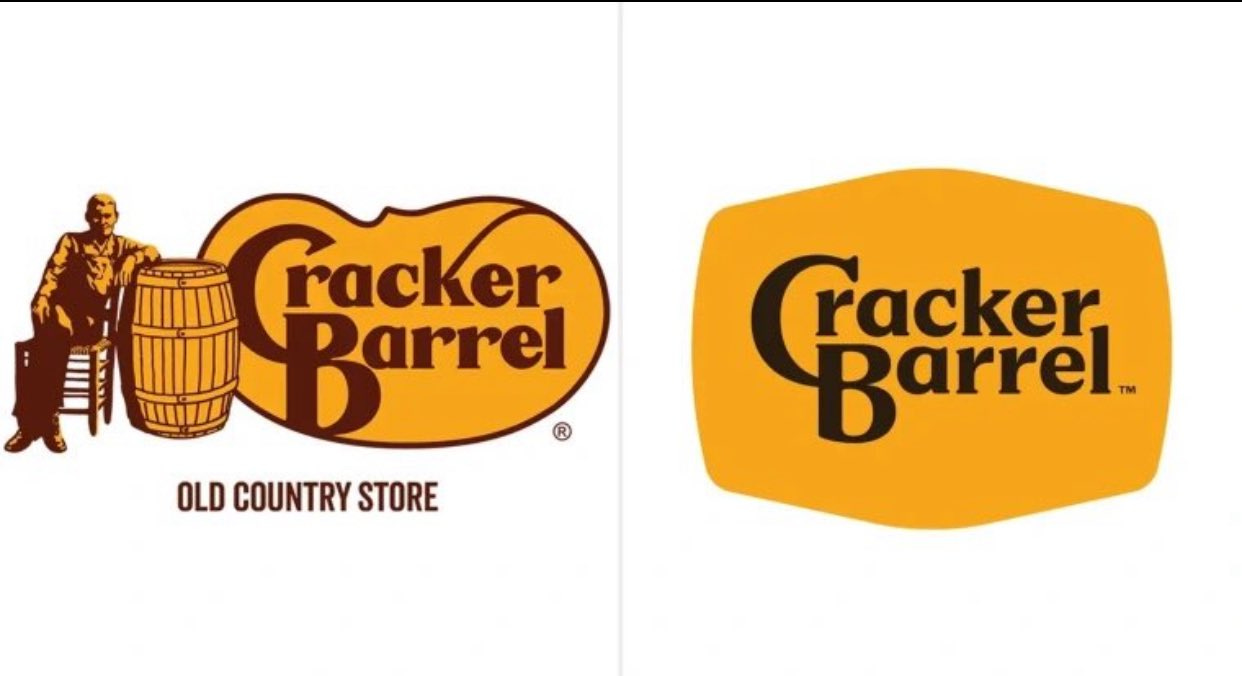
Speaking of orange-like marketing moves. Cracker Barrel just torched nearly 50 years of visual equity. A place I’ve driven by countless times, but never had the nerve to actually visit. So I don’t have any skin in the game. But to prepare for this, I started by binge watching a lot of old brand ads.
Out goes the cowboy leaning on a barrel, in comes a stripped-down wordmark you could mistake for a grocery store private label. The logo redesign comes with $700 million in renovations that chisel away the uniqueness of each renovated restaurant like they do on a Reality Show makeover. As Tiktoker Rachel Love told it, “When Cracker Barrel took away the last piece of nostalgia you had left.”
Here’s the problem: nostalgia isn’t a garnish you can swap out for a few chocolate sprinkles. For Cracker Barrel’s loyalists, that cowboy and barrel weren’t interchangeable clip art. This was brand shorthand for biscuits, rocking chairs and road-trip Americana.
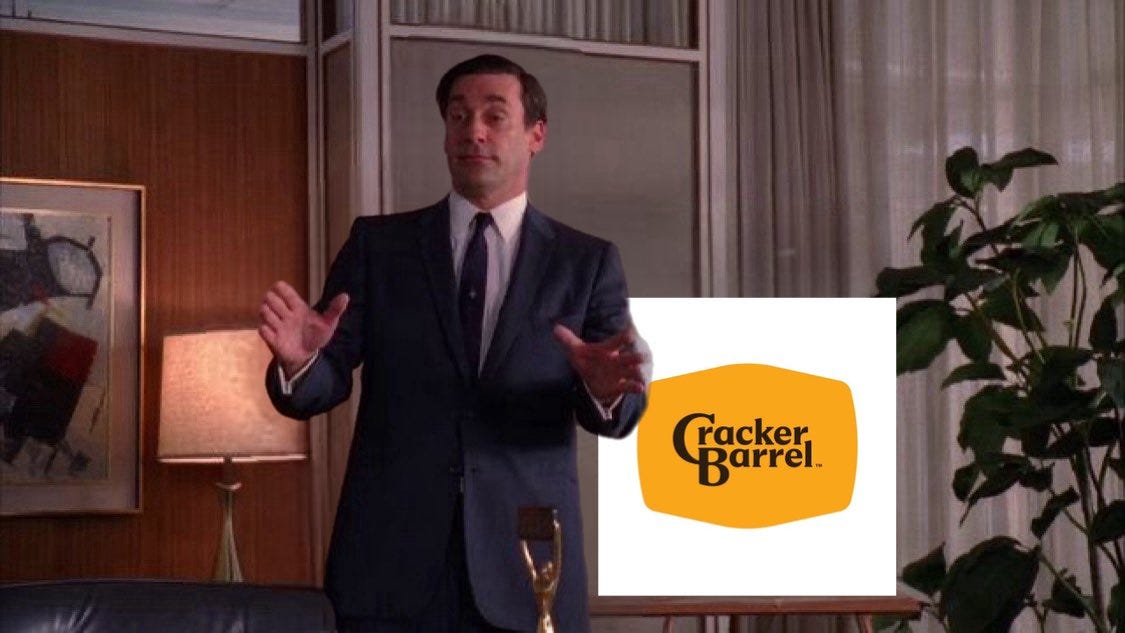
The lesson? If you start control-alt-deleting the memories people actually care about, you’re not rebranding, you’re just breaking trust.
If agencies and designer want to prove they’re more than buzzword dumpster-divers in an ear of AI, maybe the real debate isn’t about Swift-coded orange color palettes or whatever trend is being flogged this week. It’s about how not to erase the very thing that made people love you in the first place. That concludes my Ted Talk.
Drink Cart Approved™ agency discussion topics
I love this debate over if you can have AI write your wine list.
Don’t worry everyone, less than 1 percent of people have an unhealthy relationship with ChatGPT. We’re going to be just fine.
Do you guys know there is a series of Golden Girls (yes the TV show) Mystery novels? Now you do.
The creator of the legendary 007 logo for James Bond, Joe Caroff, pass away this week at 103 (1 day shy of 104). Imagine them redoing this logo. Oh boy.
Ad History Street Tennis, Nike (1995)
Back in ’95, Nike didn’t just sell shoes. They staged anarchy and took over streets before there was even a Tik to Tok about them. Pete Sampras and Andre Agassi hop out of a yellow cab and spontaneously transform a New York street into an impromptu court, complete with a net.
The ad was orchestrated by Spike Jonze just four years giving us Being John Malkovich and making an insane amount of music videos and this ad. Think about that. In 1995 we were pumping out music videos, there was no social media and we still were doing faux stunt ads.
The fun of this spot is that it wasn't suburb etiquette with racquets. It was raw, rebellious and cinematic. a perfect snapshot of American tennis shedding its quiet elite veneer and playing in the streets. Want to disrupt the game? Do it with Sampras, Agassi and a flash-mob service game in downtown New York. Even before the socials could share it.
Leave your AI and politics out of my chocolate breaks
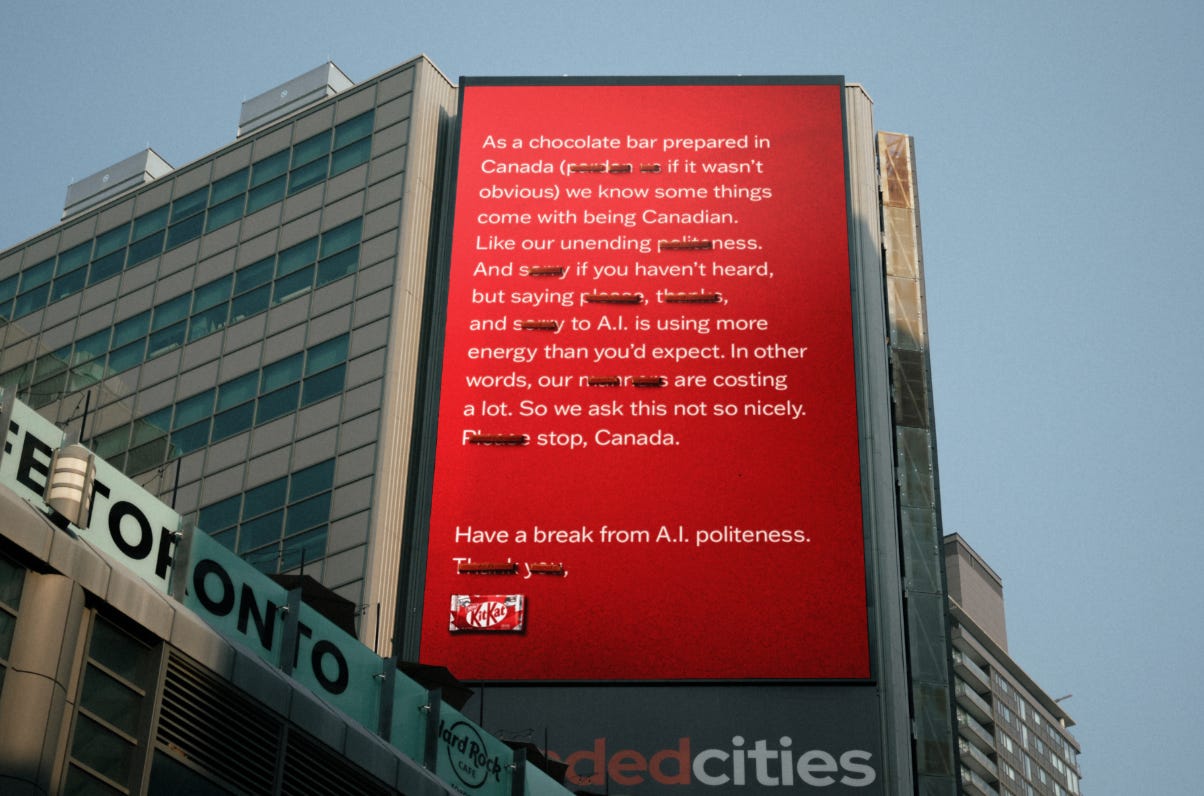
It’s one thing when your chocolate bar tells you to “Have a Break.” It’s another when it hijacks the mic to shame you for being too polite.
KitKat Canada’s new AI campaign basically says: “Hey Canada, stop saying please — you’re melting the ice caps.”
This ad is not for humans. This ad is only for the ad industry trying to squeeze the environment and AI into a single ad about chocolate bars. What did we do to you to deserve this kind of sabotage to the KitKat?
This is the kind of Cracker-Barrelled-out marketing logic only advertising could produce: the candy aisle saving the world one less “thank you” at a time.
Why is the snack lecturing us? Where are the fun police when you really need them.
Ad history: United Air Lines
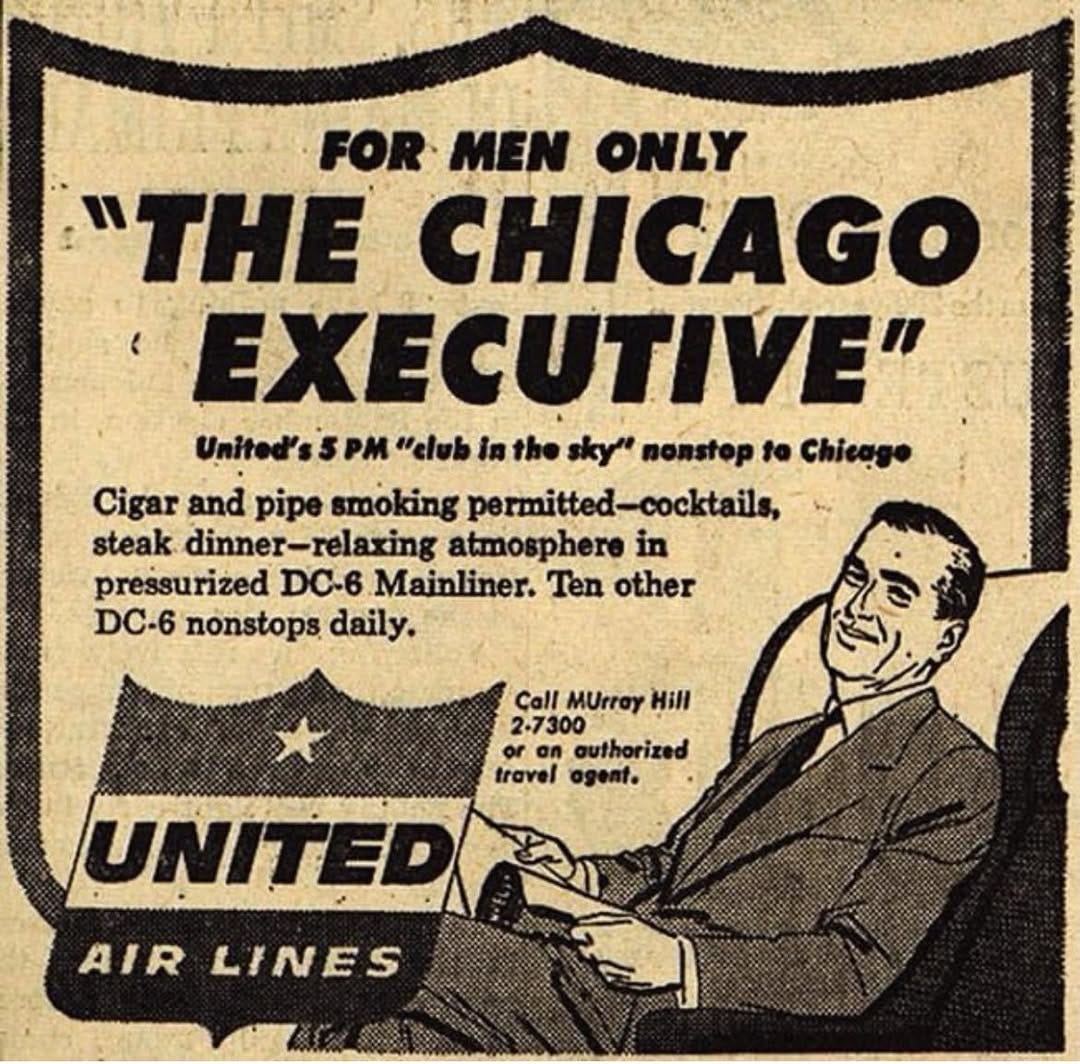
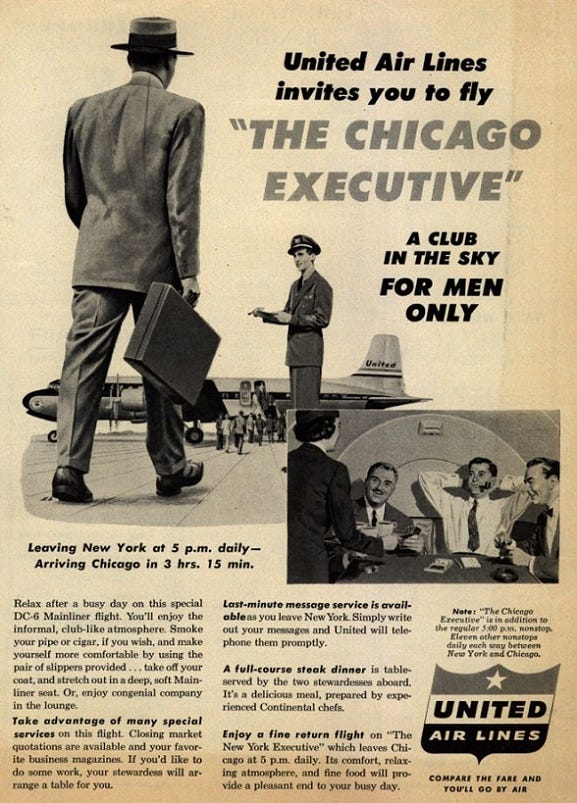
Here’s a little break (sorry Kit Kat) from the debates to marvel at a different time. From 1953 until 1970 you could fly in the executive shuttle and smoke you cigar or pipe with cocktails and steak. It’s bonkers that this was somehow men only no that long ago. Now you’d be lucky enough if you got a free soda and the ability to check a bag.
Brands are getting spicy out there
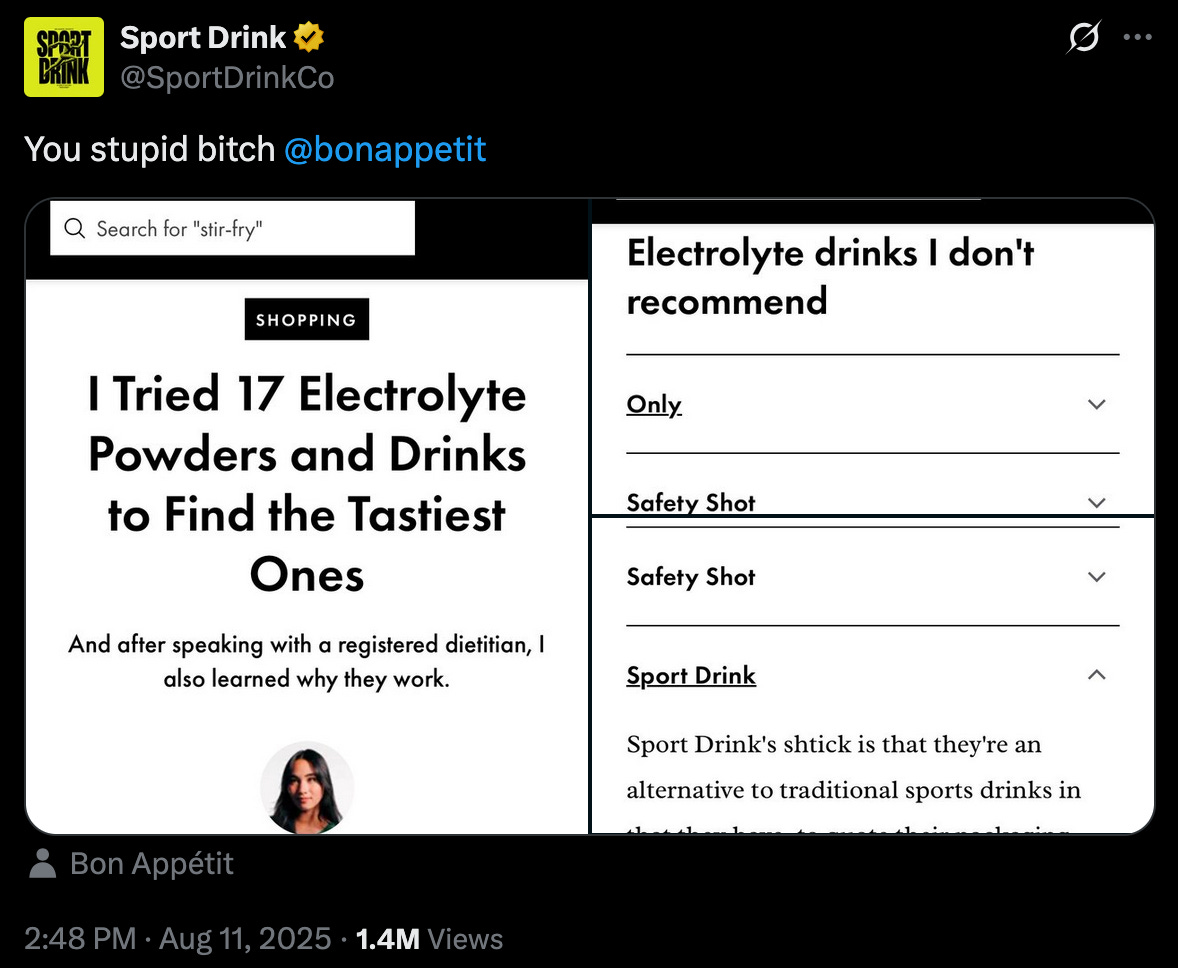
When they aren’t redesigning and driving culture wild. Brands are also just letting it all hang out. I was kind of shocked when this Electrolyte absolutely attacked Bon Appetit for an article about the tastiest electrolyte powder and drinks. The fact that that magazine is writing this click bait stuff tells you ever thing you need to know. But if you read the screen shots, it’s because the drink tasted like, “lemony seawater - and not in a good way.” Which I think is kind of how they work. Let’s just say the brand has no filter.
As Andrea from Snaxshot said it, “brands have realized they can be in control of their narrative” The crazy part is they are using this to offer promos and discounts if you hate the brand.
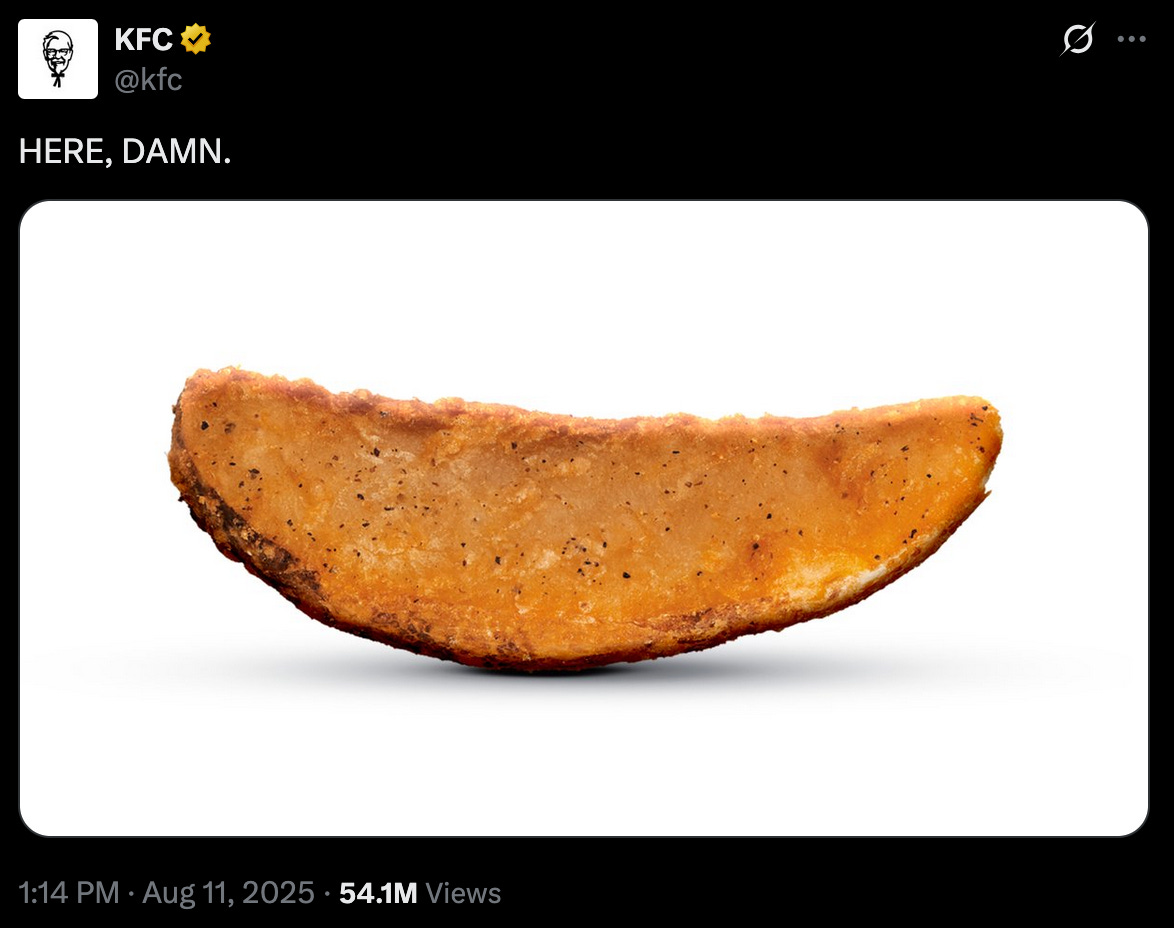
But it’s not just this random potty-mouthed Sport Drink. It’s KFC bringing back wedge fries with a simple “Here. Damn” we heard you and surrender. The whole thread is a wild back and forth over people arguing about the good and bad of this including how they switched to gas station wedges.
It’s also how Scrub Daddy is answering requests from fans in the most unhinged way possible. I still don’t know how you become interested in following a sponge channel on social, as that seems weird. But each case shows brands turning off thier targeting computers and going for it. And if you don’t think that using metaphor doesn’t get this clip here you don’t know how this newsletter even works.
Ad History: Pizza Hut (1996)
In 1996, Willie Nelson and Waylon Jennings teamed up. Not for an outlaw ballad, but for Pizza Hut’s Double-Stuffed Crust. Two country legends harmonizing about extra cheese land pepperoni in crush like it was highway gospel.
How can you not be romantic about advertising and an ad that says, ““I’m a little lonely, a small price to pay for pepperoni.” We need a 30-for-30 style advertising series that discusses ads like in depth like this and interviews everyone. I want to know everything about this.
Last call: The Drink Cart Orange Whip
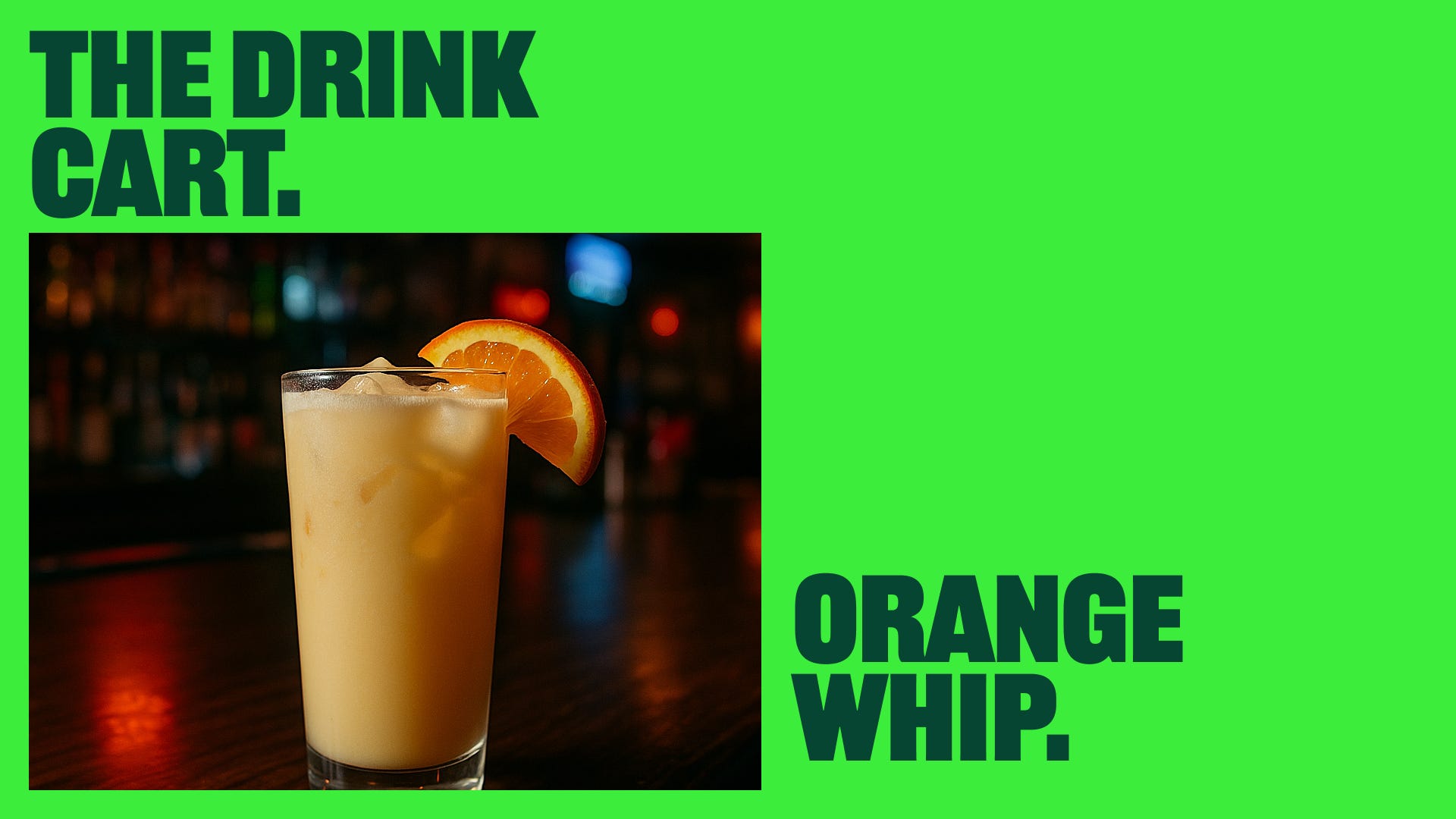
We know that every cocktail has a story, but few owe their fame to an improv line from The Blues Brothers.
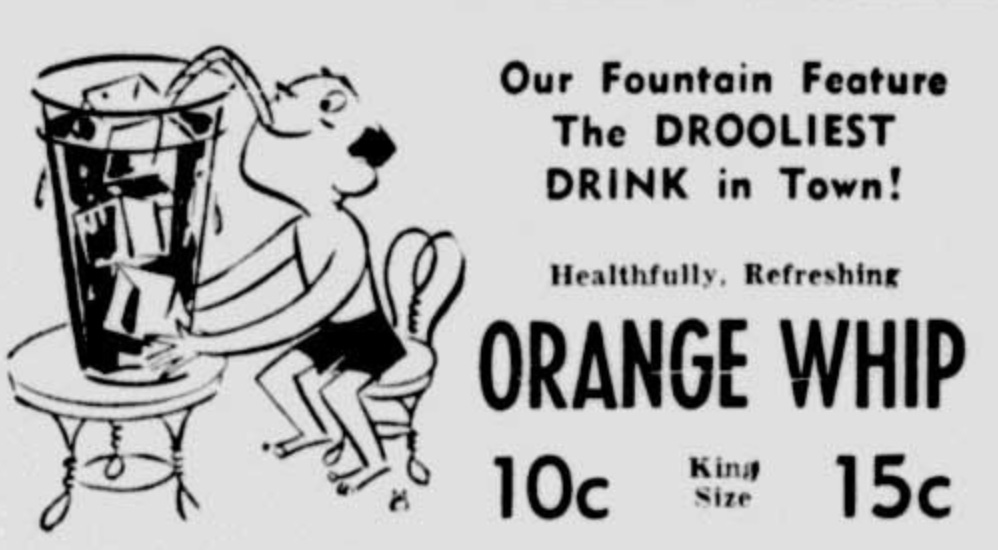
The Orange Whip started life not as booze, but as a 1950s fountain drink created by the very on the nose named, Tropical Fruit Company. Marketers stepped in and called it an "Orange Whip" and served as a fountain beverage. A creamy, orange soda treat with its own mascot and even a pin-up named “Miss Orange Whip.”
Then John Candy showed up. In 1980, playing Detective Burton Mercer, he tossed off the line: “Who wants an Orange Whip? Orange Whip? Orange Whip? Three Orange Whips.”
Classic John Candy, it wasn’t in the script. It was a nod from the crew to a family connection with the brand. And just like that, a forgotten soda became cocktail canon.
The bar world took the cue. What was once a malt-shop sip turned into a frothy, creamsicle-adjacent mix of rum, vodka, orange juice, cream, and sometimes triple sec. Sweet, smooth, nostalgic and impossible not to smile at.
While you are making it, think about these two random bar related facts.
First, the invention of the cocktail party. Imagine coming up with that banger? Alec Waugh swears he invented the cocktail party in 1924 London. Translation: he was sick of tea and thought rum at 5:30 sounded better. History says St. Louis beat him to it. But this is a better story.
Next, did you know dim lighting leads to more drinking in bars? Apparently the Tokyo Ritz Carlton actually tracked orders and with the lights were brighter guests drank on average 3.5 drinks. When the lights were dim that number shot up 37% to 4.8 drinks per guest. That’s some serious stats. Dim those lights people!
Here’s my take on the boozy Orange Whip:
4oz orange juice
1oz rum
1oz vodka
2oz cream
blend it with ice, drink.
The Drink Cart is your weekly fuel for pop culture brains and ad junkies. A cocktail of ad insights and hot takes that feel like you’re hanging at your favourite dive bar after launching your latest campaign.
That Scrub Daddy post is pretty great. I guess that’s why they have 4.4M followers on TikTok.