
Dear marketing fans, small human teams fighting bloated AI agency org charts and anyone who put “Swift Engagement” on their timesheets this week.
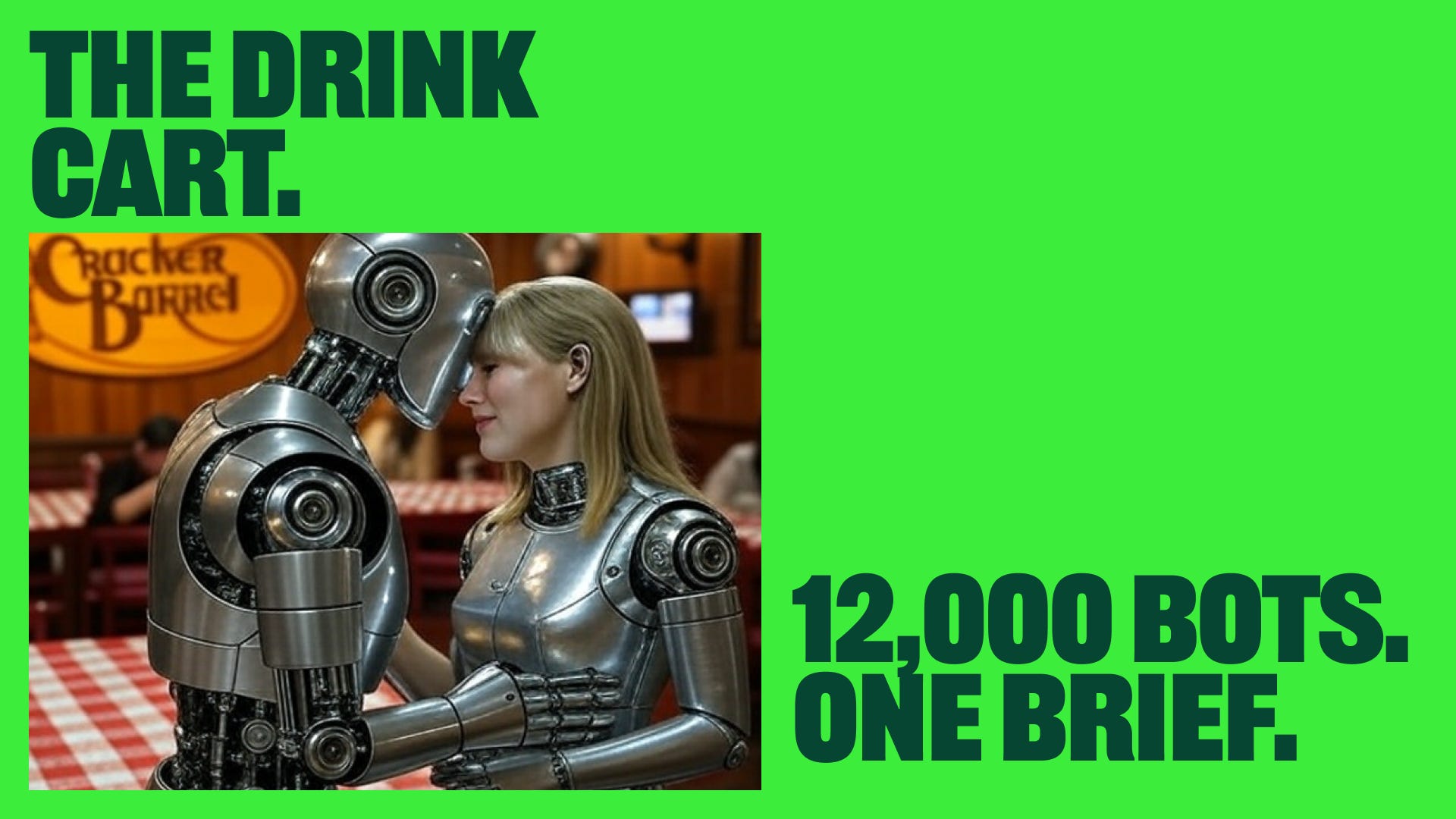
It’s only been a week since we last talked. A week and Cracker Barrel caved and is pausing their change of the logo. The backlash was swift and crushing and involved multiple Trump White House memes.
I’m not surprised after such a rebuke that posts saying things like, “Okay, now we cyber bully Pizza Hut until they bring back the buffet and red cups” are getting over 1M views. To be fair those rhe red cups are elite. But what if we kissed under the Cracker Barrel Classic Logo? Too soon?
Speaking of swift(s), if you thought the social media posting about Taylor Swift’s new album last week were something else, the announcement of her engagement to Travis Kelce was probably the only thing that kept Cracker Barrel from imploding upon itself.
Already there are too many think pieces, writers asking if brands are allowed to have fun with this, monetization is now underway as the Travis Kelce immediately dropped his collection at American Eagle (wait wasn’t American Eagle canceled two weeks ago?) and even how this Swift wedding will lift the entire GDP.
So what do you do when you don’t want to write about that and last night was the last 8pm sunset in Toronto of the year and the Toronto Blue Jays had you on edge all night?
Let’s talk about agencies. That seems super fun, right? Talking about agencies at a time when F1 drivers are the latest people to jump into the agency game. But what if It’s more about AI. To frame this discussion, I found this insane graphic for someone who replaced everything, and by everything I mean their entire team, with AI agents.
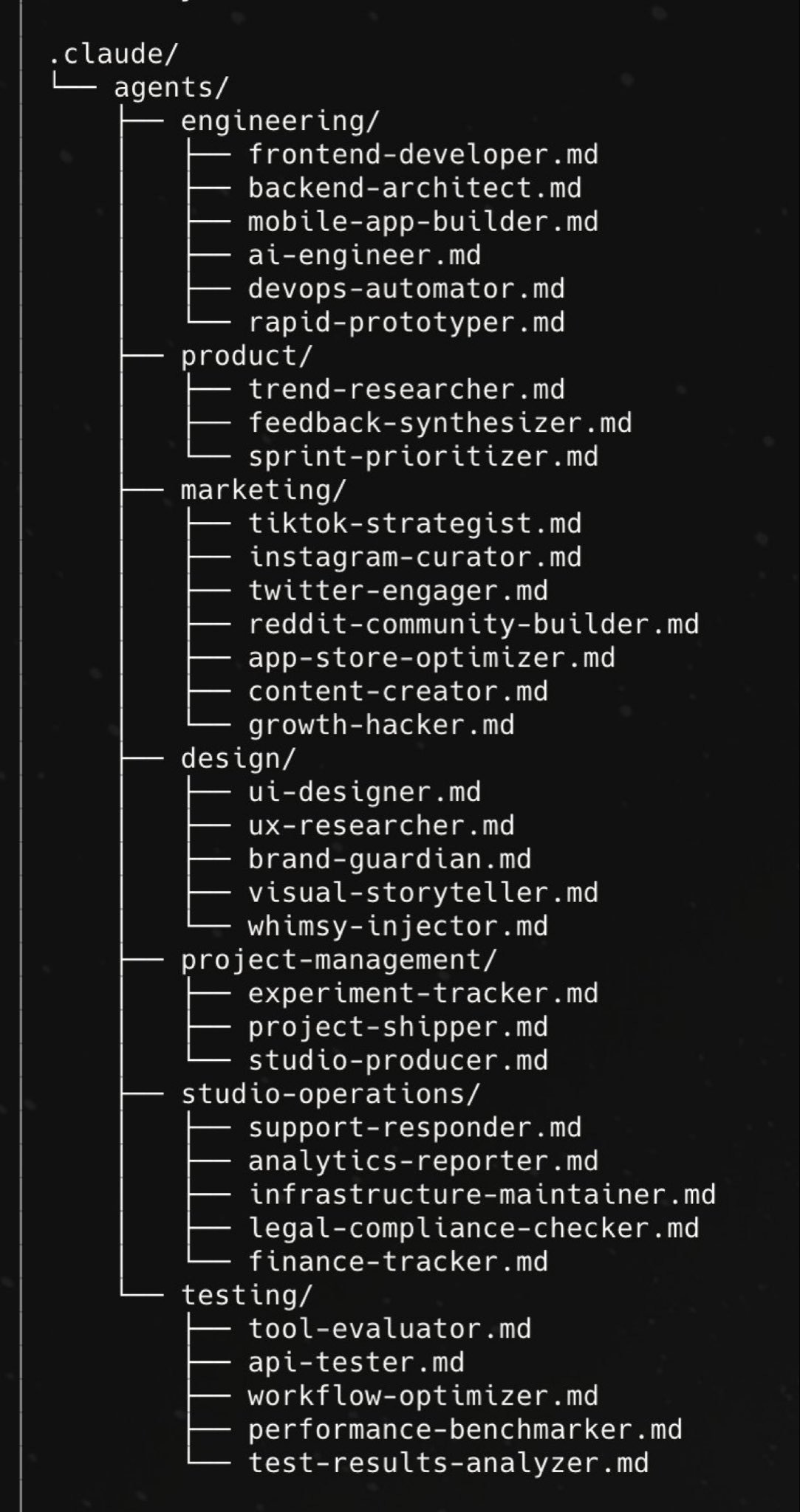
You know what an agency doesn’t need? A “whimsy-injector.md” to install whimsy at scale. Nor a “surprise-and-delight.exe” that feels like an actual “program” doing fake work in Google docs. And they certainly do not need a “make-it-pop.md” that lets faux account people turns vague notes into shippable tweaks that make logos look bigger, brighter, louder and maybe even a little too confident.
I read something Parker Mason wrote the other day about big agencies and AI that stuck with me. Parker said, “one thing is painfully clear: Traditional, legacy agencies are in trouble and unpopular.”
Ouch. No word of a lie, that same day this post seemed to make it all make sense. “McKinsey has rolled out 12,000 AI agents. Headcount is already down from 45,000 to 40,000 since 2023. And now 40% of its revenue comes from AI and tech advisory. Entire teams have been compressed. Work that took 14 people now takes 2 or 3 plus AI.”
The idea of consultants rolling out 12,000 AI agents is pretty wild. Where does thsi all go? I’d imagine in Black Mirror something like this would be the social post for your agency in 2026: “Your intern and 12,000 AI agents are running the holding company.”
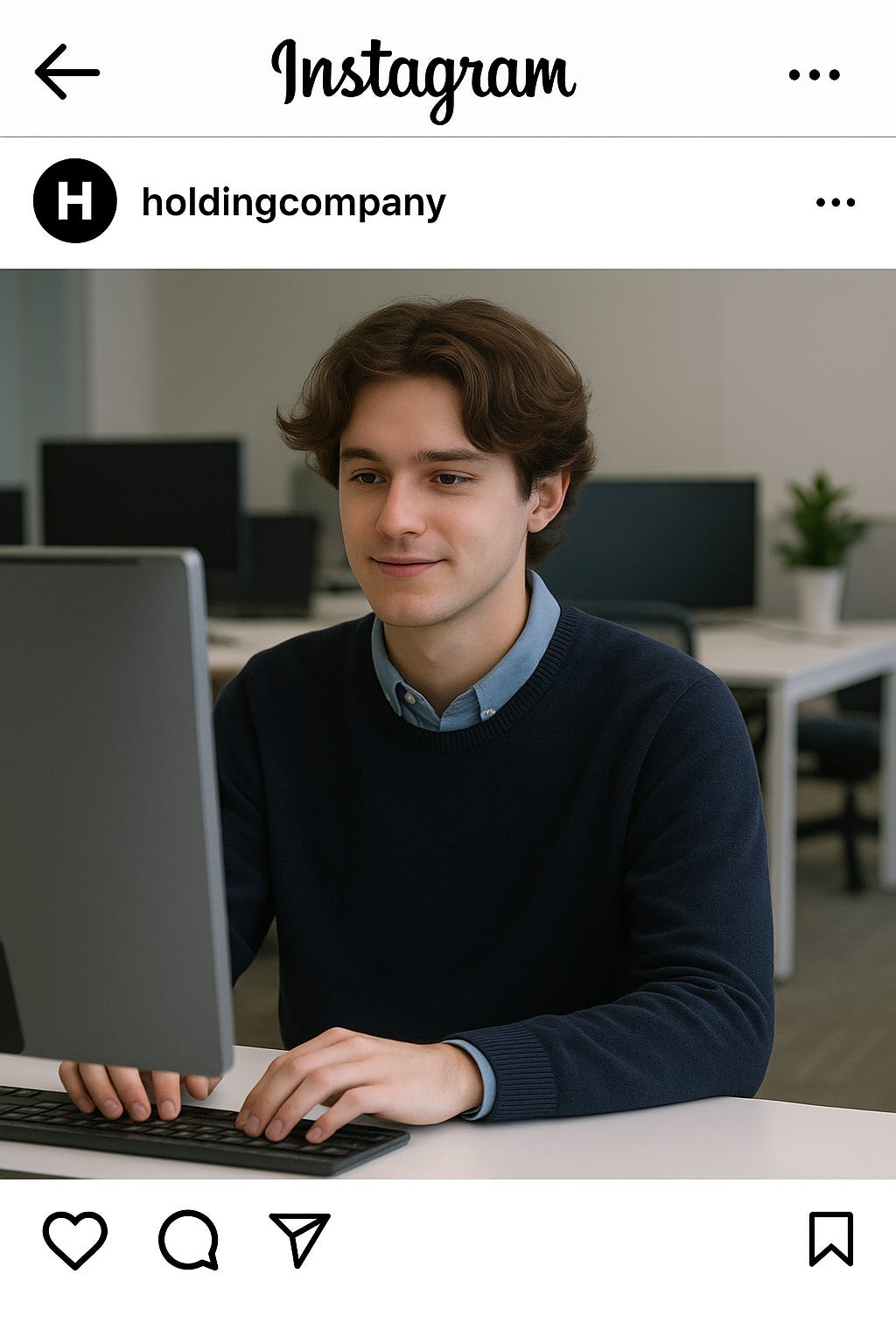
But the above graphic (made entirely by AI, the irony) illustrates where the playbook goes. I was imagining what a holding company like WPP would do with that? Could they add AI agents to their org chart? Could they then put those AI staffers into their pitches. And upon winning the pitch bill the AI agents just like regular employees with billable hours? How much could you charge for an AI Agent hourly?
For agencies, that’s all the signal you need. In a world of AI agents, and failing holding companies grasping at AI, smaller human teams, sharper roles with actual taste and talent and AI doing some lifting in the background like doing my stupid timesheets or moving something from Google to Slack to Jira. Not creating an army of bot employees to replace humans.
The winners won’t be the ones clinging to bloated org charts or even ones making bloated AI Agent org charts, they’ll be the ones proving that a few smart people plus the right tools can out-create and out-deliver an army.
Back to Parker who really cooked with this key part:
“The future is SWAT teams: small, nimble groups of experts doing the kind of work they want to do in their own way.”
Legacy agencies have become black holes, dirty machines designed for “one message for many” now trying (and failing) to pump out “many messages for even more.” They collapse under their own process, real estate, bureaucracy and army of AI agents.
The SWAT team model flips that: small, senior squads with nothing to prove but the work itself. Less admin, more output. Clients won’t just getting better ideas—they’ll finally be getting them from humans who still give a damn.
To prove the point I asked my ChatGPT the question on what would the CEO at Cracker Barrel have done with an army of AI agents instead of a human team. The answer is pretty fascinating.
“Would an army of AI agents have greenlit the Cracker Barrel brand refresh? Hard to say. On one hand, AI might have spotted the obvious—don’t mess with the cowboy when the cowboy is the memory. On the other, if you feed 12,000 bots the wrong brief, you don’t get clarity, you get 12,000 variations of the same mistake.”
Because sometimes the data says modernize, but the gut says keep the cowboy.
Drink Cart Approved™ agency discussion topics
Have you heard about the Star Wars Reylo fanfiction that blew up on BookTok as a bestselling romance, turning fandom into mainstream pop culture?
I love this lesson about polish. Google shipped Maps in 2005 and just skipped Europe.
This was all I needed to read in health news.
What in the world is awe dropping Tim Cook?
Norway covered up all branding on nicotine packaging, and made them look 100x cooler.
Stll thinking about this stat that Meta runs 10,000 A/B tests at any given time.
Ad history Wang Laboratories (1980)
Wang Laboratories was once a giant, building word processors and minicomputers that made it billions before the PC boom. And they made amazing ads like this puzzle one too. At its peak in the early 80s, Wang had 30,000 employees worldwide.
But in 1986, the founder handed the reins to his son, who bet big on the company’s aging word processor line instead of shifting to personal computers and networking. Ouch. While IBM and Apple ran forward, Wang doubled down on the past—and the company slid into decline by the end of the decade. But these incredible ads are still here to marvel at.
Ad History: Nike Plays Stickball (1999)
In 1999, Nike didn’t sell sneakers, they sold the joy of baseball.
They jam-packed Mets and Yankees stars in a stickball game on a New York street, surrounded by kids, noise and cracked pavement. For a few frames, thousands of New Yorkers weren’t just watching an ad, they were transported back to the good ol’ days: when baseball was less contracts and lockouts, more chalk lines and third base was the trash can, for awhile anyway.
That’s the magic of the spot. It wasn’t about who won or lost, it was about reminding fans why they loved the game in the first place. Nostalgia, bottled and replayed at 30 frames per second. 10/10.
Design History: KFC Brand Standards (1992)
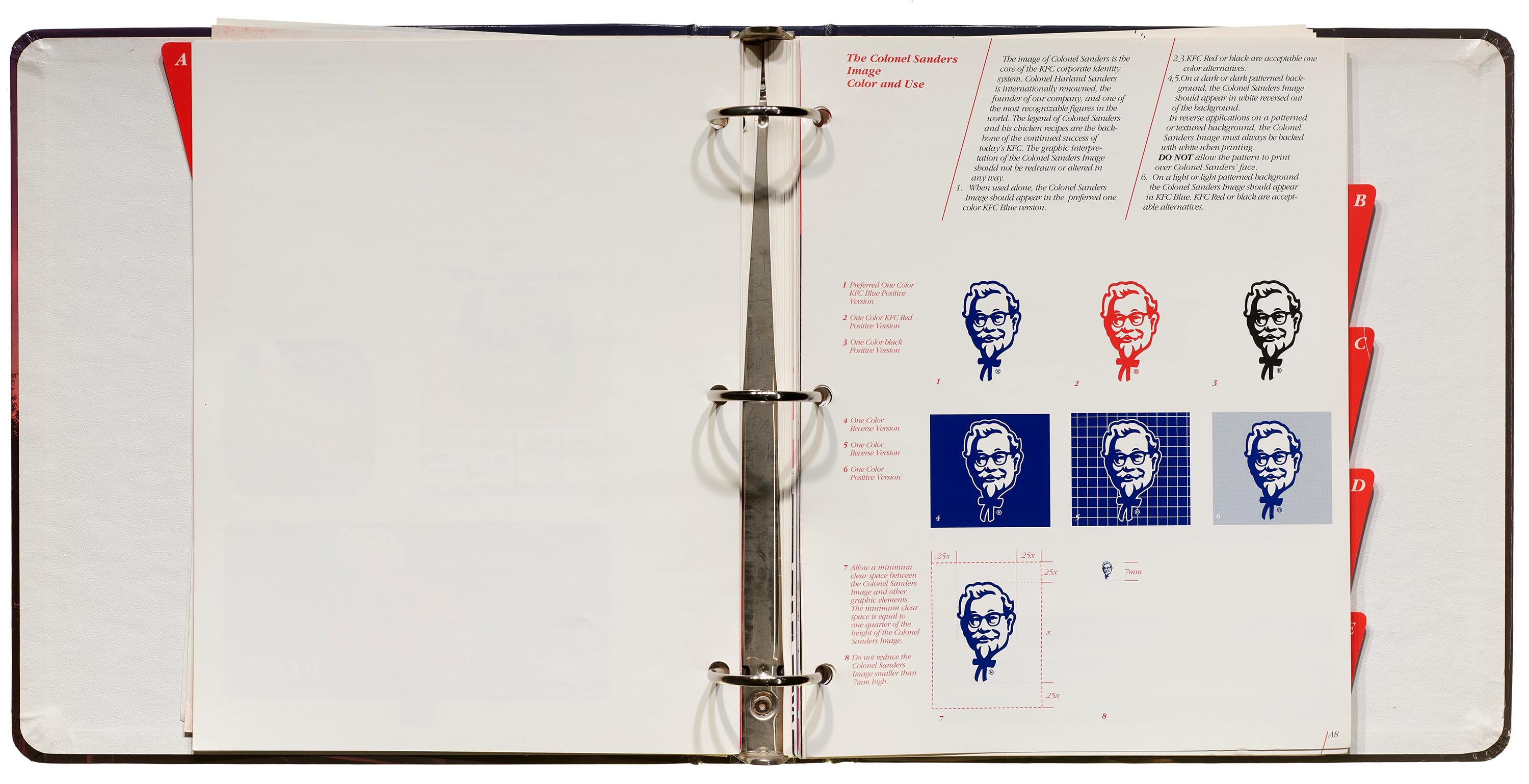
I’m not sure there is anything more soothing, and so retro cool this week as a few images from the 1992 KFC brand guide in glorious 3-ring binder glory.

Ad history: TIAA-CREF (1996)
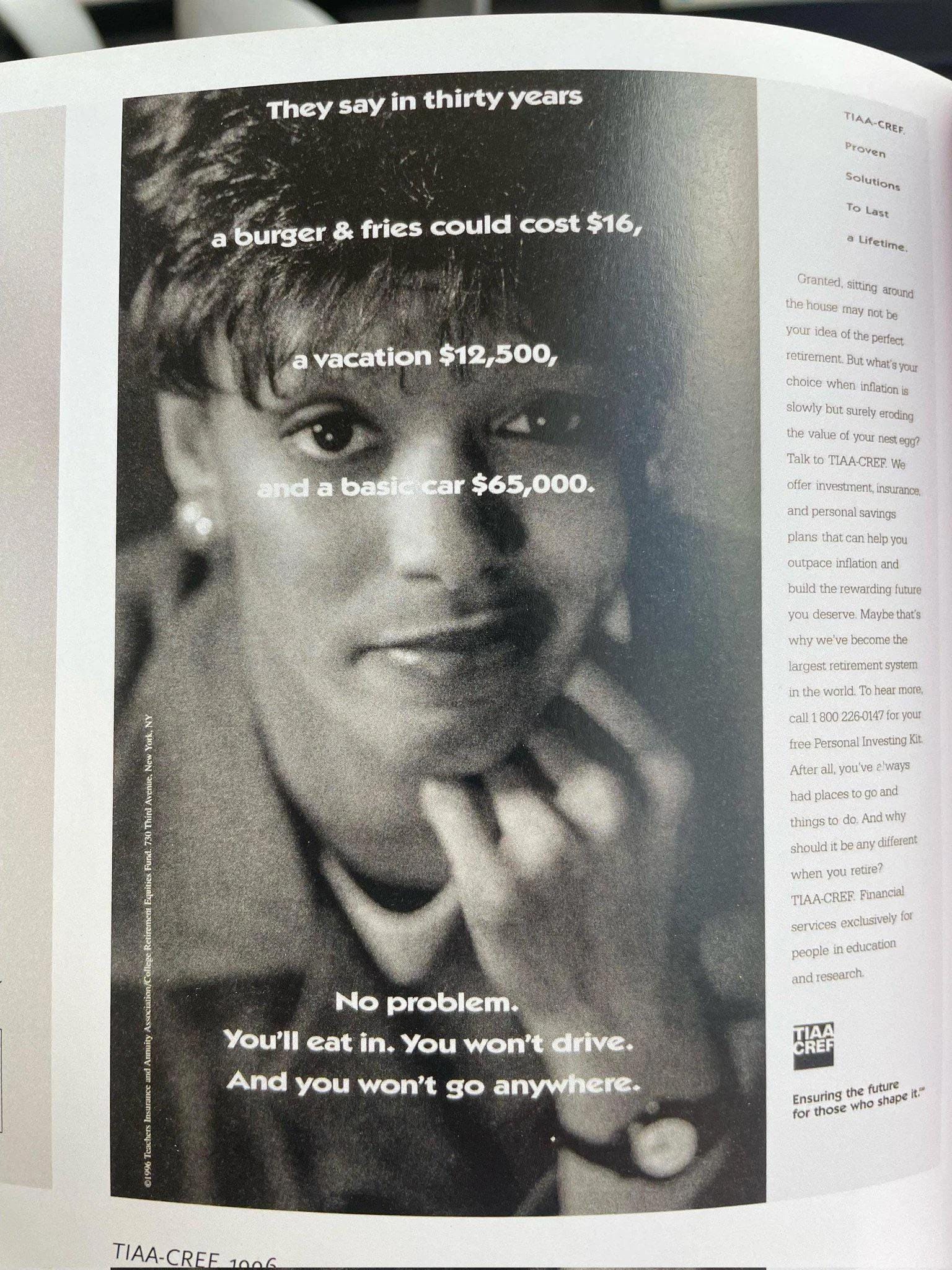
In 1996, some agency copywriter sat at their desk and typed: a burger & fries will cost $16, a vacation $12,500 and a basic car $65,000. Nearly thirty years later, they weren’t just close, they were spot on.
So was the brief that good? Did the copywriter know something the rest of us didn’t? Or are we looking at the first confirmed case of time travel in financial services marketing?
Either way, it’s a rare ad where the punchline aged into prophecy. Next time you’re writing copy, remember, you might be accidentally writing history that ends up on Reddit in 30 years.
Probably the best use of an Instagram carousel,ever?
I mean if you’re going to use all 20 images in an Instagram carousel, it better be a super long wiener dog doing the lord’s work for Pillsbury. And I’m willing to give the social team a break for posting about the Swift Engagement. But I will question why that post got 25,646 likes and this incredible dog one is only at 5,260. That is a marketing crime. I’ll ask again, why does the puff pastry need to post about that?
Last call: The Drink Cart Boardroom Grasshopper
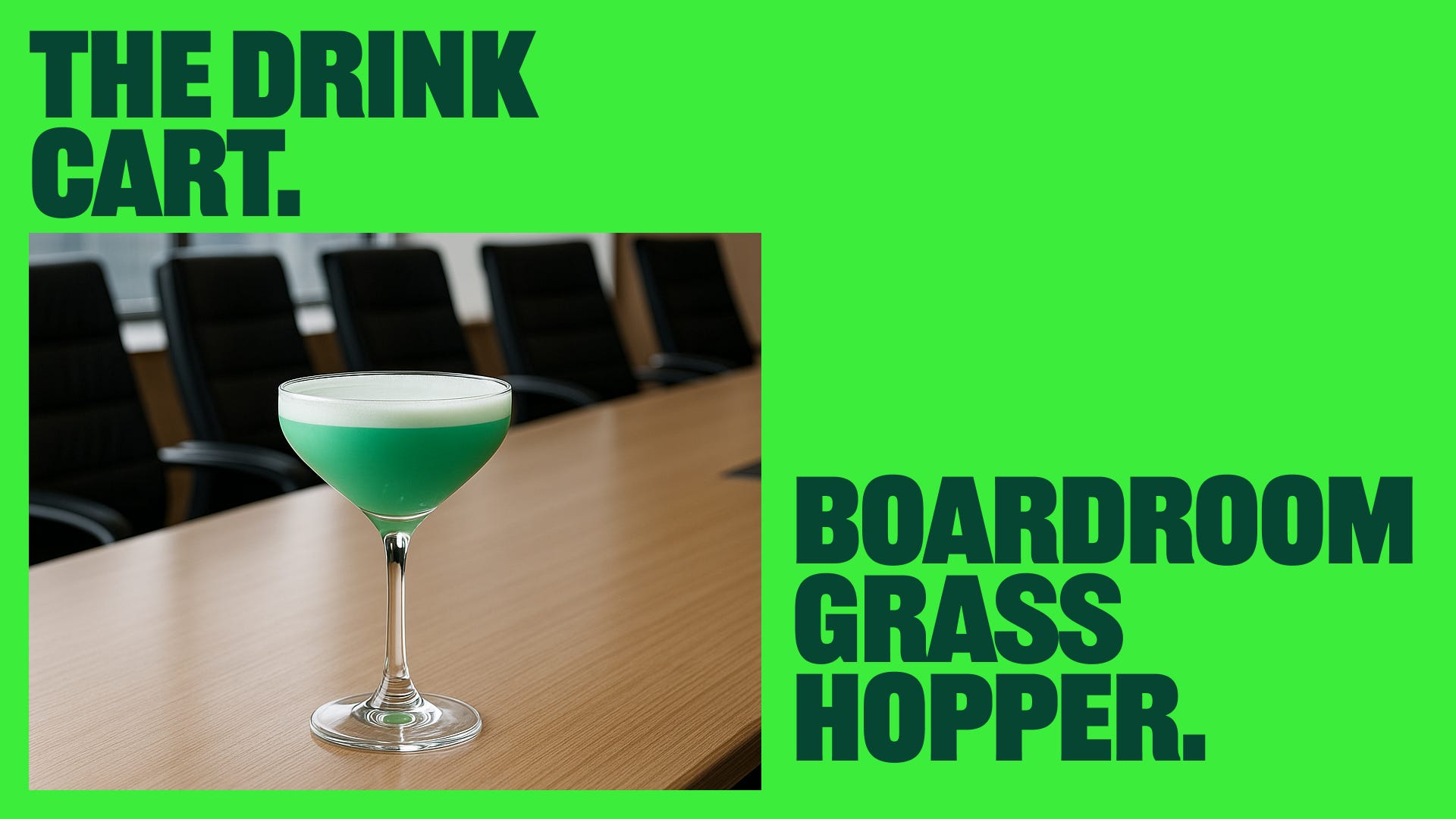
A grasshopper walks into a bar. The bartender laughs and says, "Hey, we have a drink named after you!"
The grasshopper looks at the bartender, with a look of extreme confusion on his face, and says, "You have a drink called Steve?"
And there you have it, the very first Drink Cart cocktail joke. As Fozzy Bear would say, waka waka.
But seriously, why are we drinking this retro gem? Mostly because we have some creme de menthe at the back of our drink cart nd we need to use it.
The Grasshopper cocktail is said to have hopped off the competition circuit in New York circa 1918, where New Orleans bartender Philibert Guichet earned second place for his dreamy mint-and-chocolate concoction.
He then brought it home and made it a legend at Tujague’s. Named for its vibrant green glow, the Grasshopper rocked the party scene in the ’50s and ’60s as sweet, creamy after-dinner indulgence. The most interesting part is that behind the lore lies a simpler ancestor—a layered pousse-café called a 'grasshopper' dates as far back as 1908. Boy do I remember talking an awful lot about pousse-cafés as a bartender in the late 90s. But it was Guichet’s silky shake that turned this into the dessert-in-a-glass we are raising in the agency today.
Here’s my take:
1 oz Crème De Menthe
1 oz Crème De Cocoa
1 oz Heavy Cream
3/4 oz White Rum or Vodka
Shake that over ice and strain into your fancy glass.
Shave some chocolate over top.
Speaking of cocktails, here’s the interesting idea behind the invention of the cocktail party. Alec Waugh swears he invented the cocktail party in 1924 London. Translation: he was sick of tea and thought rum at 5:30 sounded better. History says St. Louis beat him to it, but nobody brags about inventing “the luncheon.”
Did you know dim lighting leads to more drinking in bars? Apparently the Tokyo Ritz Carlton tracked orders and with the lights were brighter guests drank on average 3.5 drinks. When the lights were dim that number shot up 37% to 4.8 drinks per guest.
The Drink Cart is your weekly fuel for pop culture brains and ad junkies. A cocktail of ad insights and hot takes that feel like you’re hanging at your favourite dive bar after launching your latest campaign.
Agreed. The KFC brand guidelines are very satisfying.
The Drink Cart cocktail joke is a very welcome addition to your newsletter format!