


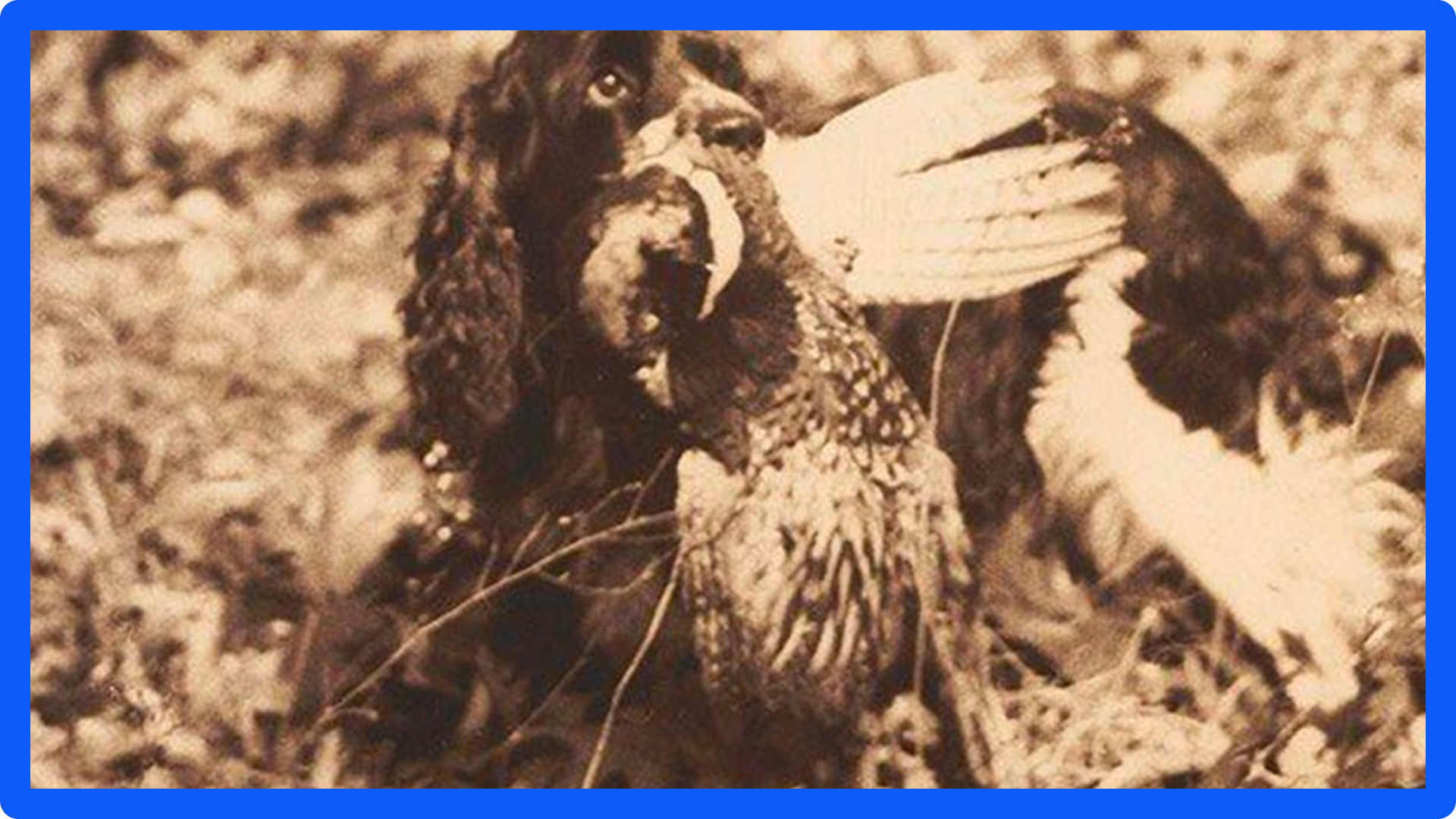
The most famous preppy shoe in American history was designed by a cocker spaniel.
Now that is how you start a newsletter.
His name was Prince. He was a good boy.
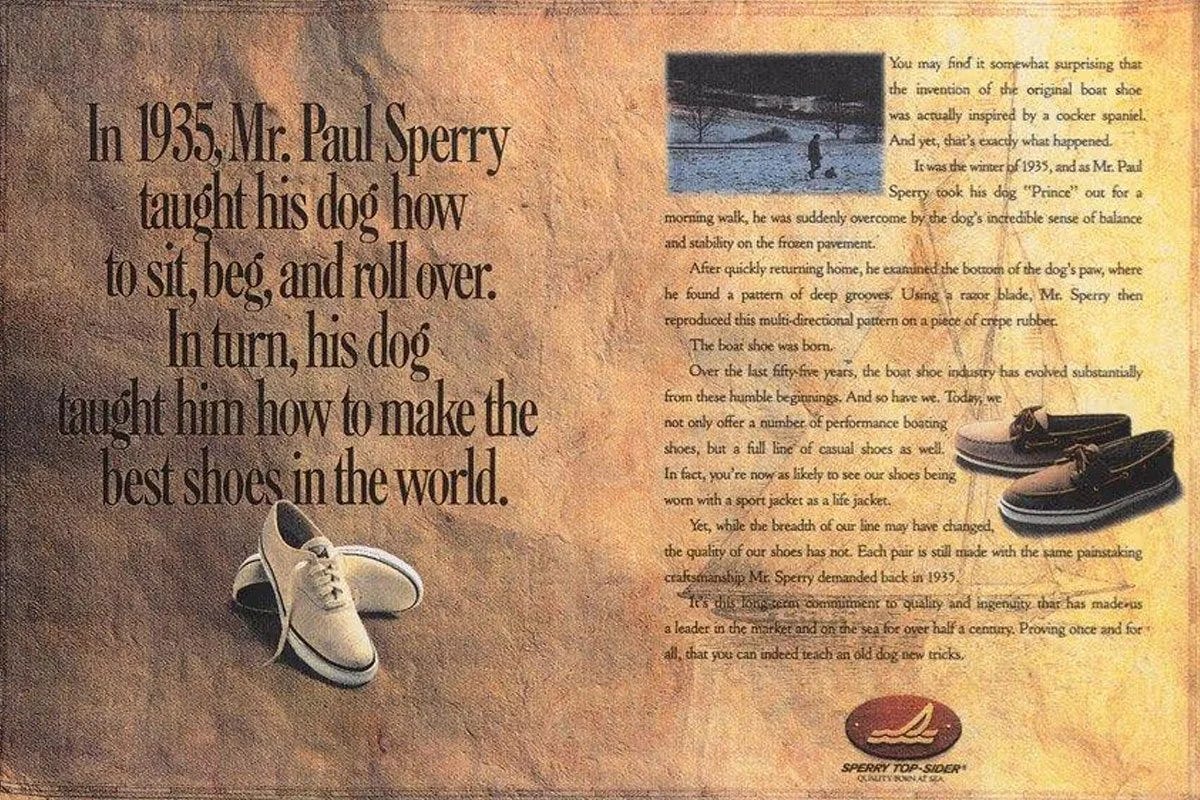
He belonged to a Connecticut sailor named Paul Sperry. On a winter day in 1935 Prince ran down an icy hill without slipping. Writing that brought back vivid memories of falling on the ice and snow and tearing my quad while walking my own dog. You can read about him here.
I could have used some ice shoes back then. Sperry wondered how the dog did it. He investigated the dog’s paws and noted that Prince had grooves on his paw pads that gripped. Sperry’s shoes did not.
Nearly a hundred years later that same paw print inspo is on the bottom of every Top-Sider ever created.
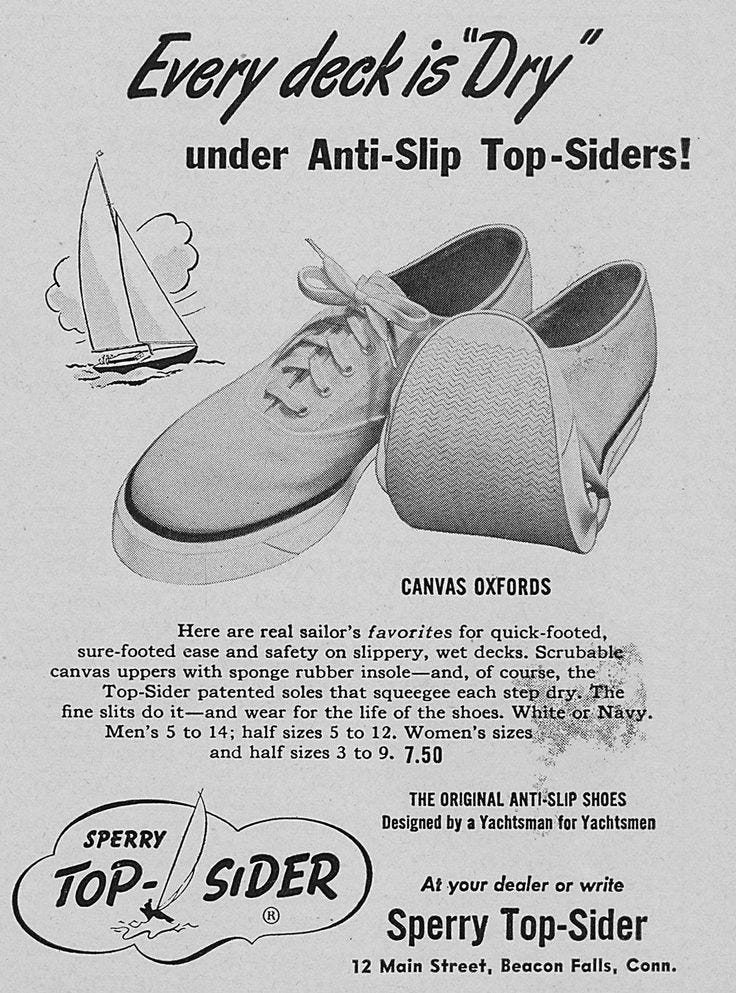
“Designed by a Yachtsman for Yachtsmen.” Not one mention of a cocker spaniel in this one. The dog got totally cut out of the credit in the early days.
A PENKNIFE AND A BAD WINTER
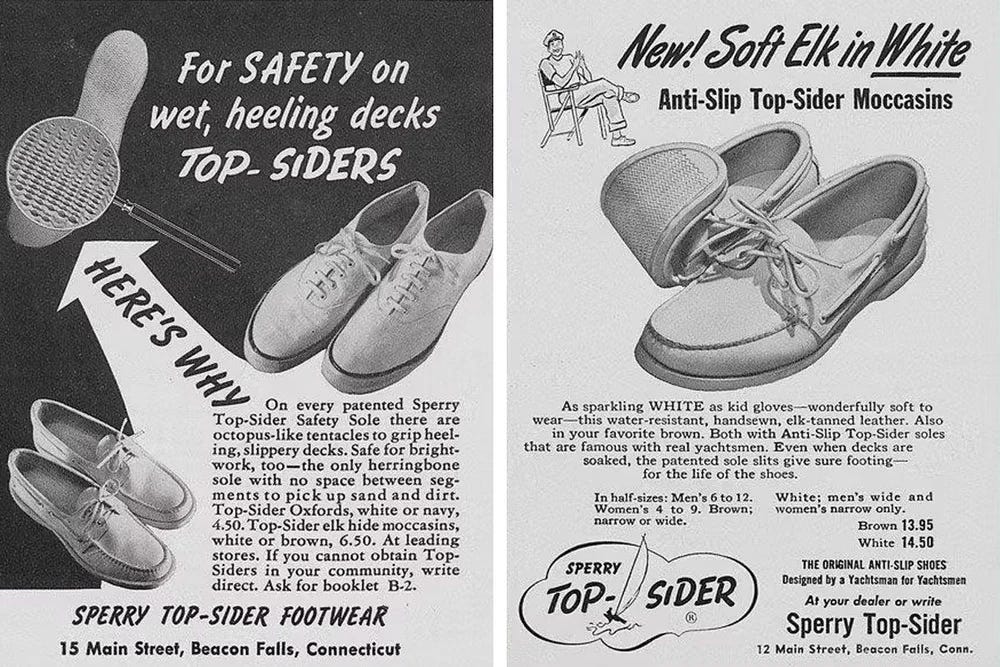
Sperry did all this because he claims to have slipped on the deck of his boat on Long Island Sound and went overboard. Paul’s own fall made it into the first ads. This one opens with “Wet decks — responsible for most of the accidents in yachting,” then promises the shoe won’t slip “the decks wet or submerged.”
Legend says he got back on the boat, but that scare stayed with him. At least that’s how Wikipedia tells it.
So the brand has this origin story of a sailor and inventor who nearly lost his life to a slippery deck and then was inspired by his dog.
This was not a light bulb eureka moment. Sperry spent the winter of 1935 trying different soles and none of them worked. Until Prince ran on the ice.
Even after the dog, the first version was a complete disaster.
Sperry made diagonal slashes in the rubber with a penknife. The zigzag pattern only showed up in the patent once he had a machine that could cut it. He started with straight cuts even though Prince’s pads ran in several directions. That sounds like a shortcut AI would try to pull off.
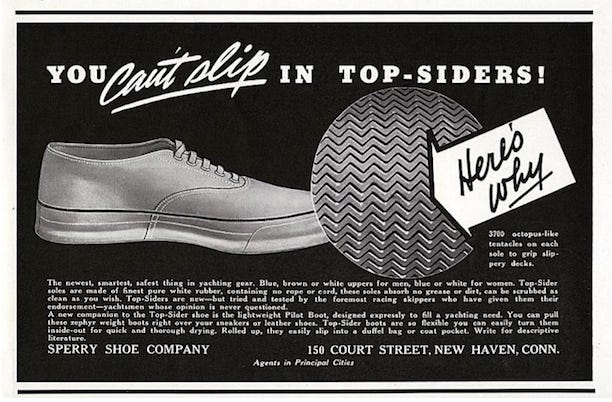
By the time the machine took over, the ad copy had gone full sci-fi: “3700 octopus-like tentacles on each sole to grip slippery decks.” It also says the shoes were “tried and tested by the foremost racing skippers,” and calls those skippers “yachtsmen whose opinion is never questioned.”
The finished shoe had a canvas upper and herringbone siping. It also had a white sole so it wouldn’t leave dark scuffs on a boat deck.
The leather version that sits in your closet came later through a partnership with Commonwealth Shoe and Leather Co., which made a water-resistant tanned leather.
The brand calls it the Authentic Original, which nobody has ever said out loud. We just call them Top-Siders.
THE NAVY TOOK THE SHOE. PAUL TOOK A PAINTING.
The Top-Sider was a niche boater product until 1939, when the U.S. Navy bought the right to make it. In 1940 Sperry sold the brand to U.S. Rubber and reportedly took an oil painting of himself as part of the deal.
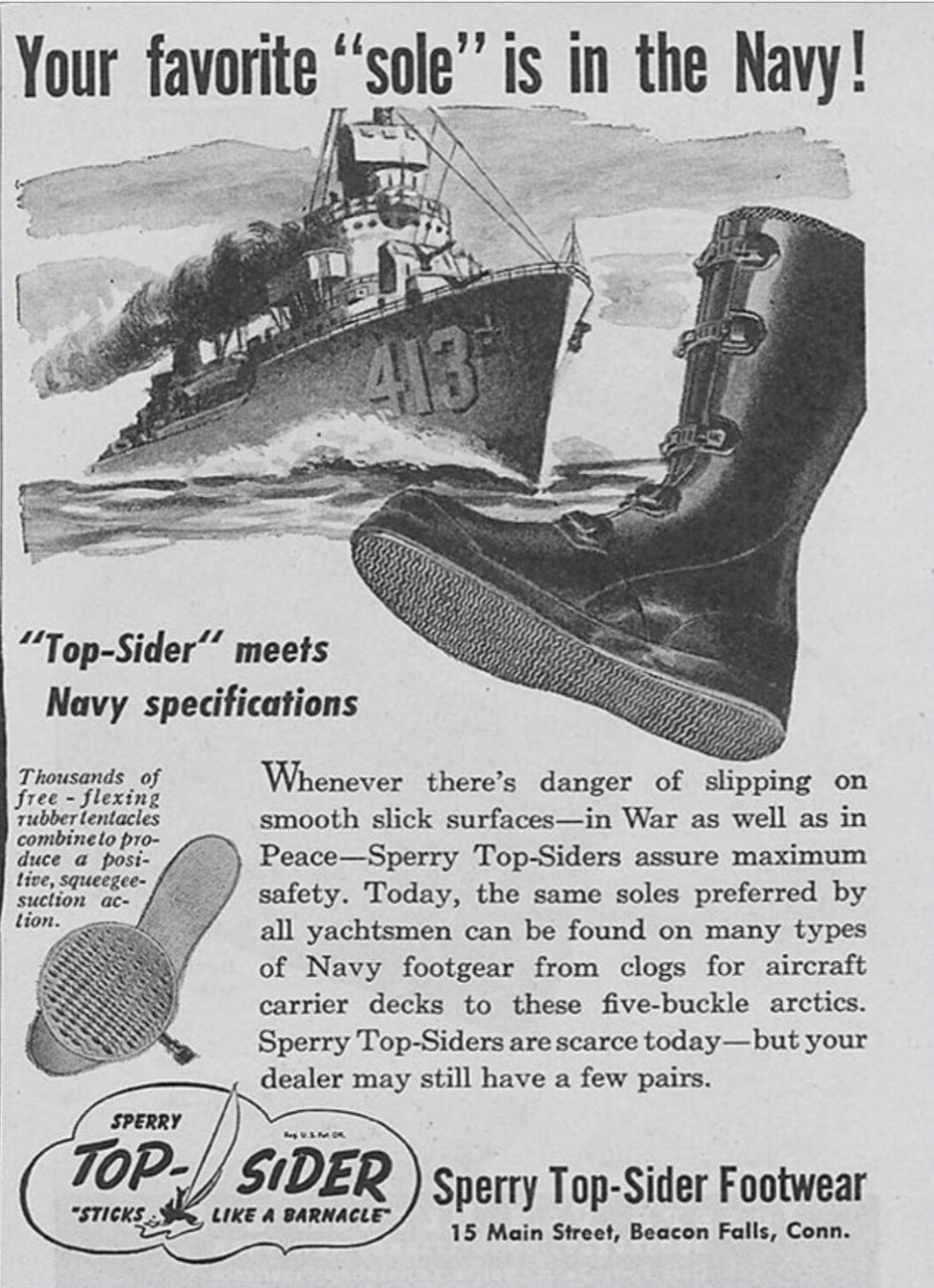
The wartime ads brag that the shoe is in the Navy, then admit Top-Siders “are scarce today.” The sole keeps getting new metaphors. It starts out with “3700 octopus-like tentacles,” then “3700 rubber jaws,” then it “sticks like a barnacle.” Nobody even mentions the dog.
A JOKE BOOK DID MORE THAN ANY AD
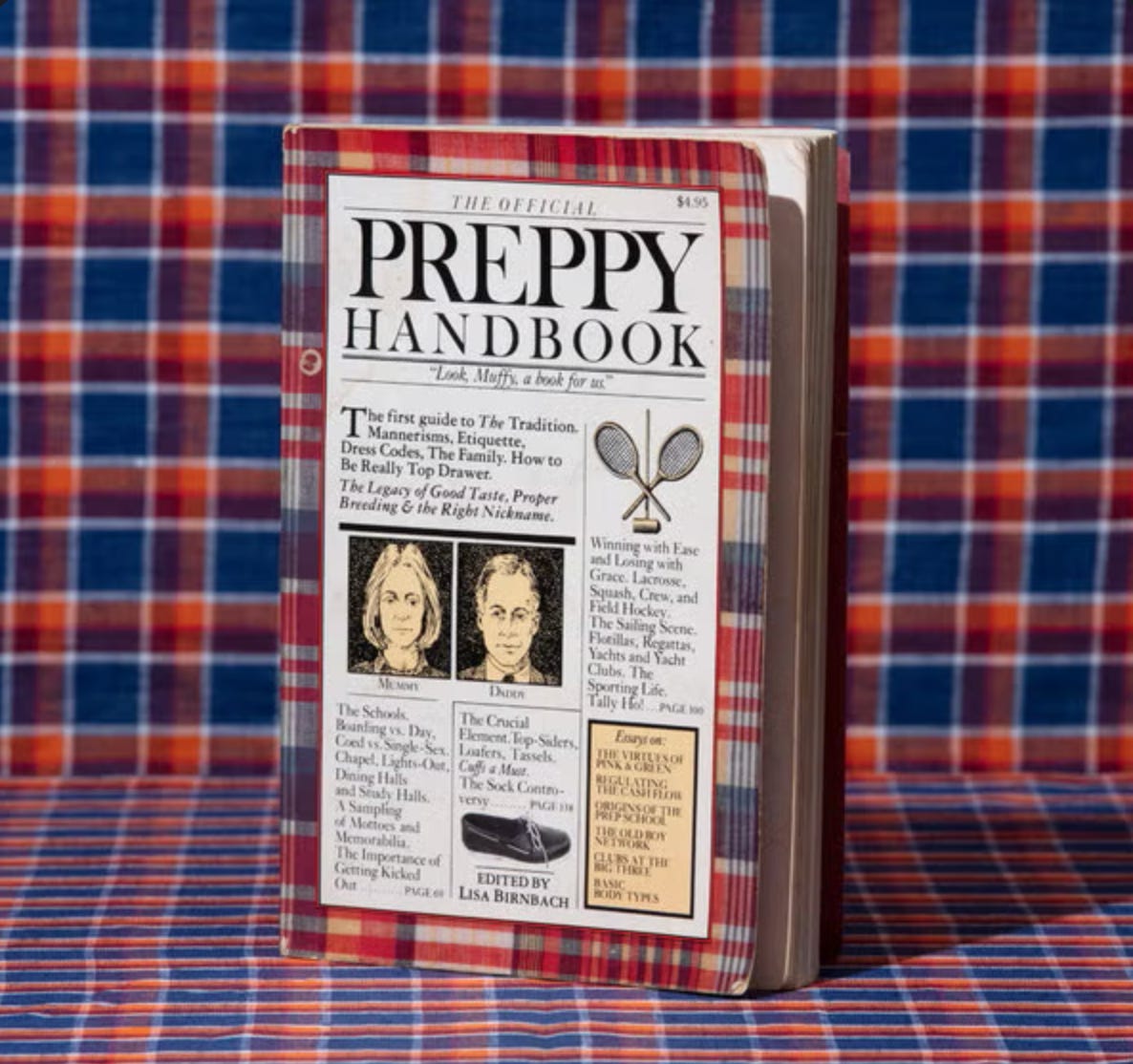
In 1980 The Official Preppy Handbook called Top-Siders “the automatic choice with khakis” and put a pair on the cover. It was satire.
Thinking about preppies makes me think about PJ O’Rourke, one of my all time favourite writers. He would write Modern Manners: An Etiquette Book for Rude People. It was three years later and arguably a response to the Handbook.
He would say things like, “You can’t buy happiness, but you can buy a yacht big enough to pull up right next to it.” And, “There are a lot of mysterious things about boats, such as why anyone would get on one voluntarily.”
In truth, the Handbook viewed Top-Siders as effortless Ivy League staples, while O’Rourke found them symbols of weather designed for leisure not labour. In fact that all shoes are tools of the rich designed to get poor people to “wear crippling foot fashions. This keeps them too busy with corns and bunions to compete in the job market.”
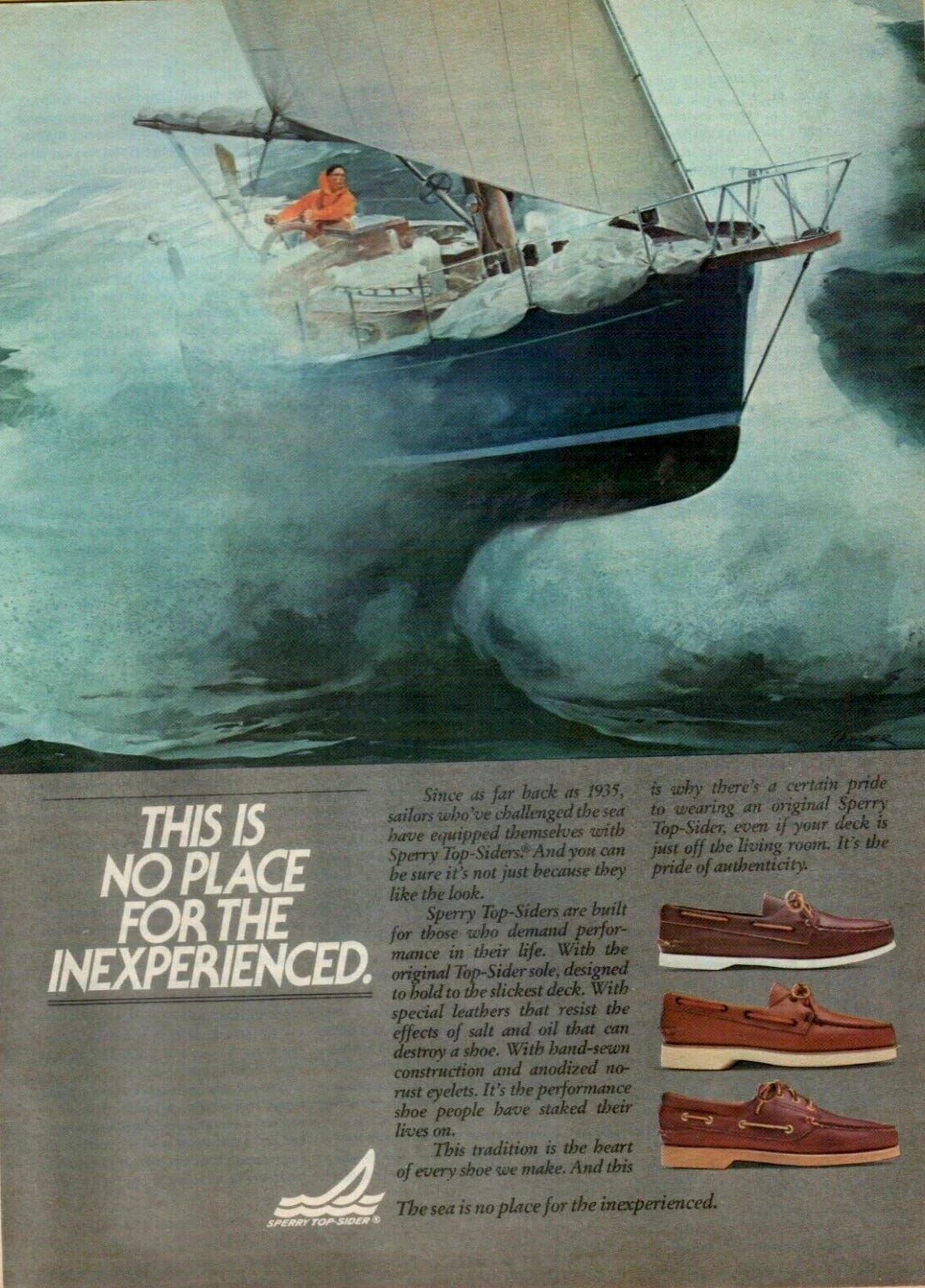
Sperry knew who was buying his shoes. One ad puts a yacht in a storm under “This is no place for the inexperienced,” then the body copy praises the pride of an original Top-Sider “even if your deck is just off the living room.”
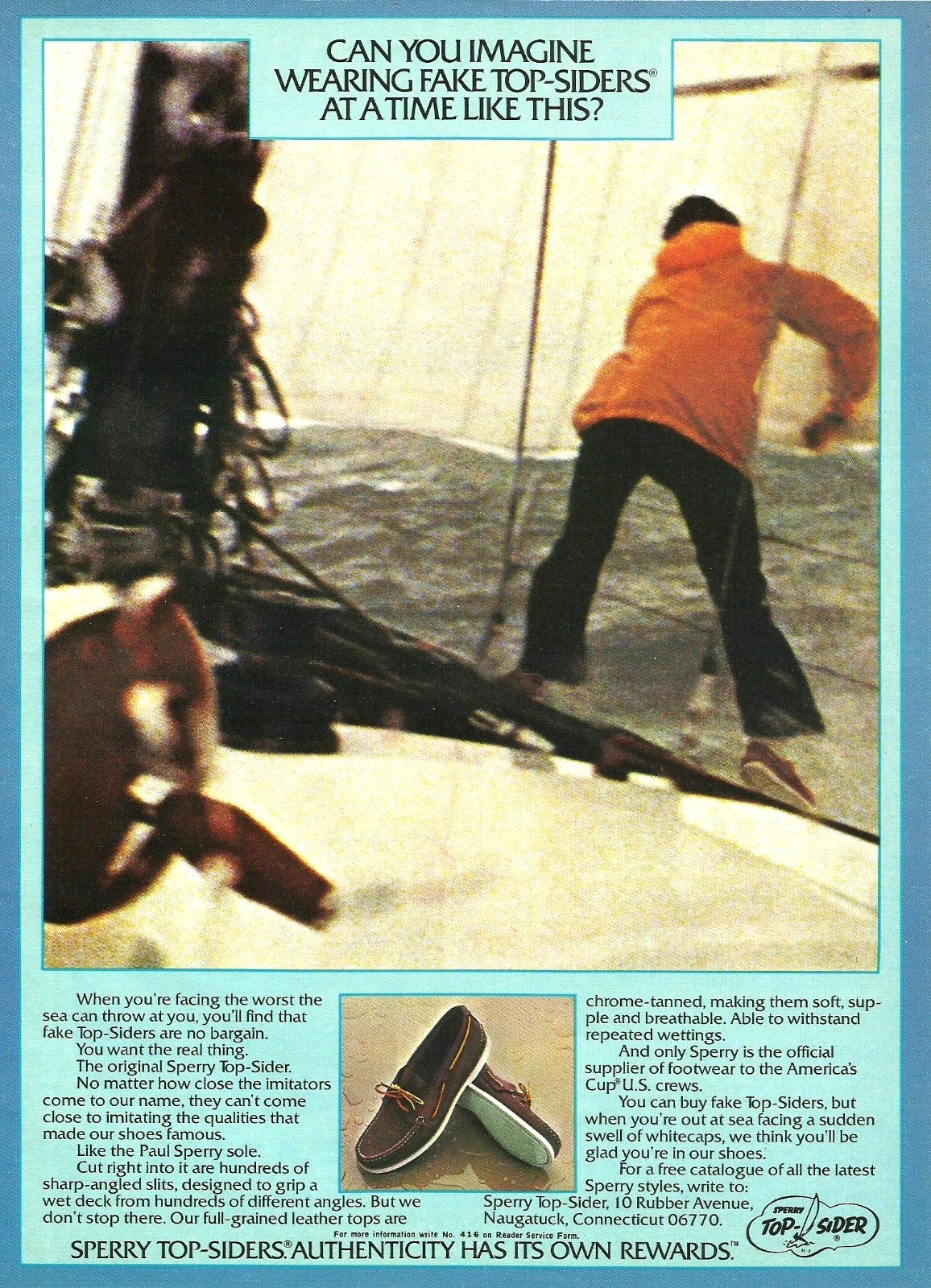
Then the knockoffs showed up and Sperry got touchy. “Can you imagine wearing fake Top-Siders at a time like this?” Tagline: “Authenticity has its own rewards.”
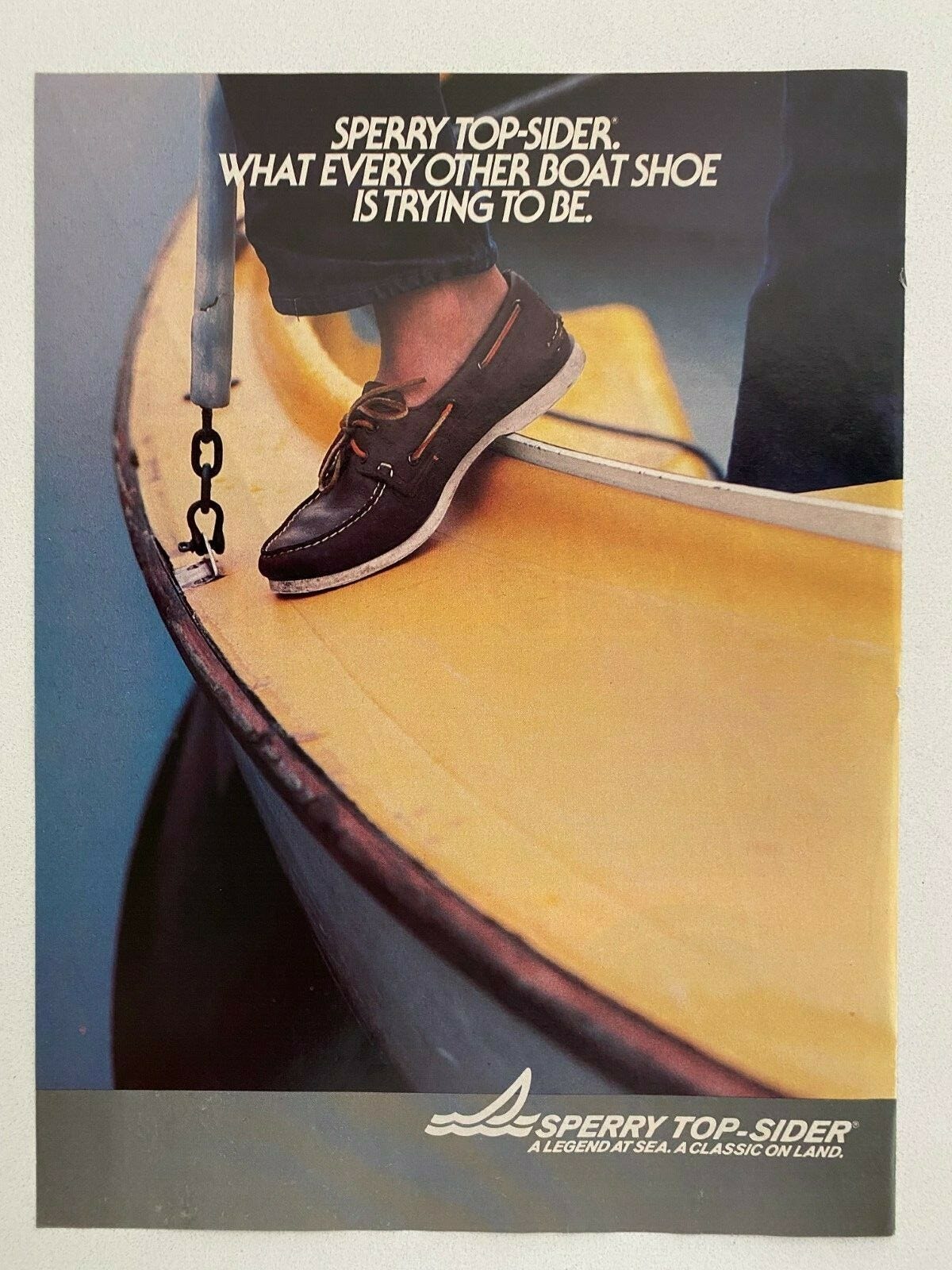
Eventually Sperry quit arguing about the copies and just announced it in an ad: “What every other boat shoe is trying to be.”
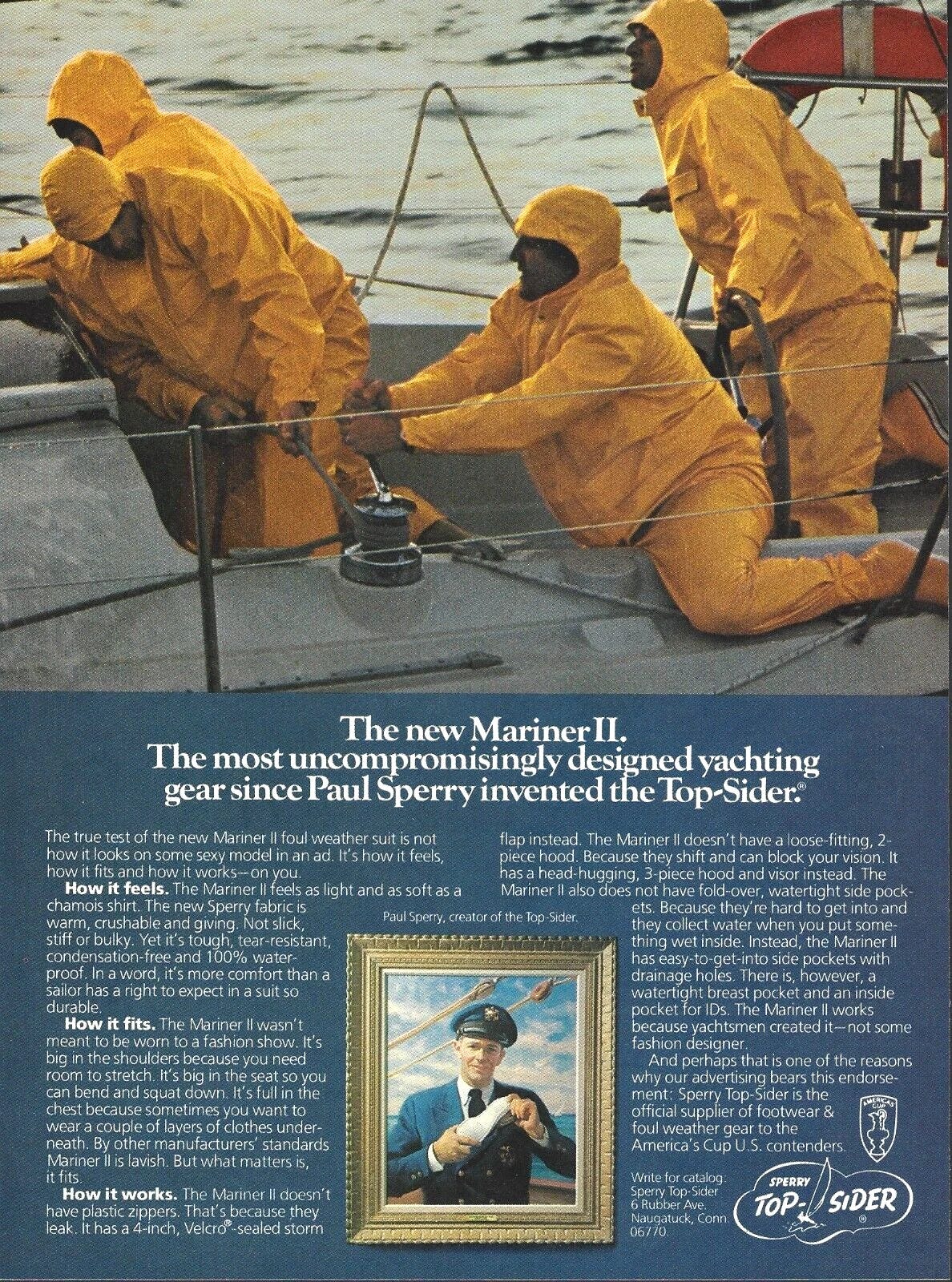
And maybe this is the painting? It shows up framed in gold in a foul weather gear ad captioned “Paul Sperry, creator of the Top-Sider.” The founder sold the company for a portrait. The company used the portrait to sell raincoats.
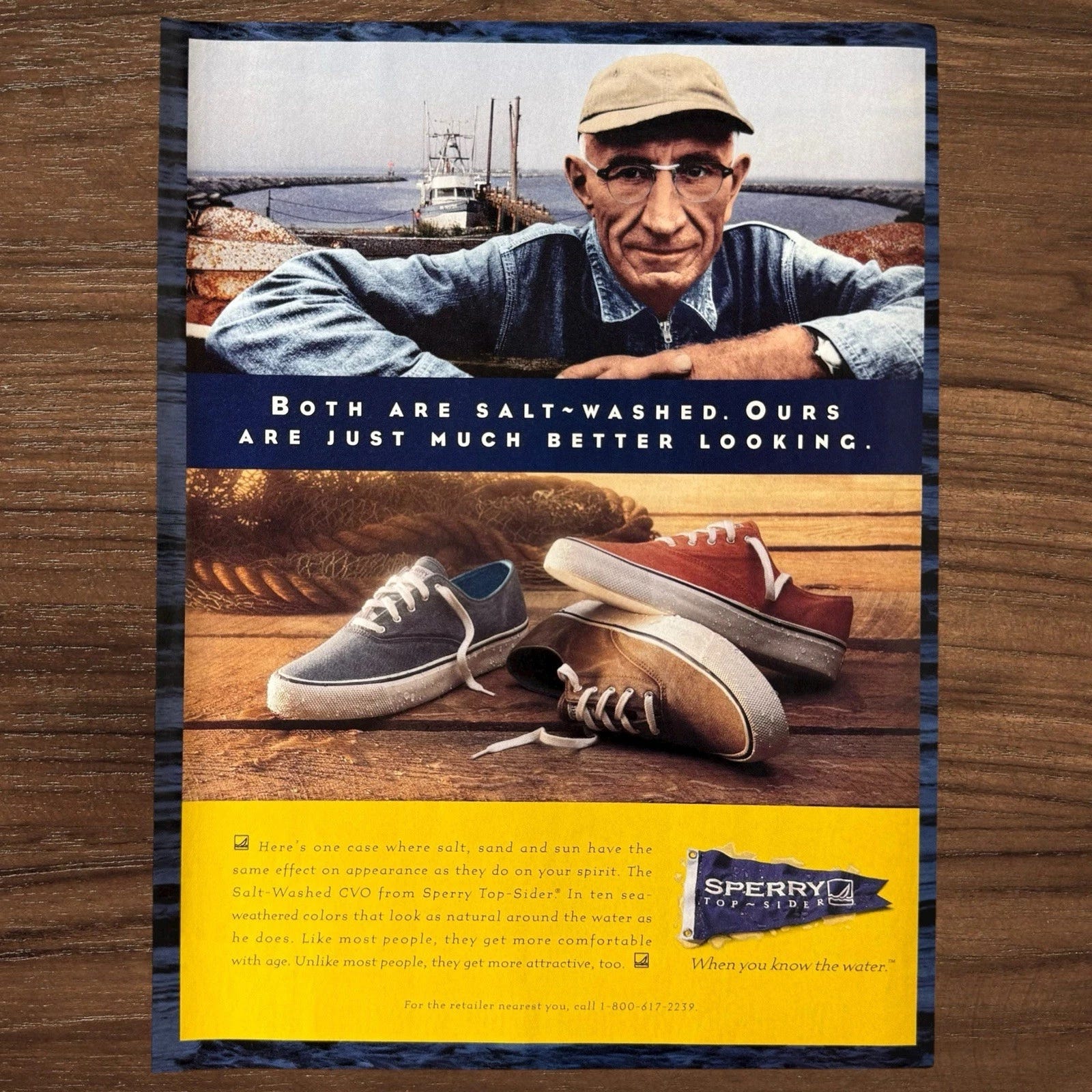
By the ’90s the shoe was, per the Boston Globe, “the sartorial equivalent of Wang Chung.” Sperry’s answer was an ad that put a weathered fisherman next to its sneakers and told him they were better looking than he was.
In 2024 the brand sold again for about $130 million to Authentic Brands and Montreal’s Aldo Group.
PENCILS DOWN
The paragraph that started this newsletter was all confidence. The sailor nearly died. The Navy made it standard issue. Legend says JFK wore it the night PT-109 sank. Several of those aren’t true.
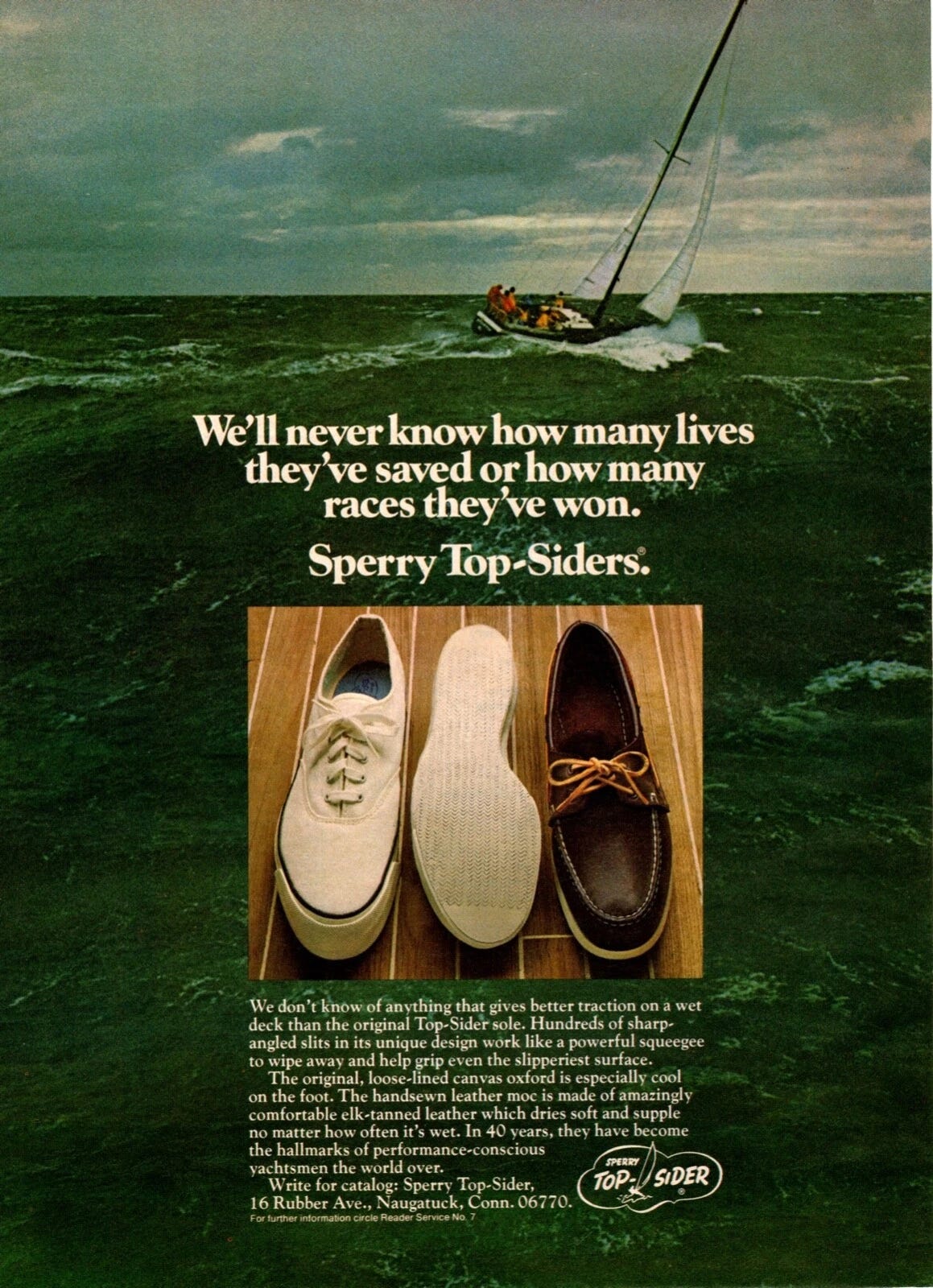
One mid-’70s Sperry ad got it right: “We’ll never know how many lives they’ve saved or how many races they’ve won.”
Today anyone can prompt their way to a heritage story in four seconds, complete with JFK naval origin story.
Sperry looked at his dog’s foot and ended up creating a heritage brand.
COCKTAIL OF THE WEEK: THE DARK ‘N STORMY
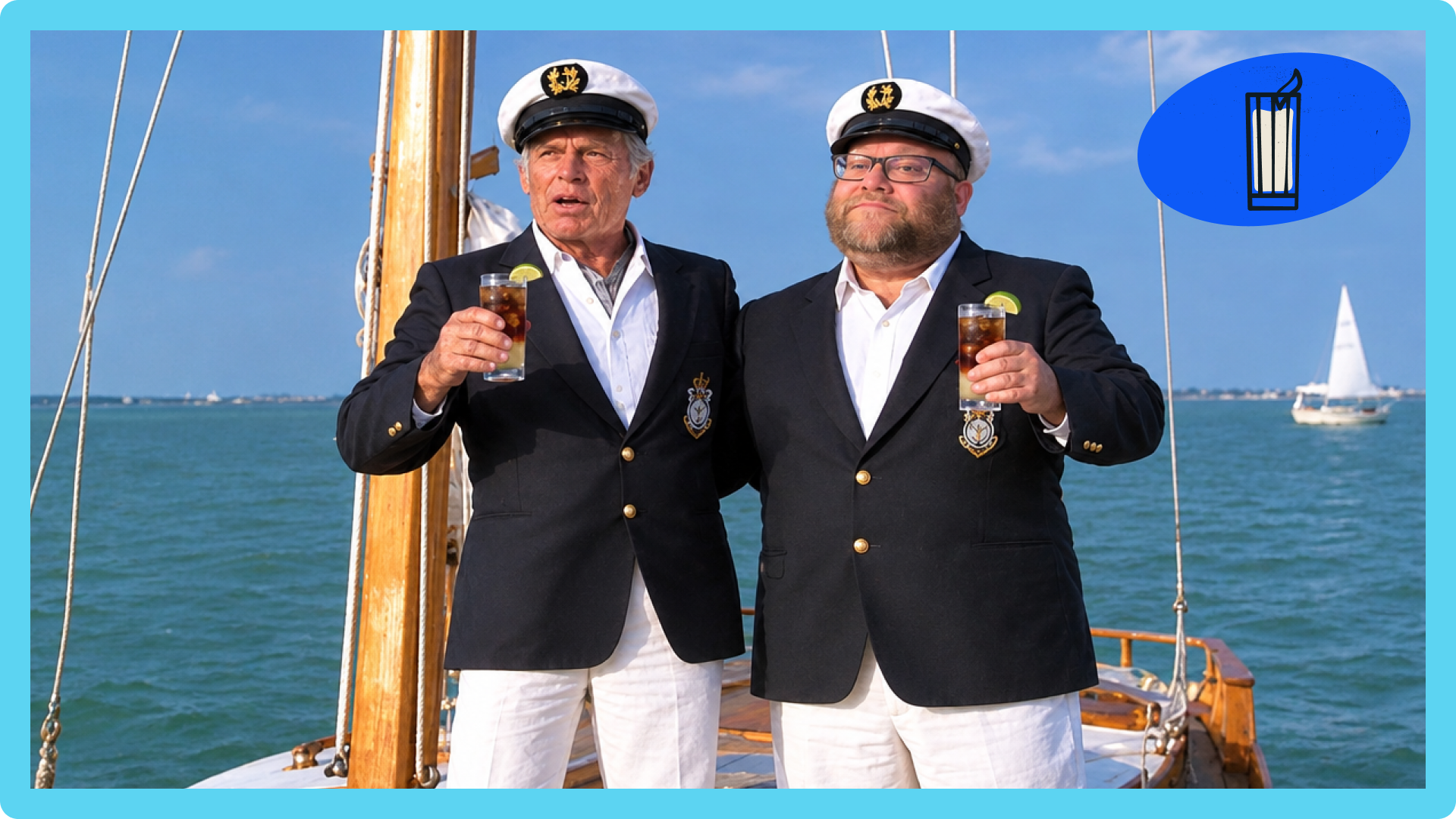
If any drink belongs next to a heritage brand that guards its own legend, it’s this one.
The story goes that sailors in Bermuda mixed ginger beer from a factory run by the Royal Navy officers’ club with Gosling’s Black Seal rum. Gosling’s tells that story in a federal court complaint, which is where all the best origin stories end up.
Gosling’s first trademarked the Dark ‘n Stormy in 1991 when it started selling a premixed version. The company has since stretched that trademark to cocktail kits and clothing and even the recipe. Gosling’s says a real one uses its rum and nothing else.
They mean it. In 2009 they went after Zaya rum for suggesting it could stand in. The same year they sent a cease and desist to a blog that asked readers which rum was best for a Dark ‘n Stormy. In 2015 they sued Pernod Ricard over a recipe on its website that used Malibu.
They even put the threat in an ad that seems lost to time: “Most cocktails come with a napkin. The Dark ‘n Stormy comes with a trademark.”
Dark ‘n Stormy
1.5 oz Gosling’s Black Seal rum
4 to 5 oz ginger beer
Lime wedge
Fill a highball with ice and add the ginger beer. Float the rum on top. Garnish with the lime wedge. If you use another rum, it’s still a really good drink. You just can’t call it that in print, legally speaking.
And just think, I got through this entire newsletter without side-questing a bunch of America’s Cup stories. You’re welcome.
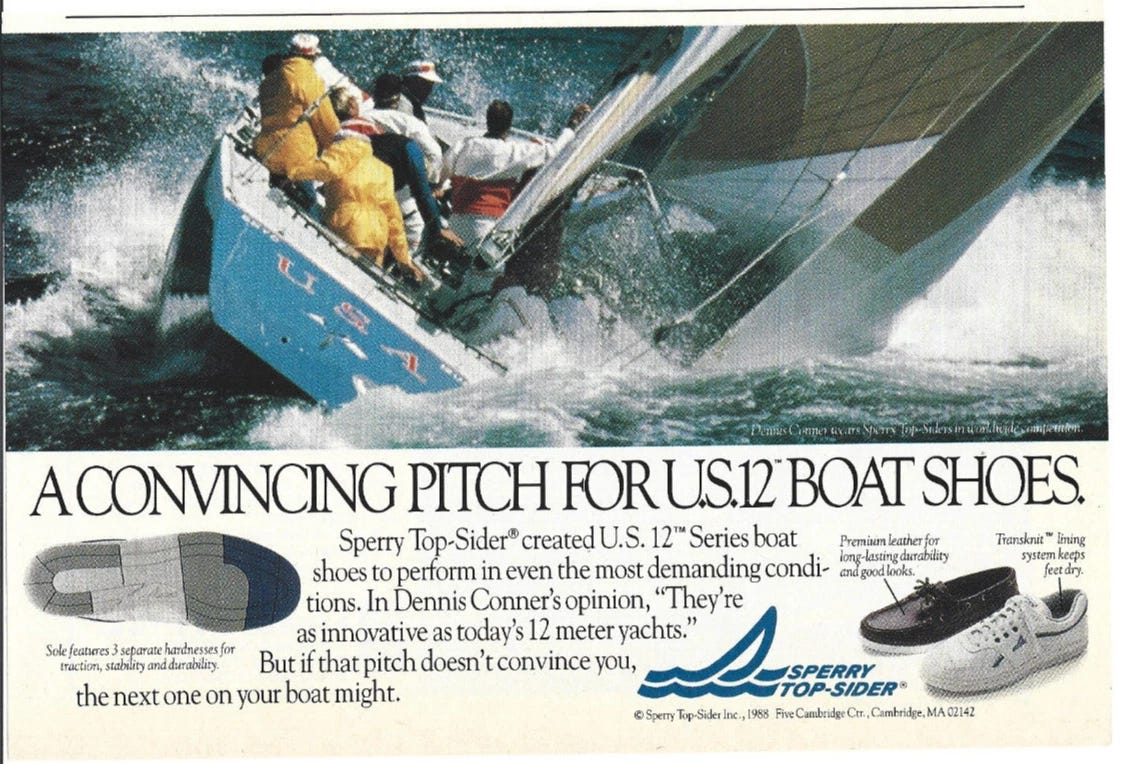
What a piece! I love my blue Top-Siders.