

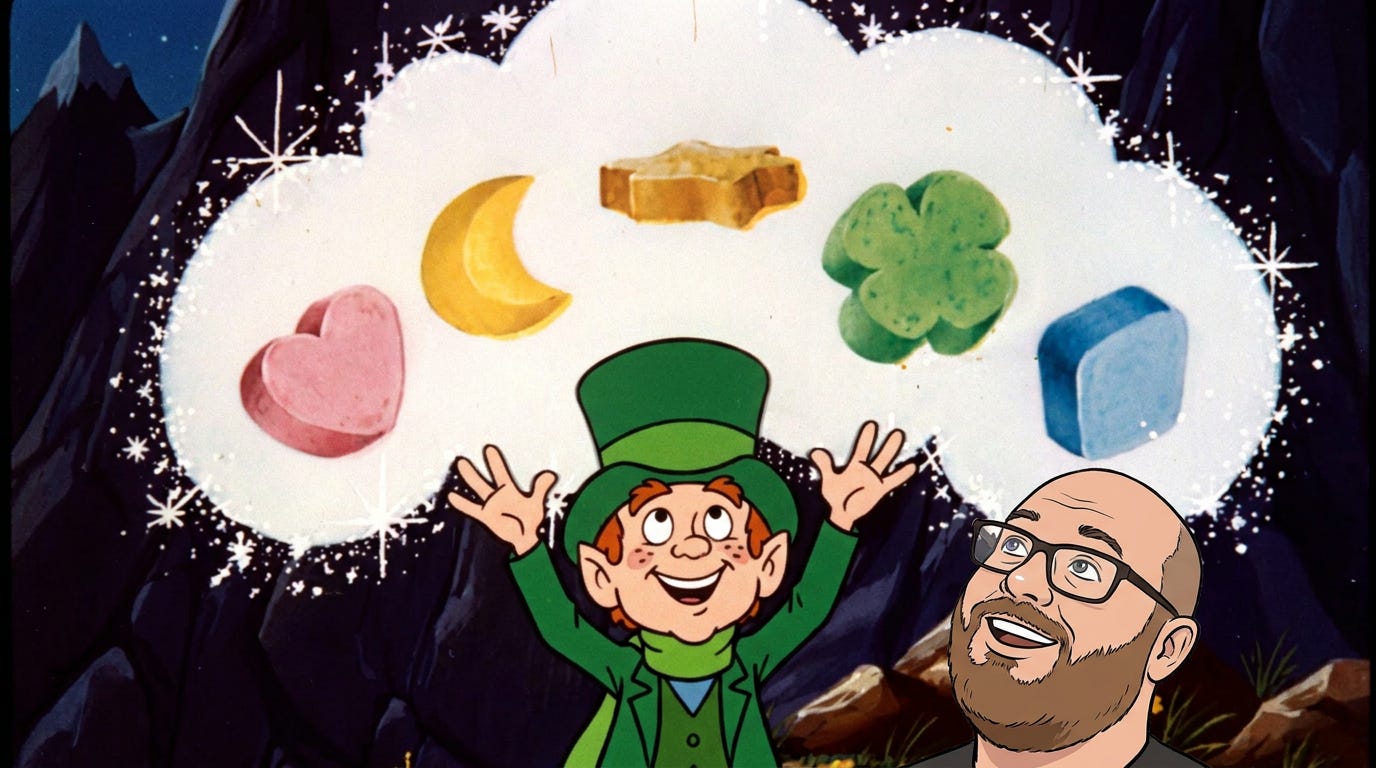
Lucky Charms exists because a man’s favorite candy was Circus Peanuts.
Circus Peanuts? Yes, the orange banana-flavored marshmallow things shaped like a peanut for no defensible reason.
Nobody knows who invented them. They’ve existed since the 1800s, sold at traveling circuses as penny candy. Originally only available in spring because no packaging existed that could keep them fresh through summer. Cellophane fixed that in the 1940s and now they’re in every gas station in America.
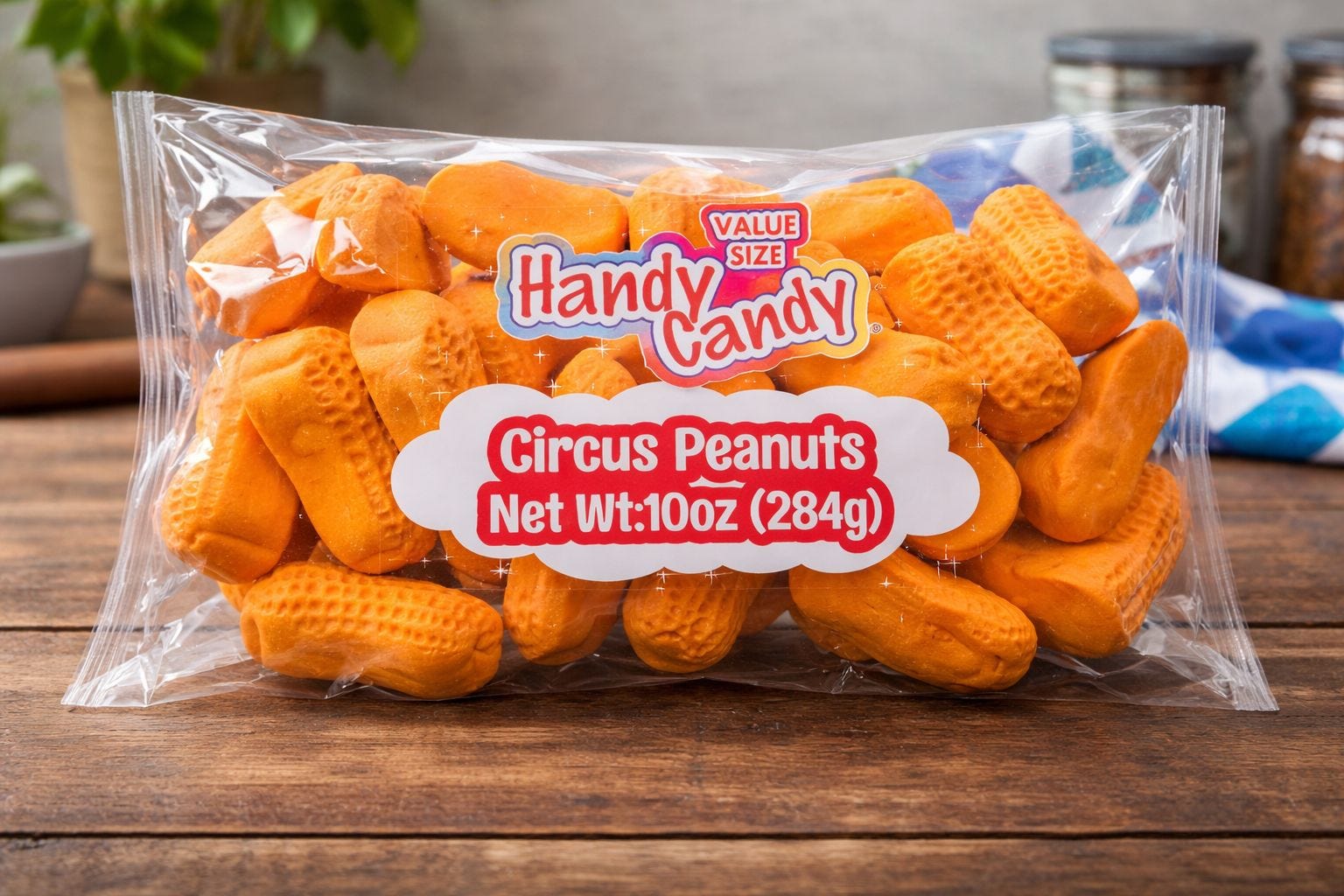
The shape is a peanut. The color is orange. The flavor is banana. None of those decisions agree with each other.
The banana flavor wasn’t a creative choice either, it was simply a cost-cutting measure. According to a Brach’s R&D guy who talked to the Wall Street Journal in 1999, banana flavoring was cheaper and more shelf-stable than peanut oil. So they just used banana. The shape stuck because the molds already existed.
They were originally stale and gross by accident. Customers preferred them stale. So manufacturers started making them stale on purpose. Spangler Candy in Ohio still produces 32,000 pounds of them a day. The candy is built entirely on errors people decided they actually liked.
ACCIDENTAL CEREALS IN SIX MONTHS OR LESS
This is the candy John Holahan was eating in 1963.
Holahan was a product developer at General Mills. The company asked him to do something unique with one of their existing cereals (Cheerios or Wheaties) and gave him six months to do it.
Most General Mills products got two to three years. He went to the grocery store. He bought Cheerios. He went home, chopped up some Circus Peanuts and stirred them in.
He liked what he tasted.
That’s it. The first cereal with marshmallows in the box was invented by a man dumping his ridiculous guilty pleasure candy into someone else’s cereal at his kitchen table. Yes, the most magical children’s breakfast in American history was inspired by the most accidental candy in American history.
Then the agency named it.
General Mills hired Dancer Fitzgerald Sample to figure out how to sell it. That’s right the same agency behind the Trix Rabbit, the Monster Cereals, the original Duracell drumming bunny and eventually “Where’s the beef?”
They looked at the marshmallow bits and pitched a campaign built around charm bracelets. The marshmallows became “charms.”
That’s it. That’s how Lucky Charms got its name. Not from leprechaun magic. From a creative team staring at costume jewelry.
DFS launched on St. Patrick’s Day 1964. Full color comic book ads. Animated TV spots. They introduced a leprechaun first called L.C. Leprechaun, then Sir Charms, then finally Lucky.
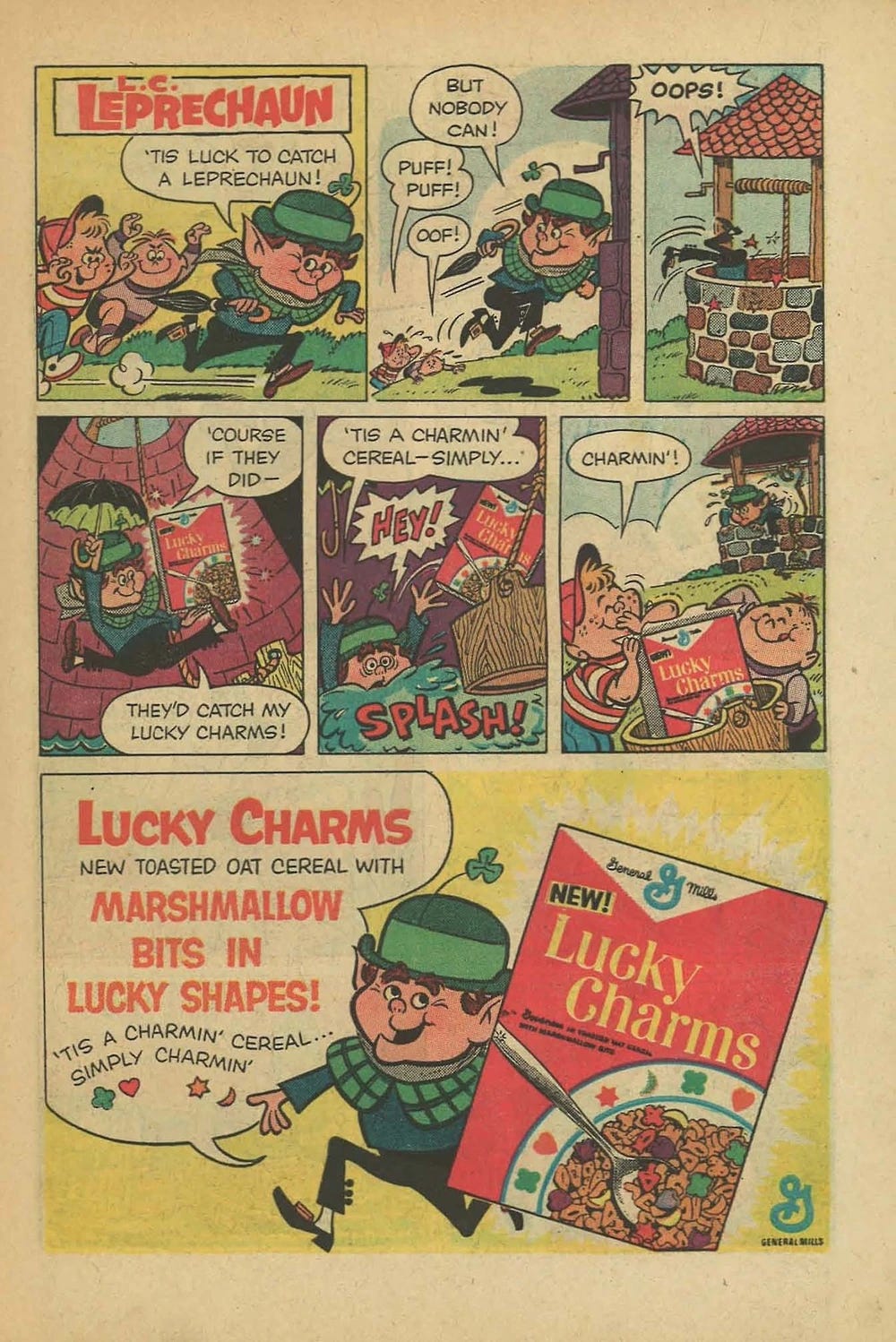
The premise was simple: kids chase Lucky through a meadow trying to steal his cereal. Lucky always escapes. They’re magically delicious.
A WORD ON MARBITS
The marshmallows in Lucky Charms aren’t actually marshmallows. They’re marbits — short for “marshmallow bits,” the genuine industry term for the crunchy little shapes inside a box of cereal.
A marbit is engineered for the box. Drier than a real marshmallow, harder, with most of the moisture pulled out so it won’t melt in milk and won’t go stale next to dry oat cereal. A regular marshmallow on a Cheerio would turn the whole bag into a brick by Tuesday.
A marbit lasts months on a shelf and still has snap when it hits the bowl. The pink heart, the orange star, the green clover — all marbits. Everything else in this story revolves around them.
The first boxes had four marbit shapes (pink hearts, orange stars, yellow moons, green clovers) plus oat shapes (bells, fish, arrowheads, clovers and x’s). The oats weren’t sugar-coated. Sales were disappointing.
General Mills sugar-coated them in 1967. Sales grew. The lesson was absorbed immediately and applied to children’s breakfast for the next sixty years.
THE WIZARD WHO ALMOST KILLED LUCKY
In 1975, somebody at General Mills decided Lucky wasn’t friendly enough. He was too aloof, too slippery, too unwilling to share his cereal with the children chasing him. The job of replacing him went to Alan Snedeker, a copywriter at DFS who’d been on the Lucky Charms account for years.
Snedeker came back with not one replacement, but two.
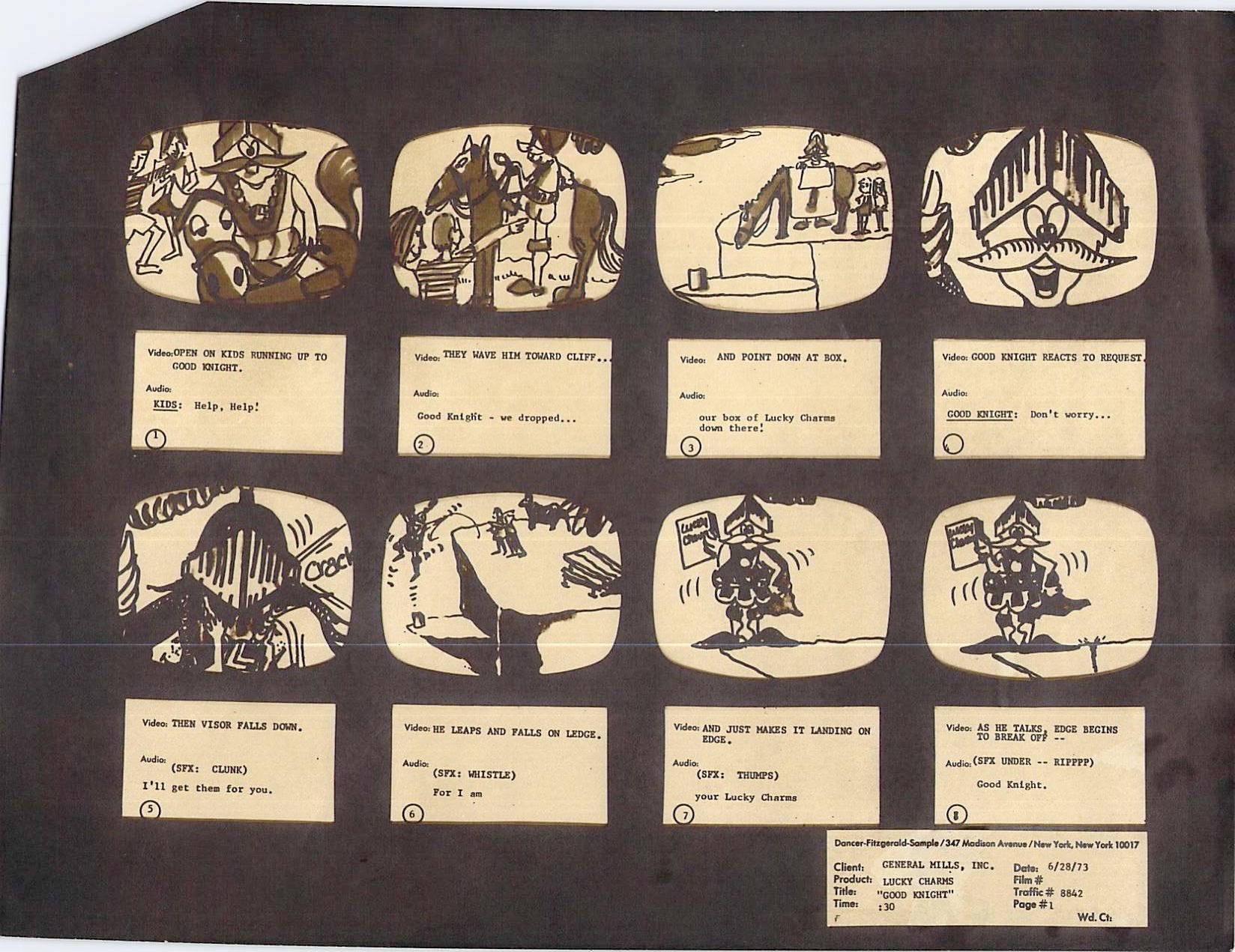
The first was the Good Knight. A medieval knight in armor who jumped off cliffs to deliver Lucky Charms to children. The slogan: “If you want Lucky Charms in the morning, just yell ‘Good Knight!’” Tested with five-to-eight-year-olds. Tested well. General Mills passed because a knight wasn’t “magical enough” for a cereal called magically delicious.
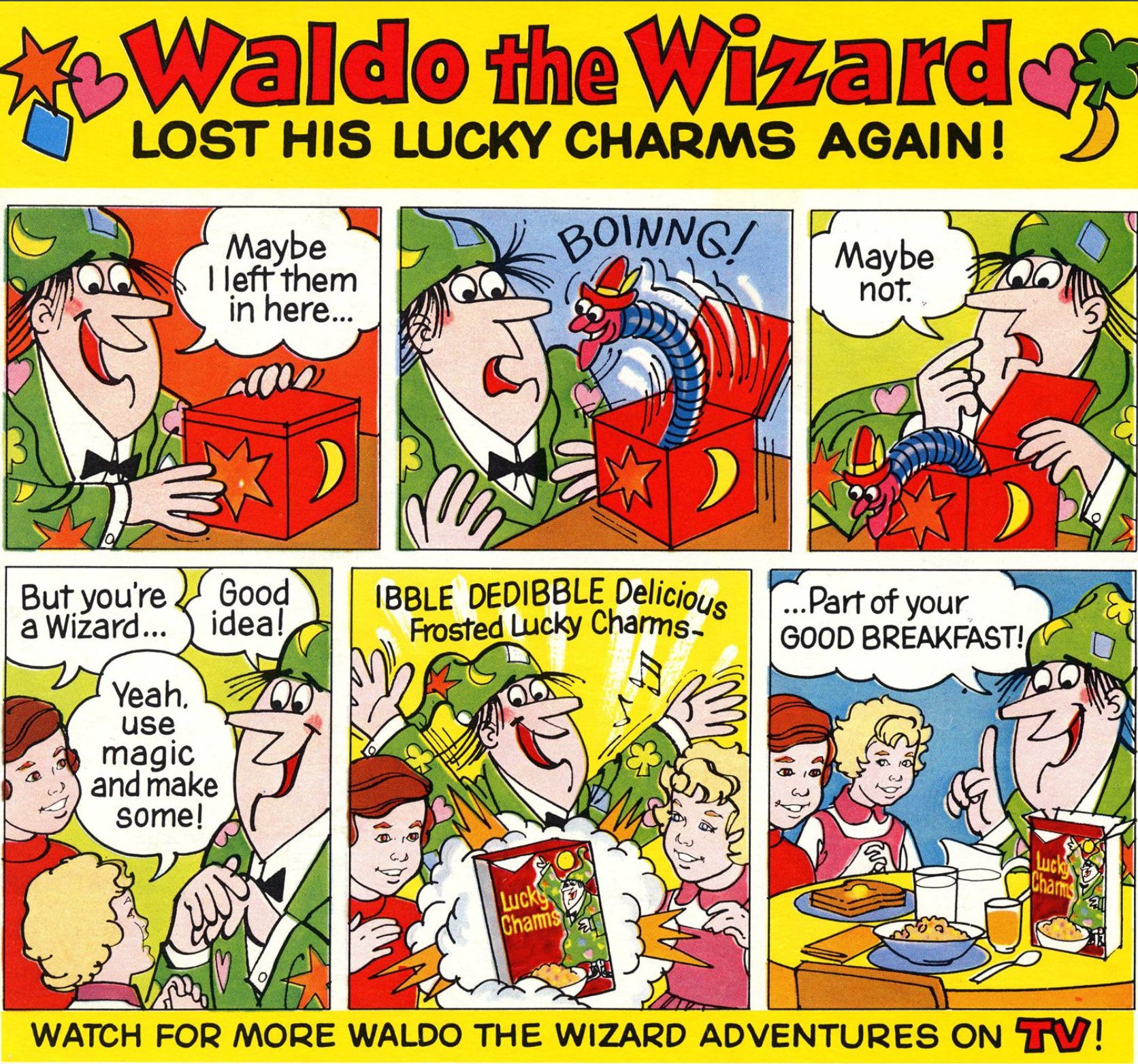
The second was Waldo the Wizard. Green cape. Wizard hat. Bow tie. Slightly overweight. Always forgetting where he put his cereal. Never ran from the kids. Catchphrase: “ibbledebibbledelicious” — a jibber-jabber line Snedeker borrowed directly from “Bibbidi-Bobbidi-Boo” in Disney’s Cinderella, his favorite Disney song.
Here’s the part nobody tells you. Waldo wasn’t even originally a Lucky Charms idea. Snedeker had created him in 1970 for a different General Mills cereal called Amazin’ Raisins, which never launched. Waldo had been sitting in a drawer for five years. Snedeker pulled him out, dressed him in marshmallow shapes and shipped him to New England.
Test markets confirmed it. Waldo beat Lucky.
“My work beat Lucky twice in tests,” Snedeker would later say. He meant Waldo and the Good Knight, both.
So why is Lucky still on the box?
Because while the Waldo test was running in New England, Snedeker was also working on a parallel set of comparative ads featuring a softer, friendlier version of Lucky. He turned in the script. The new friendlier Lucky tested better than the original grumpy Lucky. And once the friendly Lucky existed, there was no reason for General Mills to spend the millions it would cost to retire him for a wizard.
Snedeker’s verdict: “In making Lucky nicer, I probably killed Waldo.”
He created two replacements. Both beat the original. Then he fixed the original well enough to kill both his own creations. The man who pitched the replacement made the case for keeping the thing he was replacing. Waldo went into a folder at the General Mills Archives. The Good Knight, as far as anyone can tell, never even made it to a finished commercial. Snedeker stayed at DFS for another ten years.
Every new marbit was a small event. The 1975 blue diamond moved sales thirty percent in a single year. General Mills learned the lesson on the spot. Purple horseshoes followed in 1983. Red balloons in 1989. Rainbows in 1992. Blue moons in 1995. Hourglasses in 2008. Unicorns in 2018, chosen by emoji vote on social media. Each one got its own commercial. Each one updated the jingle. Each one gave the box something new on the front and gave kids one more shape to dig for.
Today there are eight permanent shapes. Only the pink heart has survived from 1964. Everything else has been rotated, retired or replaced. Sixty years of brand strategy, encoded in colored sugar.
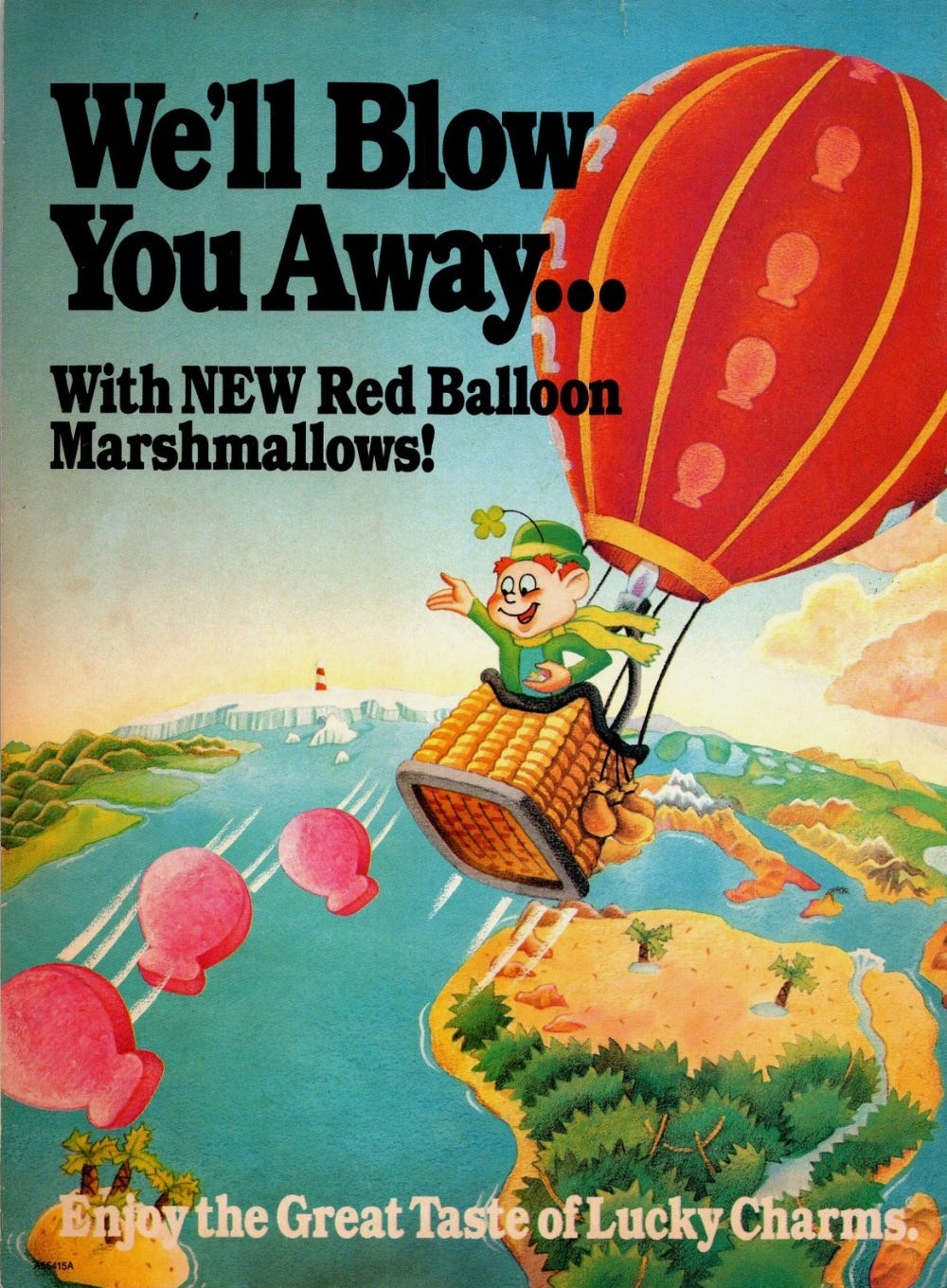
In 2020, General Mills sold bags of just the marbits. No cereal. No oats. Just the marshmallows. They sold out immediately. Sixty years of restraint, abandoned in a pandemic. Turns out nobody actually wanted the cereal.
THE AD LESSON
Lucky Charms was inspired by an accidental candy, named after costume jewelry, launched on a holiday and grown by adding things kids liked one marshmallow at a time.
It never had to reinvent itself. It just kept accumulating. Each new marbit was a small event — something to look for, something to update the jingle, a reason to grab the box again on a Tuesday in April.
The brand didn’t transform. It kept adding. The lesson is that you don’t always need a new idea. Sometimes you just need to keep making the thing you already have slightly more magical on a regular schedule.
Lucky has been doing this for sixty years. The pink heart in the box this morning is pretty much the same one Holahan stirred into Cheerios at his kitchen table.
COCKTAIL OF THE WEEK: THE TIPPERARY
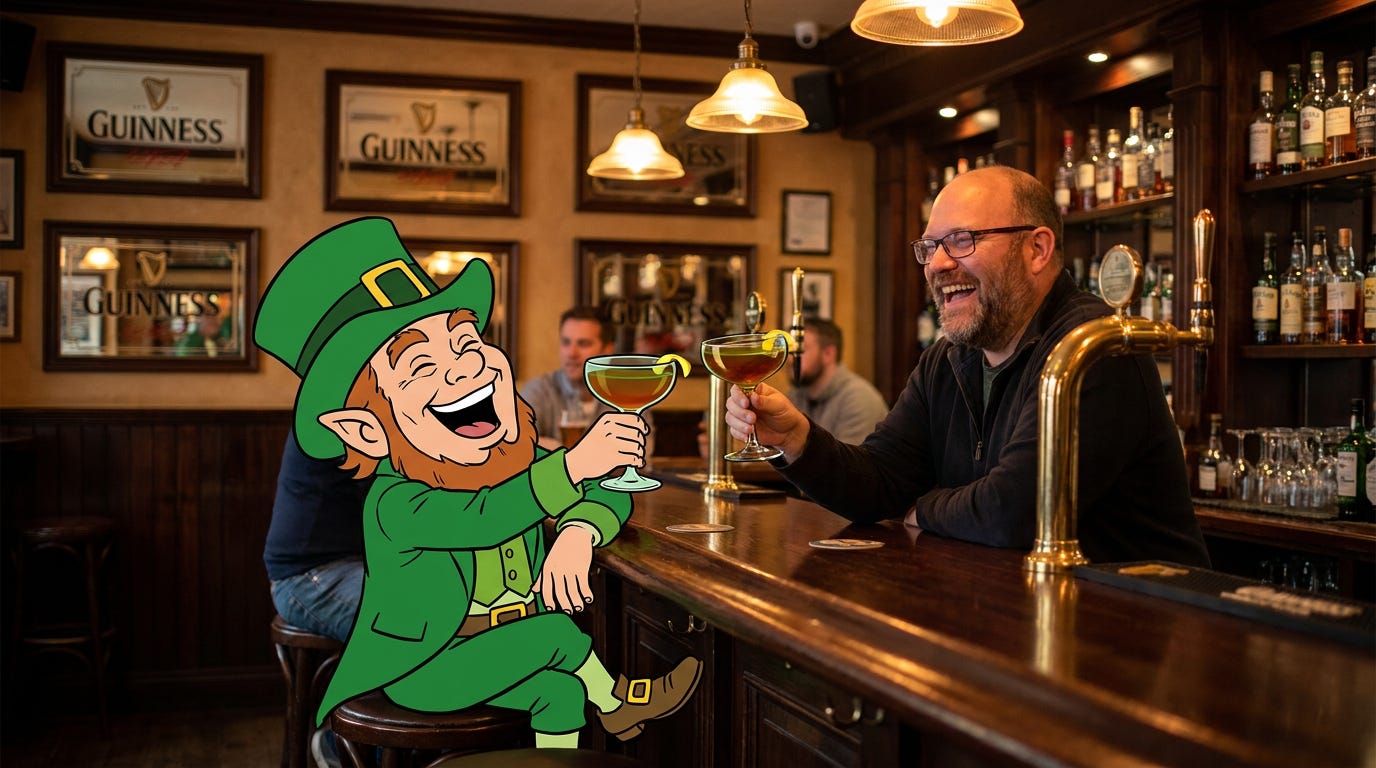
In 1916 a German-born bartender named Hugo Ensslin was working at the Hotel Wallick in Times Square — the best bar on the most sophisticated cocktail strip in the world at the time. As the story goes, a customer walked in humming “It’s a Long Way to Tipperary,” a music hall song from 1912 that had become the unofficial anthem of homesick Irish soldiers in the trenches of World War I. Ensslin grabbed a bottle of Irish whiskey, reached for the green Chartreuse and built the drink on the spot.
Then he put it in a book. Recipes for Mixed Drinks, 1916. One of the most important pre-Prohibition cocktail manuals ever written. Harry Craddock plagiarized half of it for the Savoy Cocktail Book in 1930 and got famous off Ensslin’s work. Ensslin himself shot himself in 1929. The book outlived him by about a century.
So the Tipperary is what happens when a German immigrant in New York invents an Irish cocktail to honor a song British music halls wrote about a town in Ireland that homesick soldiers turned into a marching anthem. Then he dies broke and somebody else takes the credit.
1.5 oz Irish whiskey (Jameson, Bushmills or Powers — pick one)
1 oz sweet vermouth
1/2 oz green Chartreuse
2 dashes Angostura
Stir over ice until cold. Strain into a chilled coupe. Lemon twist.
It’s Manhattan-shaped but greener and weirder. Lucky would absolutely drink it. So would Waldo, until he forgot where he put it. Sit back, relax and watch a movie-length amount of Lucky Charms ads.
The Drink Cart is a newsletter version of sitting at a really good bar with someone who thinks too much about advertising and won’t shut up about it. Subscribe to get it on Wednesdays and Fridays.
I'm only saying this because I'd want someone to tell me - your marbits are showing.