

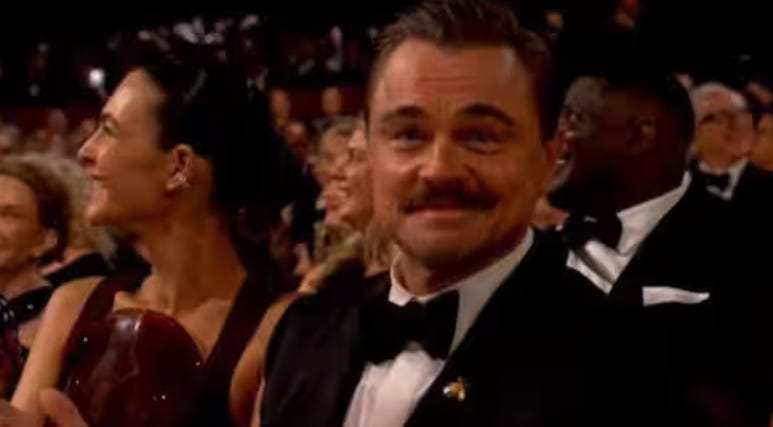
I know it’s March because Leonardo DiCaprio has released a new meme that is clogging my feeds post Oscars.
This week’s Leo “Shrugs with a Mustache” works for everything. Lawyers keeping their hourly rates despite AI. Bosses asking where the slide data came from. It works for anything. The hallmark of a DiCaprio Meme.
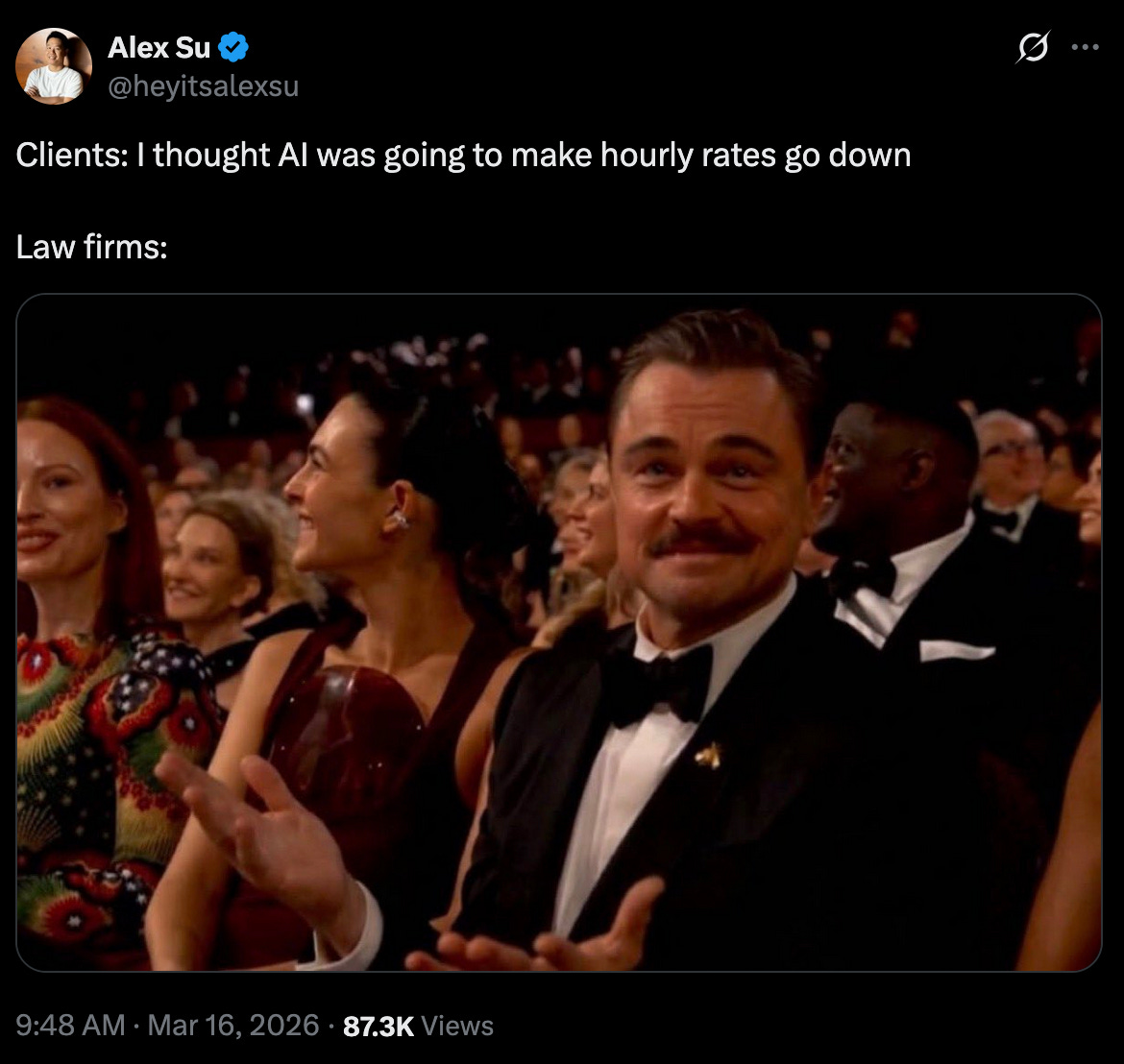
Leo in that photo looks like a man who knows exactly what he’s getting away with. Very on brand for March.
BRACKETS
The second reason I know it’s March is college basketball. It doesn’t hurt that I’m currently neck deep in March Madness for clients, but i’m also swimming in Kalshi ads and posts about giving away a billion dollars for a perfect bracket.
That’s the kind of math that C-3PO would tell Han about and regret instantly. The odds are 9.2 quintillion to one. Even knowing basketball well, you're at roughly 1 in 120 billion. One grain of rice in 80 semi-trucks.
And yet millions of people are losing their minds to get their picks in. Funny thing is, Warren Buffet did this exact same gag in 2014. March Madness is so linked to the idea of the bracket and betting that U2 once appeared with a giant bracket behind them for the tournament. I’m not kidding.
ESPN's "Bracketbrain" campaign is the best work of the season — a full pharma spoof where bracket obsession is a medical condition, Joe Lunardi plays head of the Department of Bracketology and the prescription is ESPN Tournament Challenge.
Side effects include "elation, heartbreak and/or emotional whiplash." Knows its audience cold. Which brings us to the Atlantic piece.
SUCKERS
McKay Coppins is a staff writer at The Atlantic who doesn’t gamble. Last year The Atlantic gave him $10,000 to spend an entire NFL season betting. The cover story — “Sucker: My Year as a Degenerate Gambler” — is the longest and best magazine piece I’ve read this year.
He lost almost everything. More importantly, he became someone his family didn’t even recognize. Up past midnight on games he had no reason to care about. Sneaking bets at church. His 10-year-old finding him hiding in the pantry. “You’re addicted,” his wife whispered from a pew.
The piece isn’t about addiction. It’s about infrastructure. Since 2018, Americans have wagered over half a trillion dollars on sports. Roughly half of men 18 to 49 have an active sportsbook account. Majorities of Americans now believe athletes occasionally change their performance to help gamblers. There used to be signs in ballparks that stated No Betting. Right there next to all the other cool stuff. Beer. Cigarettes. Deli meat.
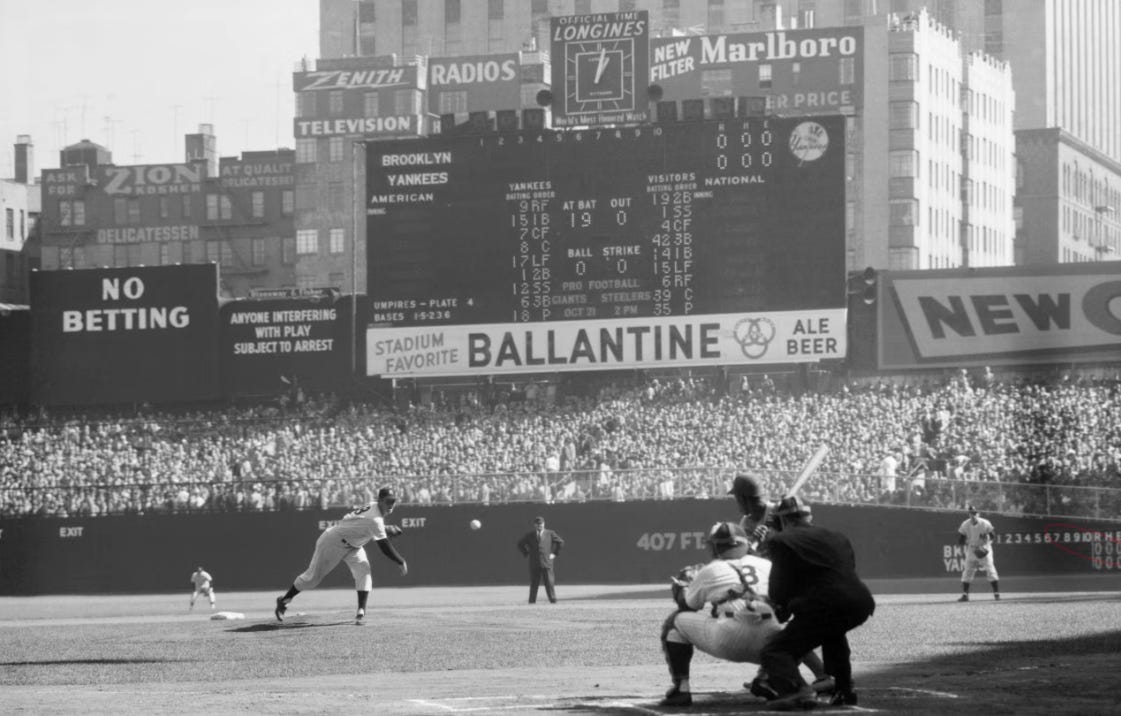
As a brief side note on stadiums. This week, the Los Angeles Dodgers, a team with more money than god, sold the naming rights to the field at Dodger Stadium to Uniqlo.
As @luke_metro noted: “Uniqlo Field sounds like the place where you go to fight the menswear guy.” The historic ballpark will now be called “Uniqlo Field at Dodger Stadium.”
I’m not one to be on a high horse. My entire creative career has been defined and continues to be heavily favoured in work for gambling brands. So I’m not advocating we can’t do that. Just that it’s just interesting to see how the gambling is now so woven into the fabric of sports.
The gambling ads are worth paying attention to if you’re in this business. The “no sweat bets” language. The same game parlays. The reality check pop-ups Coppins says he impatiently swiped away. This is precision-engineered persuasion running at full speed during every game you watch backed by AI. Kalshi is handing you a free bracket to sign up for the same ecosystem.
Watch the first round and think about that as your bracket busts out. True story, I’m already out 1 team. It’s only been 2 games.
THE COCKTAIL: THE WARD EIGHT
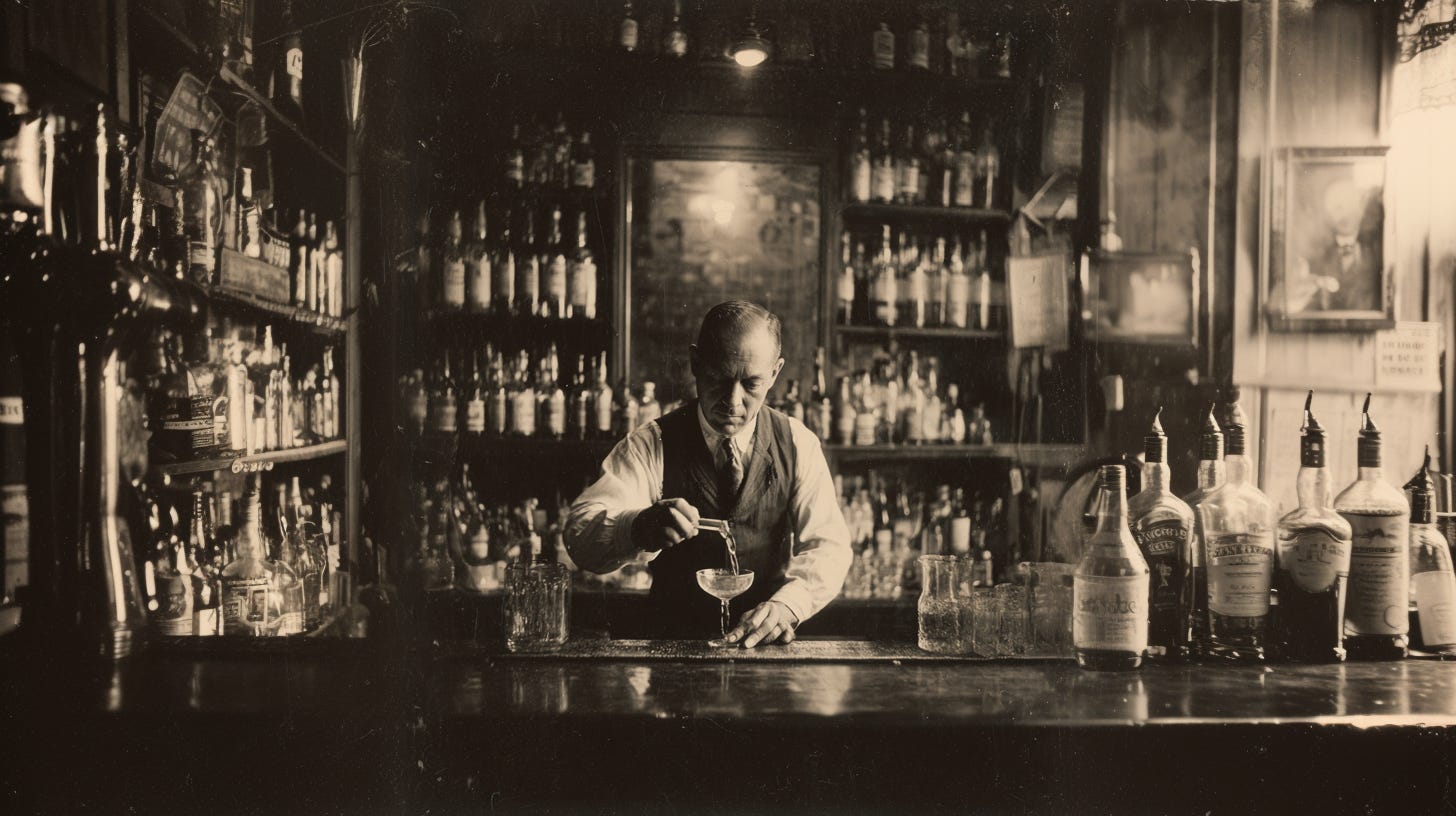
This story lives almost entirely in bar lore, cocktail history books, squeezed out of wet bar rags and a 1951 Holiday magazine article that nobody can fully verify. And historians have been poking fun at this for decades.
Martin “The Mahatma” Lomasney, the Democratic boss of Boston’s Eighth Ward, a man who held the city’s political machine in his pocket for nearly 50 years — was so confident about the next day’s election in 1898 that his supporters gathered at Locke-Ober, the power dining room of the Boston political class, and ordered the bartender to make a drink in his honour.
Before a single vote had been cast.
The bartender — name disputed, depending on who’s telling it, Tom Hussion or Charlie Carter or maybe Billy Kane — made several options. The party tasted and voted. The Ward Eight won. Democracy at its finest.
Lomasney won the next day too. He always did.
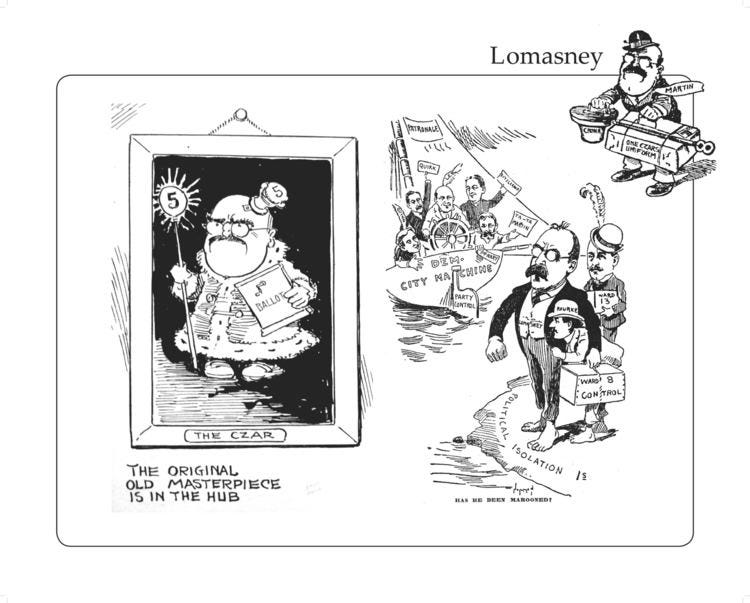
Now here’s where it gets good. Lomasney was actually a teetotaler. He didn’t drink. And if the historians are right that grenadine didn’t become widely available until the early 1900s, the drink that supposedly celebrated his 1898 victory couldn’t have contained its signature ingredient. The origin story of Boston’s only classic cocktail is almost certainly wrong on multiple counts. The man it honored didn’t drink it. The key ingredient may not have existed yet. The bartender’s name nobody can agree on.
One more thing. Lomasney was famous for a single piece of advice: “Never write if you can speak, never speak if you can nod, never nod if you can wink.” The ward boss whose drink lives on in Boston bars was a man who left no paper trail on purpose.
Locke-Ober closed in 2012 after 130 years. The Ward Eight is still being ordered. A drink invented to celebrate a victory before the game was played, named after a man who never touched it, built on an ingredient that may not have been available, with three possible inventors and a story nobody can verify. That’s beautiful.
It’s a bracket pick in liquid form.
2 oz rye whiskey
½ oz fresh lemon juice
½ oz fresh orange juice
½ oz grenadine (real grenadine, not the corn syrup stuff)
Shake hard with ice, strain into a chilled coupe. Cherry and orange slice if you want to go full 1898 about it.
This week if you’ve made the drink, pair it up with this bit of 1990s nostalgia to the vocal stylings of Bob Seger in and Shooter McGavin says, “Kids today will never get to hear Bob Seger belt “Like a Rock” for a 90s Chevy truck commercial. Peak America culture.”
And I 100% agree with Michael Miraflor, “They don’t do it like this anymore.” They sure don’t.
The Drink Cart. A newsletter version of sitting at a really good bar with someone who thinks too much about advertising and won’t shut up about it. Wednesdays and Fridays.
Okay, thank you Kalshi for explaining March Madness sports betting to me in the most direct way possible.