

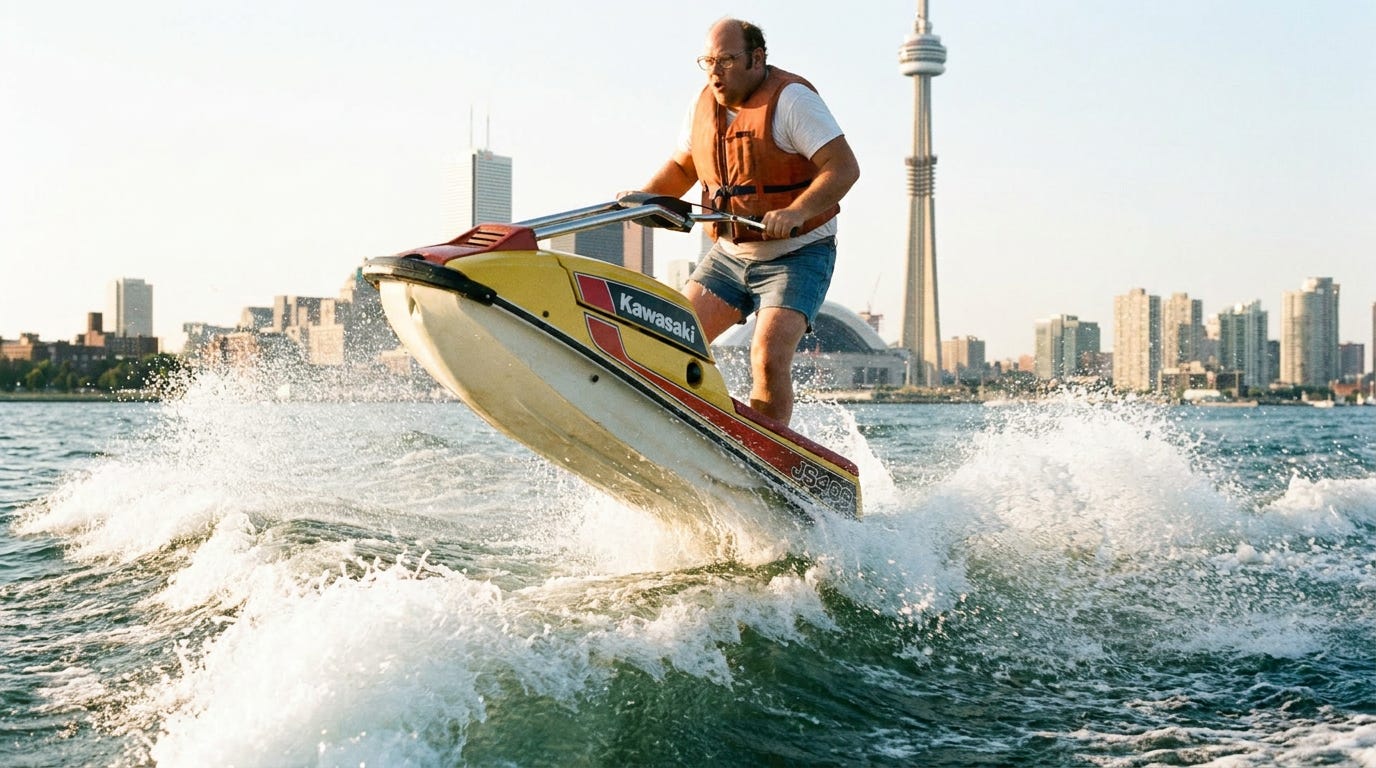
I keep coming back to this one ad. And also this completely fictional mid-seventies image of me in jean shorts absolutely shredding on a jet ski.
The ad? A humble 1975 Canadian Club print ad. The hero, just like me, is Jet Skiing past the CN Tower.
The ad is a full on narrative played out in four photos. A near-death incident with a speedboat. A girlfriend named Diane shouting “Look out!” A bucking-bronco metaphor. A cork-in-a-storm side-plot.
And a resolution where the couple toasts their survival with a Canadian Club whisky at the Sailor’s Pub at Ontario Place.
Over two hundred words of body copy. The bottle shows up for maybe six percent of the entire layout. The logo is smaller than the CN Tower.
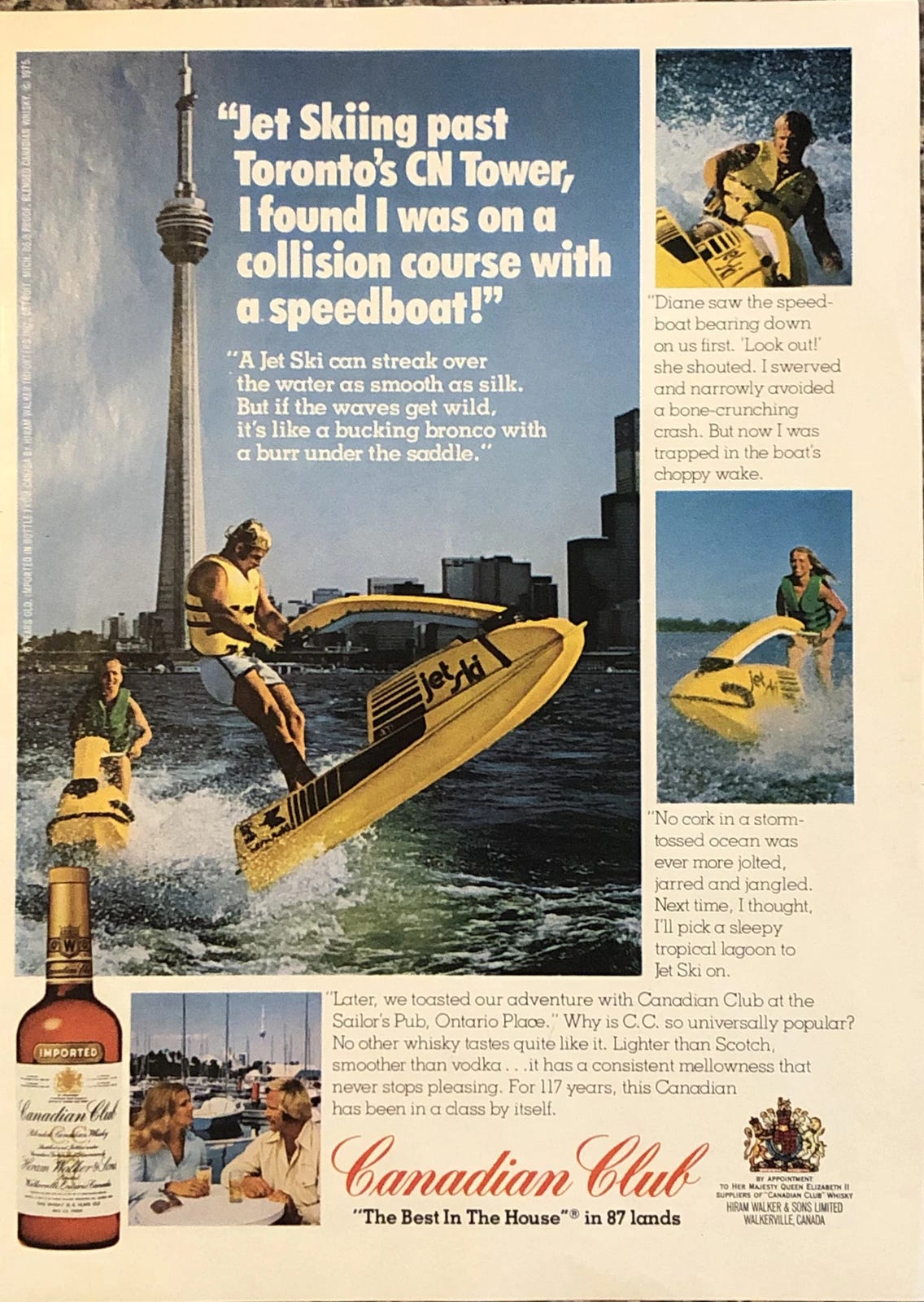
Today this ad would die in round one of a focus group. The brief would come back with “trim to a single image, max 10 words, add a QR code.”
Instead, in 1975, Hiram Walker ran a fully narrated short story. With a plot. They trusted you to read it. They trusted you to care about Diane. They trusted you to finish the ad and think, yeah, a whisky at Ontario Place sounds pretty damn good.
This ad is part of the Canadian Club “Adventure Series” — a campaign that had already been running. Same formula every time. Some guy does something insane in a beautiful place, survives it and drinks a Canadian Club afterward.
I am in awe of this ad. Maybe it’s the idea that people would do things like this even before camera phones and social media. Maybe it’s just that it looks kind of rad, fifty years on.
I think about it more than I think about most ads running today.
THE 1975 TORONTO FLEX
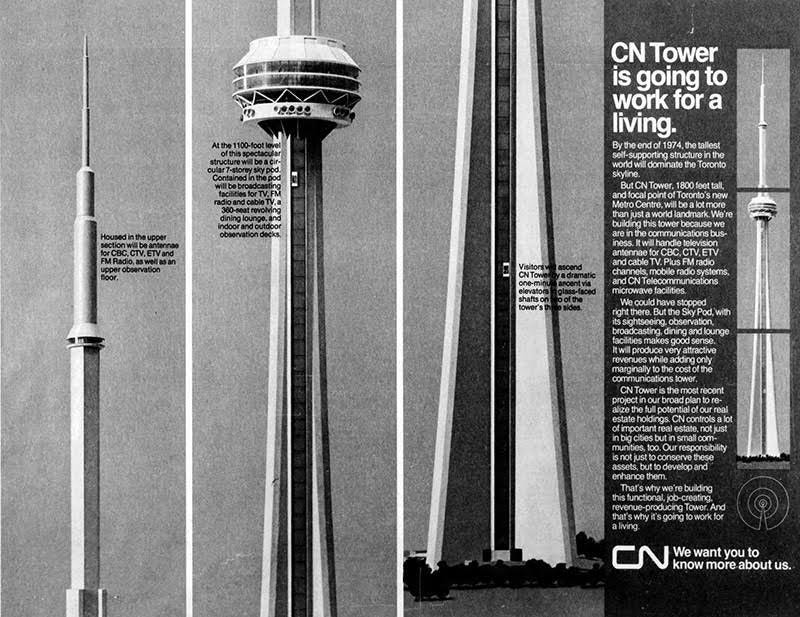
The other thing I love about this ad is the stack of new things it’s casually showing off.
The CN Tower was brand new. Barely new, actually — it had topped out on April 2, 1975, when a big Sikorsky helicopter named Olga lifted the last 39 pieces of the antenna into place.
It didn’t open to the public until June 26, 1976. So when this ad ran, the hero was Jet Skiing past the world’s tallest freestanding structure, and most people had never been inside it.
Funny story, I’ve been in Toronto for 11 years now, and still haven’t gone up. Might have to change that this week.
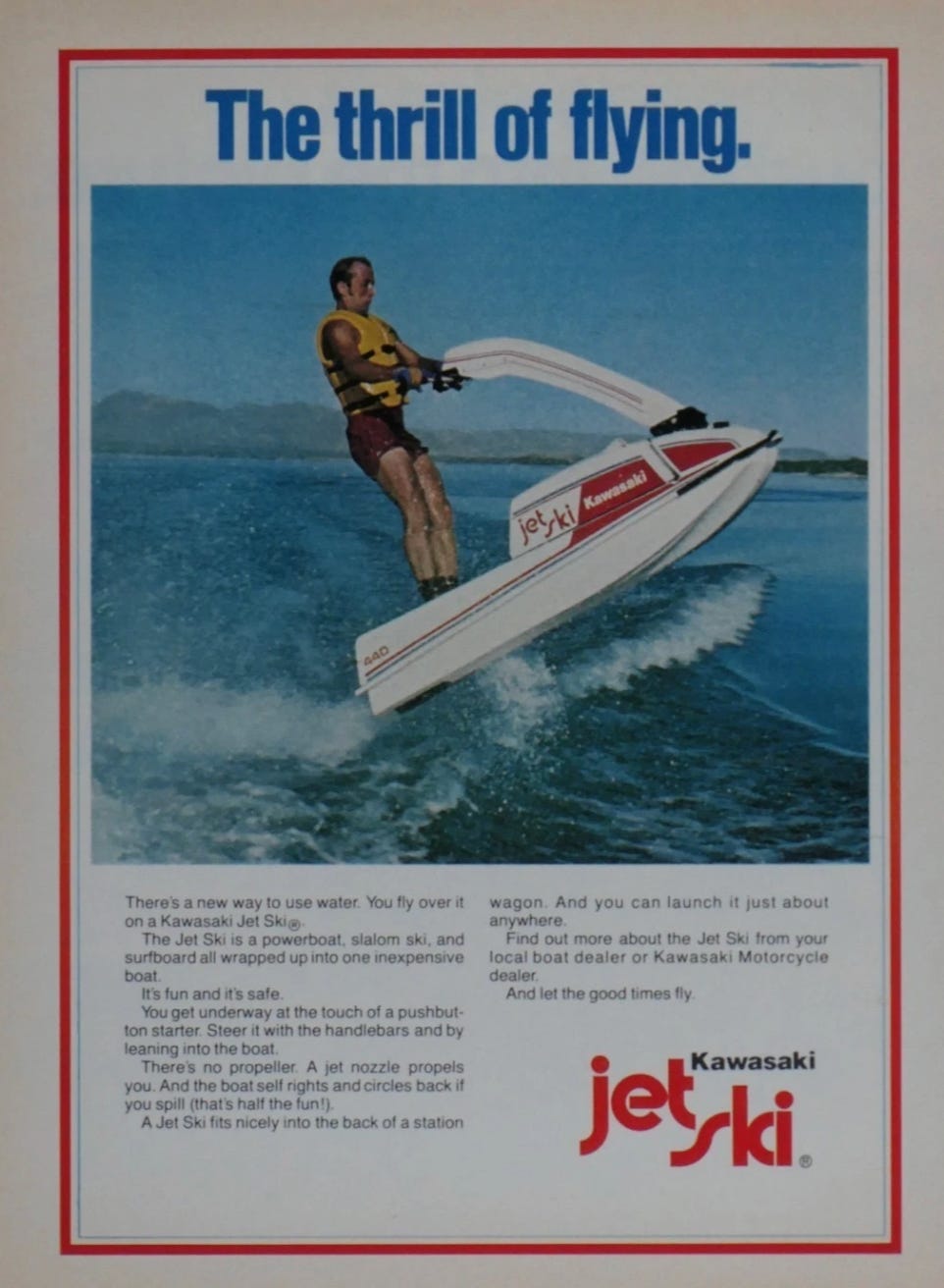
The Jet Ski was brand new too. It was essentially meant to be a dirt bike on water. That concept is incredible when you say it out loud.
Kawasaki had launched the Jet Ski as a 1973 trial program and went into mass production in 1975. The ad above is from 1978. Their tagline, “Let the Good Times Roll,” launched in 1973 by J. Walter Thompson. It’s still their tagline today.
You’re looking at one of the earliest ad appearances of a new category of vehicle that barely existed five years before.
Kawasaki didn’t actually invent the personal watercraft. Bombardier did. The first sit-down Sea-Doo hit the water in 1968, and by 1970 they had a TV commercial running coast to coast featuring the 1969 model riding around with bottles of Fanta.
Talking about Sailor’s Pub at Ontario Place was also new-ish.
Ontario Place itself had only opened in May 1971. The whole waterfront futurism — Eberhard Zeidler’s Bauhaus-trained vision of pods on artificial islands, a giant geodesic Cinesphere, all built with a breakwater made of sunken freighters — was the most Toronto thing Toronto had ever done.
Having a whisky at the new parking lot at Ontario Place isn’t going to have the same vibes. Even if we do end up deeming it, “Garage Mahal.”
So this Canadian Club ad is, structurally, a pile of brand-new Toronto stacked on one page. The tower that wasn’t open yet. The vehicle that barely existed. The waterfront that opened four years earlier. All of it on the cover of a whisky ad sold internationally. A city showing off.
Now we can barely decide if we are charging or not charging for FIFA World Cup fan fests this summer.
But it's not the only Canadian whisky and Jet Ski ad from the 1970s. Lord Calvert took it to a whole new level.
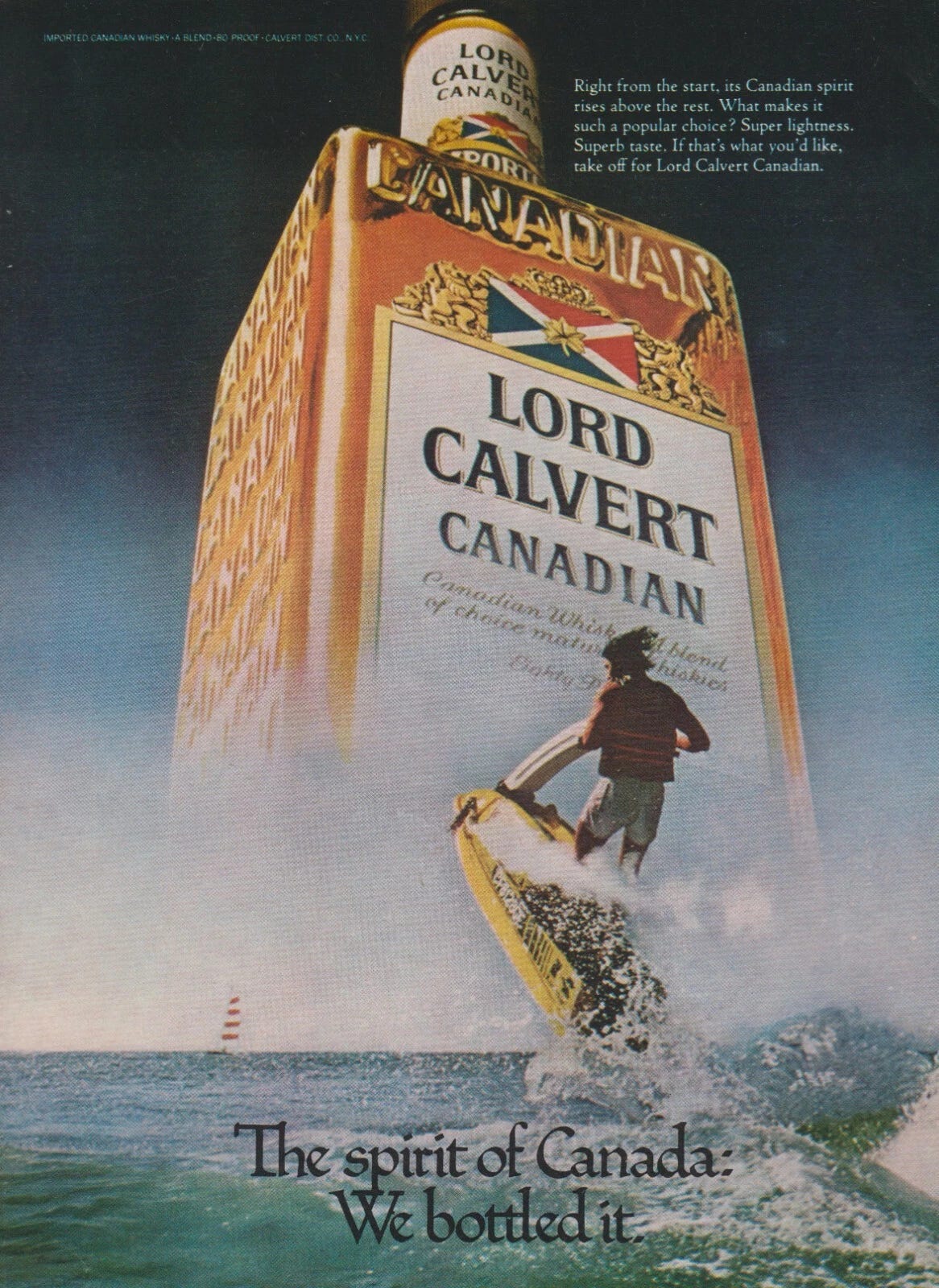
RIP SAILOR’S PUB
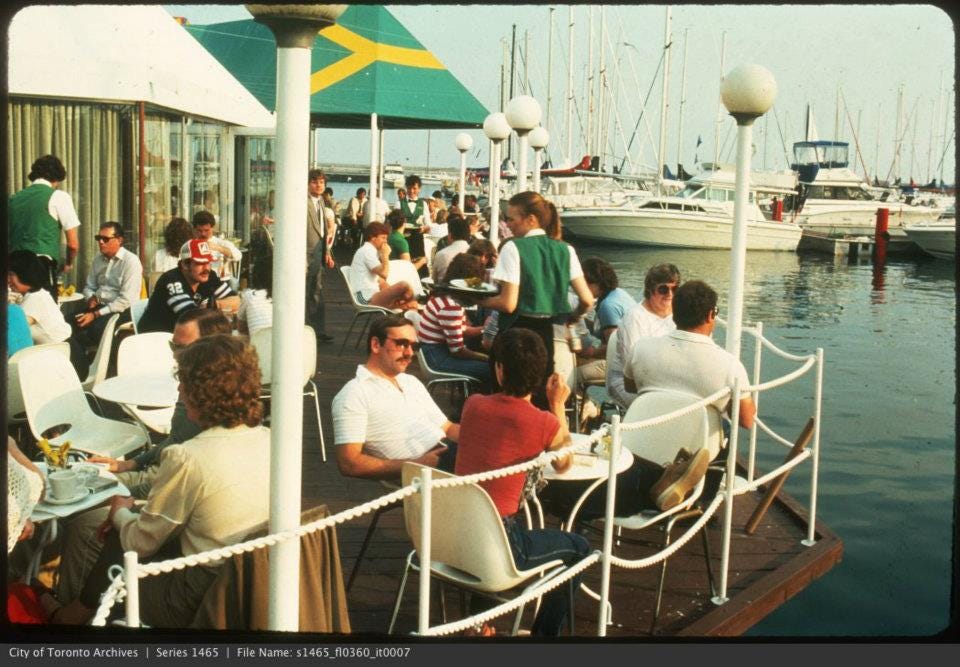
The specific spot name-checked in the ad — “Sailor’s Pub, Ontario Place” — was a real place allegedly. I found a button and some vague recollections of how great it was.
It’s full name: Sailor’s Pub at Stoodleigh Mariner’s, in the Marina Village section on the west end of Ontario Place. Blue modular roof. Deck overlooking the marina. The kind of spot you could, in theory, sit at with a whisky on a summer night while sailboats bobbed in front of you.
My greatest memory of old Ontario Place is being attacked by geese. Not getting a shot at a Canadian Club on the rocks on the Sailor’s Pub deck. Never happened. The geese were territorial. The geese had their own agenda. Namely it was trying to snack on our dog, Renly.
Ontario Place’s main attractions closed in 2012. Sailor’s Pub shut. The building was still standing out there — abandoned, blue roof intact, slowly getting weathered, until the Therme Group mega-spa started doing whatever it’s doing.
In 1975 Canadian Club sold Canadians on sipping whisky at a waterfront pub that, fifty years later, is now gone and behind a construction fence.
THE HIDE A CASE STORY
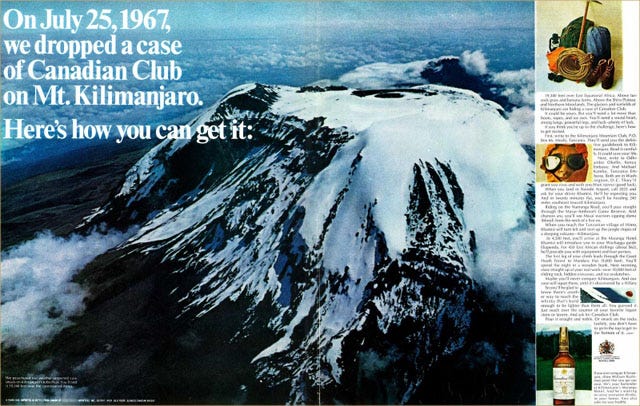
Okay. The best part of this campaign isn’t even the ad I started with.
In 1967, Hiram Walker’s ad agency, McCaffrey and McCall, launched a promotion called Hide A Case.
The idea: hide actual cases of Canadian Club in extreme and exotic places around the world, then publish cryptic print ads with clues about where they were, and dare people to go find them.
Between 1967 and 1991, twenty-five cases were hidden. Most have been found. Roughly five are still out there, depending on who's counting and whether you trust the agency's records or the people still digging. The locations were absurd.
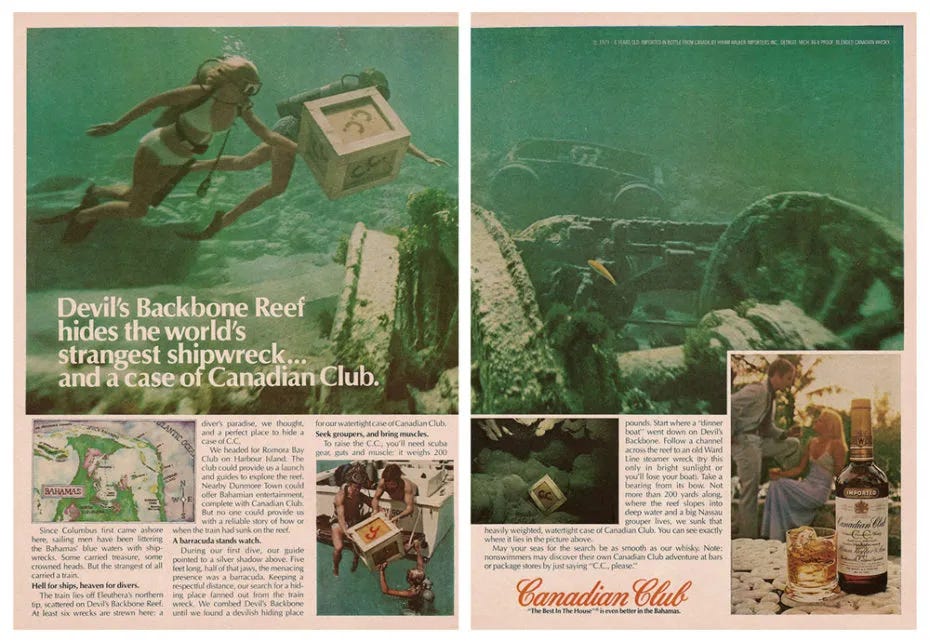
Mount Kilimanjaro. Angel Falls, Venezuela. Atop a skyscraper in Manhattan. The Great Barrier Reef. The Arctic Circle. The Swiss Alps. Death Valley. The site of the Lost Dutchman Mine in Arizona. Loch Ness. Robinson Crusoe Island off the coast of Chile. Lake Tanganyika. The Yukon. Lake Placid (buried there in 1979 to tie in with the 1980 Olympics).
The stories are better than any ad copy.
The Angel Falls case was found months after it was planted by newlyweds who were going to Venezuela instead of Acapulco until they boarded the plane. She thought she was going to the beach. Instead they hacked through the jungle getting bitten to death. He found the case behind a rock. Their marriage presumably still exists.
The Kilimanjaro case wasn’t found until the mid-70s, when a journalist on an expedition literally stumbled over it.
The Manhattan skyscraper case took hunters thirteen weeks to locate.
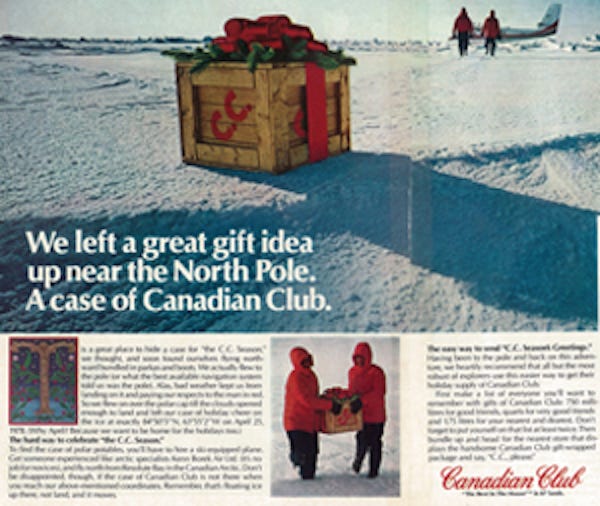
The Arctic case is considered permanently lost. Blizzards. Ice movement. It’s probably sitting under a hundred feet of compressed snow.
The Yukon case is a comedy. The first one they tried to hide was found by a group of Boy Scouts before the contest had even been officially announced. So Hiram Walker had to send another team out to hide a second Yukon case. That one was never found either.
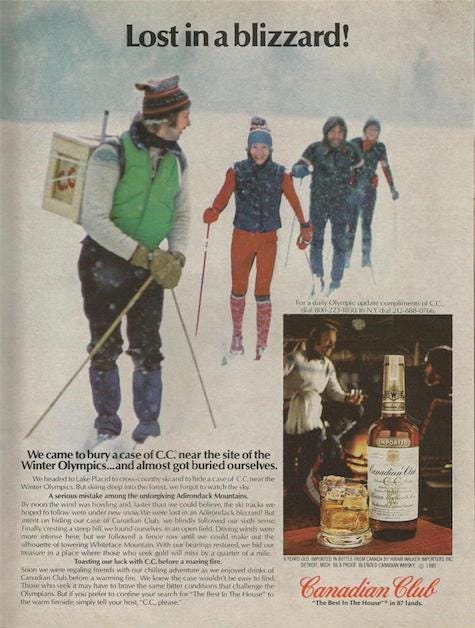
The Lake Placid case is my favourite story. McCaffrey and McCall formally wrote to the Olympic Committee asking for permission to hide a case of whisky on the Mount Van Hoevenberg bobsled and ski trails. The Olympic Committee said no. The agency then asked the Adirondak Loj. Also no. So they hid it somewhere else entirely. That case is still missing. A New York liquor store owner named Tim Robinson spent fifteen hours digging in a field near Lake Placid in 2020 based on interpreted ad clues. He found nothing. He’s still looking.
The ads ran in Life, Look and Playboy. The copy on one read “We left a great gift idea up near the North Pole. A case of Canadian Club.” Another: “Devil’s Backbone Reef hides the world’s strangest shipwreck... and a case of Canadian Club.”
Just a clue and a dare. I’m guessing legal wasn’t as involved as they are today.
AND THEN THE CAMPAIGN ACCIDENTALLY INVENTED JAMES BOND
Here’s where it goes from good ad campaign to historically iconic.
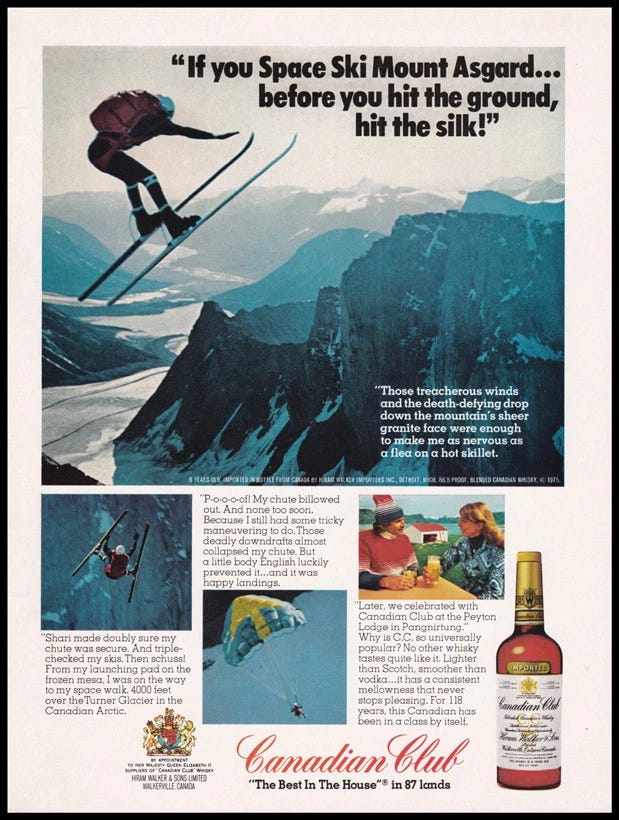
Michael G. Wilson — Cubby Broccoli’s stepson, the guy who’d eventually run the Bond franchise — was flipping through a Playboy in the mid-70s. He saw a Canadian Club ad featuring a skier named Rick Sylvester launching off what the ad claimed was Mount Asgard on Baffin Island. Sylvester skis off a cliff, pulls a parachute, floats down.
Wilson showed it to Broccoli. They decided to make this the pre-title sequence of The Spy Who Loved Me.
They hired Sylvester — who wasn’t a pro stuntman, just an adventure skier who’d done a version of this jump for fun off El Capitan in 1972 — to do the stunt for real on Baffin Island. It cost five hundred thousand dollars.
Most expensive single movie stunt in history at the time. Christopher Wood added the Union Jack parachute. Only one of three cameras actually caught the jump. One take. Uncut.
When that parachute opens over the Baffin Island mountainside and the Bond theme kicks in, you’re watching a moment that exists because a whisky ad ran in Playboy.
A Canadian whisky campaign inspired the most iconic opening in British spy cinema.
The ad was also, incidentally, faked — the El Capitan footage from one of Sylvester's early-70s jumps was the real jump, the Mount Asgard claim in the Canadian Club ad was staged. The Bond version shot in Baffin was the real version.
Bond unfaked it for history during the most faked Bond era.
Ads are pretty incredible aren’t they?
THE COCKTAIL OF THE WEEK: COLA OLD FASHIONED
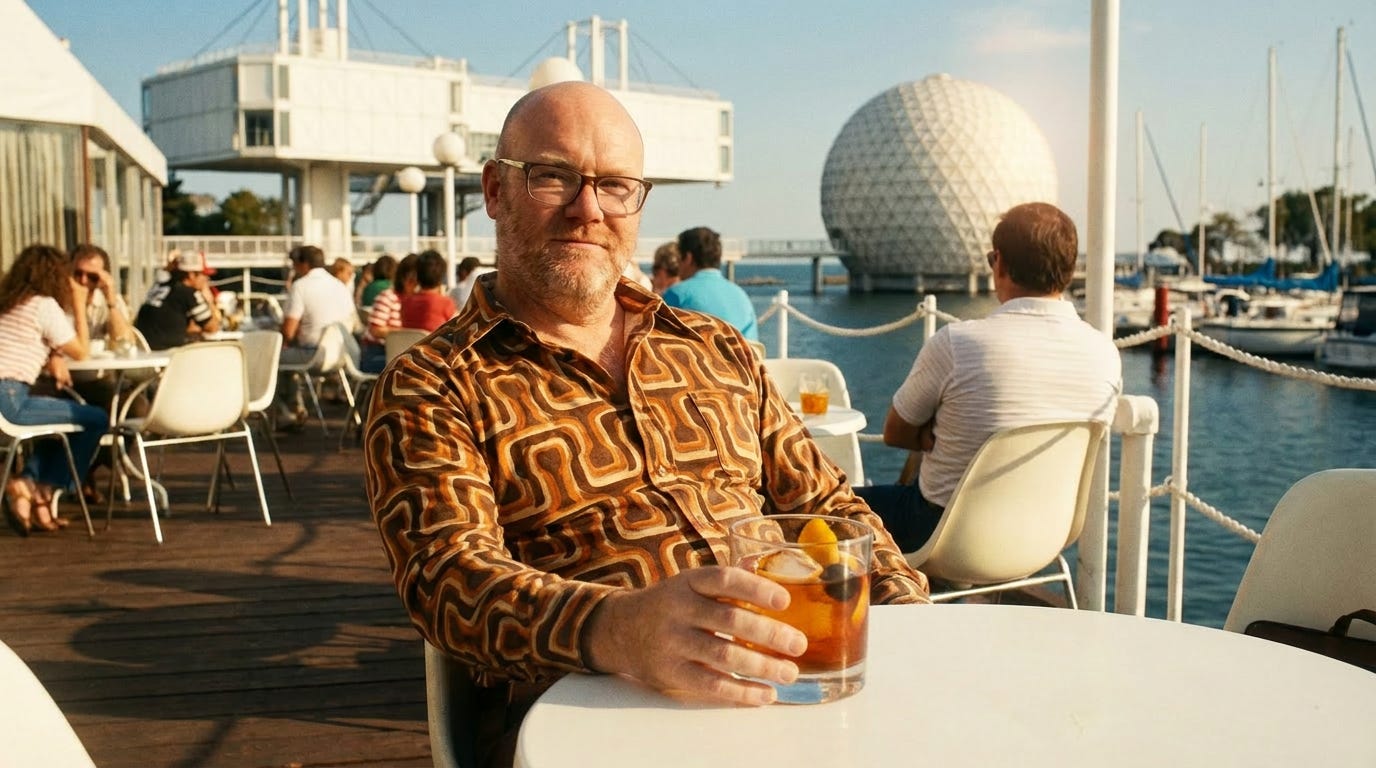
It had to be Canadian Club inspired. It had to be something that pairs with fifty plus years of men almost dying on Jet Ski and then sitting down to a stiff drink.
It had to be in a shirt this hideous. The fever dream of whatever Ozempic AI thinks I need.
So: a Canadian Club Cola Old Fashioned.
Coca-Cola bitters on a Canadian whisky is my move. CC has a slightly softer, sweeter profile than American bourbon, and Coca-Cola bitters play off the caramel and vanilla notes without overloading it with sweetness.
You get an Old Fashioned that reads like a memory of every road trip where you bought a Coke at a gas station and a Canadian Club at a duty-free. Which is, on balance, a fine place to land.
Cola Old Fashioned
2 oz Canadian Club
1 tsp demerara or rich simple syrup
3-4 dashes Coca-Cola bitters (I made them myself - it was a three month wait to try them just for this)
Orange peel
Stir over ice in a mixing glass until properly chilled. Strain into a rocks glass over one big cube. Express the orange peel over the top and drop it in.
Drink it somewhere with a view. A patio counts. A kitchen window counts. On a Jet ski does not count. After a Jet Ski, yes. We’ve been over this. The jean shorts are just a suggestion at this point.
The Drink Cart. A newsletter version of sitting at a really good bar with someone who thinks too much about advertising and won’t shut up about it. Wednesdays and Fridays
Hiding cases of Canadian Club is epic. Sadly, it would never make it past legal these days.