

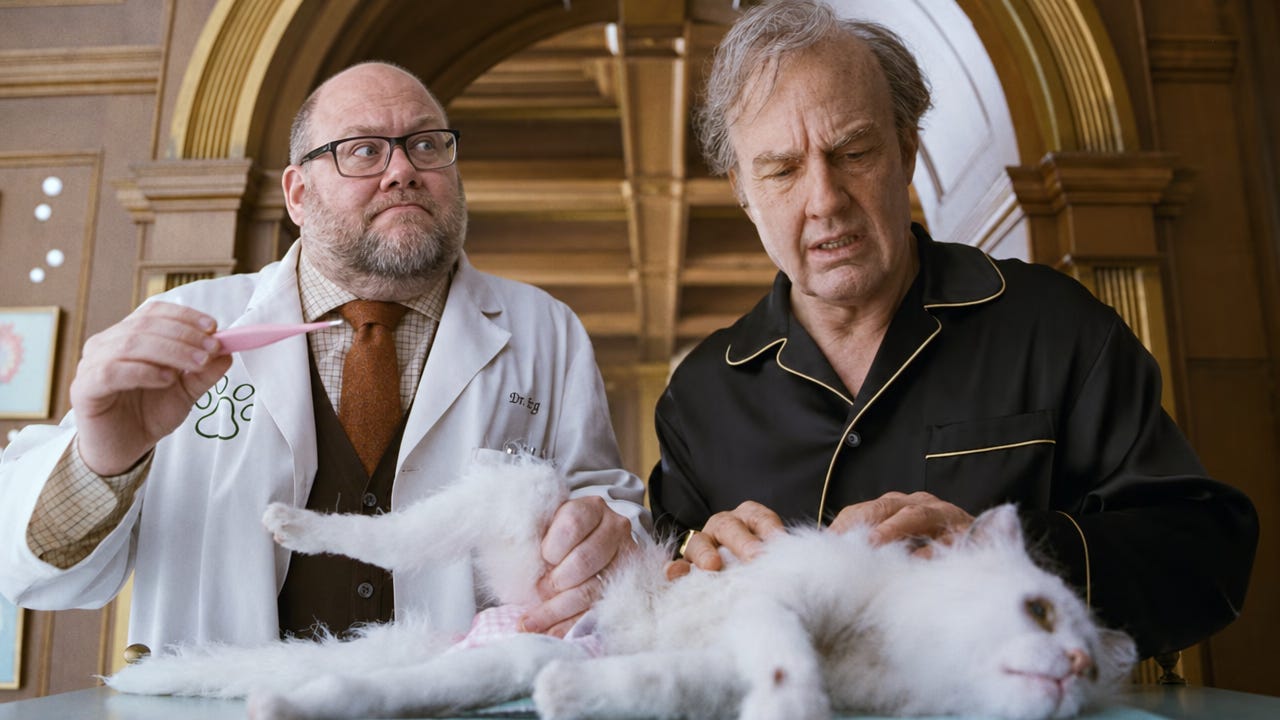
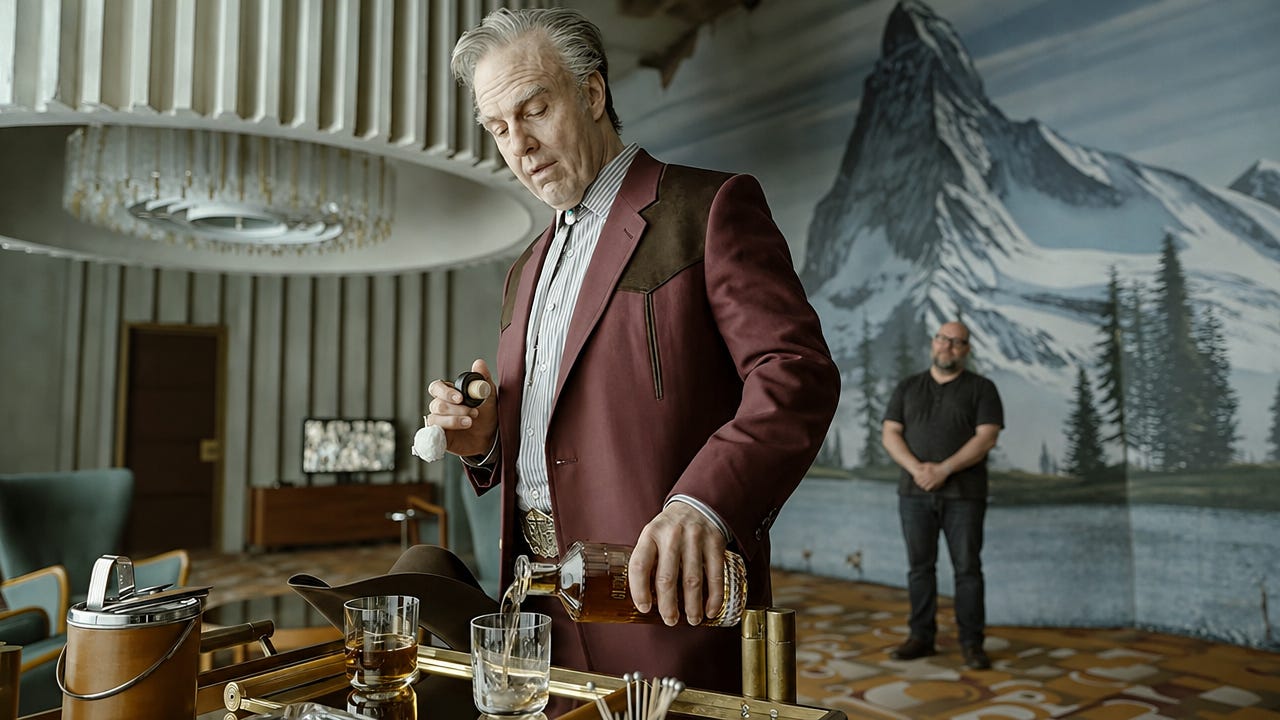
Tom Cruise put on a fat suit and a wonderful old-man face that he should probably look like now that he’s 64, and spent much of a movie cradling a disgusting animatronic cat in its final death throes.
Warner Bros. spent nine figures on it.
America stayed home.
DIGGER IS THE MOST INTERESTING FLOP OF THE YEAR
The box office numbers are absolutely brutal.
Digger made just $8 million in the US and Canada on its opening weekend and finished fifth.
That’s Cruise’s lowest opening since Lions for Lambs in 2007. The budget was at least $125 million, with some reports putting it at $160 million or more. It’s expected to lose up to $245 million theatrically. Yikes.
The reviews are more fun than the math.
Pajiba called it “the phoniest slapdash heap of provocation” in years. One critic said “I’ve seen oil slicks that were more interesting than Digger.” Rude.
Film Threat called it “the biggest swing of Cruise’s career.” The Deep Focus Review thinks it “might become an all-timer.” Same movie.
Warner’s own marketing team knew exactly what they had. Instead of hiding the split, they paired words like “Masterpiece” and “Unpleasant” and “Magnificent” and “Insufferable” under the line “Same film, different truth.”
A studio put the bad reviews in the ad. I’ve sat in a lot of meetings and I’ve never seen anyone wanting to touch negative reviews in an ad.
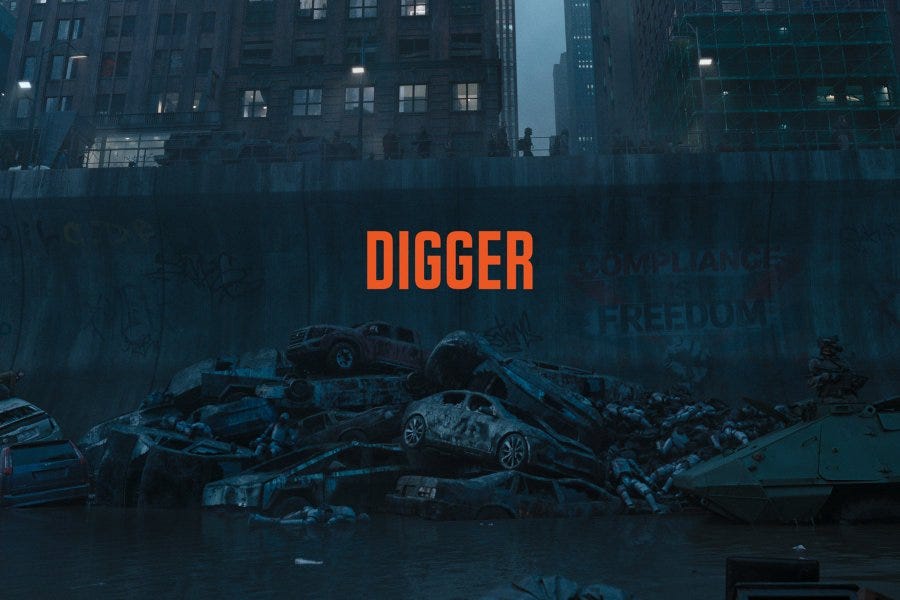
Director Alejandro González Iñárritu clearly didn’t make this film for any algorithm. The trailers sold you an oil tycoon who blows up the planet and tries to dig everyone out. Surprise, that’s not really the movie.
Spoiler alert: If you plan to see Digger, please skip the next paragraph. If you’ve seen it, you know. If you’re never going to see it, which statistically is most of you, read on.
Halfway through, Iñárritu pulls back a curtain and reveals Cruise isn’t actually Digger Rockwell at all. He’s an actor named Curtis Markson playing Rockwell in a stage play, fighting with a hip young theater director over what the whole thing means. The apocalypse is the play version of the disaster. The movie is about the people making it. Warner’s marketing kept that buried on purpose. There’s a reason people thought it might be a musical.
Okay. Safe to look again.
The film might also be the last of its kind. It flopped on the cusp of the studio’s merger with Paramount, a bitter final note for Warner Bros. as a standalone studio. I don’t think the new owners are going to fund a lot of future $250 million Cruise-Iñárritu climate farces with dying cats.
But I am almost positive that people will be arguing about Digger in 2076. Can you say that about anything else that opened that weekend? This year? This decade?
Don’t pour the lessons of Digger down the sink yet. Advertising used to make Diggers all the time.
THEY’VE BEEN DOING THIS FOREVER
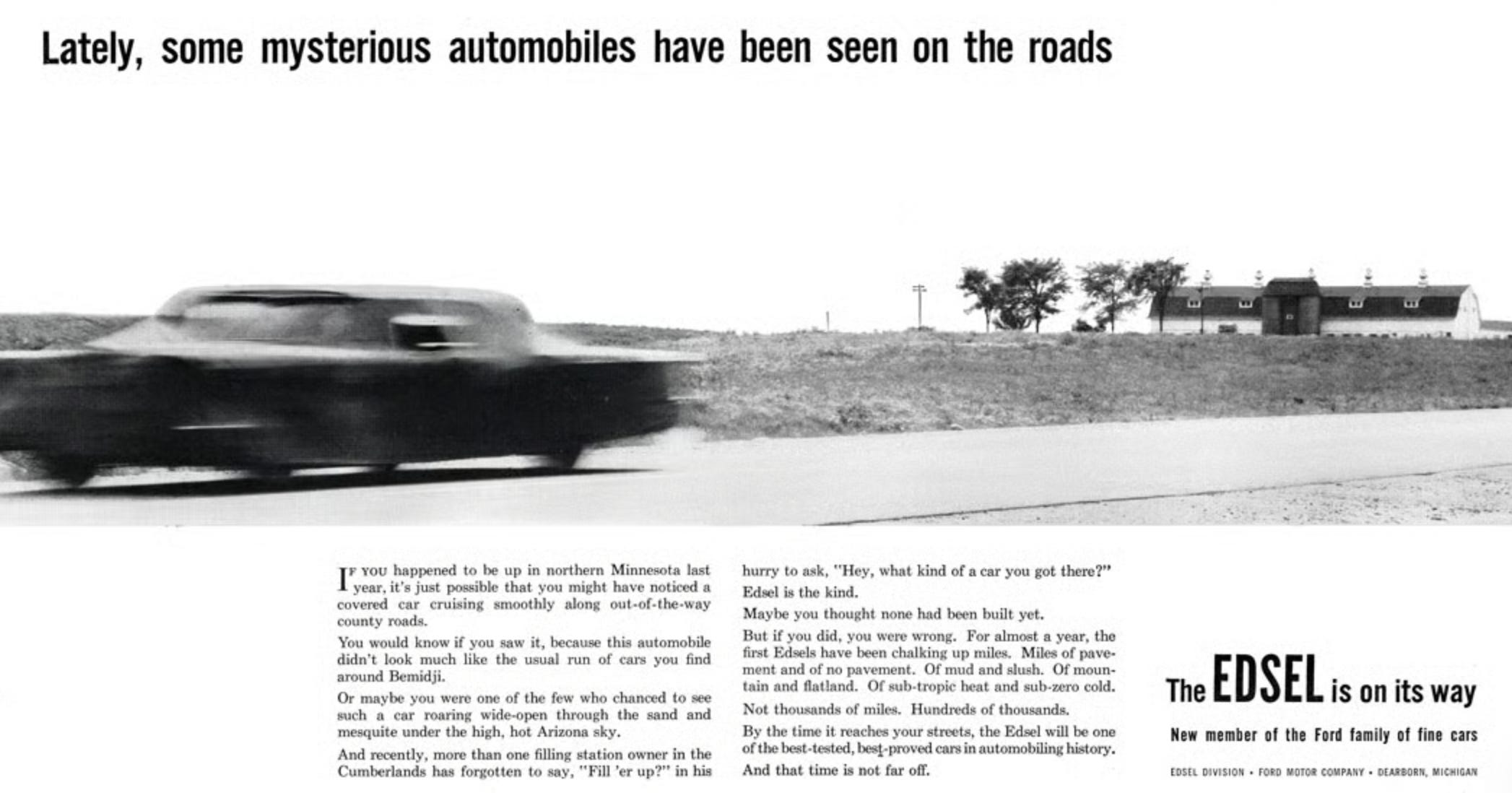
In 1957, before anyone saw the Edsel, Ford ran ads that said “Edsel is Coming” with no photos or footage of the car at all.
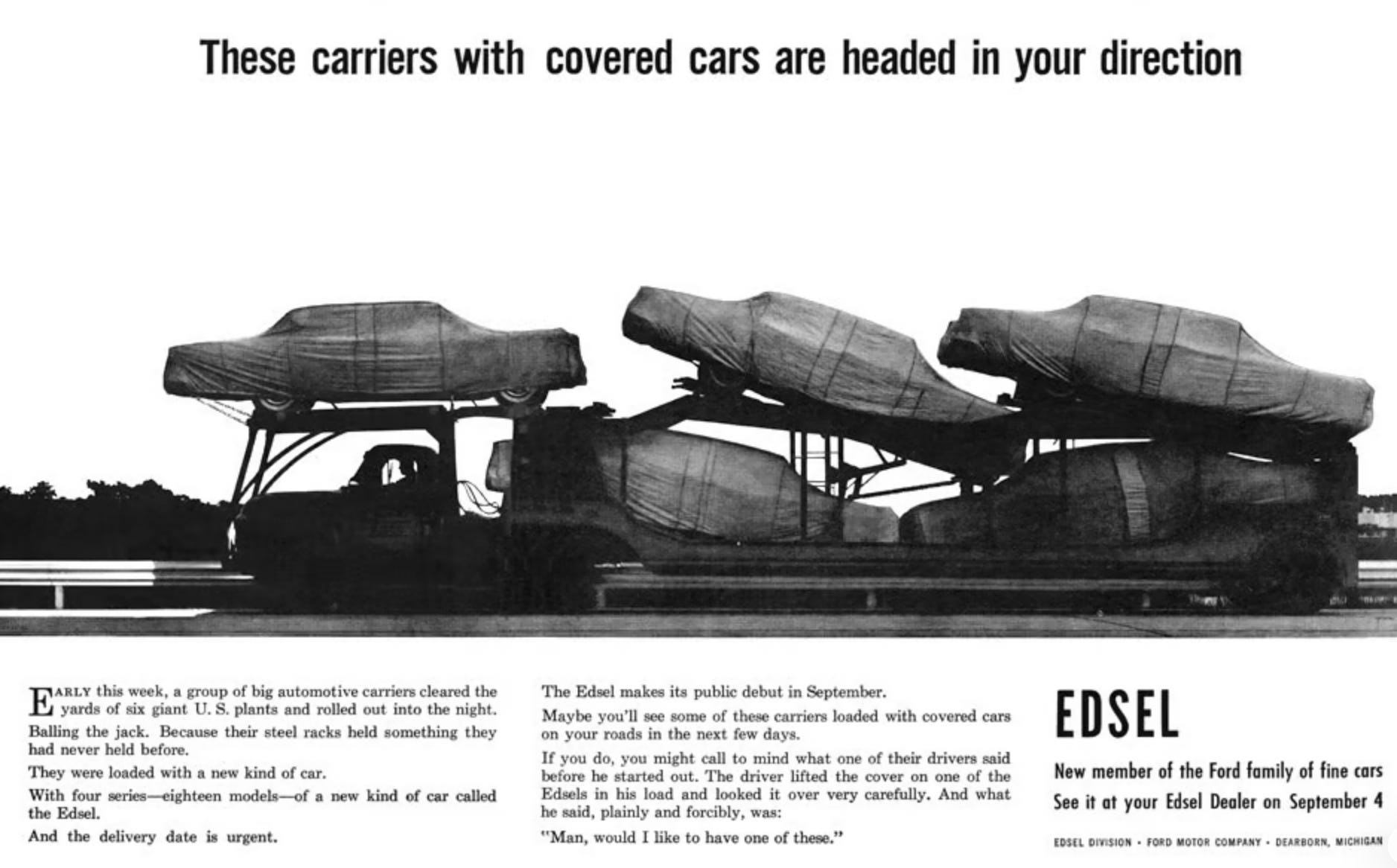
On launch day 2.5 million Americans walked into showrooms. Then they saw it.
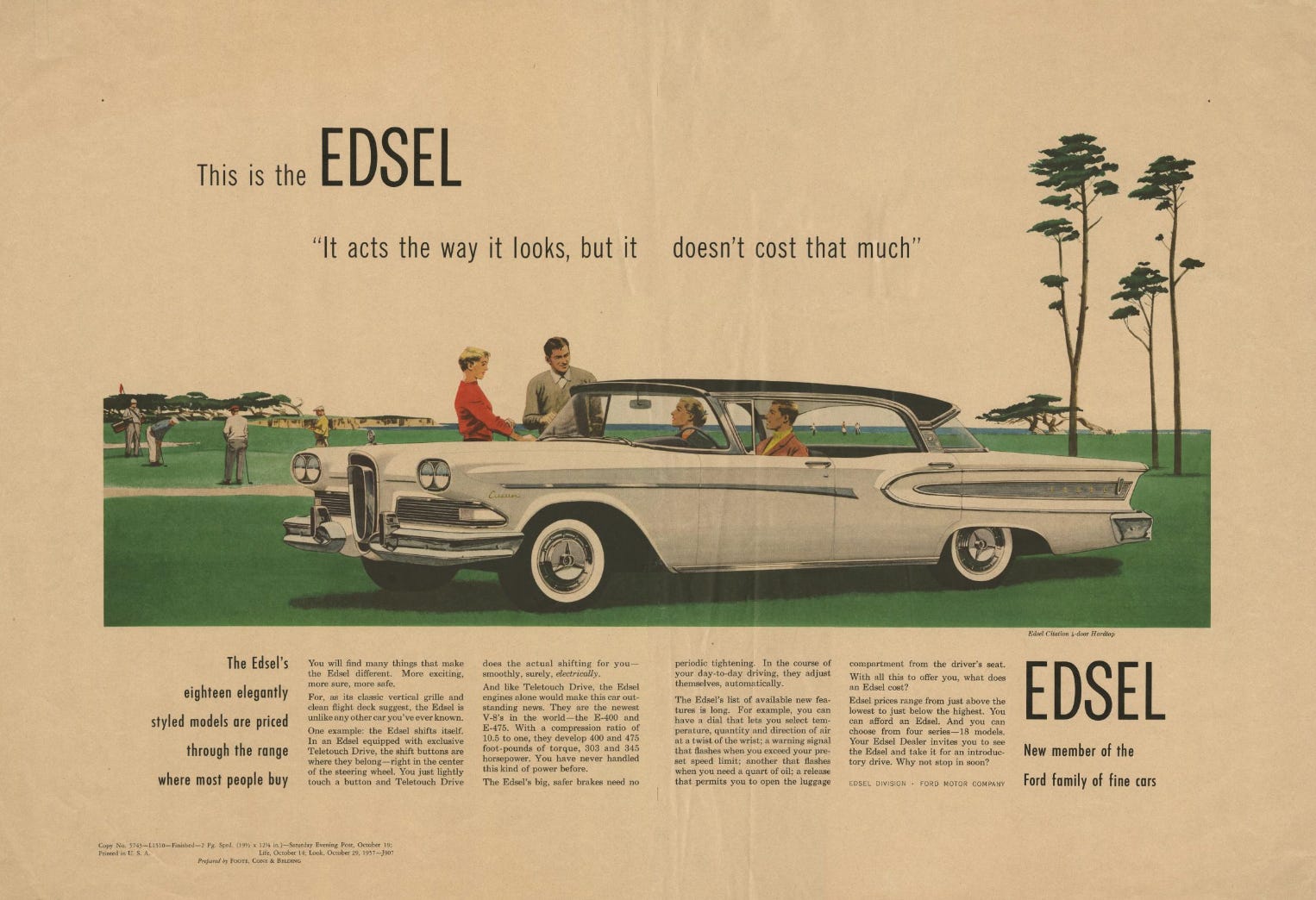
The actual headline Foote, Cone & Belding ran: “It acts the way it looks, but it doesn’t cost that much.” Somebody approved that too.
A year later rioters in Peru pelted Nixon’s Edsel and he said “They were throwing eggs at the car, not me.” (Name another advertising newsletter that works in Nixon references? I’ll wait.)
There is actually a book named “Edsel: The Motor Industry’s Titanic” and that probably means there should be some ads in the future that we call Diggers.
A man in a trench coat on a wet London street in 1959 is smoking a Strand cigarette. “You’re never alone with a Strand.” The theme music charted as a single. Meanwhile only 0.3% of male smokers ever bought a pack.
Britain decided the Strand man was a loser. Dave Trott thinks that’s a myth and the real problem was it gave smokers no reason to switch. Either way, it’s the most artful flop of the era.
DDB and Tony Schwartz made Daisy in 1964 for Lyndon Johnson and it ran exactly once as a paid spot. Schwartz called it “the first Rorschach test on the American public.” The backlash got it pulled, which got it replayed in full on the network news and put the girl on the cover of Time. Politicos are still talking about this one.
THE MONEY GOT BIGGER. SO THE ADMEN STARTED DIGGING.
Advertising really did regularly swing for the fences like this.
Apple’s 1985 spot “Lemmings” for the Macintosh Office was the sequel to “1984.” This would not become Apple’s Empire Strikes Back. Steve Jobs and John Sculley watched this Super Bowl ad bomb live at Stanford Stadium. The crowd had cheered “1984” on the big screen and met “Lemmings” with stunned silence.
When Apple wanted to apologize in the Wall Street Journal, Jay Chiat threatened that Chiat/Day would buy the opposite page and apologize for the apology. That would have been a fun ad.
Burger King spent $40 million dollars on the only man in America who had never eaten a Whopper in “Where’s Herb?” also in 1985. Profits dropped 40% by the end of 1986. At one point the Alabama senate declared Burger King had committed fraud. All over a guy named Herb. What’s really funny about this one, is they did this exact same thing in 2008 with Whopper Virgins.
Infiniti’s “Rocks and Trees” was basically Ford’s Edsel trick, 32 years later. A luxury car launch with no car in it. Just rocks and trees and philosophical copy.
They called it “Zen advertising”. People remembered the ads but the sales stayed sluggish. The flopvertising was real.
In 1997 Fallon invented a fictional ad genius named Dick and had Devo’s Gerald Casale direct a series of insane spots for Miller Lite.
One featured a man in a beaver costume who torments settlers on a motorcycle and eventually eats their home. Ad people loved them. Beer drinkers did not. After 80+ ads, sales stayed flat. I am still thinking about the beaver.
Microsoft spent $300 million dollars with $10 million of it to Jerry Seinfeld in a bunch of nothing ads with Bill Gates. The first spot never once mentioned Windows Vista. Microsoft pulled the campaign within weeks and never mentioned it again. This one’s different than Digger. The swing missed so hard the client flinched before it really landed.
Every one of these ads failed. Every one of them is still being talked about. Name a light beer campaign from 2014 or 2026 that did more than “performed in line with benchmarks.”
Ads now do exactly the same thing Hollywood is doing. Use celebrities, existing IP and nostalgia and avoid originality at all costs. It’s just not worth it.
COCKTAIL OF THE WEEK: TRINIDAD SOUR
Bitters are seasoning. You use a couple of little dashes. Nobody builds a whole drink out of them.
Wrong! In 2009 Giuseppe Gonzalez basically asked, but what if we did?
He was a bartender at Clover Club in Brooklyn and he poured an ounce and a half of Angostura into a shaker like it was rye. Then he took it to a cocktail competition, and it bombed spectacularly. And this was a bartender who’d won a boatload of competitions.
It should have died there. Instead bartenders kept making it for each other. John Gertsen started slipping it to adventurous guests at Drink in Boston, and it spread so well that a customer once sent one back to Gonzalez himself for not tasting like John’s.
Nine years later a guy in Vegas ordered one from him. Gonzalez thought it was a joke. His cocktail had breached containment.
Now it’s an official IBA cocktail. The cocktail flop that refused to stay a flop. Pour one and decide for yourself.
1 1/2 oz Angostura bitters
1 oz orgeat
3/4 oz lemon juice
1/2 oz rye
Shake with ice and strain into a chilled coupe.
If 1 1/2 oz of bitters scares you like a Level 4 warning in Digger, drop it to 1 oz and use a little more rye.
I’M STILL TALKING ABOUT OLD ADS OUT LOUD
If you read this whole issue, you just spent ten minutes on ads that failed decades ago. You’re my people.
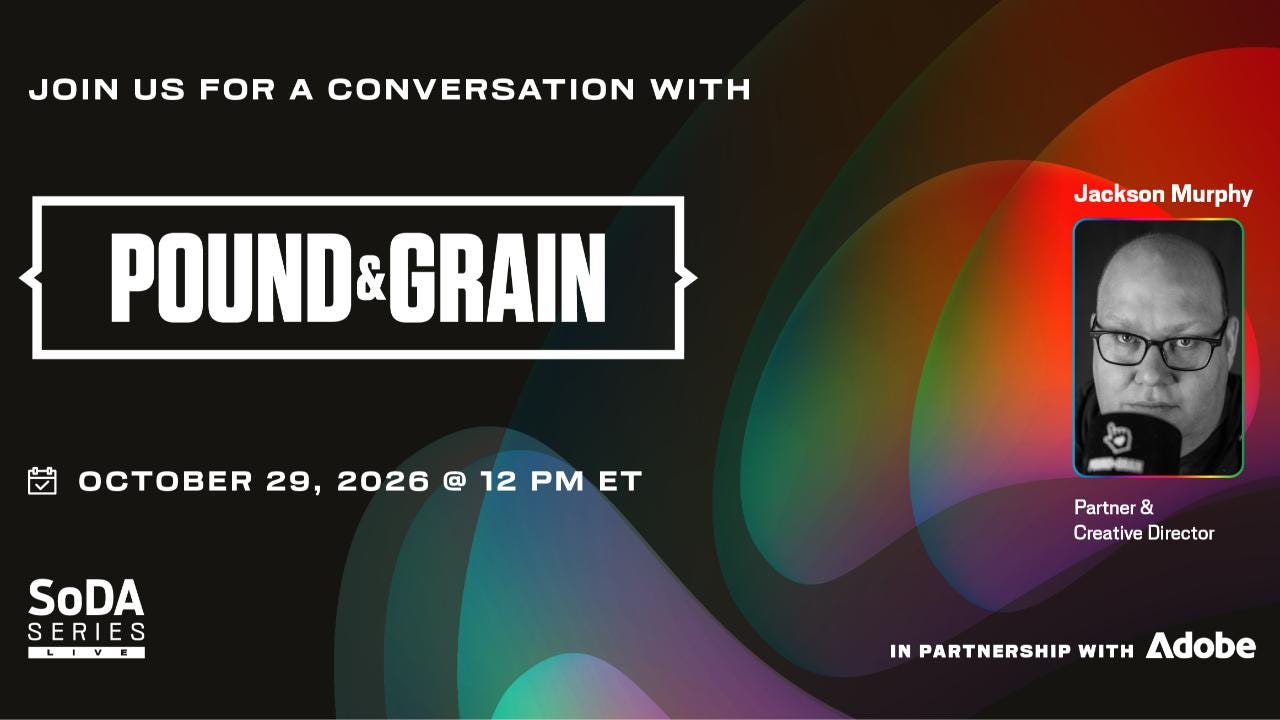
On Thursday, October 29 at 12 PM ET I’m joining SoDA Series LIVE with Pound & Grain, in partnership with Adobe, for a conversation called On Having Advertising Nostalgia. Why the old stuff sticks. Why everyone keeps stealing from it. And probably at least one more bit about the beaver.
Sign up on Linkedin. Keep digging.
The Drink Cart is the newsletter version of sitting at a really good bar with someone who thinks too much about advertising and won’t shut up about it. Subscribe to get it on Wednesdays and Fridays.