

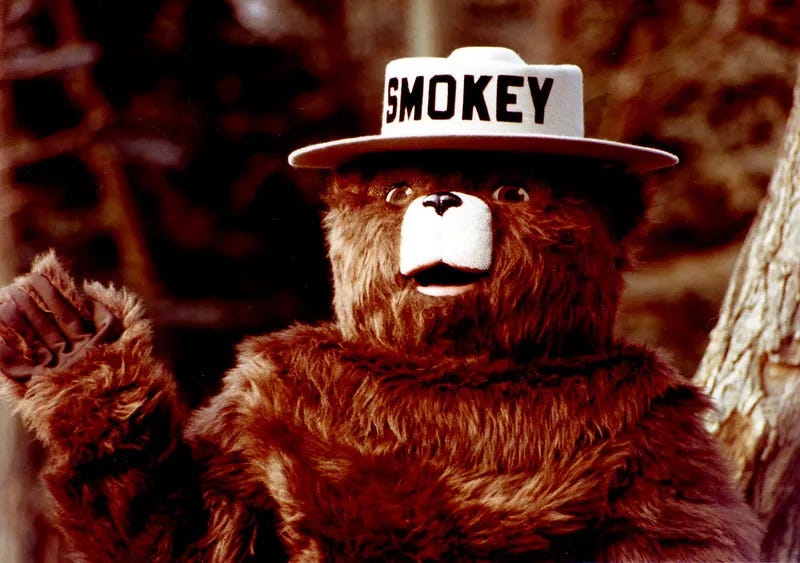
I’ve had Smokey the Bear on my advertising mascot radar for months. Since there are Ontario seems to be fully engulfed in flames this week and the smoke has settled over Toronto giving us that sweet campfire air quality, it felt like the week to run the story of the bear.
He outlived the man who voiced him, the artist who drew him and the deer he replaced. And the slogan that made him famous turned out to be ecologically wrong.
Here’s what I didn’t know. Smokey was born in wartime. After Pearl Harbor a Japanese submarine actually shelled an oil field near Santa Barbara, right beside Los Padres National Forest. The fear took hold that enemy fire could ignite all of the Pacific forests, you know those same forests America needed for wartime lumber, with the able-bodied firefighters all overseas.
This wasn’t just paranoia. A Japanese pilot named Nobuo Fujita actually bombed the forest outside Brookings, Oregon in September 1942. Later in the war Japan launched some 9,000 incendiary balloons into the jet stream, hoping they’d drift across the Pacific and set the American West on fire. Hundreds made it. The enemy wasn’t hypothetically trying to burn the forests. They were trying 9,000 times. Oregon just happened to be to wet.
So the first fire-prevention slogans weren’t cuddly at all.
They were Forest Fires Aid the Enemy and Our Carelessness, Their Secret Weapon.
As Marty would say to Doc Brown, “Whoa. This is heavy.”
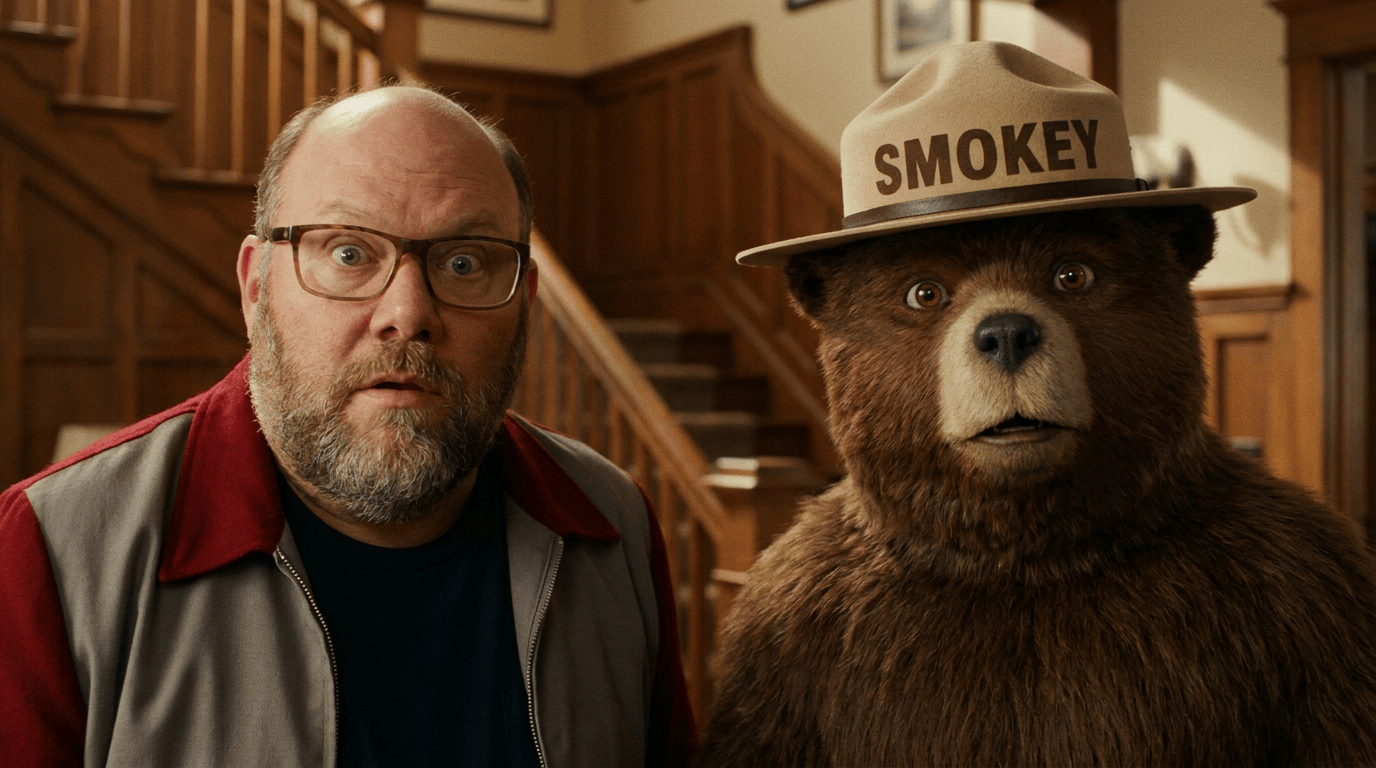
DISNEY LOANED THEM BAMBI. THEN THEY NEEDED THEIR OWN BEAR
For one year, Disney let the campaign use Bambi. It worked. But the loan expired, and the Forest Service needed a mascot it owned. On August 9, 1944, now considered his birthday, they authorized a bear.
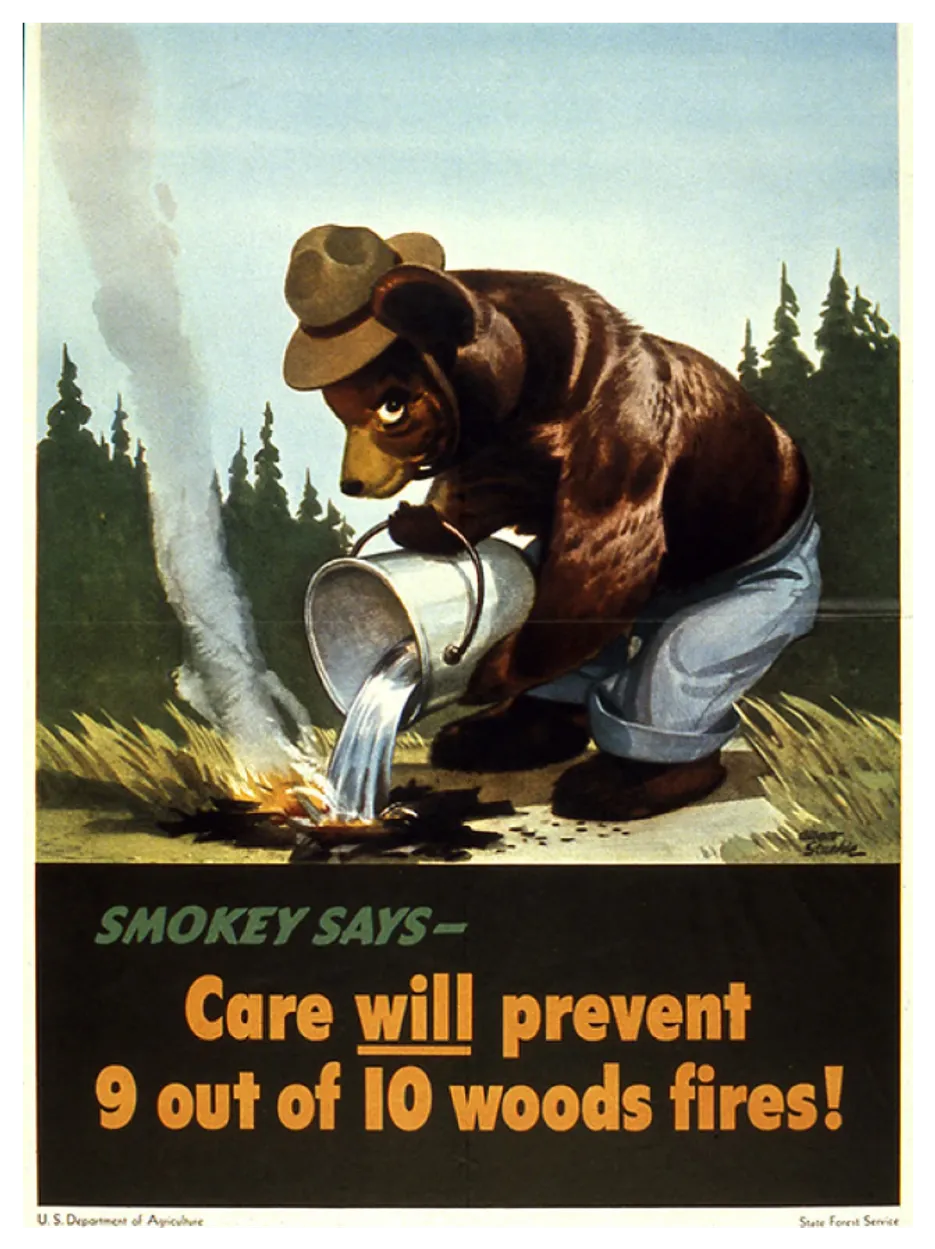
Artist Albert Staehle delivered the first poster that October. In 1947 came the line that ran for the next 54 years. Remember — Only YOU Can Prevent Forest Fires.
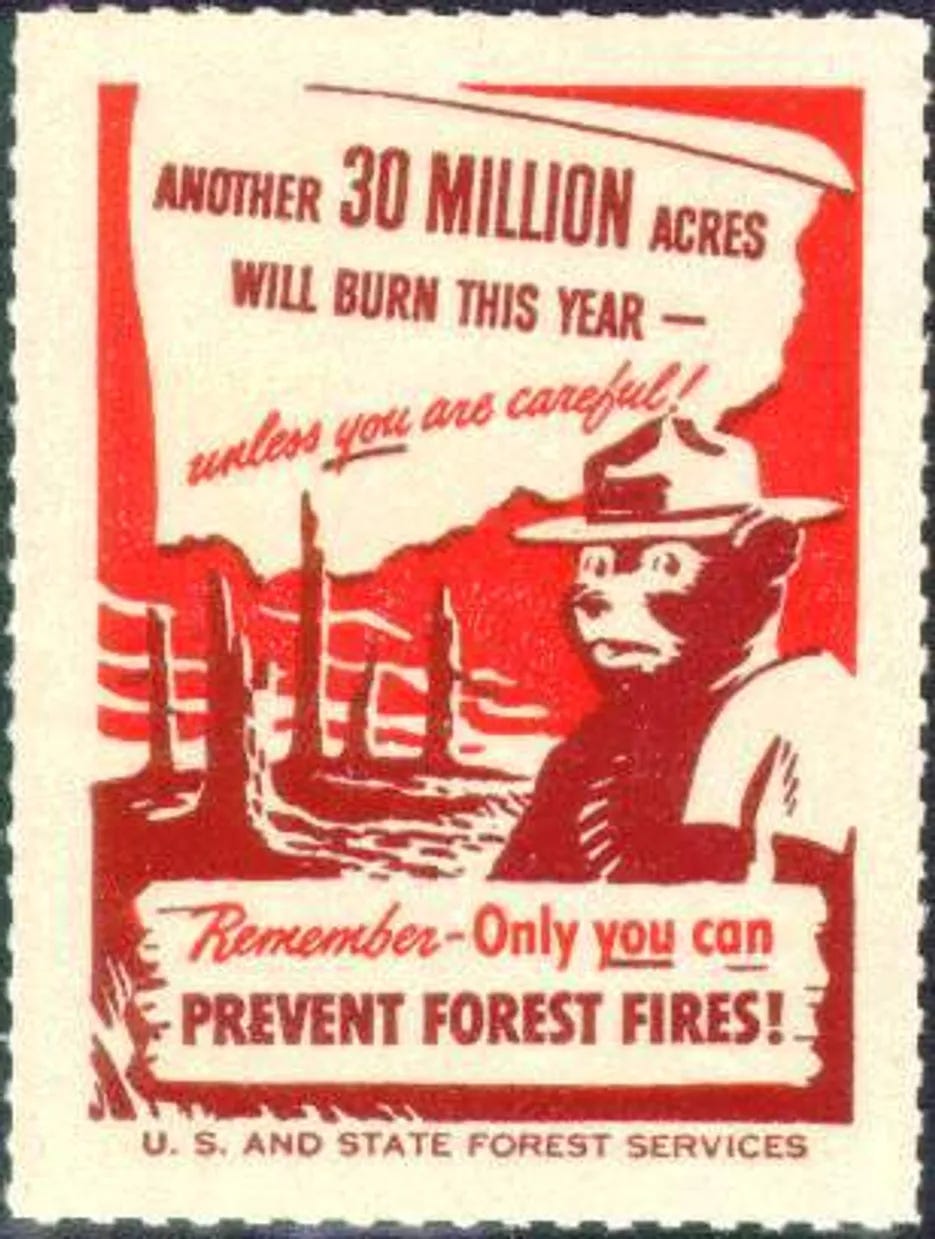
A Forest Service artist named Rudy Wendelin became the campaign’s full-time artist in the late 40s and drew Smokey for nearly three decades, softening him, making him more human, putting his name on the hat and the belt buckle.
Smokey worked so well that Congress literally pulled him out of the public domain in 1952 and protected him by federal law. Yep. there is a statute about this bear.
THEN A REAL BURNED CUB MADE HIM FLESH
In May 1950 the Capitan Gap fire tore through the mountains of New Mexico. Crews found a black bear cub clinging to a charred tree, paws burned.
They called him Hotfoot Teddy, then renamed him Smokey after the cartoon that already existed. Flown to the National Zoo in Washington, he drew 13,000 letters a week. That was enough that the Postal Service gave him his own ZIP code, 20252, and the zoo needed three staffers just to answer his mail.
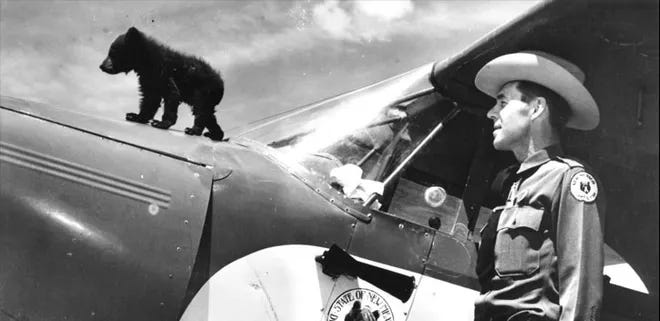
The government gave him a wife (Goldie, 1962, no cubs, sadly), a successor (an orphan from the same New Mexico forest, anointed Smokey Bear II (original) at an actual retirement ceremony in 1975) and, when he died in 1976, a front-page obituary in the Wall Street Journal. The Washington Post listed Goldie among his survivors. The bear had a widow in print.
And one more thing he never asked for — the “the”. His name is Smokey Bear, full stop. A 1952 hit song by Steve Nelson and Jack Rollins — the same duo who wrote Frosty the Snowman and Peter Cottontail — added the the to fix the rhythm of a lyric, and we’ve been mangling his name ever since.
HE’S ALSO WHY TRUCKERS CALL COPS BEARS
Let’s be real. This whole newsletter was just carefully crafted long play to post something about Smokey and the Bandit.
The flat-brimmed campaign hat became so associated with Smokey that when state troopers adopted the same style, the hat took his name. Truckers on CB radio ran with it — highway patrol became Smokeys, became bears. Bear in the air meant a police helicopter. Full-grown bear meant a state trooper.
Which means Smokey and the Bandit — second only to Star Wars at the 1977 box office — is technically named after a fire-prevention PSA.
Alfred Hitchcock called it one of his all-time favorite movies. It was the last film he ever screened in his office before he died. He’s not wrong. No mascot has ever traveled further from the brief.
THE SPOTS GOT WEIRD. AND THE CASTING GOT WEIRDER
Eighty years of pro bono work produces a strange archive. Smokey started in 1950s radio, voiced by Washington broadcaster Jackson Weaver, and for the last decade-plus he’s been Sam Elliott — the only casting decision in history nobody has ever questioned.
In between, the campaign pulled in Bing Crosby, Roy Rogers, Barbara Stanwyck, B.B. King, Dolly Parton, Leonard Nimoy, Betty White and Ted Nugent. The Beach Boys quote Smokey in Drive-In. All of it running in donated time and space — over $1.63 billion worth of free media since 1944.
The best spot in the vault is a 60-second Ray Charles piece from the 70s called A Personal Viewpoint, where Charles describes the sounds he loves in the forest and closes with “when we lose a forest we lose a lot more than meets the eye.” A blind man selling the forest through sound. Somebody at FCB earned their keep that day.
The strangest is 1973. Actress Joanna Cassidy talks to camera about the quiet of the forest, the shot creeping closer and closer — then she peels off her face like a mask and it’s Smokey underneath. Plot twist.
“If you knew it was me, would you have listened?” It terrified a generation and got remade in 1980 with softer edges. And nine years after peeling off her own face on national TV, Cassidy was cast as a replicant in Blade Runner. Some auditions happen in public.
THE LONGEST CLIENT RELATIONSHIP IN ADVERTISING IS A BEAR
Here’s the part for the agency people.
Foote Cone & Belding picked up Smokey through the Wartime Advertising Council in 1944 and never let go. Eighty-plus years. Pro bono. Through every rebrand, every reshuffle, every procurement cycle that killed lesser relationships, somebody at FCB was the keeper of the bear. It’s routinely cited as the longest-running agency partnership in American advertising.
Then Omnicom swallowed IPG, and the longest agency-client relationship in the business quietly became a BBDO account.
The bear survived a wildfire, outlived two zoos worth of caretakers and made it 80 years with one agency — and in the end, not even Smokey could prevent the agency mega merger.
THE AD LESSON: THE CAMPAIGN WAS SO GOOD IT BROKE THE FORESTS
Smokey the Bear worked too well. Decades of all fire is bad trained Americans and policymakers to suppress every flame on sight. But fire is part of how healthy forests live.
Not something we are hearing this week at all. To be fair most of the feed is speculation on just how many cigarettes you’re consuming being out in that air quality. Is it .125 an hour, 10, one pack, 10 packs. Lets call that unhelpful.
Stamp out every small natural burn and the dead fuel just accumulates — year over year, decade over decade — until it feeds the catastrophic megafires we get now.
That’s why in 2001 the slogan officially changed from forest fires to wildfires. The fix was to carve out a distinction Smokey had spent 50 years erasing — that some fire, the controlled and prescribed kind, is exactly what the forest needs. The most effective public-service campaign in American history had, in part, taught the country the wrong lesson about its own woods.
Smokey is the cautionary tale. A great campaign reduces a complicated thing to one unforgettable idea — and that compression is the entire point, because nuance doesn’t travel and slogans do.
Only YOU Can Prevent Forest Fires is a perfect line.
Personal, direct, impossible to misread. The better your message lands, the longer you’re responsible for it.
COCKTAIL OF THE WEEK: THE DIVISION BELL
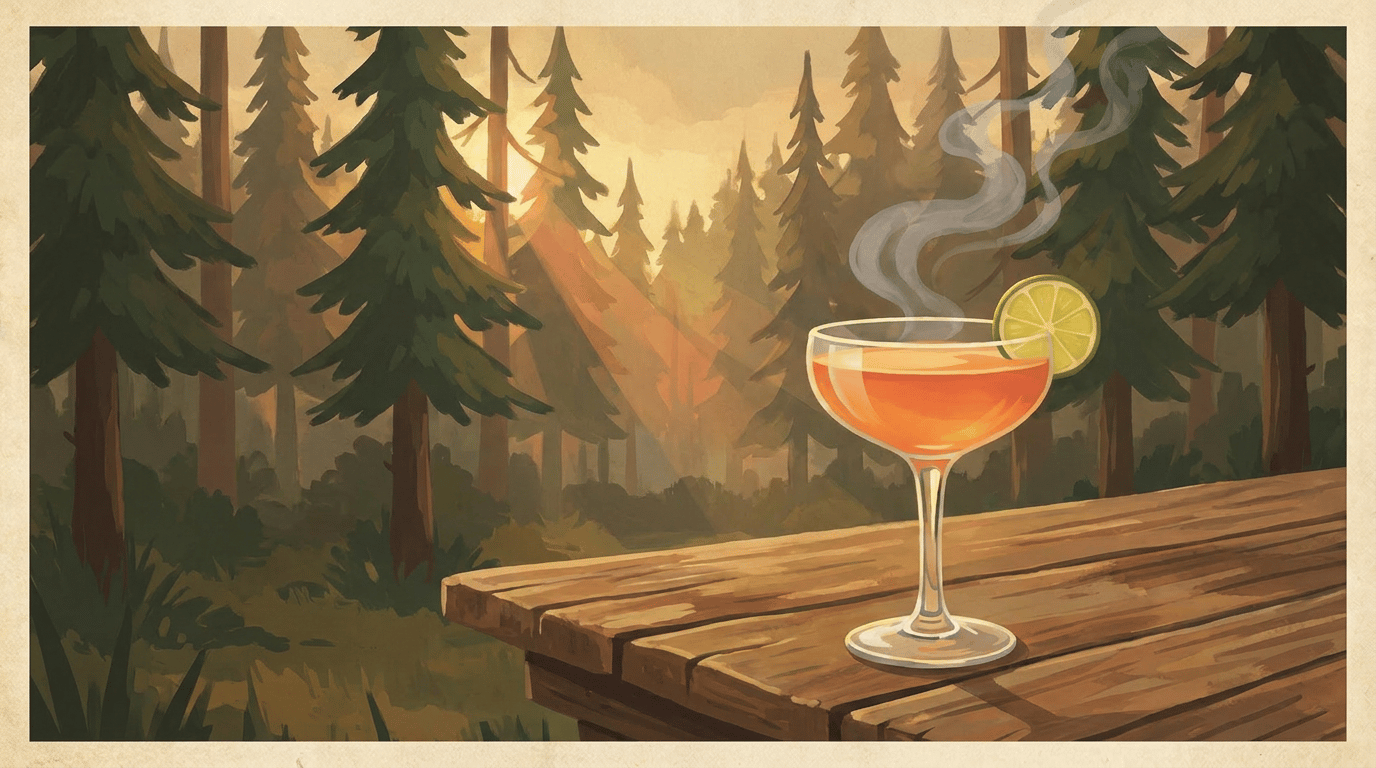
Don’t write this cocktail off as just another mezcal sour. Think of this week’s cocktail as the Last Word after the fire went through.
In 2009 a bartender named Phil Ward tore down the Last Word and rebuilt it in smoke: mezcal in for the gin, Aperol in for the Chartreuse. He was opening Mayahuel, his East Village shrine to agave, and the construction nearly broke him. The thing that got him through was Pink Floyd’s The Division Bell on endless repeat. So the drink took the album’s name.
Remember what mezcal was in 2009 — a worm in a bottle, a dare, a punchline. Ward’s menu helped change that. The Division Bell was smoke used deliberately, in proportion, in service of something beautiful. Sound familiar? It took the Forest Service 57 years to figure out what a bartender knew on opening night.
The Division Bell
1 oz mezcal
3/4 oz Aperol
3/4 oz fresh lime juice
1/2 oz maraschino liqueur
Lime wheel
Shake everything with ice. Double strain into a chilled coupe. Garnish with a lime wheel.
The Drink Cart is the newsletter version of sitting at a really good bar with someone who thinks too much about advertising and won’t shut up about it. Subscribe to get it on Wednesdays and Fridays.