

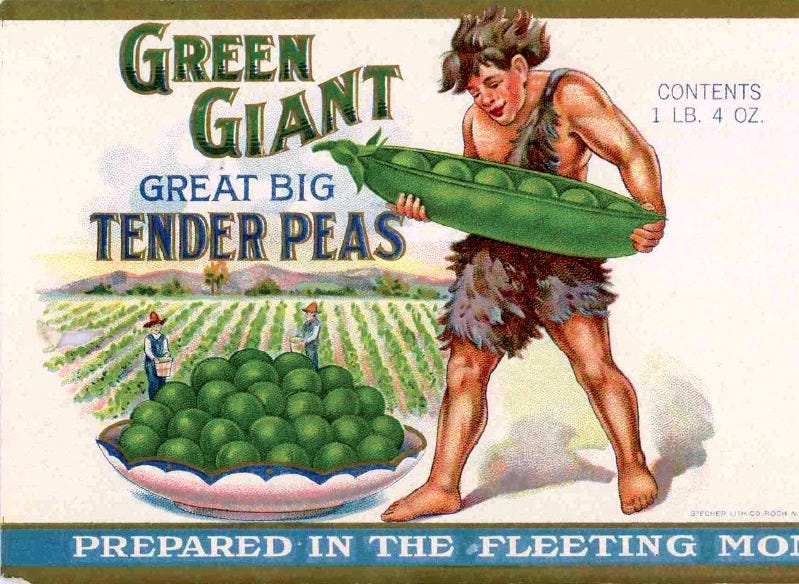
In 1928, the Jolly Green Giant wasn’t jolly.
He wasn’t even green.
He was an orange caveman in a bearskin, hunched over a giant pea pod.
And before you even ask, I’m not AI-ing myself as the Green Giant. Even I have limits.
So back to Green Giant.
Angry, maybe. Threatening, kind of. Described at the time, charitably, as terrifying.
1928 seemed maybe a bit too generous to advertisers.
They already had a solid canned vegetable mascot, right?
He existed because a small canning company in Le Sueur, Minnesota had discovered a new variety of jumbo pea.
So big and tender that none of the established brands wanted to sell it. What a time to be alive.
So the Minnesota Valley Canning Company made up a name, Green Giant. Then they bolted a cave monster to the label for maximum effect.
In 1935, you know what comes next. It’s always the copywriter.
The account landed on the desk of a copywriter at Erwin, Wasey & Company in Chicago.
His name was Leo Burnett.
He looked at the angry orange cave dweller. He decided the problem was simple.
The giant wasn’t jolly.
He added the word. Changed the bearskin to leaves. Straightened the posture. Gave him a smile.
Minnesota Valley liked the revision so much they eventually renamed the entire company after it.
When Burnett left to start his own agency that same year, the Green Giant account came with him. One of the founding clients of what became Leo Burnett, Chicago.
Imagine being on such a generational run creating Tony the Tiger, the Pillsbury Doughboy, Toucan Sam and the Jolly Green Giant?
He made everything that way. Found the one true word and the whole thing changed.
There’s a reason his company was billing over $100 million a year by 1959.
The Giant’s first TV appearance we’re a disaster. He sort of moved. He apparently frightened children.
The “Ho, Ho, Ho” wasn’t added until 1961.
A Chicago session singer named Elmer Dresslar Jr. walked into an audition. Was told nothing except to stand at a mic and do a low laugh.
He did.
That was it. That sound ran for decades.
They introduced frozen vegetables and gave JGG red scarf to keep him warm in the freezing temperatures.
They added Little Green Sprout in early 70s because the Giant had one problem. He was too big and too iconic to really give a voice to. He couldn’t sell products directly. He could only loom and Ho, Ho, Ho.
Sprout was the talking proxy. He’d ask questions. The Giant would just watch over the valley.
A genuinely odd two-mascot structure. The authority figure communicates exclusively through size and laughter. The little guy does all the actual explaining.
It worked.
The Giant got so embedded in culture that in 1964, The Kingsmen (yep the “Louie Louie” guys) had a top 10 hit with a novelty song about him.
Green Giant initially objected. When it hit #4 on the Billboard Hot 100, the brand took the win.
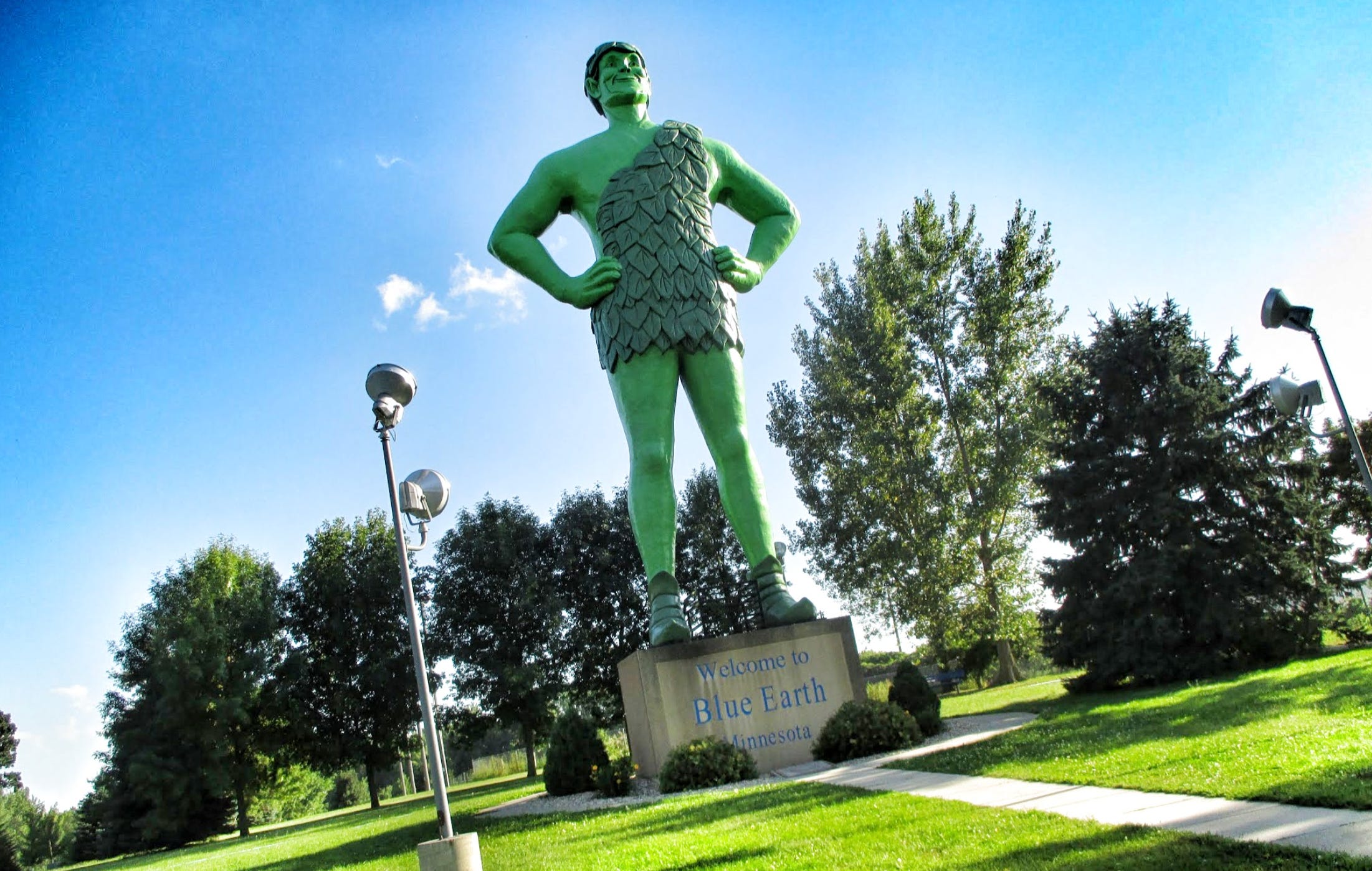
A 55-foot fiberglass statue was erected in Blue Earth, Minnesota in 1979. A local radio host commissioned it because travellers kept telling him they wanted to see the Giant.
No landowner near the new I-90 would donate frontage for it. So at the freeway’s dedication ceremony, he hoisted the Giant from a crane by the armpits as a publicity stunt. The Giant got a permanent base the next year.
Still draws 10,000 visitors.
In 1999, Ad Age ranked the Green Giant third among the top 10 advertising icons of the 20th century. Behind only the Marlboro Man and Ronald McDonald. Ahead of Betty Crocker, the Pillsbury Doughboy and Tony the Tiger.
Third.
For a guy who sells canned corn.
Then you know what happened? Oh you know.
Green Giant merged with Pillsbury in 1979.
Pillsbury then sold to General Mills in 2001.
General Mills decided $585 million in annual vegetable sales was only 4% of their business and not worth the focus.
So they sold to B&G Foods in 2015 for $765 million.
B&G sold the canned line to Seneca Foods in 2023. Then the frozen line a few years later
The complete brand is now at Seneca Foods in Fairport, New York.
Four ownership changes.
But he’s still here.
THE AD LESSON
Leo Burnett looked at a frightening orange cave monster.
And applied his phrase: 'There is an inherent drama in every product. Our No. 1 job is to dig for it and capitalize on it.'
For Green Giant, the inherent drama was one word. Jolly.
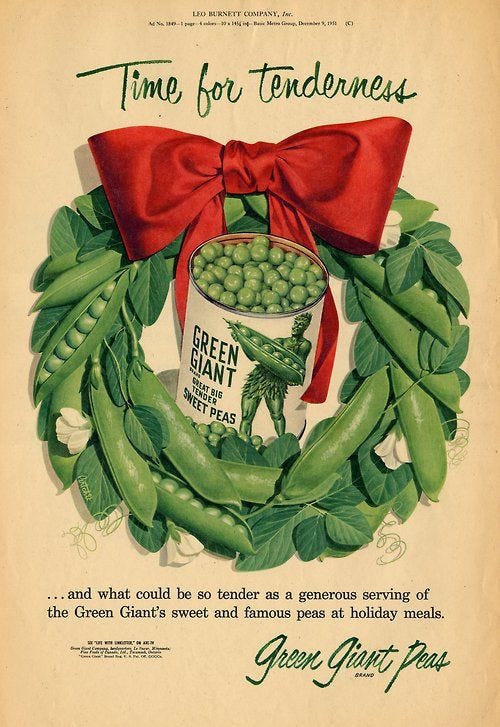
That’s the whole intervention. The product didn’t change. The peas didn’t change. Just the one word.
Suddenly the monster had a personality. The personality had a brand. The brand had a company name, a pop song and a 55-foot statue in Minnesota.
The lesson isn’t about softening a brand. It’s about finding the word that transforms how everything else gets read.
Sometimes the brief is just: find that one word.
COCKTAIL OF THE WEEK: GREEN CHARTREUSE SOUR
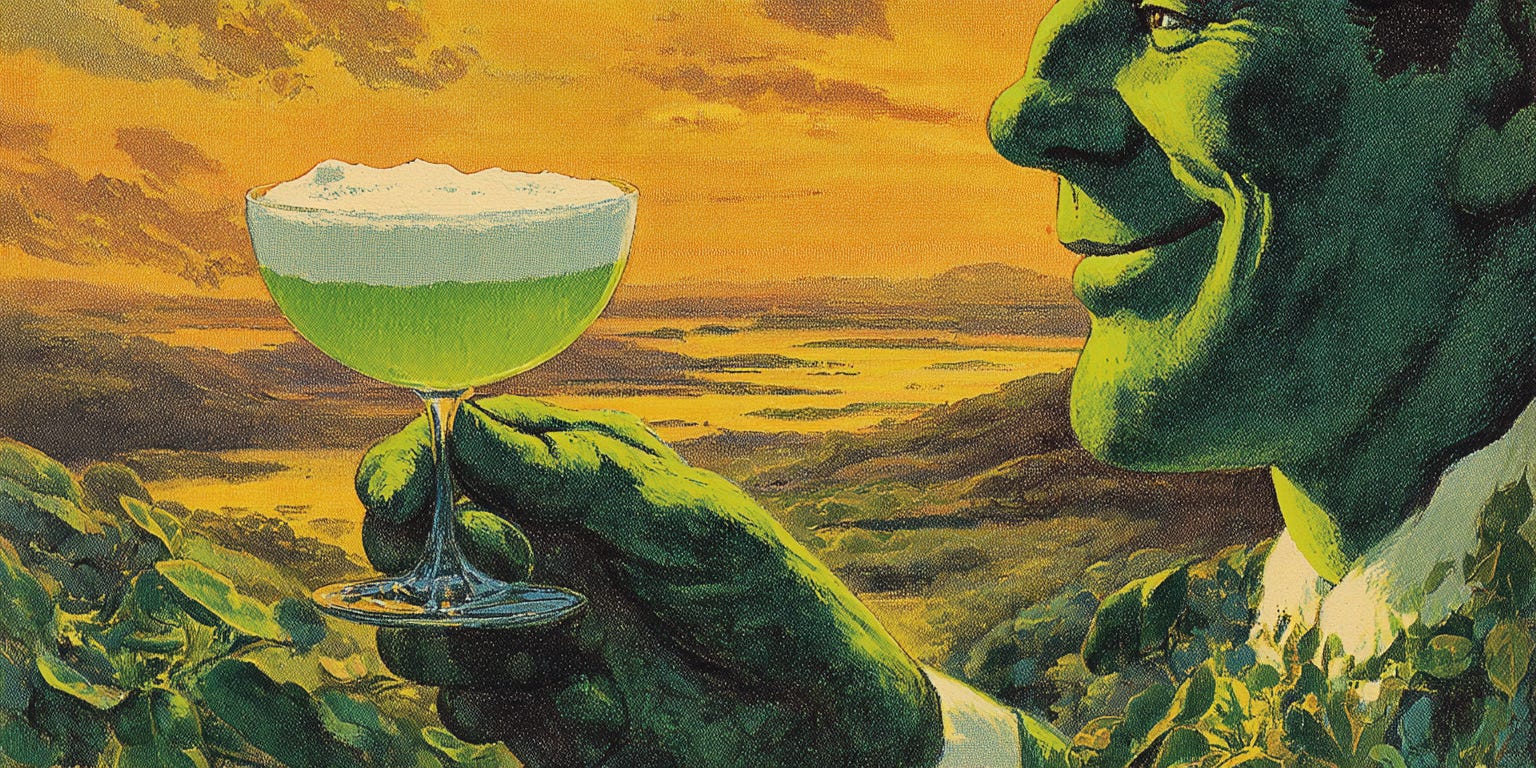
Ho, Ho, Ho. Yes, we’re making a green drink.
Made with a French liqueur that gets its green from actual chlorophyll. The recipe has 130 herbs in it and two Carthusian monks are the only people who know what they all are.
2 oz Green Chartreuse
3/4 oz fresh lemon juice
1/2 oz simple syrup
1 egg white
Dry shake to whip the egg white. Add ice, shake hard, double-strain into a coupe. Foam on top is the look.
Herbal, bracing, actually green. Made by monks who capped production in 2019 because they’d rather pray than scale.
The Giant would respect it. So sip that sour and watch the Jolly Green Giant in action.
The Drink Cart. A newsletter version of sitting at a really good bar with someone who thinks too much about advertising and won’t shut up about it. Wednesdays and Fridays.
Love the green cocktail tie-in 👌🏻