

Just a few weeks after shaming their CEO to step down for daring to not share a plane accident in French, Air Canada announced something this week with breathless excitement.
The press release called it a “comprehensive redesign showcases a distinctly Canadian experience rooted in comfort, care, and connection.”
They named the whole thing “Glowing Hearted.”
I’ve always hated Air Canada. This story just adds fuel to that.
Yeah, lie-flat seats, 4K OLED screens, bigger overhead bins, Bluetooth audio. Honestly, all fine upgrades. The kind of thing you’d actually want on a transatlantic flight if you were suckered enough to have to fly on this airline.
But you see, “Glowing Hearted” is not about that kind of stuff. It’s about the design in the air. The thing a 27-year-old will be asked to present at a stakeholder meeting with a straight face.
Air Canada’s EVP Mark Nasr said — and I am quoting directly — “We’re setting a new standard for how Canadians and the world connect with our brand.”
Mark. Buddy. You put bigger screens in economy seats. Simmer down a bit.
The press release tells us, “The new cabin design is inspired by Canada, creating a thoroughly modern space that evokes a sense of calm.”
I can hear you asking, “what does Canadian mean to Air Canada”
The answer, apparently, is glowing. And hearted. And if I’m being honest kind of bland and grey. That must be the luxury part? But I am forgetting that the “signature red stitching and bespoke fabrics provide a subtle Canadian touch paired with a palette of greys and stone.”
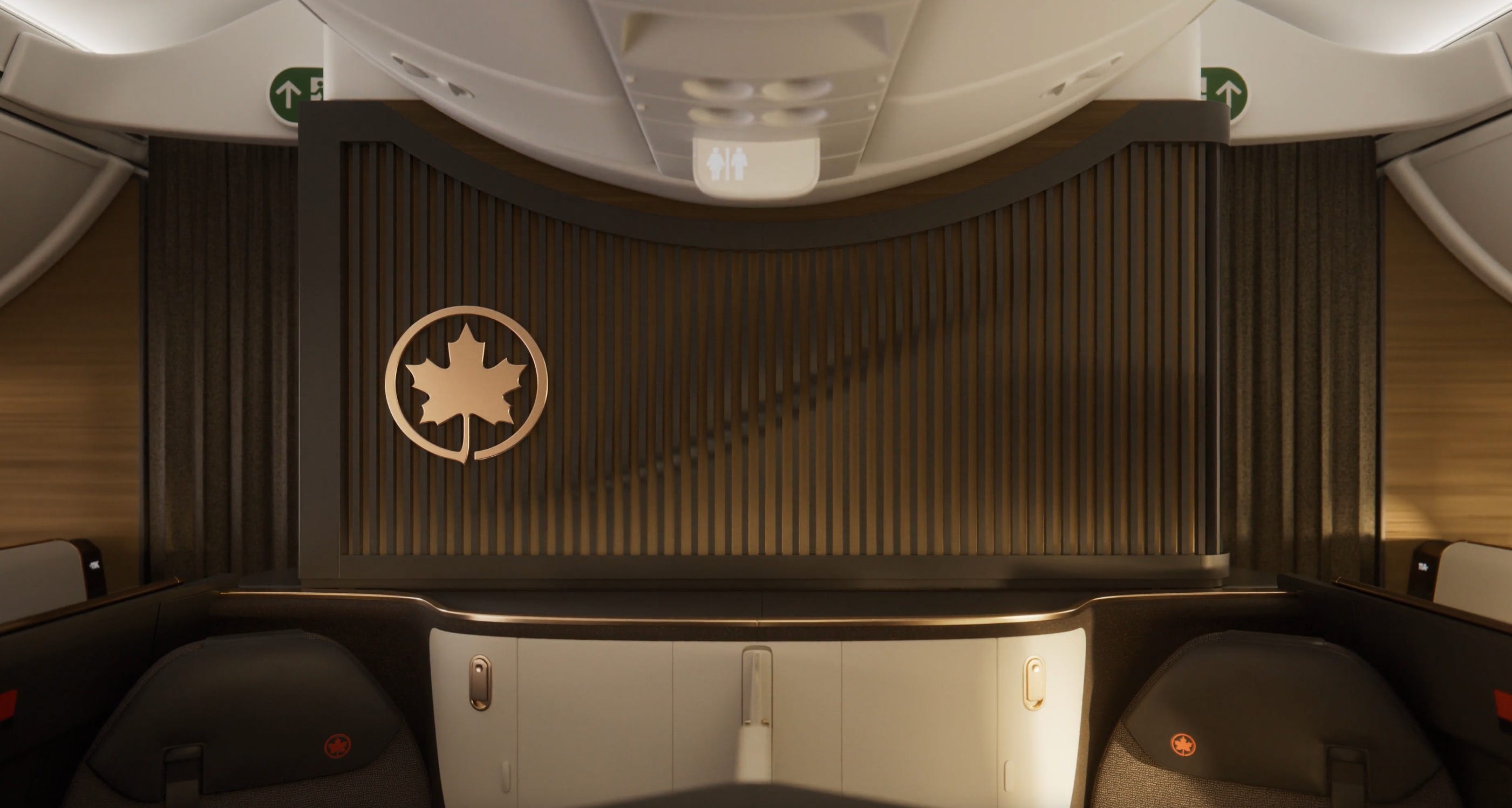
Sure those in the fancy areas are also, “greeted by a wave-like entrance monument, inspired by Canada’s waterways and anchored by the Air Canada rondelle cast in bronze.”
What are they even talking about? I do not need a welcome monument on my plane.
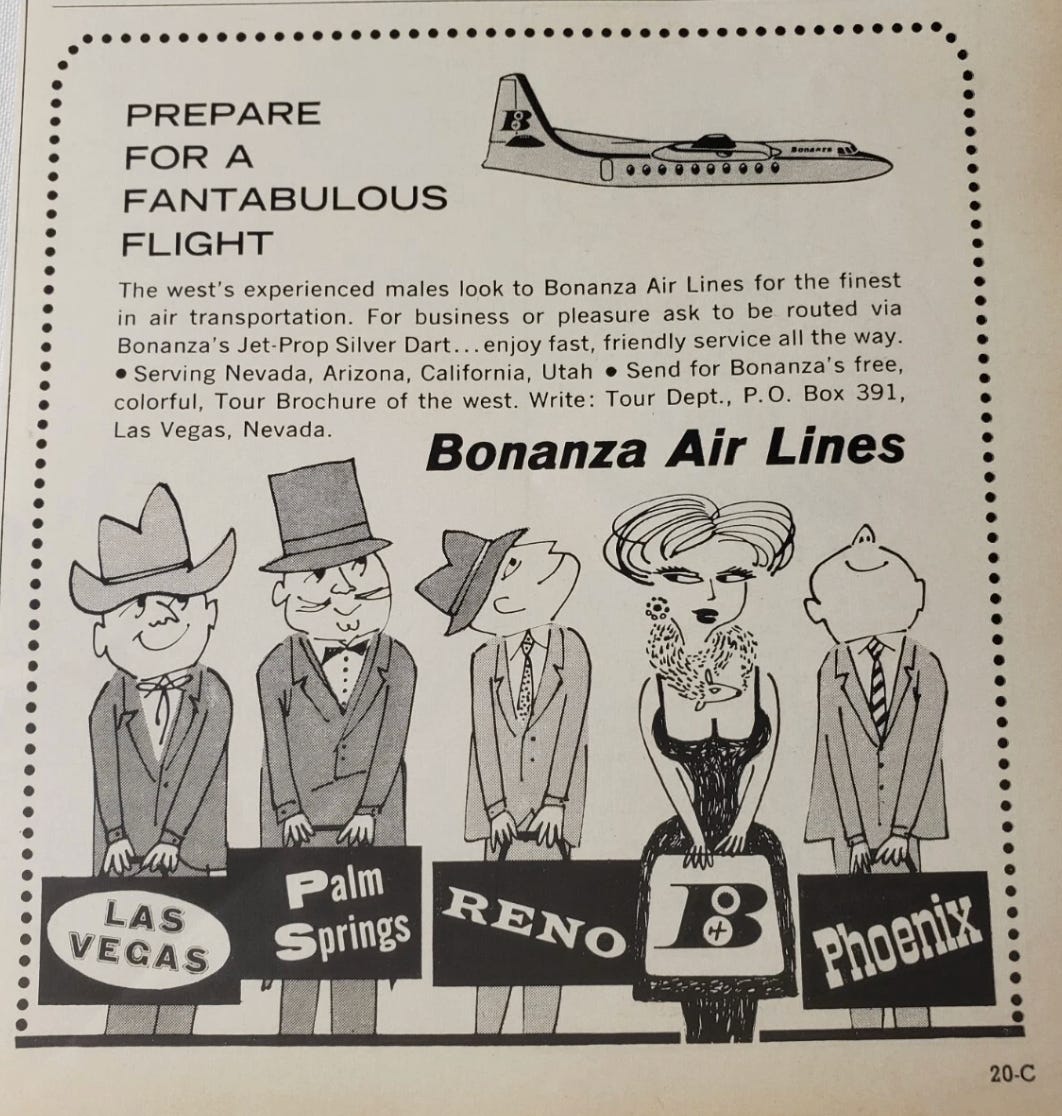
There was a time when airlines just had good names and used words like Fantabulous. Bonanza Air Lines launched in Las Vegas in 1945 with one Cessna and a dream of connecting the Southwest. I’ve been thinking about this one a lot.
By 1960 they were the first all-turbine airline in America. Here’s the best part. They called their DC-9s “Funjets.”
Not Joyful Skied Jets. Not Warmly Elevated Travel or even Glowing hearted.
Funjets.
They flew Las Vegas to Reno, Phoenix, LA, Salt Lake City, eventually Mexico. Then Howard Hughes bought them, Delta eventually absorbed the whole lineage and that was that.
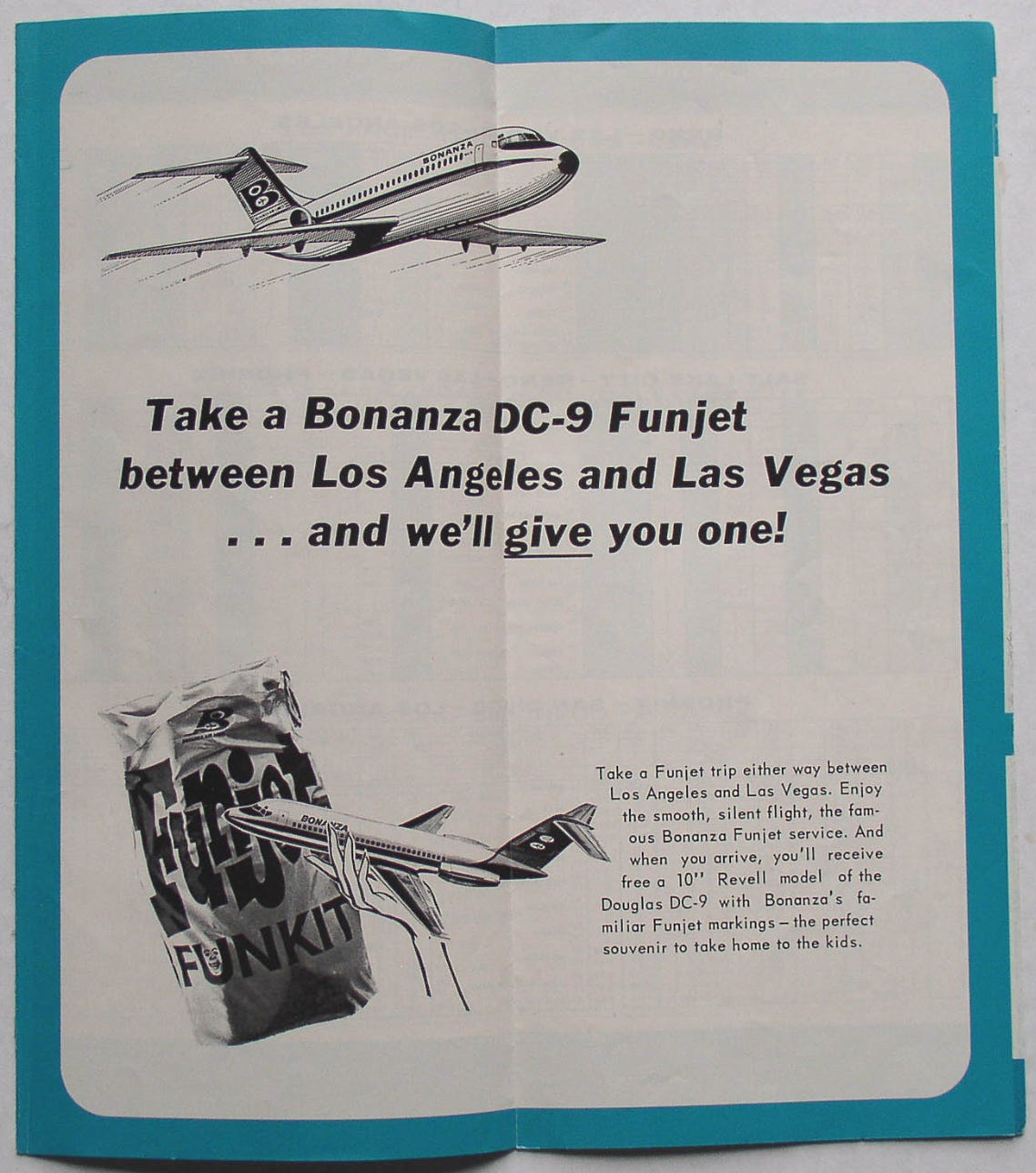
Funjets. Two syllables. The opposite of whatever Air Canada is trying to call innovation.
That energy. The earnest, effortful, slightly over-explaining itself, runs through everything Air Canada does. And I say that as someone who has been apologized to by Air Canada while being delayed dozens of times.
The seats will be fine. No one is every going to say, “oh, have your flown in the new Glowing Hearted cabins?” Never. The name will haunt the brand manager for the rest of their career.
BEAVER LUMBER: A CANADIAN LOGO EULOGY
The logo says everything.
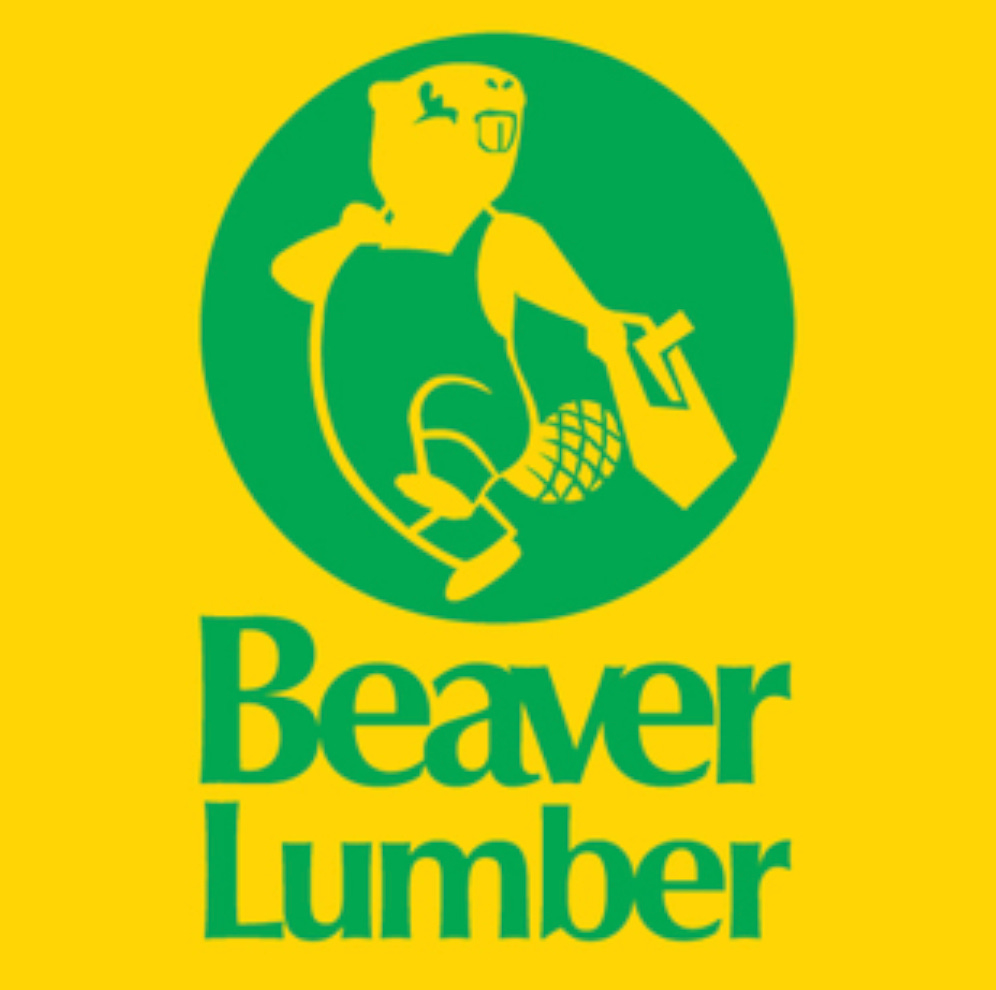
A beaver. A Green apron. A tool box. Yellow background. Absolutely unmistakable. The kind of identity that takes forty years to build and eighteen months to throw away.
Beaver Lumber started in 1906 in Winnipeg, after the Banbury brothers came down from Saskatchewan and bought up a bunch of other lumber stores. They needed a name connected to wood. Someone said “Beaver.” That was that. 94 years as a Canadian institution.
At its peak, 138 stores. Hardware. Lumber. Building supplies. The place your dad went on a Saturday morning and didn’t come back until 2pm.
Then Molson bought it.
The beer company. In 1972, for $40 million.
Why on earth did a beer company buy this and at the same time also own Aikenhead’s Hardware. Their plan was to merge the two chains and build a national hardware empire.
This is a real thing that happened. Canada’s most beloved brewery spent the better part of two decades in the lumber and hardware business.
Then Home Depot crossed the border.
Molson saw what was coming and made the only sensible call: sold Aikenhead’s to Home Depot in 1994 for $200 million. Then sat on Beaver for five more years, watching it retreat from cities to smaller towns, closing its big urban stores one by one. In 1999, they sold the rest to Home Hardware for $68 million.
By the end of 2000, the name was gone. Stores became the very on the nose, Home Building Centres. The green and yellow beaver gone.
The real tragedy isn’t the brand death. It’s the ownership sequence. A beloved Canadian hardware chain, built over 90 years, ending up as a line item in a brewery’s failed diversification strategy.
Molson didn’t kill Beaver Lumber exactly. But they were just holding the keys when Home Depot showed up.
RIP to a fine logo. And we didn’t even get Beaver Lumber lager? So dumb.
MARV THRONEBERRY: THE ORIGINAL SELF-AWARE SPOKESMAN
In 1975, a phone rang at midnight in Fisherville, Tennessee.
Marvin Eugene Throneberry picked it up. An ad executive on the other end offered him a job. A Miller Beer ad. They wanted athletes. They also, apparently, wanted Marv.
This was a strange call to receive.
Throneberry had been out of baseball for over a decade. His defining moment — and he had several — came in 1962, when he was the first baseman for the New York Mets. The expansion Mets. The ones who lost 120 games, a modern record that stood for over 40 years.
In one game, Marv hit what should have been a bases-clearing triple. Called out for missing first base. His manager, Casey Stengel came out to argue. An umpire walked over and said, “Casey, I hate to tell you this, but he also missed second.” Stengel, reportedly: “Well, I know he touched third because he’s standing on it.”
That’s Marv. His initials were MET. His fan club had 5,000 members who wore shirts that said VRAM, Marv spelled backwards and they chanted “Cranberry, Strawberry, we still want Throneberry.”
McCann-Erickson’s “Tastes Great / Less Filling” campaign was ranked by Ad Age as the eighth best advertising campaign in history. They filled it with legends. Mickey Mantle. Whitey Ford. Bob Uecker. Rodney Dangerfield. And then, at the end, they put in Marv.
His line: “If I do for Lite what I did for baseball, I’m afraid their sales will go down.”
That’s it. That’s the whole pitch. The results are impeccable.
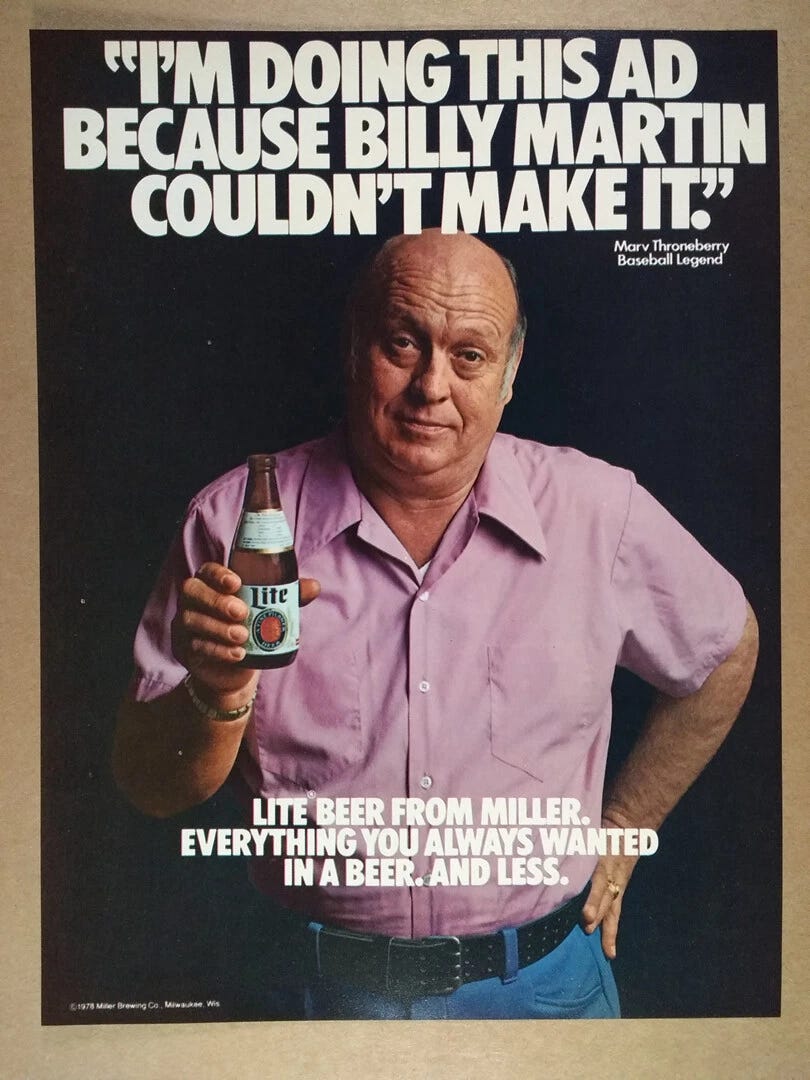
In another spot, sportswriter Frank Deford sits at a bar waxing poetic about a beloved baseball icon. Billy Martin sits next to him, assuming Deford means him. Deford slides the beer to Marv. Marv looks at Martin: “Cheer up, Billy. One day you’ll be famous just like me.”
When he died of cancer in 1994 at 60, the New York Times ran a full column.
The lesson? Self-deprecation, delivered straight, is more charming than almost anything else. They didn’t ask Marv to pretend to be great. They paid Marv to be exactly himself.
ON THE DRINK CART: THE MILE HIGH RUM PUNCH
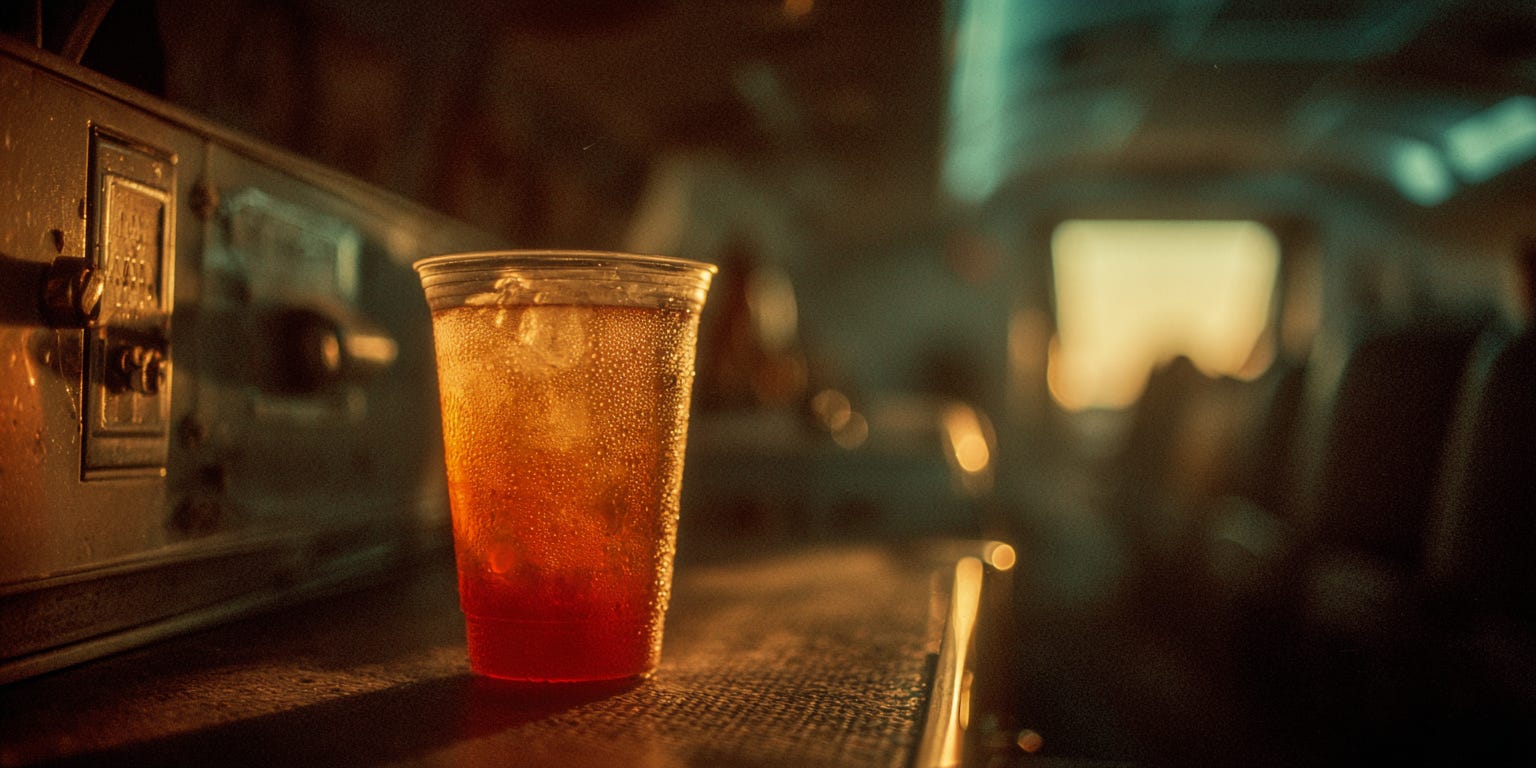
Since Air Canada just named their new cabin design the impossibly smug “Glowing Hearted” we have to be inspired by flight.
Flight attendants have been mixing rum, orange juice and cranberry in plastic cups at 35,000 feet for decades and calling it Crew Juice or simply a really great Friday.
This is the real Air Canada cabin experience. You have to drink to get through it.
It’s deadly simple:
2 oz rum
2 oz orange juice
2 oz cranberry juice
Ice
Pour over ice. Stir. Done. If by some miracle you have an orange slice handy and you want to feel fancy, you do you. You’re not getting that fancy in the air.
The Drink Cart. A newsletter version of sitting at a really good bar with someone who thinks too much about advertising and won’t shut up about it. Wednesdays and Fridays.