

In 1965, a Leo Burnett copywriter named Rudy Perz sat at his kitchen table trying to figure out how to sell something.
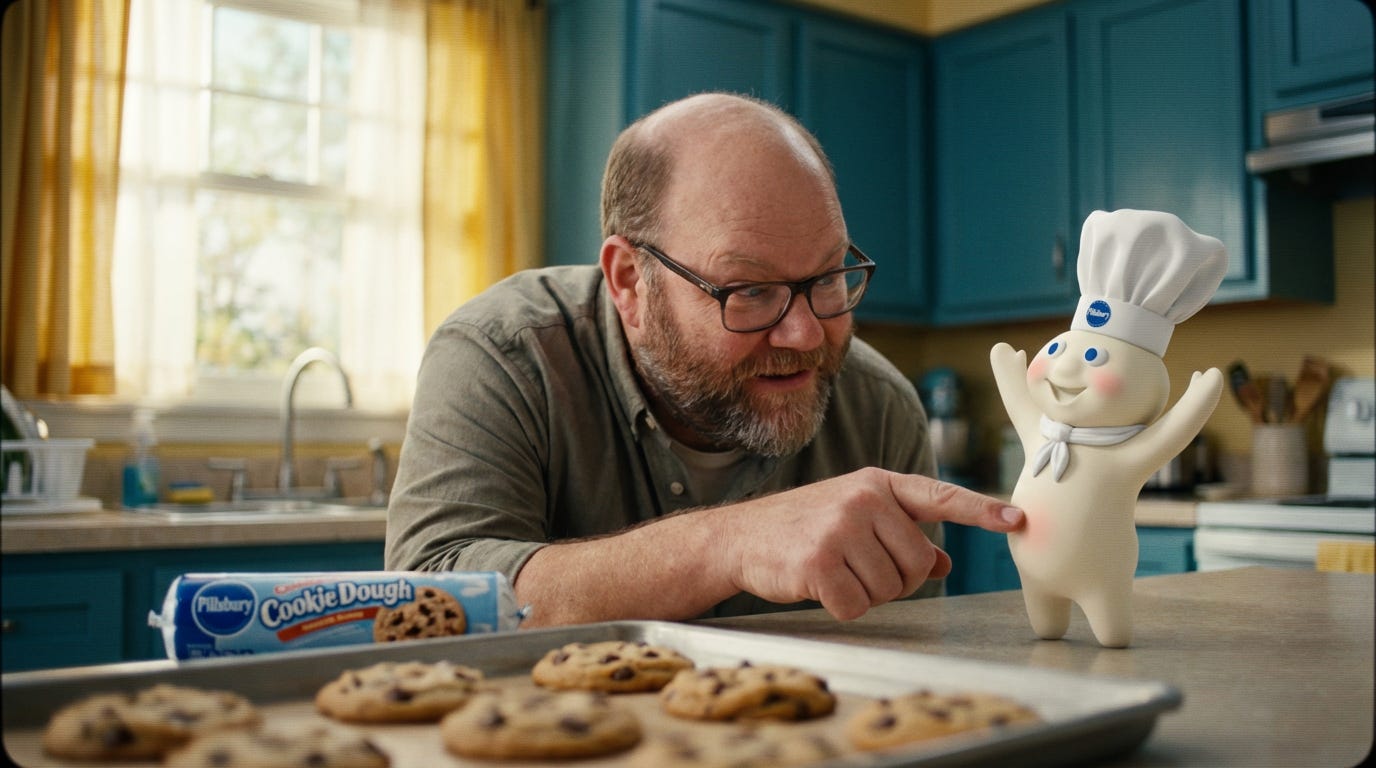
In 2026, a Pound & Grain copywriter named Jackson Murphy sat at his desk and AI’d himself into a Pillsbury commercial and achieved a lifelong dream.
But, enough about me.
Perz was briefed on refrigerated dough.
Tubes of raw biscuit batter.
Not the most inspiring creative challenge in the world in 2026. Probably insane in 1965.
Here’s the business context that gets left out.
Pillsbury was getting absolutely lapped.
Betty Crocker and General Mills had figured out convenience food. Cake mixes. Ready-to-bake everything.
Pillsbury was still selling flour while everyone else was selling time back to housewives.
Leo Burnett had just won the refrigerated dough account that March. Perz had to come up with something fast.
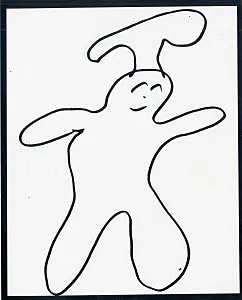
He popped a can. Imagined a little figure climbing out. A dough boy. Poppin’ Fresh.
The pitch practically wrote itself.
The first sketches came from Martin Nodell — yes, the same Martin Nodell who created the original Green Lantern for DC Comics in 1940.
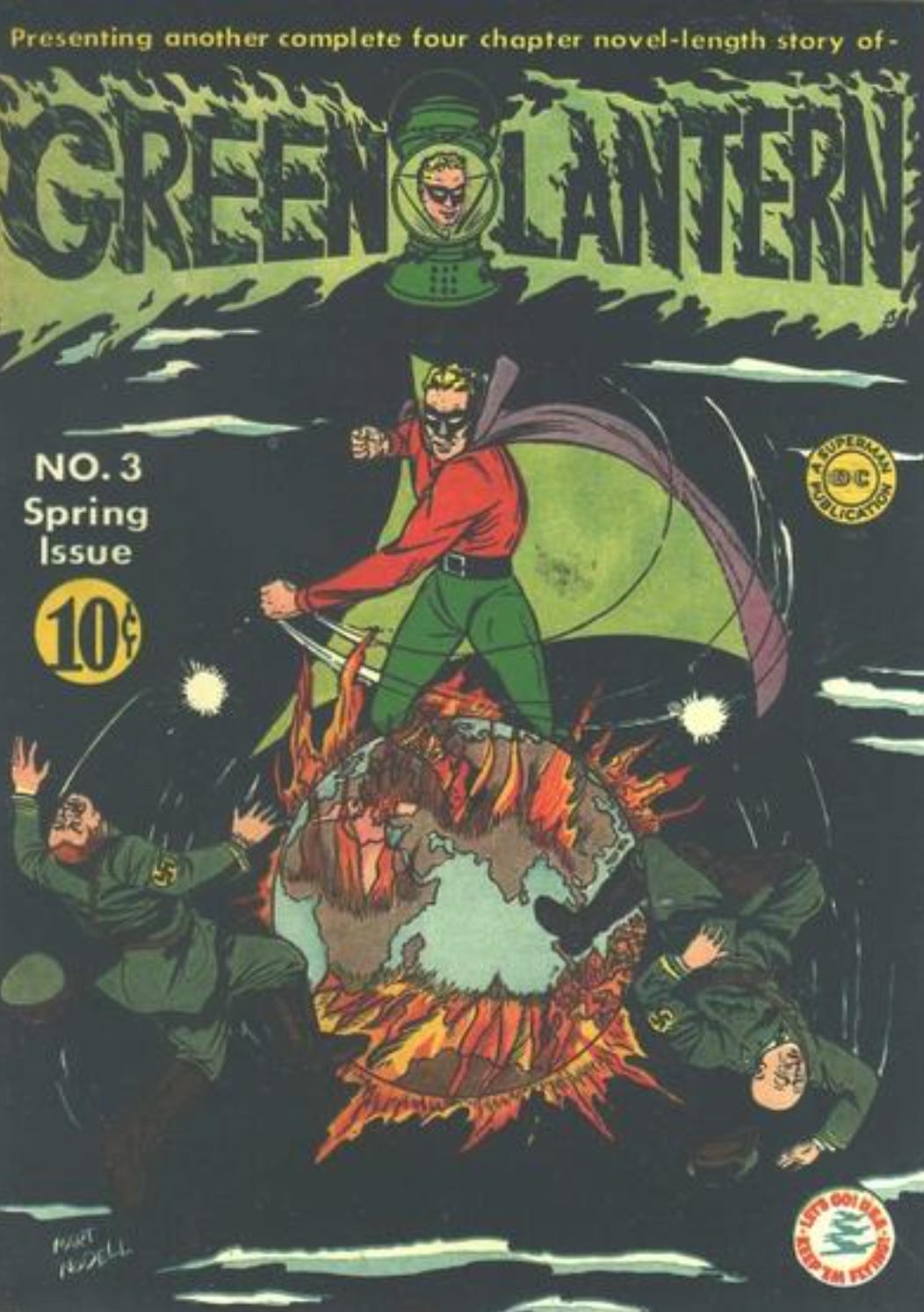
He left comics in 1950, drifted into advertising and eventually landed at Leo Burnett as an art director.
One of the most important superheroes in American comics and one of the most recognized brand icons in American advertising. Same guy.
It wasn’t all magic. His early Doughboy sketches looked too much like Casper the Friendly Ghost.
A former Disney animator named Milt Schaffer came in and fixed it. Gave him the chef’s hat. The neckerchief. The blue eyes. Enough personality to stop being a ghost.
Perz originally wanted him animated as a 2D cartoon.
Then he saw the stop-motion titling sequence on The Dinah Shore Show and changed his mind.
Cascade Studios in LA built a puppet. Plaster. Foam. Ball and socket armature inside. Five bodies. Fifteen interchangeable heads with different expressions.
Total cost: $16,000. Which is about $160,000 today.
For one puppet.
For the record he’s 8¾ inches tall. He weighs 14 ounces.
These details have been officially maintained by General Mills for 60 years. Nobody asked. They keep them on file anyway.
They hired voice-over actor Paul Frees. More than 50 actors auditioned. One of them was Paul Winchell — the original voice of Tigger from Winnie the Pooh. Tigger almost became the Doughboy.
He was the Doughboy for 21 years. Until his death in 1986.
The first commercial aired November 7, 1965.
It was called “Dancing Fingers.” 30 seconds. Pillsbury Crescent Rolls.
His first words: “Hi! I’m Poppin’ Fresh, the Pillsbury Doughboy!”
Pillsbury approved 13 more out of the gate.
Within three years he had an 87% recognition rate among American consumers.
Pillsbury was getting 200 fan letters a week.
At his peak, 1,500 requests for autographed photos. And again, this was for a puppet selling refrigerated dough.
He shot ads with a young Maureen McCormick making cookies pre-Brady Bunch.
A few years in, Leo Burnett hired a copywriter named Carol H. Williams. She took over the account and wrote the campaign that made him a household name — “Say Hello to Poppin’ Fresh Dough.”
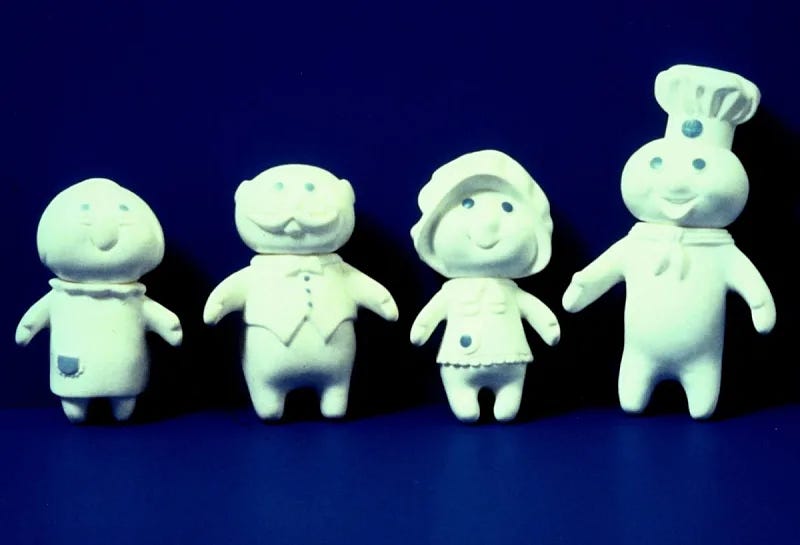
On her watch they added Poppie Fresh, the Doughgirl, because the Doughboy was showing up on too many products and there was real concern he was getting diluted.
And Poppie never got poked in the belly. Too much of an optics problem — a giant masculine hand jabbing a small female character without her consent.
In 2017 she became the first Black woman creative inducted into the American Advertising Federation Hall of Fame. Poppie was just one of the reasons why.
The Doughboy family rolled out through the early 70s. Poppie in 1973. The rest in 1974. Son Popper. Daughter Bun-Bun. Grandparents Granpopper and Granmommer. Uncle Rollie. A dog named Flapjack. A cat named Biscuit.
I do not remember Flapjack or Biscuit.
By 1999, Ad Age ranked him sixth among the top 10 advertising icons of the 20th century.
He’s appeared in over 600 commercials for more than 50 products. He’s been an opera singer, a rapper, a rock star, a ballet dancer, a skydiver and a professional skateboarder.
He’s fluent in French, German and Hebrew. He’s played harmonica, bugle, accordion, electric guitar and violin — at a level General Mills describes as “virtuoso.”
In Germany he’s Teigmännchen — The Little Dough Man.
In Israel he’s Efi — a nickname meaning “cute little baker.”
In Latin America, El Masin — The Little Dough.
In 2005, he showed up for the Super Bowl in a MasterCard “Icons” spot alongside the Jolly Green Giant, Mr. Peanut, Chef Boyardee, the Morton Salt Girl, Count Chocula and Charlie the Tuna — ten mascots having dinner together. He was the one who got poked.
From 2009 to 2017 he moonlighted in GEICO commercials. He kept the giggle.
In Super Bowl LIX (2025) he showed up again for Instacart alongside Mr. Clean, the Kool-Aid Man, the Old Spice Guy and the PuppyMonkeyBaby. Sixty years in and still booking Super Bowl work.
Somewhere in the early 2000s, an anonymous writer sent a fake obituary out into the early internet.
“Veteran Pillsbury spokesman, The Pillsbury Doughboy, died yesterday of a severe yeast infection and complications from repeated pokes in the belly.”
The eulogy was wall-to-wall bread puns.
He “never knew how much he was kneaded.”
His later life “was filled with turnovers.”
He was “not considered a very smart cookie, wasting much of his dough on half-baked schemes.”
The California Raisins were at the funeral. So was Captain Crunch. Mrs. Butterworth. Aunt Jemima delivered the eulogy.
It went viral — pre-social viral, the chain email kind — and has been circulating for 20+ years. Nobody knows who wrote it.
The Doughboy has outlived his own fake death by longer than most careers last.
Even Gary Larson made a comic with him once.
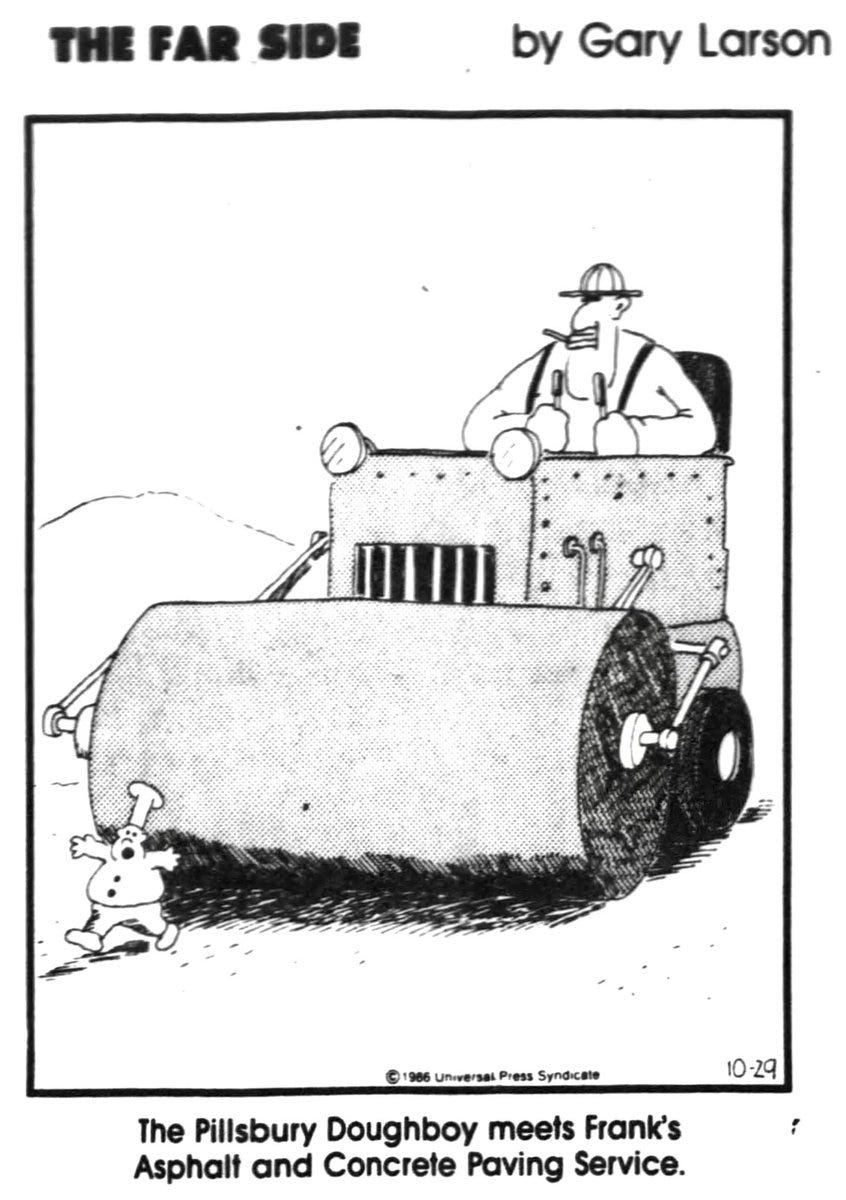
In 2001, General Mills acquired Pillsbury from Diageo in a $10.4 billion deal. Which meant the Doughboy now worked for Pillsbury’s biggest historical competitor.
He turned 60 last November.
The belly poke has never stopped.
THE AD LESSON
Rudy Perz had to make people care about a tube of biscuit dough.
His answer was to make the product into a character that people felt genuine affection for.
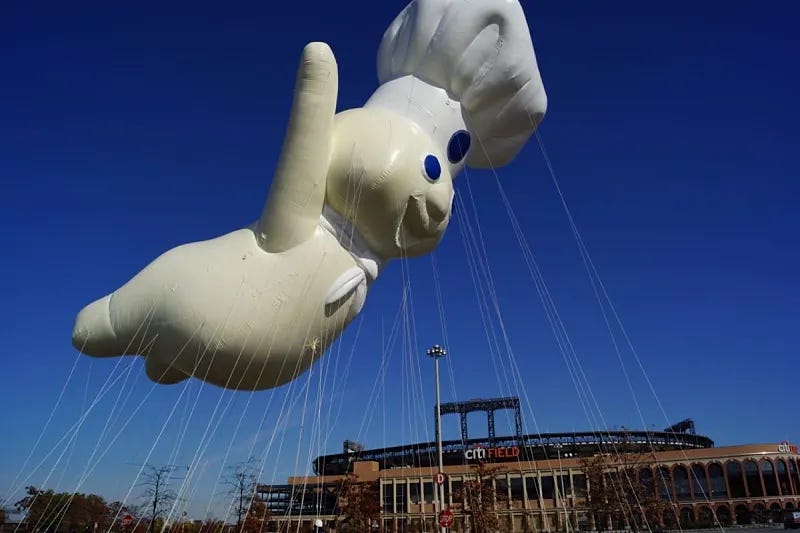
Not just awareness. Affection.
Strong enough that they wrote letters. Strong enough that they bought dolls. Strong enough that a stranger wrote a fake obituary full of bread puns and the internet shared it for 20 years.
Sometimes you don’t sell what the product is.
You sell what it feels like to have it in your house.
FRIDAY DRINK CART COCKTAIL: THE CLOVER CLUB
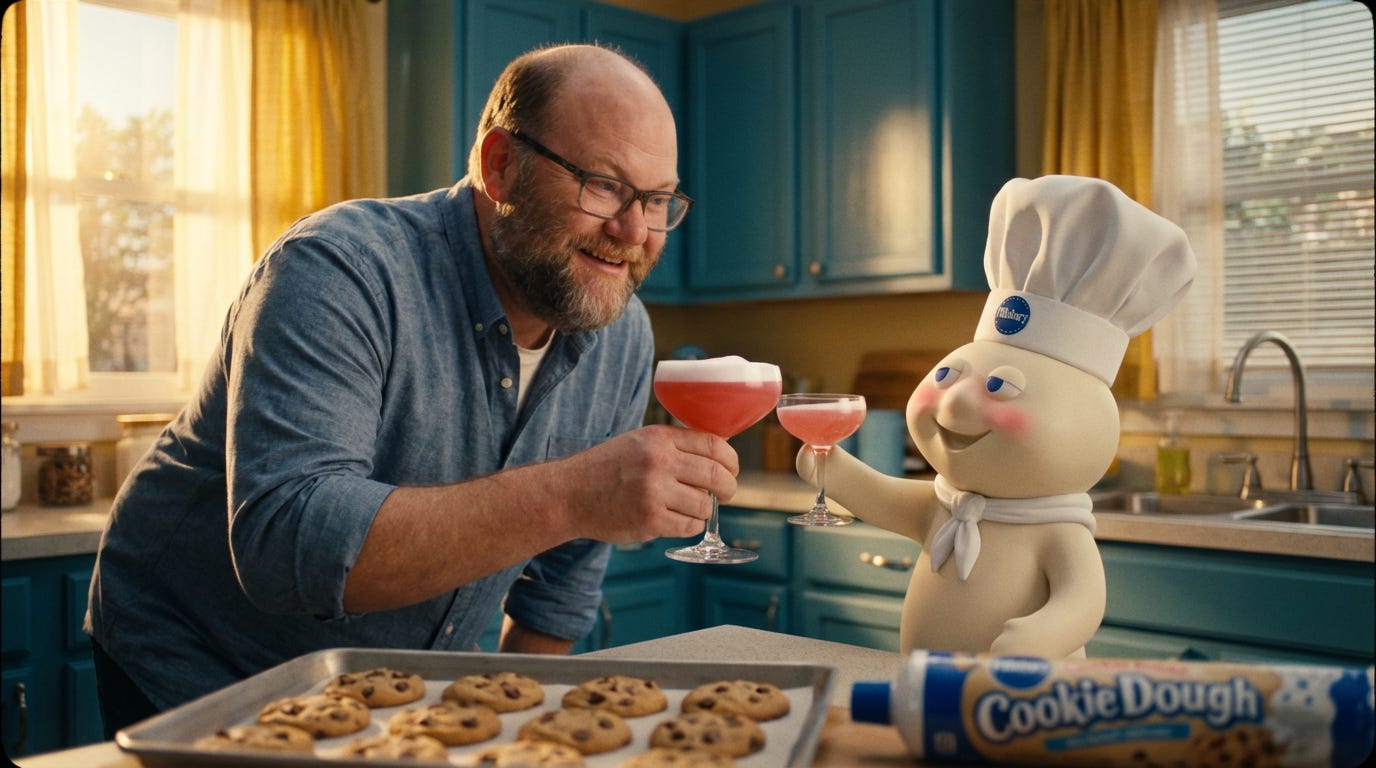
Pink. Foamy. Soft enough to give when you poke it.
Born in Philadelphia in the 1880s at the Bellevue-Stratford Hotel. The Clover Club was actually a men’s club where lawyers, journalists and businessmen met in the hotel bar and eventually got a drink named after them.
It was one of the most popular cocktails in America before Prohibition. Then Prohibition killed it. Then the cocktail renaissance of the 2000s dug it out of the grave.
It tastes better than anything this pink has a right to.
2 oz gin
0.75 oz fresh lemon juice
0.5 oz raspberry syrup (or 4-5 fresh raspberries muddled with 0.5 oz simple)
1 egg white
Raspberry for garnish
Dry shake everything without ice for 15 seconds to build the foam. Add ice. Shake again hard until cold. Double strain into a chilled coupe. Drop a raspberry on top.
The whole drink is about what it feels like to poke it. The foam holds its shape for a moment, then gives. Soft. Pillowy. Giggling optional.
The Clover Club is older than the Doughboy by about eighty years. Which feels right.
Some things just survive.
The Drink Cart. A newsletter version of sitting at a really good bar with someone who thinks too much about advertising and won’t shut up about it. Wednesdays and Fridays
Affection was the goal, and affection was achieved.