

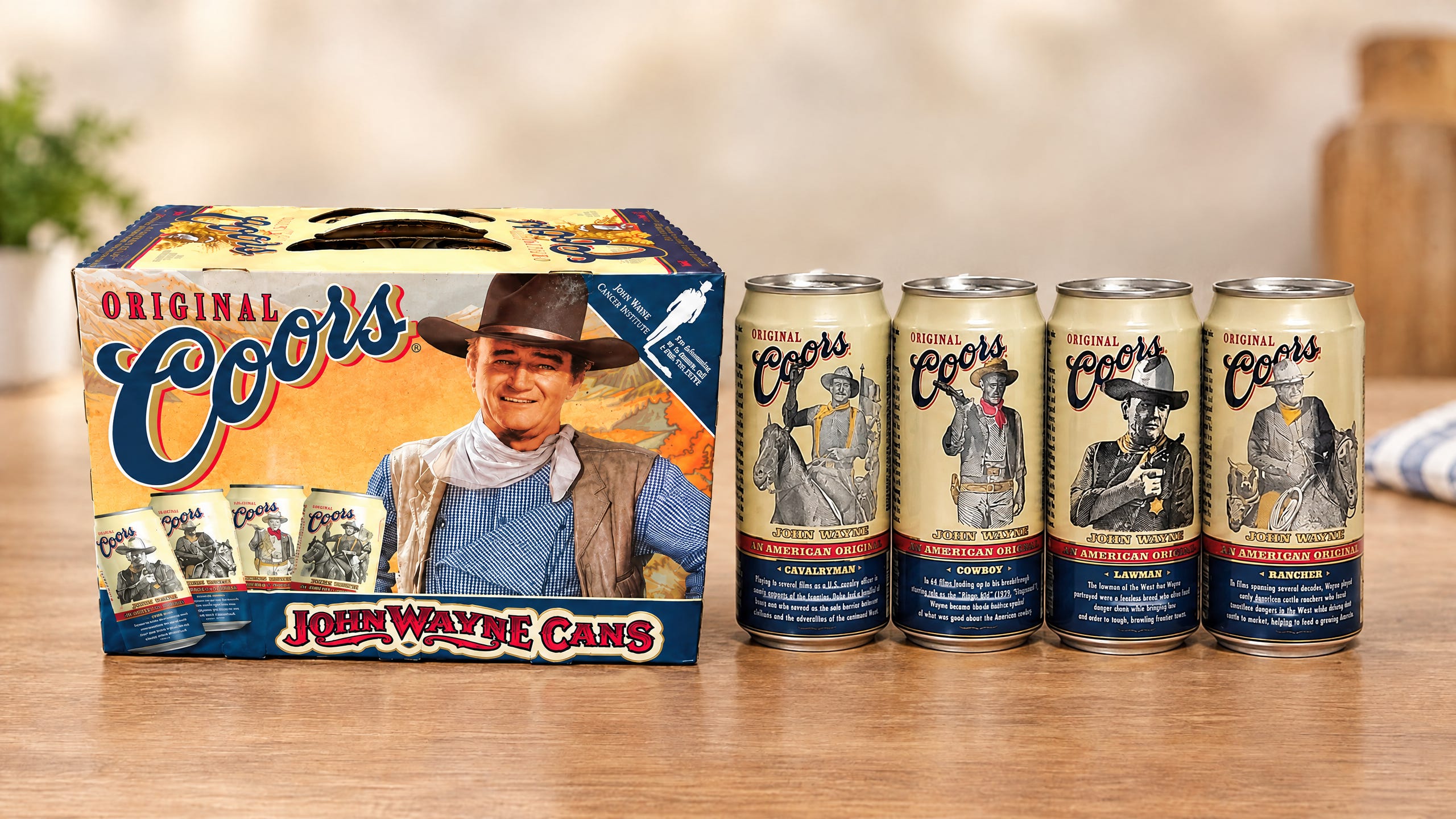
Let me start this newsletter off by saying today is about John Wayne and beer.
It starts with the simple story that The Duke got radiation treatment on the morning of his last appearance. He was presenting the Best Picture award at the Oscars in 1979.
The crowd stood. And two months later the legend was gone.
Seventeen years after that, he starred in a beer commercial.
This issue is about what happens to a person after they die. How do we go from his face on beer cans to baseball cards? Let’s see how it goes.
THE INSTAGRAM CAPTION GOT EVERYTHING WRONG
A few weeks back I found a post about these amazing John Wayne Coors cans.
You know, the Duke on horseback and the idea of “An American Original”. That rang up nearly 16k likes.
The post got a few things wrong. They said early 1990s. That was wrong. And so was the story they missed.
Technically the cans came out in 1997, and they came out because in May of 1996, Coors Light aired a commercial starring John Wayne. The ad dropped in the season finale of Friends, the biggest TV night of the year.
This one featured R. Lee Ermey, the “Full Metal Jacket” drill sergeant who interrogates his platoon over a six-pack left in the barracks.
But he’s interrupted by Wayne, lifted frame by frame from the 1966 film “Cast a Giant Shadow”, telling him “It’s my beer, Sergeant.” They went on to make one where he shows up in a bar to save some guests from some bullies.
They also made one where the Duke was a football coach.
Another one with Johnny Knoxville too.
The spots were made by Foote, Cone & Belding out of Chicago and directed by Joe Pytka. They shot with a stand-in over five days and then digitally inserted a dead man. The process took three weeks, using technology similar to Forrest Gump. In hindsight the ads don’t even seem as good as AI was 2 years ago. Reminds me more about seeing President Bill Clinton getting stitched into the 1997 classic, “Contact”.
The deal would end up funding the John Wayne Cancer Institute. To get the rights to use him, Coors underwrote a fundraising campaign for the charity.
Wayne died of stomach cancer. The beer can was a cancer fundraiser. Sit with that one.
People are probably still arguing about the ghoulishness of it all after all these years.
THE DUKE HATED HIS OWN ADS FIRST
John Wayne was no stranger to exploiting his image.
He did Camel cigarette ads in the early 50s asking “Why Did You Change to Camels?”
Then the legend got lung cancer, quit and became a spokesman for the American Cancer Society.
Two divorces. Another separation. Seven kids and growing cancer bills in the 70s would get him back to Monument Valley, where he made The Searchers.
It was here in 1976 that he shot commercials for Datril 500, an acetaminophen brand. His line: “I asked my doctor about taking Datril 500. He said ‘great.’ Ask your doctor.”
The Boston Globe reported he was incredibly fussy about how the ad should look, to preserve his image. There was no preserving anything. It’s still cited as one of the worst celebrity-product matchups ever, and Wayne hated it enough to get Bristol-Myers to cancel the reported $200,000-a-year contract after one year.
Then he found the right gig. Great Western Savings. Him on horseback, talking straight to camera about California, “A pretty nice place.” The spots reportedly added over $20 million in new accounts. He passed away within a year of shooting these, but secured his finances.
The man understood his own brand better than most agencies could ever.
EVERYBODY’S DOING IT AND EVERYBODY’S DEAD
Coors didn’t invent this playbook. It was an incredible 1990s door that brands walked through.
Diet Coke pioneered this whole genre starting with Paula Abdul dancing with Groucho Marx, Humphrey Bogart, Louis Armstrong and Cary Grant.
1997 became the year of the dead spokesperson.
Wayne’s beer cans hit shelves. Lucille Ball went on California Lottery tickets. I couldn’t find that one, but I did find a rather unfortunate lottery ad featuring OJ Simpson and Jose Canseco that is worth the watch.
And during the Super Bowl, Dirt Devil ran three spots of Fred Astaire dancing with a vacuum cleaner. His widow signed the deal.
But his daughter Ava wrote an open letter to Dirt Devil, returning the vacuum she’d bought from them. She called the ads paltry, unconscionable and “the antithesis of everything my lovely, gentle father represented”. Ouch.
Advertising has never really stopped this.
Gene Kelly breakdancing for Volkswagen in 2005 to a remix of his own song.
A CGI Audrey Hepburn selling Galaxy chocolate in 2013, the same year a digital Bruce Lee sold Johnnie Walker in China.
Even David Fincher directed one.
And they dug up Steve McQueen twice for Ford. Once for a Puma, then again for the new Mustang.
COORS ALSO MADE TRADING CARDS OF ITS OWN ADS.
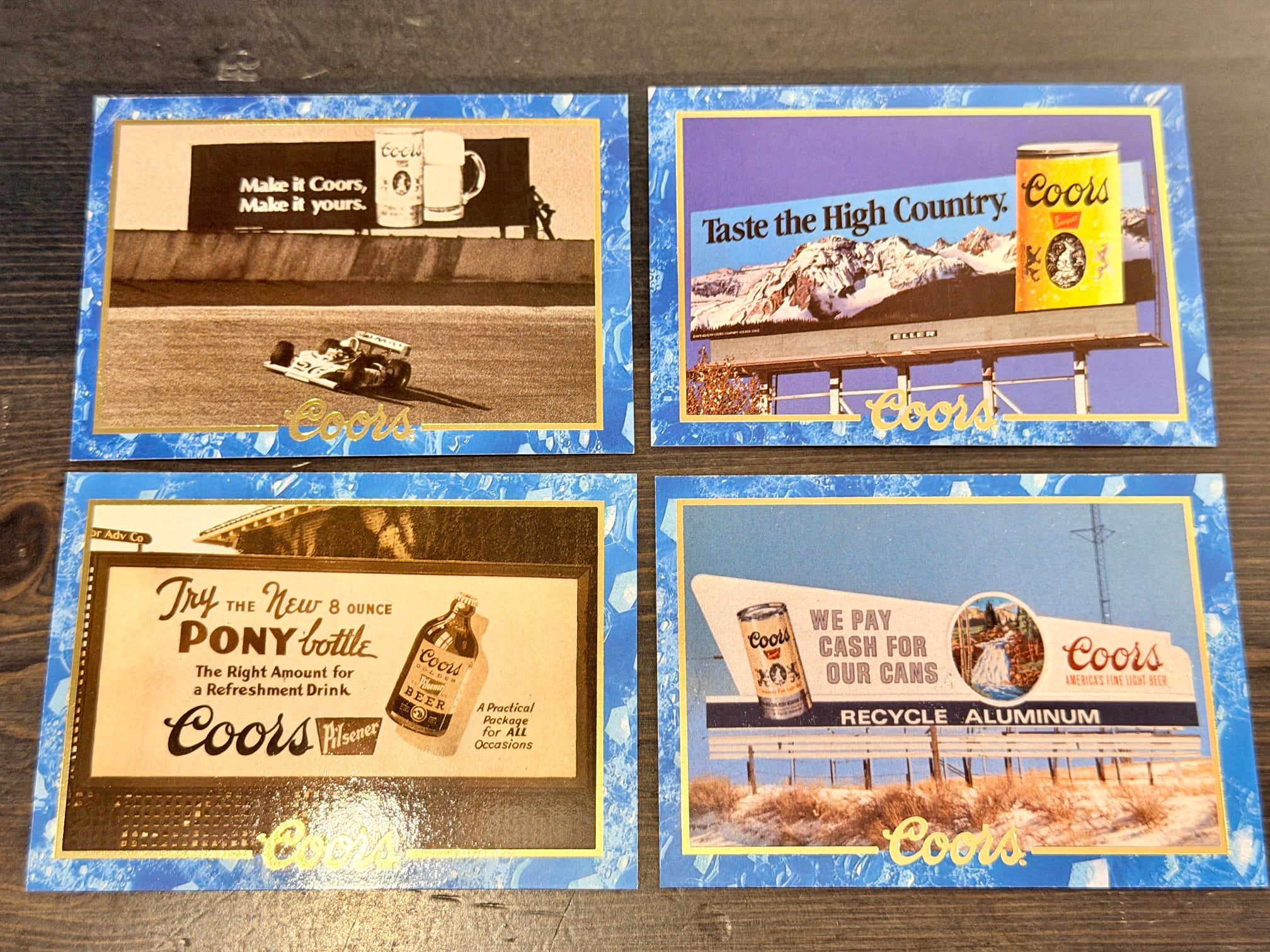
The most interesting thing is that the Wayne campaign wasn’t a one-off. It was the middle of a trilogy.
In 1995, the year before the resurrection, Coors released an odd Coors Collectors’ Cards set. A 100-card set depicting the history and advertising of the company, sold in wax packs just like baseball cards.
Each hobby box included 36 packs with 8 cards in a pack and included chase cards called “Rocky Mountain Heritage.”
A brewery printed trading cards of its own advertising, scenes of Coors beer factories, mountains and of course legendary cold mountain streams. With history on the back.
I know because I just opened a box.
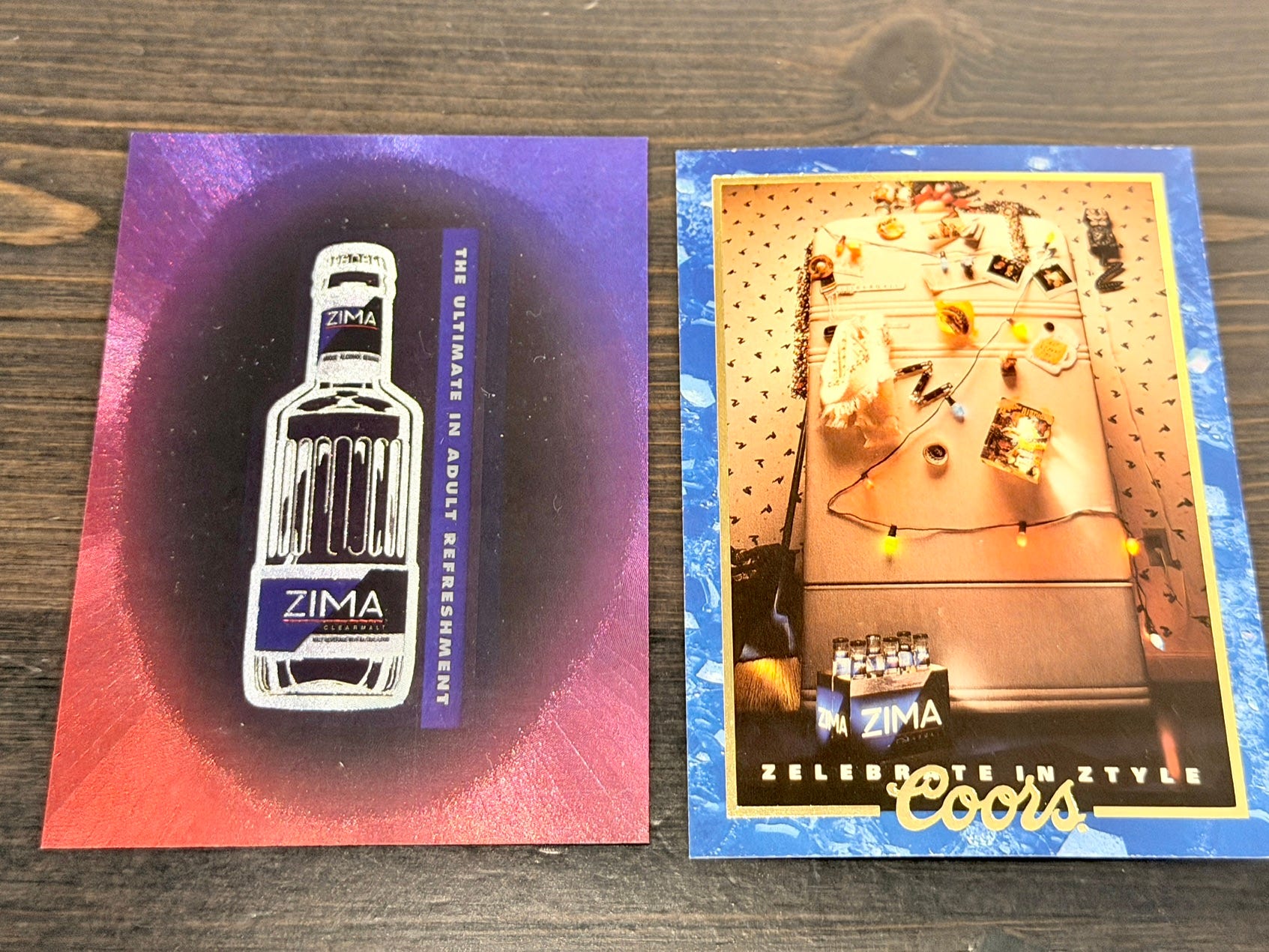
You haven’t lived until you’ve found not one, but two Zima cards. The elusive clear malt beverage that screams 90s.
Or when you get a chrome parallel “Golden Moments” refrigerated boxcar card? Chills. Like the fresh mountain water.
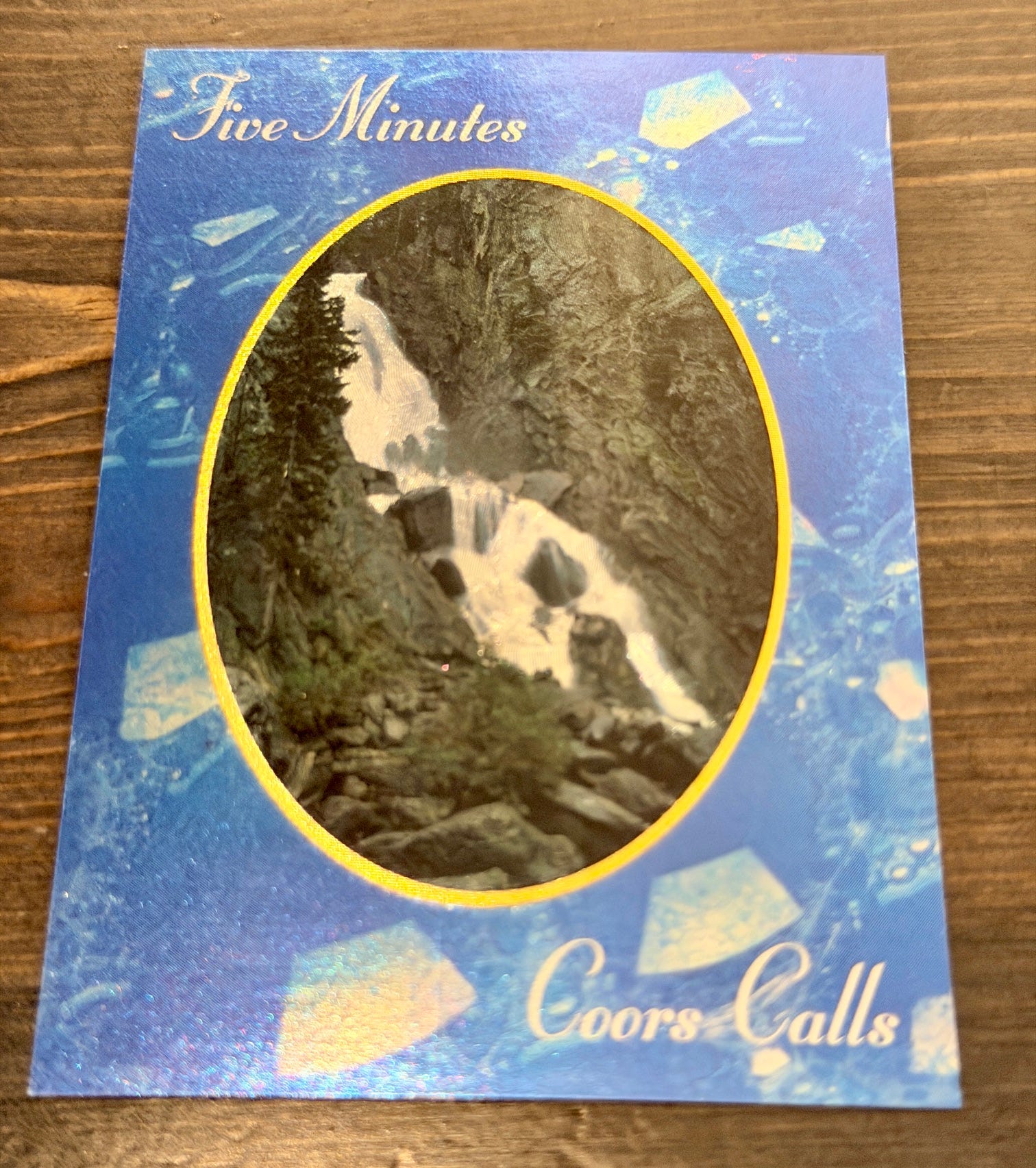
You can’t imagine the thrill of getting 5 minutes of “Coors Calls” in a pack. If you guess that this pull is a now expired long distance calling card, you were right. Trust me, I tried calling the 1-800 number. The thrill was palpable. Why an expired for over 30 years calling card is selling for $12 on eBay, I’ll never know.
What a three-year brand run.
1995, trading cards of the old ads.
1996, dead John Wayne in a new ad.
1997, commemorative cans of the dead John Wayne, sold in collectible cases.
They weren’t selling beer anymore. They were selling Coors, the concept.
A full case of 24 John Wayne cans sold on eBay for $47.50. An unopened hobby box of the cards went at auction for thirty bucks. You can even get full John Wayne Coors display signage still.
Thirty years of careful basement storage and the entire Coors nostalgia-industrial complex is worth less than a fresh case at the LCBO. That’s not a collectible. That’s a beer with a longer sales cycle.
COCKTAIL OF THE WEEK: EL DIABLO
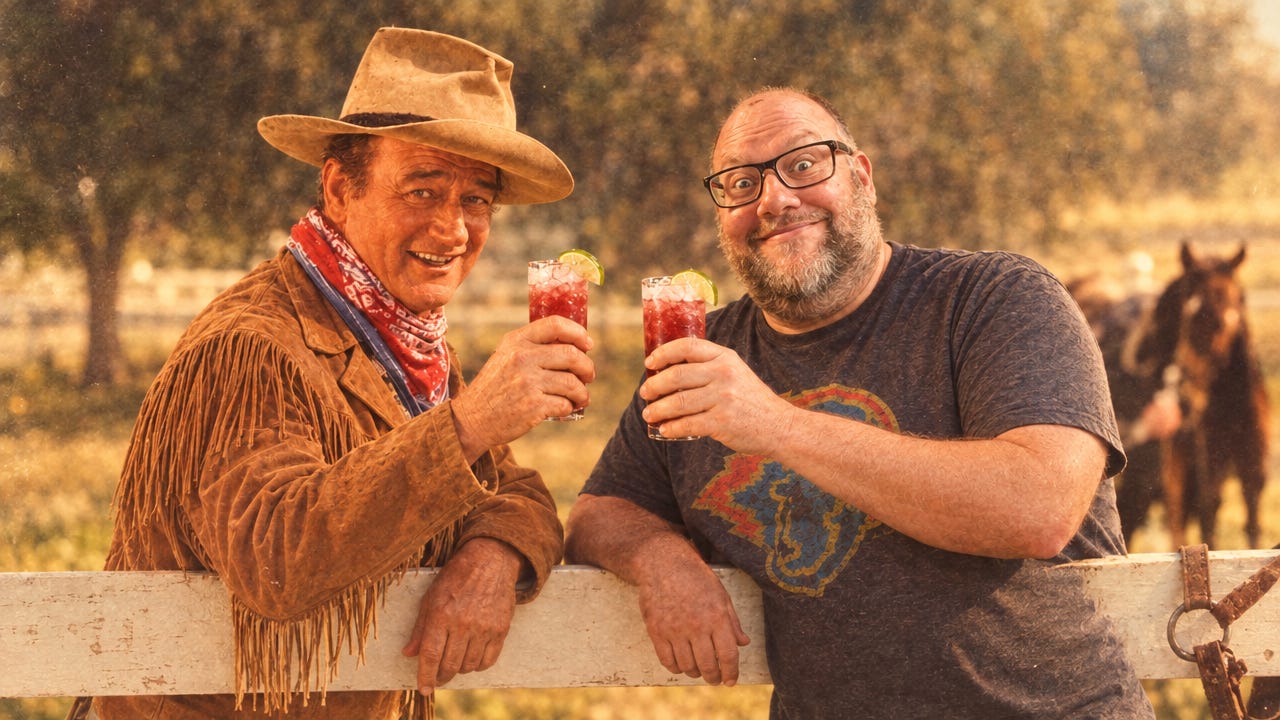
Apparently the Duke’s drink wasn’t Coors at all. It was tequila.
And he liked it. A big splash of Sauza Conmemorativo, in a small glass with one ice cube and a squeeze of lime, confirmed by a congressman who learned to drink at Wayne’s house.
The legend has it that after meeting with Khrushchev, he got cases of Russian vodka marked “Duke. Merry Christmas. Nikita”
So the Duke shipped back cases of Sauza signed “Nikita. Thanks. Duke.”
You have to respect a man that liked drinking more than he hated communists.
So this week’s cocktail is a tequila classic with a devil’s name.
The El Diablo is usually credited to Trader Vic, who printed it in his 1946 book and marked it as an original.
Except Difford’s found the receipts: a rum Diablo with the same lime-cassis-ginger build appears in a 1940 bar book. Vic swapped the rum for tequila and took all the credit. The “original” designation quietly vanished from his later editions.
It’s fitting that in a newsletter about licensing dead men’s faces, the cocktail is a borrowed likeness with the serial numbers filed off.
El Diablo
1 1/2 oz reposado tequila
1/2 oz crème de cassis
1/2 oz lime juice
Ginger beer to top
Lime wedge
Build in a highball glass over ice, top with ginger beer, garnish with the lime wedge. Vic used ginger ale, but modern ginger ale is kind of a bore, go full ginger beer. Exactly what the Duke would’ve handed you if he wasn’t drinking straight tequila all the time.
The Drink Cart is the newsletter version of sitting at a really good bar with someone who thinks too much about advertising and won’t shut up about it. Subscribe to get it on Wednesdays and Fridays.
The Duke’s drink doesn’t sound bad to me!