


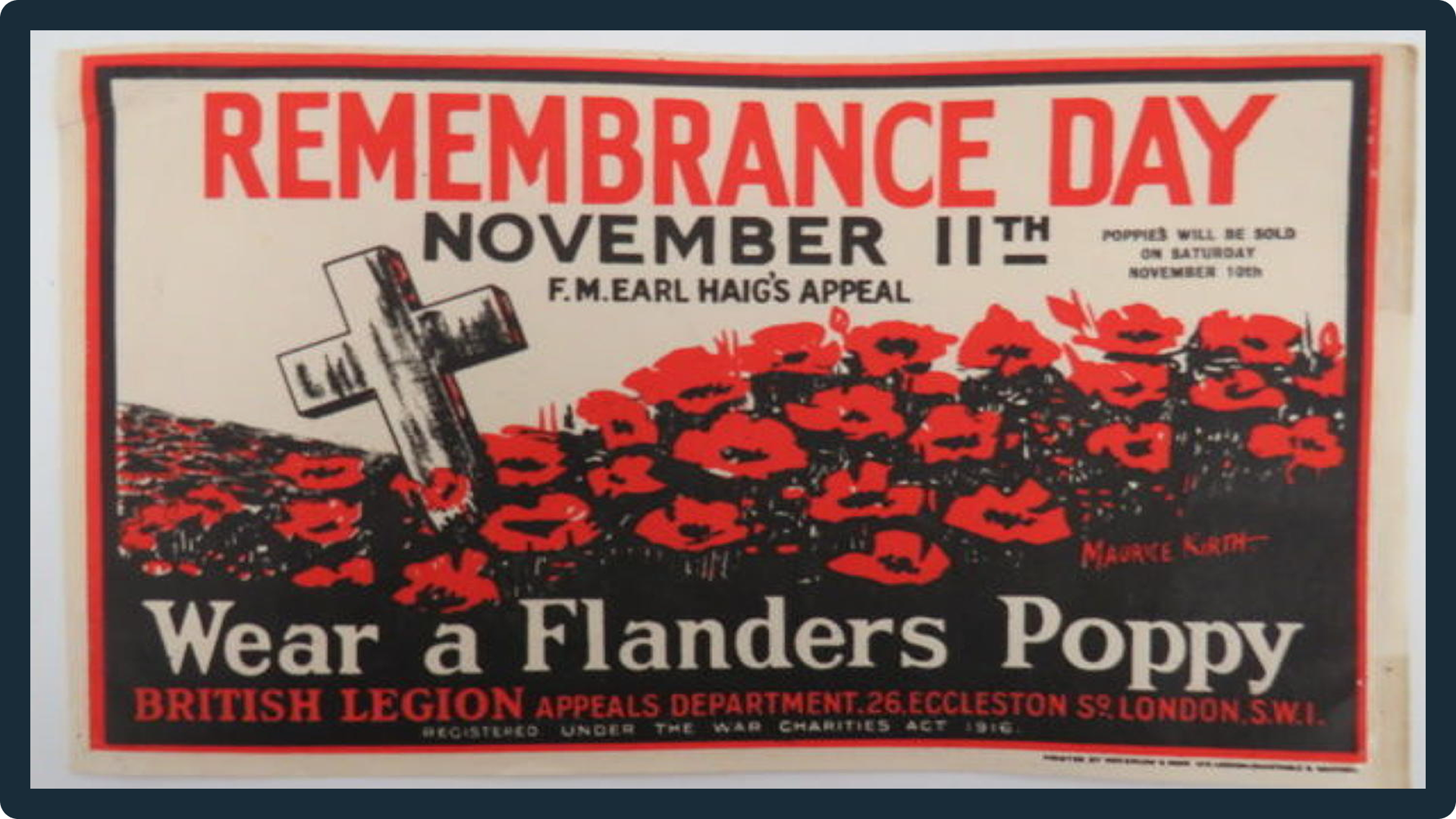
Here’s something they don’t teach you at the school assembly about Remembrance Day.
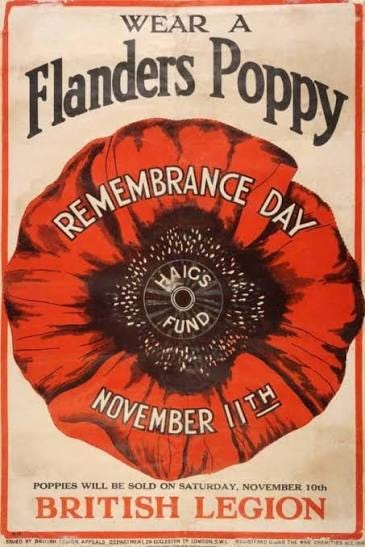
In 1921, every poppy was made in France.
An enterprising Frenchwoman named Anna Guérin made an all-time pitch to the Great War Veterans Association. Sell a cloth poppy and split the money between Canadian veterans and French war orphans.
That was a no-brainer for the first Poppy Day on November 11, 1921.
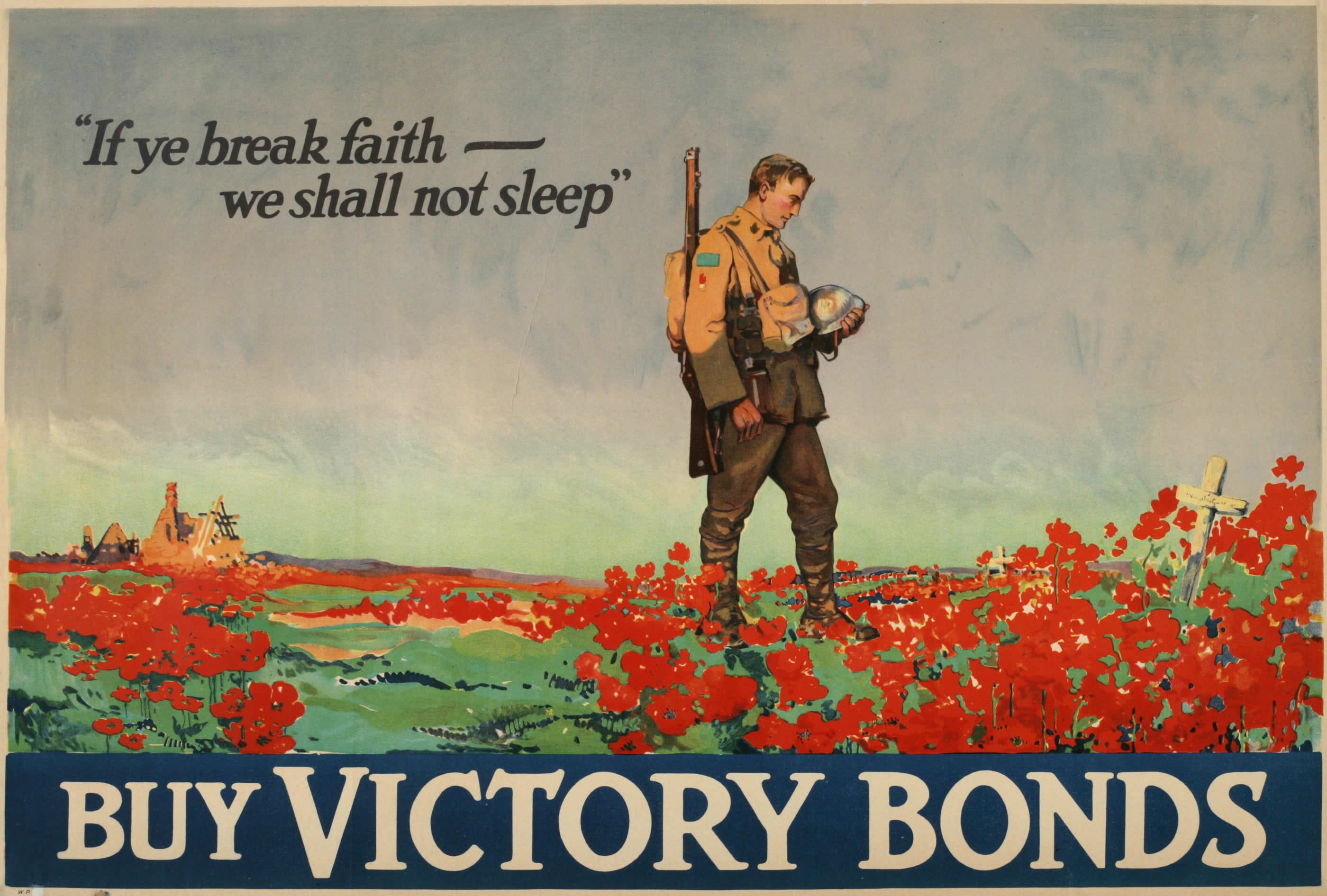
The idea of the poppy as an icon was already well under way. In 1917, The poem by John McCrae was up on billboards selling Canada’s first Victory Loan. In 1918 Frank Nicolet painted a soldier standing in the poppies and then the government printed the last stanza over it: “If ye break faith — we shall not sleep.”
Underneath they dropped the CTA: Buy Victory Bonds.
In 1915 nobody thought Canadians would lend their own government $5 million. They lent it $100 million. Two years later, McCrae’s poem went up on the billboards and the first Victory Loan pulled in $398 million.
So by the time Anna Guérin showed up in 1921 with a box of cloth flowers, the hard part of marketing was already done. Canada had spent the whole war proving it would most certainly pay up for the poem.
The poppy was a very good fundraising idea and the poem was a really good closing line of copy.
THE HERITAGE MINUTE WAS PAID FOR BY A WHISKY FORTUNE
The poem was and probably still is ubiquitous in our schools. And it would become one of the most famous episodes of the Heritage Minute ad series that ran on a loop in the ‘90s. The story of McCrae’s poem featured Colm Feore at his best (well until his portrayal of Nathan on Landman).
But what nobody talks about is that these little gems were privately funded series ads and the idea of Charles Bronfman. That’s right, the co-chair of Seagram and that means our greatest heritage storytelling was funded by big whisky. As it should be.
Don’t worry, we’ve got a lot more booze in this issue.
RONNIE DIDN’T EVEN SMOKE
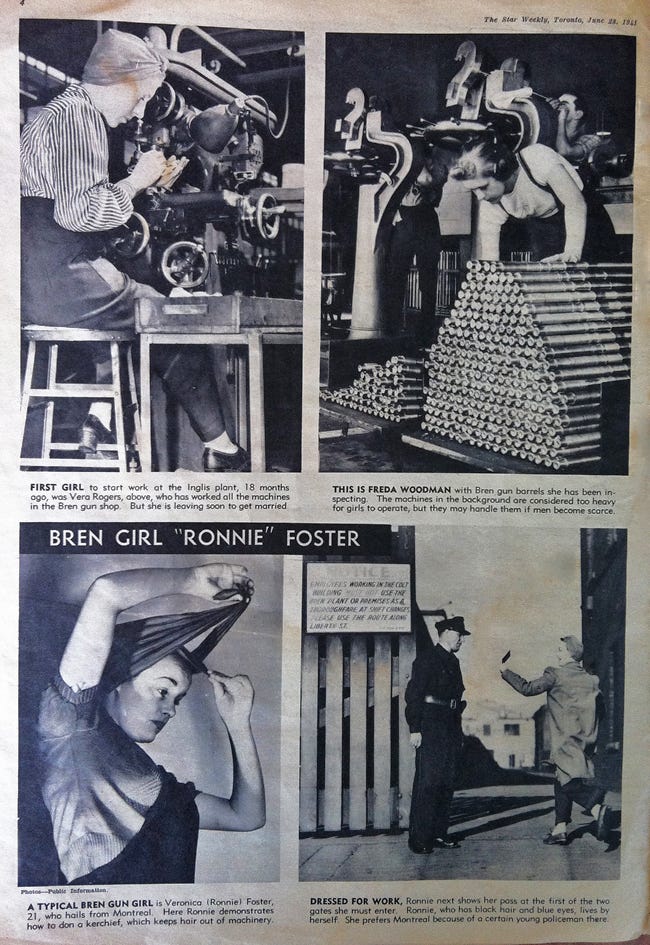
This wasn’t the last time Canada turned war into advertising and communications gold. Before the Americans immortalized Rosie the Riveter, Canada had Ronnie the Bren Gun Girl.
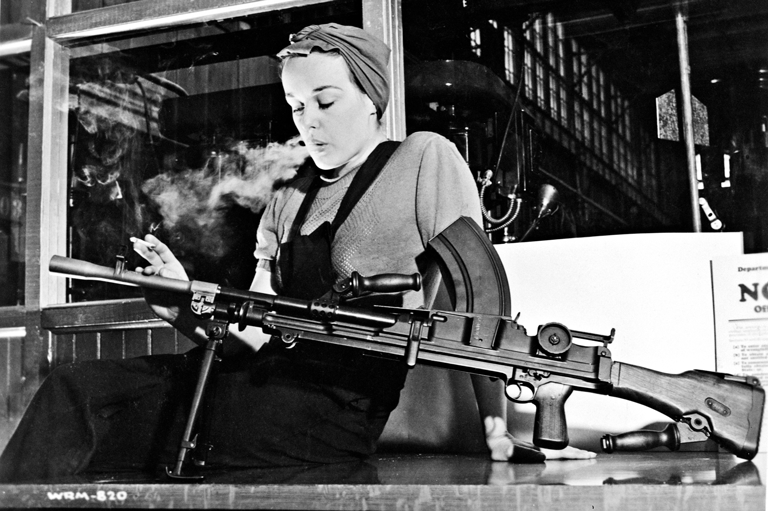
In May of 1941 just a few blocks from Drink Cart Headquarters, the NFB photographed 19-year-old Veronica Foster at the John Inglis plant on Strachan Avenue, which is now Liberty Village.
The famous shots have her in a kerchief and overalls, cigarette in hand, admiring a Bren gun she just put together. They didn’t even have to make it into an ad.
It didn’t matter that she didn’t smoke or that her name wasn’t technically Ronnie. Her daughter said the cigarettes were only for the photos.
The NFB also shot her dancing the jitterbug and playing baseball, which was a helluva pitch to get women to work in war plants building guns all day.
The ROI: Nearly a million Canadian women ended up doing just that
CANADA WENT DRY TO WIN A WAR
Meanwhile temperance crowd had been losing their argument against the bottle for decades. Until the First World War handed them a way better brief.
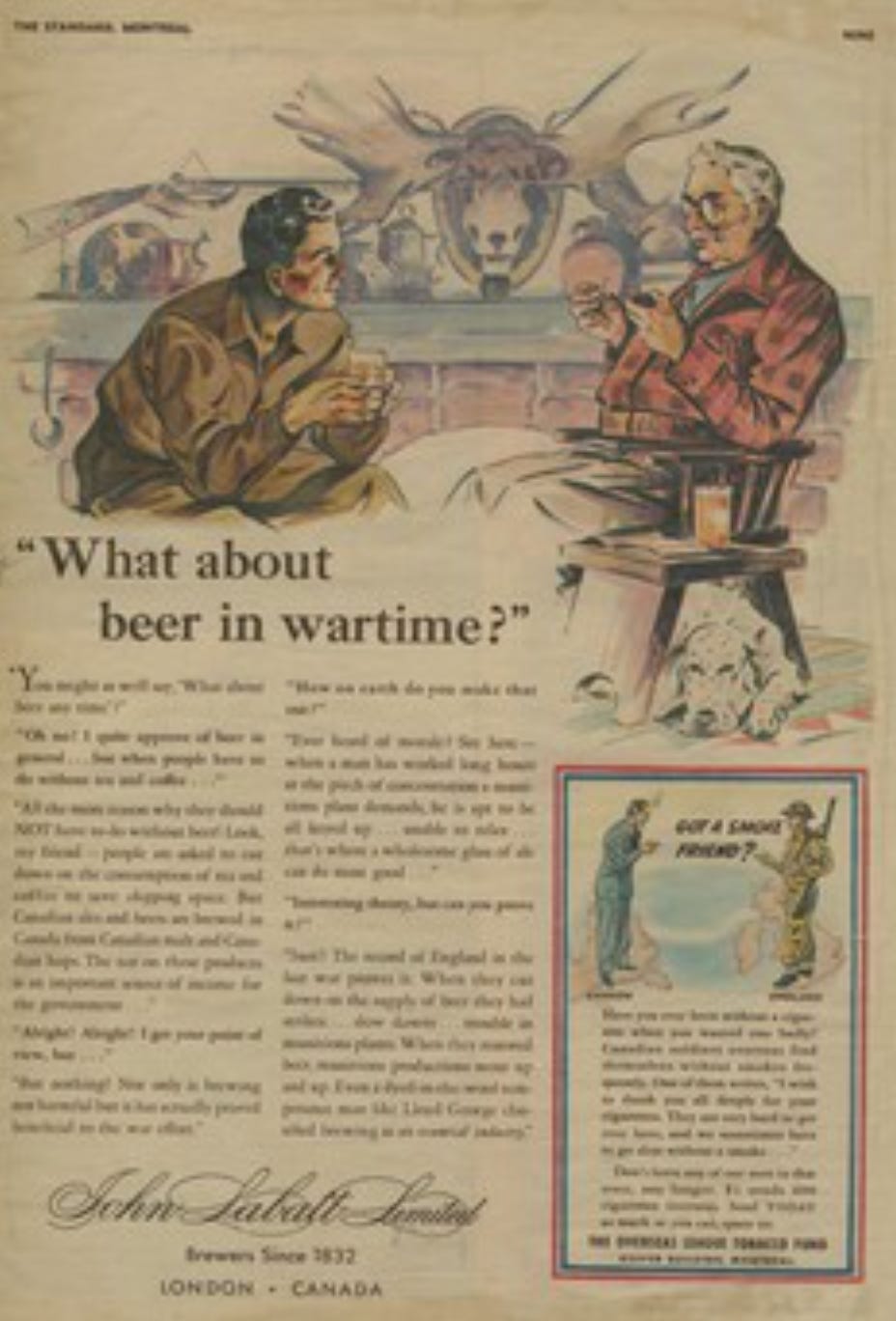
The idea was that drinking was a waste and booze was pure inefficiency when you are at war. Bars were not just wretched hives of scum and villainy, they were where potential enemies plotted against the Empire. Just like taking California Cab off the shelves as one pre-Elbows Up poster read, The Bar or the War?
So Ontario closed the bars in September 1916 and by 1918 the country was mostly dry.
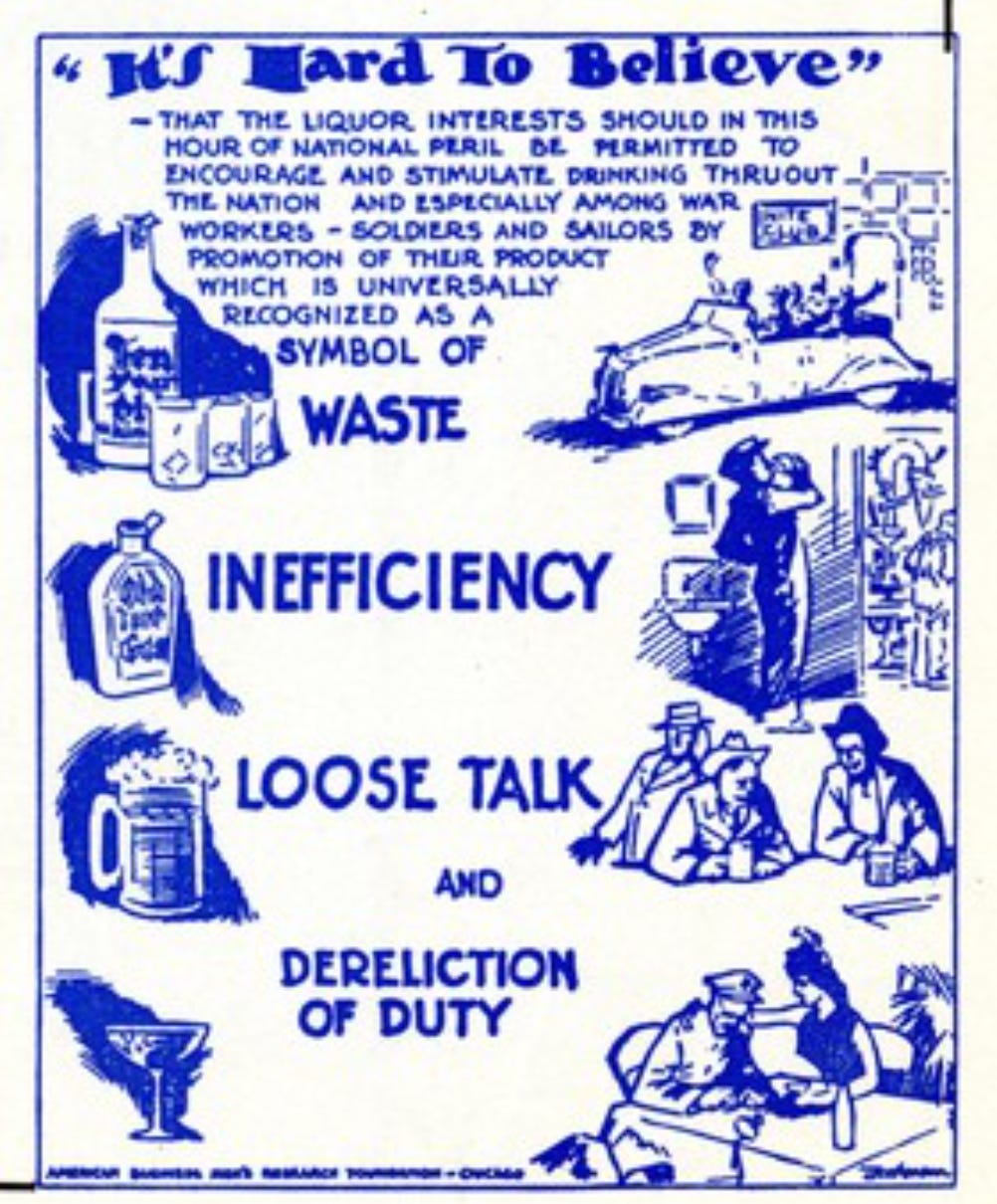
And this was a major problem if you happened to be making beer in London, Ontario.
THREE FISHING BOATS AND A 2.5% BEER
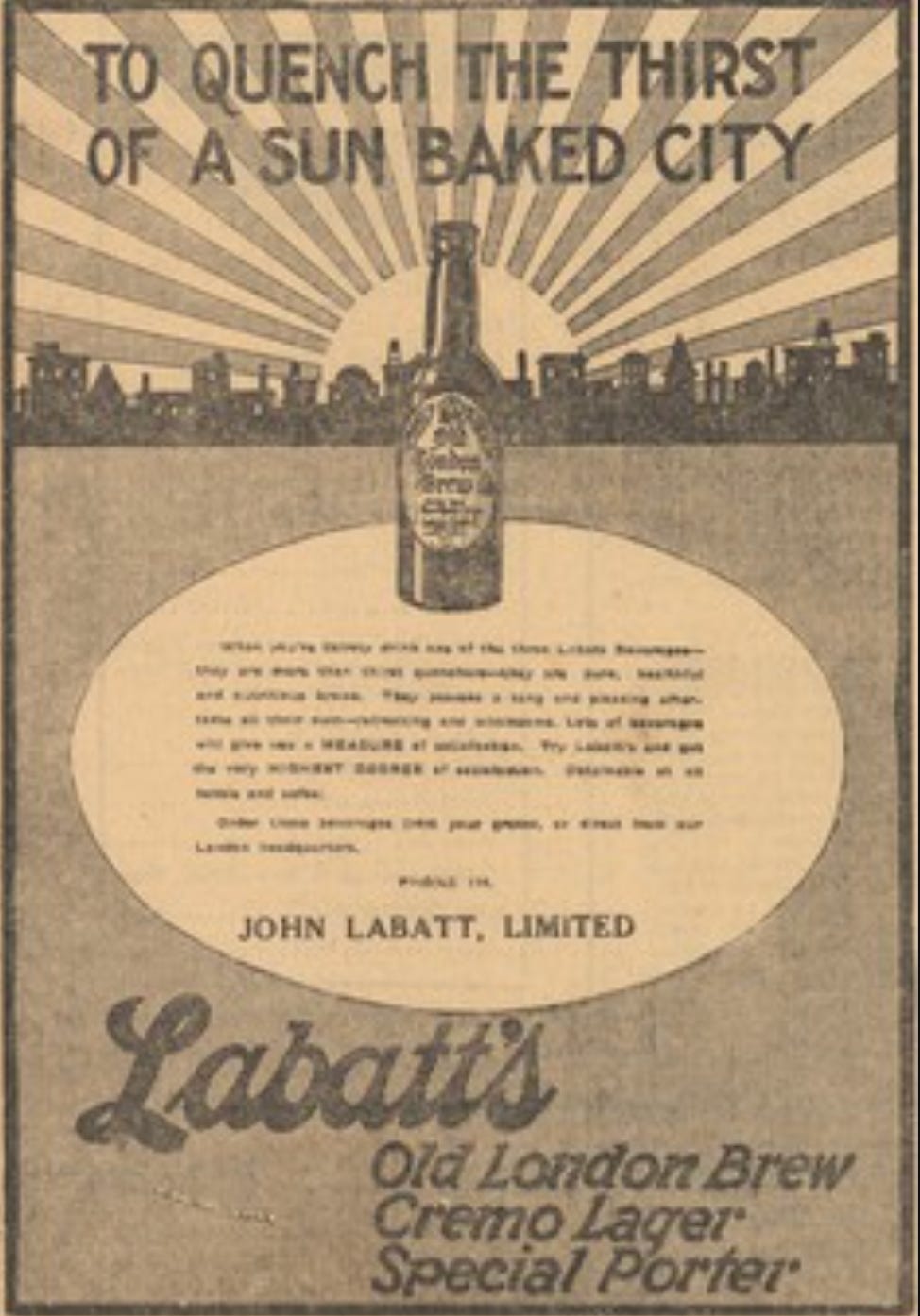
Labatt was granted the right to sell low ABV “temperance beer” at 2.5%. They made two brands, Comet and Old London Brew, even as John S. Labatt said it was pretty, “hard to market 2.5% beer except by peddling.”
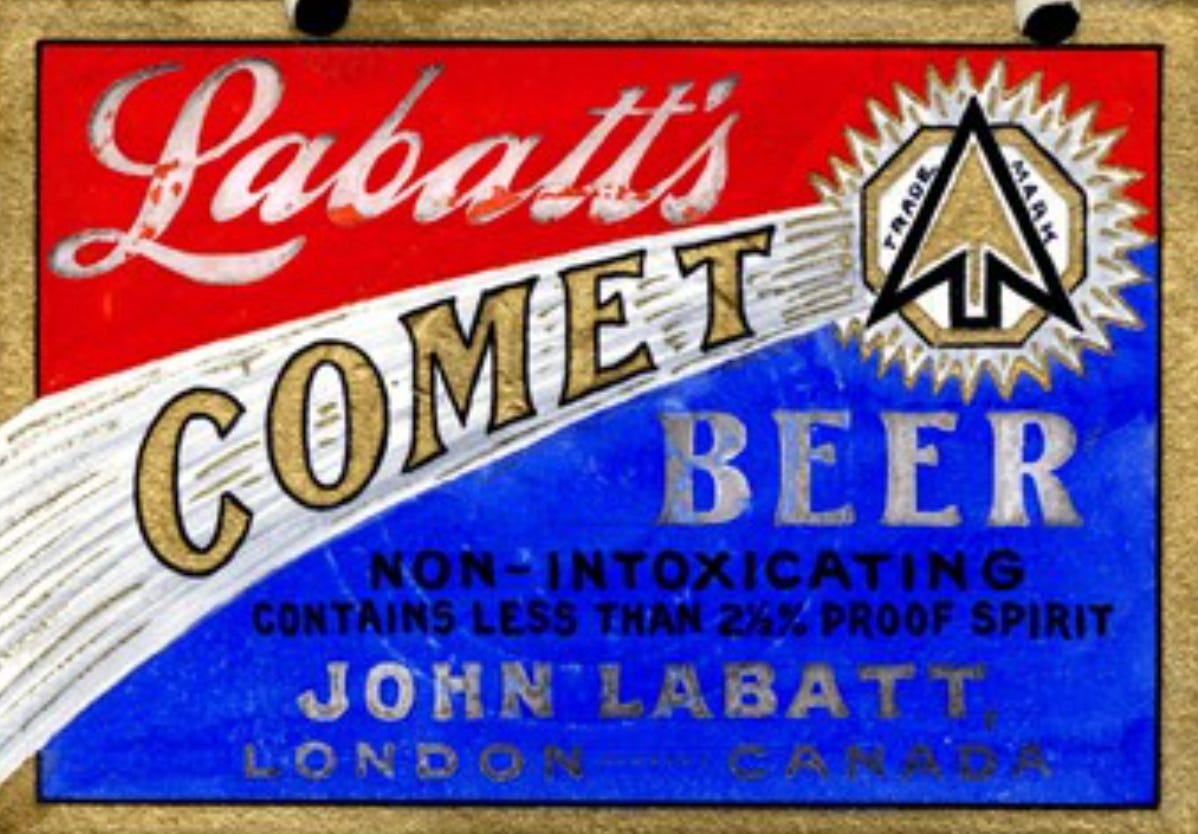
The brand got super creative. They shipped full-strength beer to Quebec, which was still wet, and then shipped it back to Ontario. The beer was taking a ride on trains to become “Frenchified” until Robert Borden, then prime minister, shut that loophole down in 1916.
By June of 1921 Labatt’s board voted to close the brewery. But the GM, Edward Burke, talked them out of it in exchange for 10% of the profits.
His idea? Start running beer to the US on three fishing boats. By Christmas of 1923, 89% of their beer was “exported.”
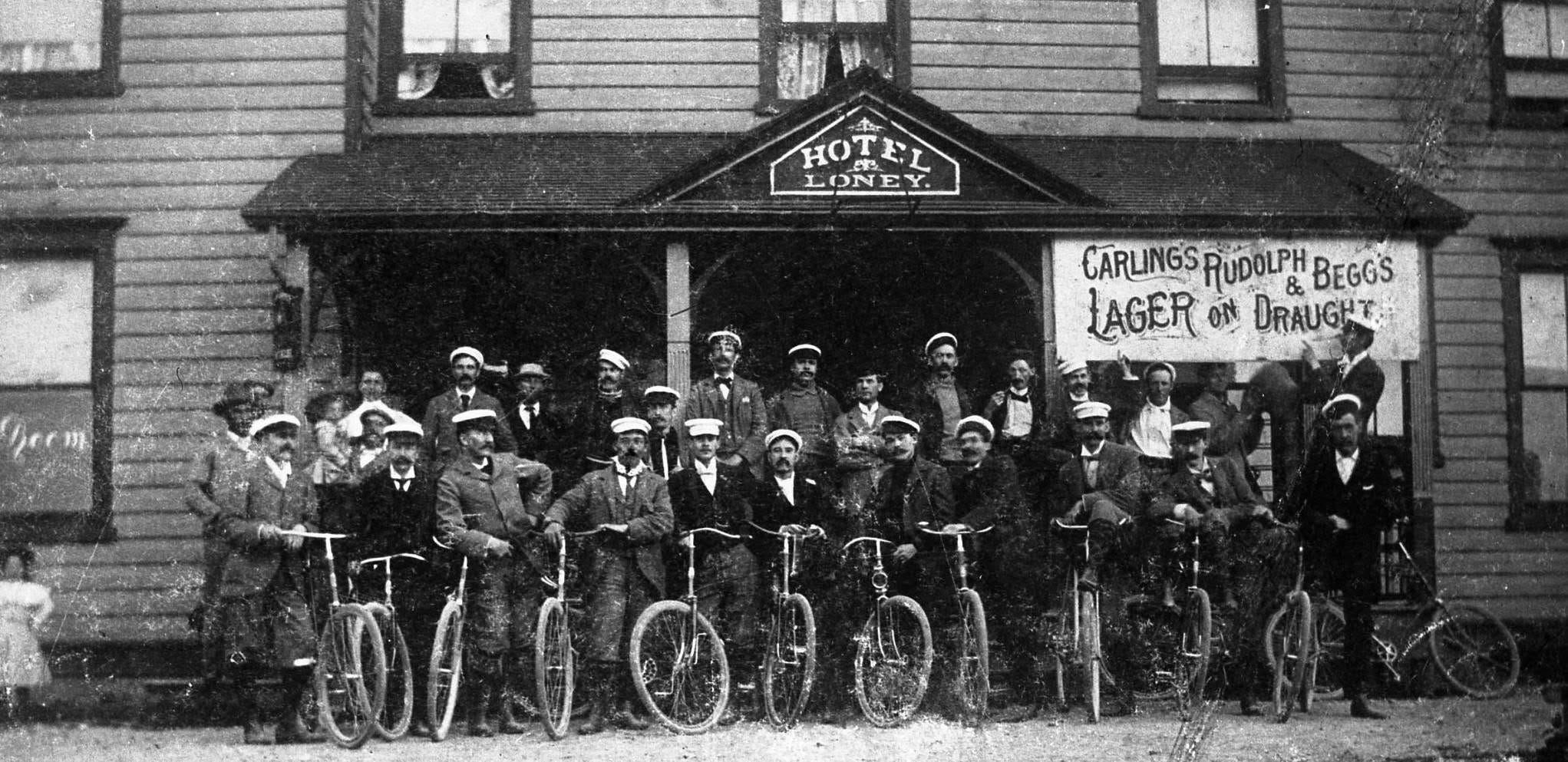
Other brewers were not so lucky. 35 of 49 did not survive prohibition. Brewers with names like Copeland Brewing Co., Cosgrave Brewery, Reinhardt Salvador Brewery, Rudolph & Begg Brewery and Grant’s Spring Brewery all didn’t make it through the war on alcohol.
But war changes everything. Ontario’s brewers seized the opportunity and formed a PR committee to keep and make the country wet.
By chance a Toronto Star correspondent Matthew Halton was in Solum, Egypt after Rommel’s attack. A British lieutenant handed him a beer and proclaimed, “It’s Canadian.”
That story ran in papers across the country. You can’t buy that kind of exposure or ads.
Mackenzie King, a renowned teetotaler, capped beer sales anyway in December 1942. Then they started rationing Canadians to 24 pints a month.
Vancouver shipyard workers sent him a message: “No Beer – No Bonds.” Even King relented and dropped the restrictions in March 1944.
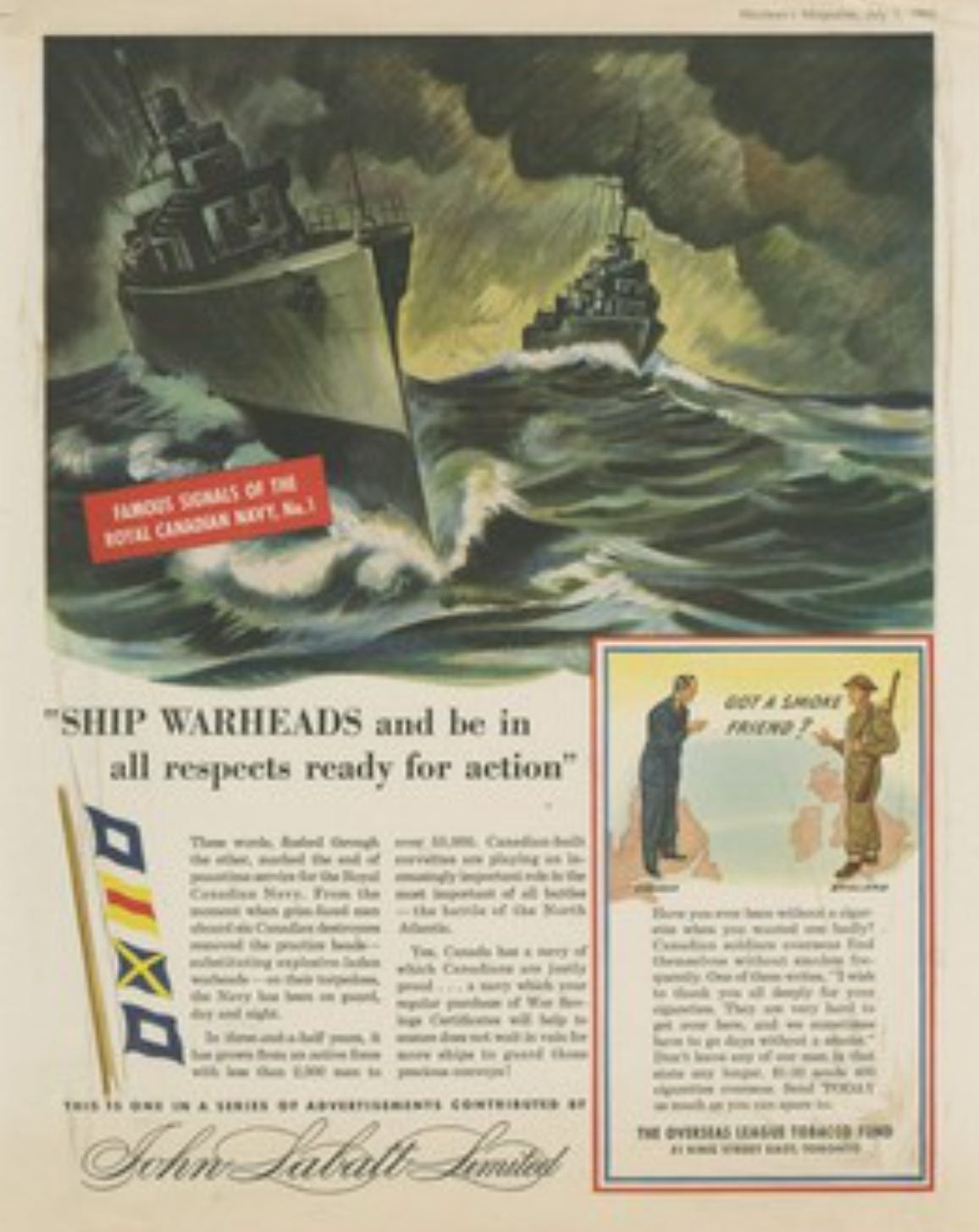
For Labatt? Sales and profits more than doubled during the war..
MORALE IS A LOT OF LITTLE THINGS. MOSTLY BEER.
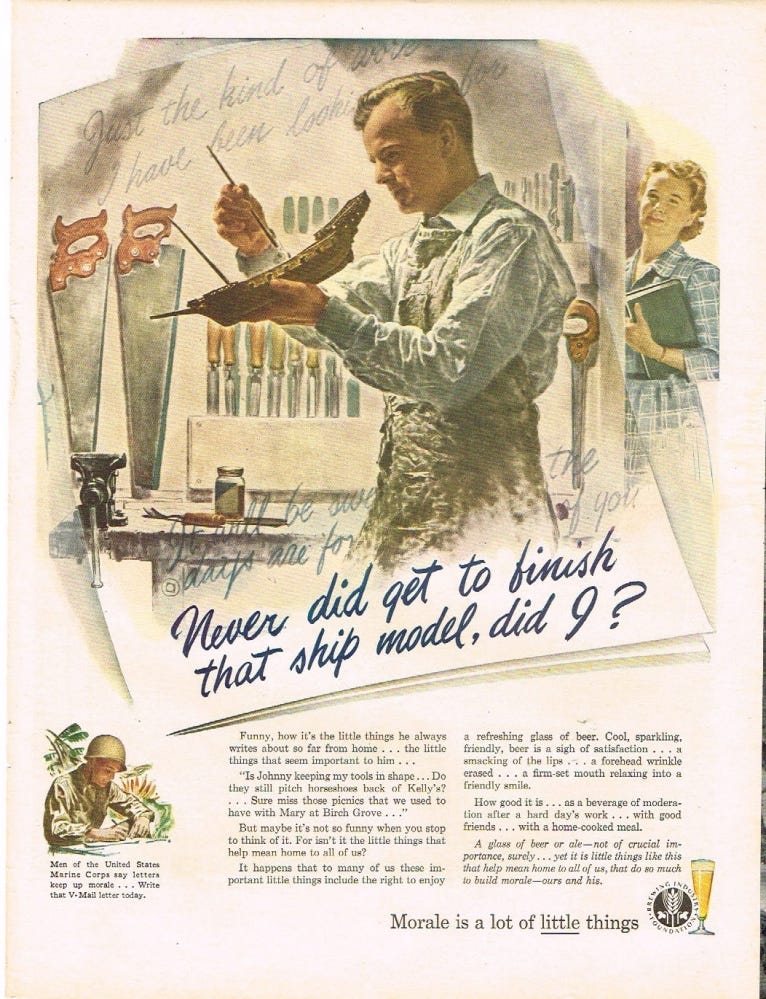
I love that America’s brewers had much the same fight, but went even more over the top with iconic paintings. The Brewing Industry Foundation’s “Morale is a Lot of Little Things” campaign was wild.
The ads were about the small pleasures the boys were fighting so hard to come back to. They laid it on thick, showing grilled steaks and model ships you never finished. Then a beer.
You could even write to the brand and get the paintings without the ad part. God bless a world where you wrote in to hang beer ads in your living room.
CANADIAN CLUB HAS A GREAT ORIGIN STORY. IT MIGHT BE MISSING A LAW.
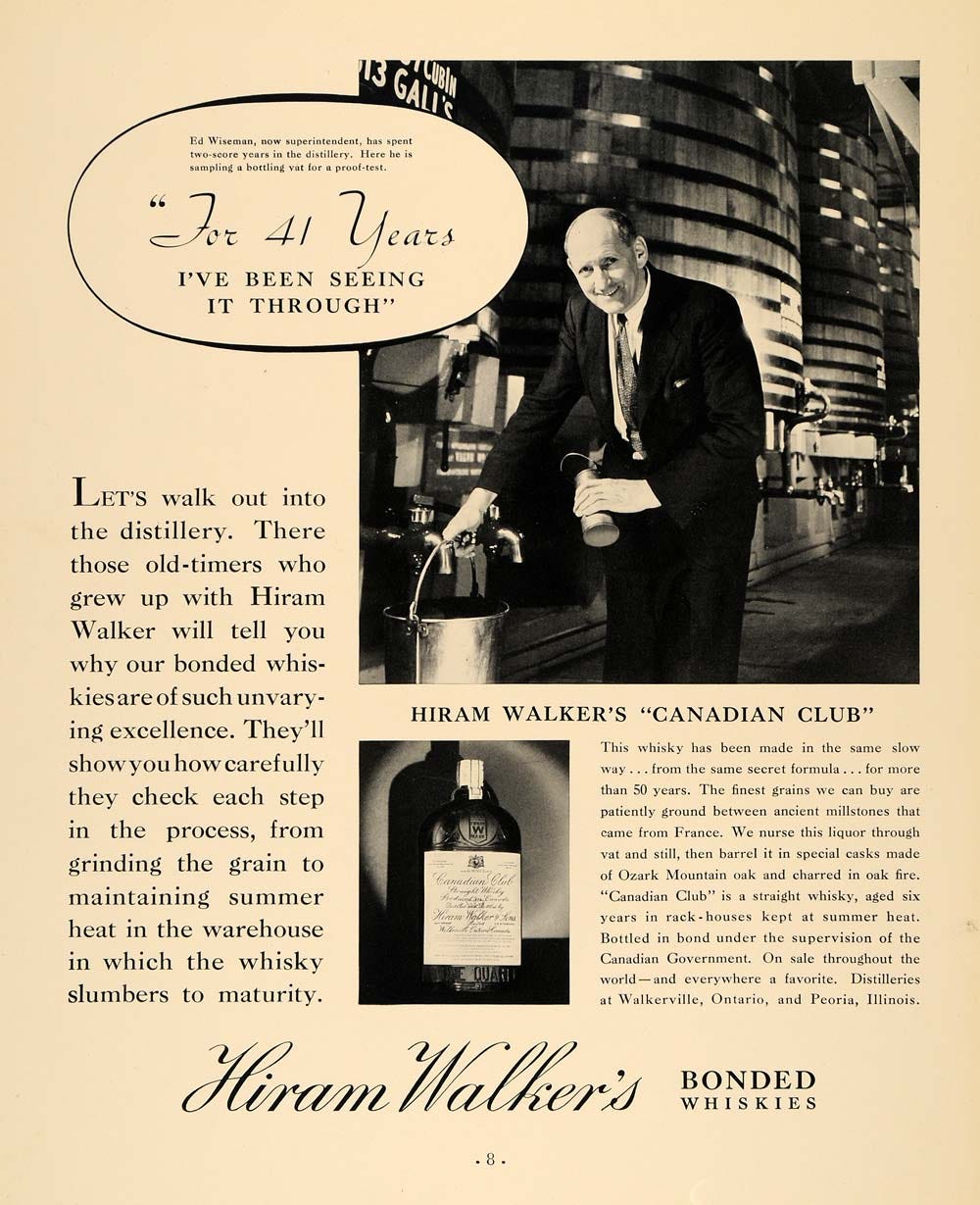
Beer wasn’t the only thing that got Canada through two wars. The whisky has an even better story. Some of it might even be true.
Canadian Club tells it like this. Hiram Walker was an American who moved over to Canada and made a whisky (notice no “e” on the whisky!) so smooth that America’s gentlemen’s clubs couldn’t get enough of it. They called it “Club Whisky”.
Some jealous bourbon makers went to Washington and got a law passed forcing him to put “Canadian” on the label. They figured nobody in their right mind would trust, let alone drink, a foreign whisky.
Surprise, it backfired. The whole thing sounded fancy and imported and it became the best-selling whisky in America. In your face, America!
Super fun origin story. Nobody’s ever really found that specific law. Classic.
What the research and paperwork say is that Walker was one of the first distillers to sell whisky in bottles with his own name on them.
You see, back in the 1800s most whisky went out in unmarked barrels. Back then you saddled up to the General Store, brought your own jug and hoped for the best. What a time to be alive.
His best seller was called Three Star Club, and in April 1882 he trademarked it as just “Club.”
In 1889 “Canadian” showed up at the top of the label. A year later it was part of the name. In 1898 Canadian Club became the first North American spirit to receive a royal warrant from Queen Victoria.
So it’s possible that the bourbon guys actually made him do it. Or maybe Walker just figured out “Canadian” sold better. Either way, it’s the most successful forced label change in whisky history, if anyone forced it at all.
In 1926 the Walker family got nervous about the whole temperance thing and sold to Harry Hatch for half its value. Hatch turned it into a very booming bootlegging hub. By 1929, 500 to 600 cars an hour were crossing from Detroit to Walkerville, and nobody was going for the architecture.
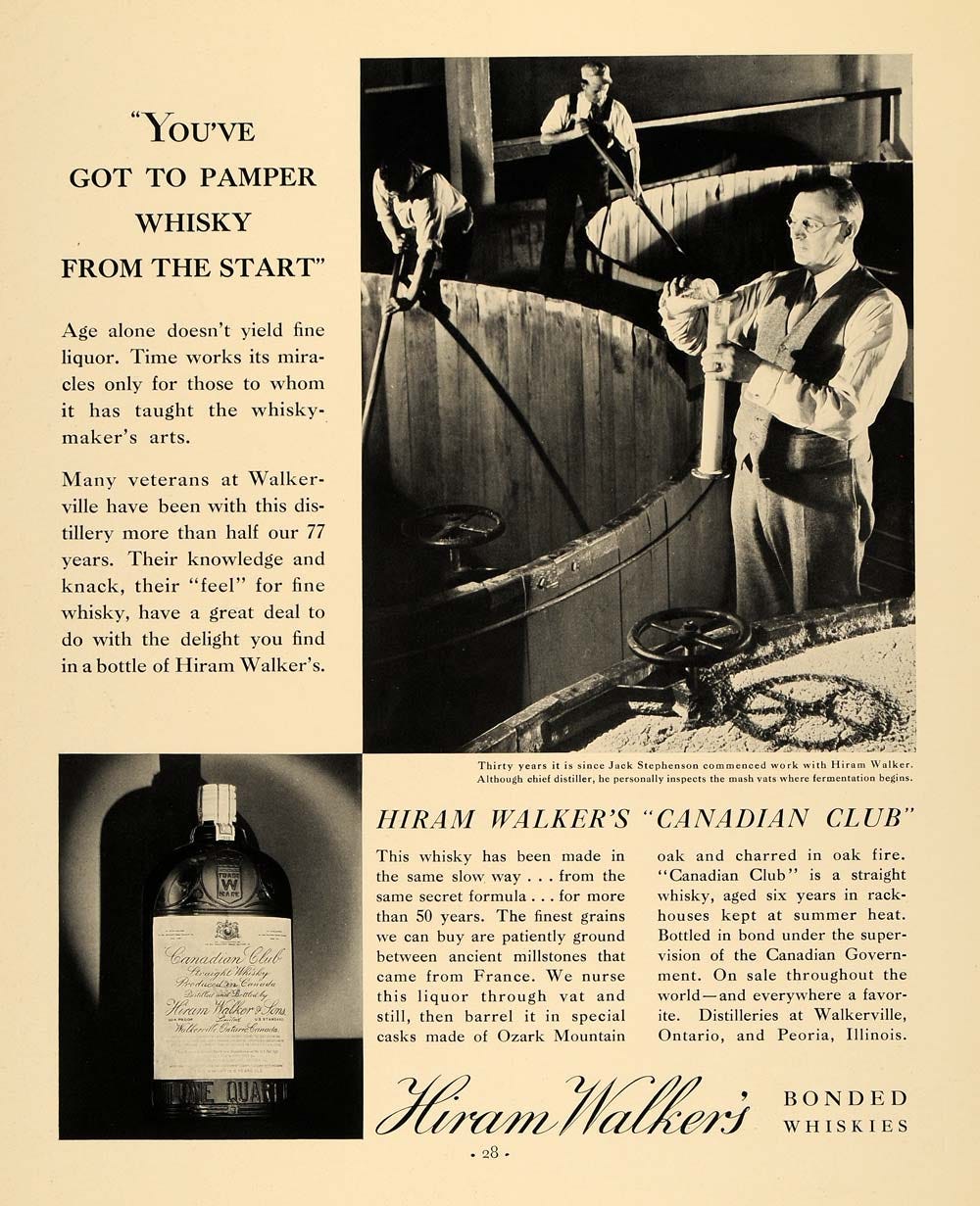
NO WHISKY WAS HARMED IN THE MAKING OF THIS AD OR NEWSLETTER
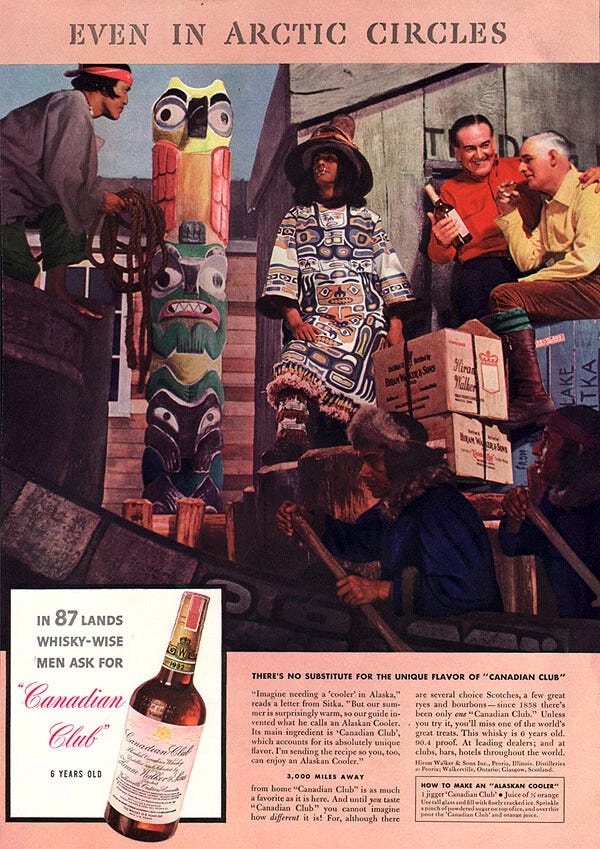
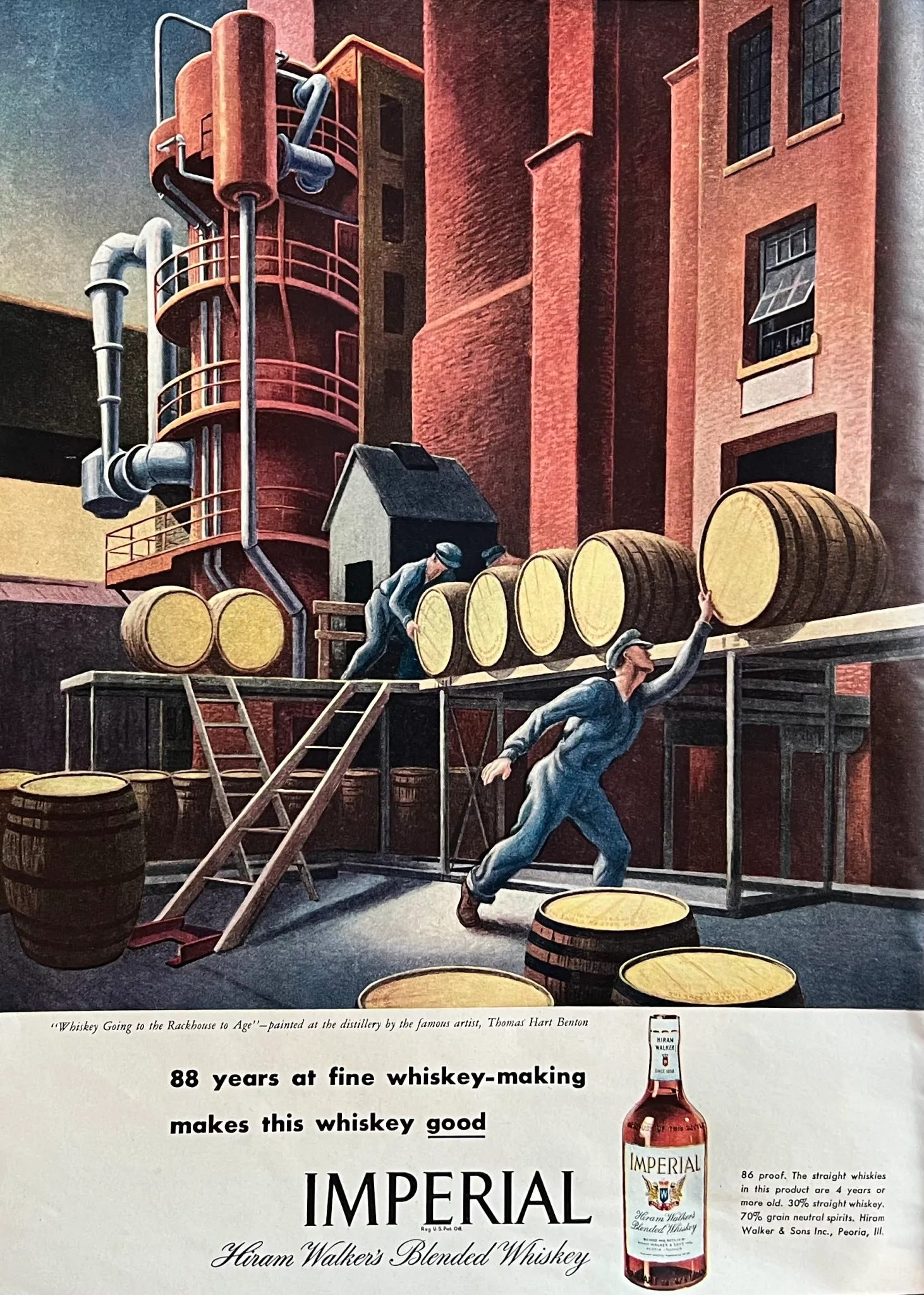
In 1942 every Canadian distillery switched to war alcohol for munitions and synthetic rubber. Hiram Walker ran an ad bragging that its stills were “100% in production of war alcohol” and that it had packed 48 million K-ration meals.
The Canadian Club ads were already on vacation. They were showing the brand in the Arctic in 1938 and Budapest in 1937, and the war didn’t call them home. In 1941 they were at Niagara’s Rainbow Bridge. In 1944 they were at a Mayan pyramid.
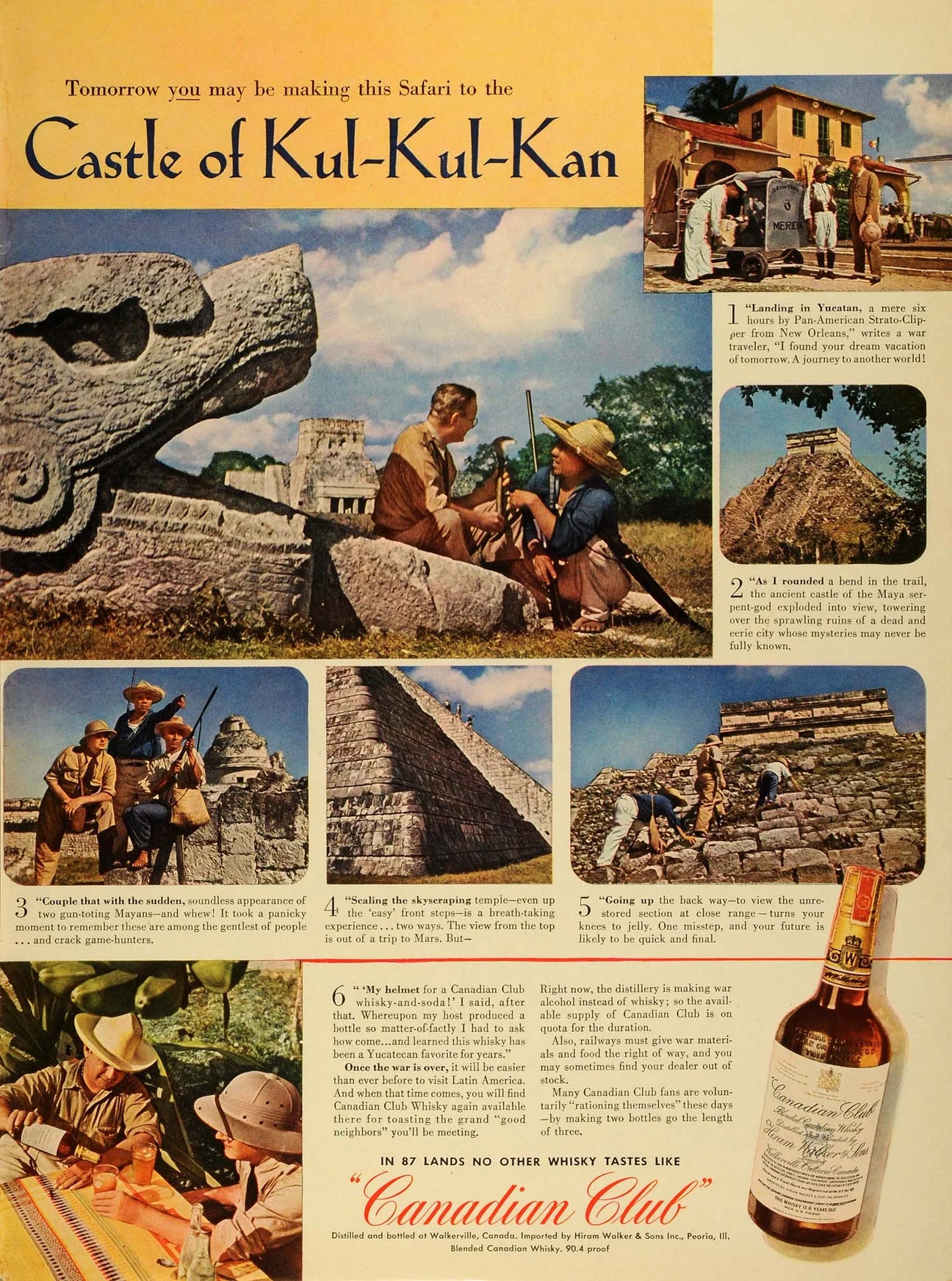
Whisky in exotic places from a company that wasn’t supposed to be making any.
COCKTAIL OF THE WEEK: THE UP-TO-DATE

After all that, we could use a drink. So let’s introduce Hugo Ensslin, the German-born head bartender at the Hotel Wallick in Times Square.
In 1916, Ensslin published Recipes for Mixed Drinks a true look at bartending in New York on the eve of prohibition.
1916 was the same year Ontario closed its bars, and a year before America went to war with the country he was born in.
So today’s cocktail, the Up-to-Date is equal parts rye and sherry with a couple dashes of Grand Marnier and Angostura. When the Savoy printed it in 1930, it swapped the rye for Canadian Club, which a lot of Americans were getting by boat, in the dark.
1 1/2 oz rye or Canadian Club
1 1/2 oz amontillado or dry oloroso sherry
1/4 oz Grand Marnier
2 dashes Angostura bitters
Lemon peel
Stir with ice and strain into a chilled coupe. Express the lemon peel over the top.
I love these in-depth looks. History brought back to life.