

Slowly but surely, I’m going to sneak more baseball content into this newsletter. It was bound to happen. You’re welcome.
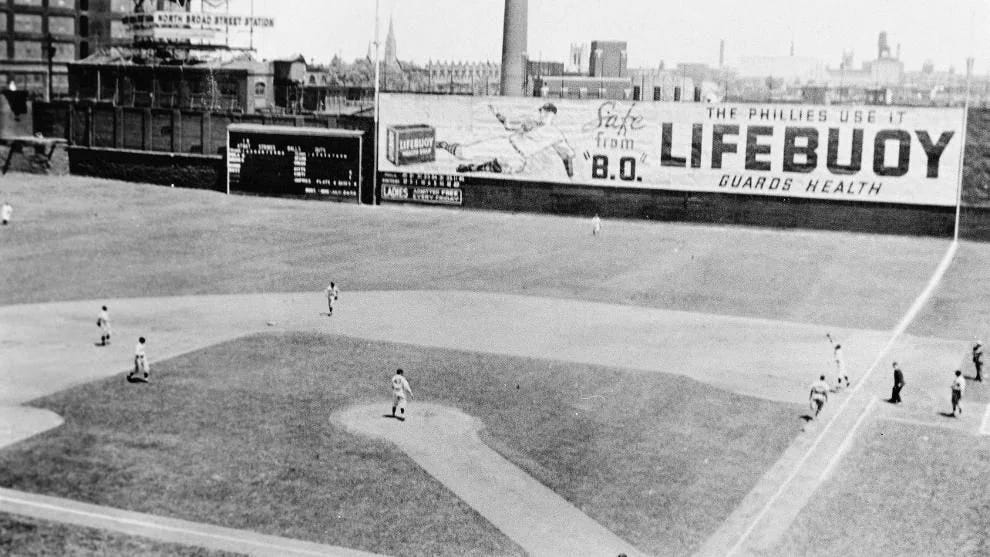
This week I wanted to talk about a billboard from the 1930s. At a ballpark in Philadelphia that hasn’t existed since 1950. And hadn’t seen a baseball game since 1938. This was Baker Bowl or National League Park.
Sometime in the mid-1930s a man broke into the ballpark at night and painted on top of the giant ad in the outfield. The ad, gloriously oversized for Lifebuoy soap reading The Phillies Use Lifebuoy, got the wonderful addition of “And They Still Stink.”
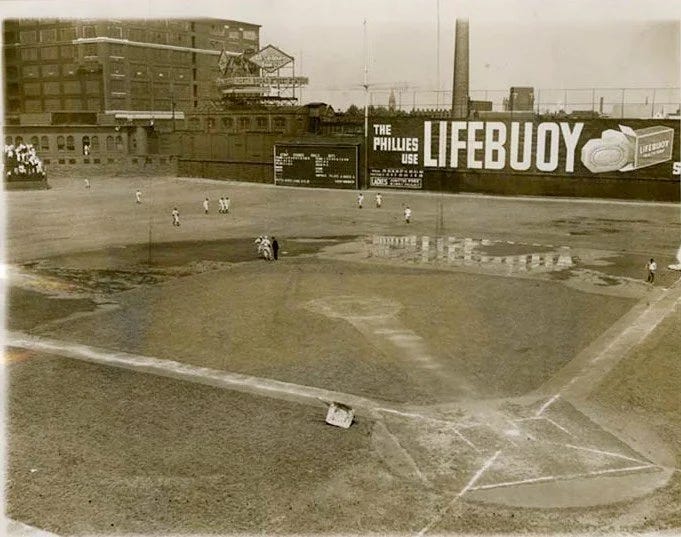
A great line. A great rebuttal to an ad. And a team that was arguably terrible. There’s a reason they are the all-time leader in franchise loses. The joke wrote itself. And the vandal kind of knew the brand well enough that this laddered up to the soap’s positioning and work they had done.
Stink was the very worst thing you can have. The Phillies were stink.
But this is an issue about one of the most successful lies in advertising history.
THE PROBLEM DIDN’T EXIST YET
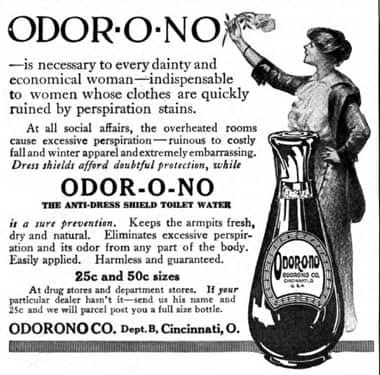
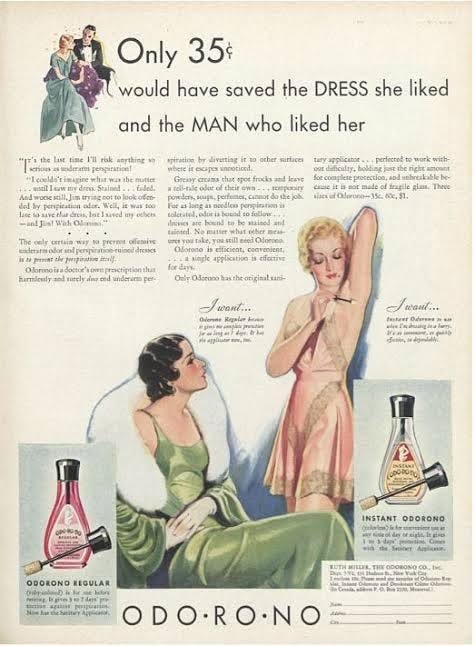
A high school student named Edna Murphey was bottling up her father’s home-brewed antiperspirant in 1910. He needed it so that his hands wouldn’t slip in the operating room as a surgeon.
But Edna started dabbing it under her arms, decided it actually worked for her stinky pits and called it, Odorono. Odor? Oh no. Definitely a top 5 brand name and story if you ever heard one.
The problem was nobody was buying it.
Women thought it was unnecessary or unhealthy. But Edna was no quitter. She took it to an Atlantic City expo in 1912. The sweaty crowds finally gave her the proof of concept to go all in.
She took out a $50,000 bank loan and hired J. Walter Thompson.
The agency assigned copywriter James Webb Young. A name we’ll get back to, maybe not in a good way.
TWO THIRDS OF WOMEN WERE FINE
JWT started with door-to-door survey research. Every woman knew Odorono was a thing. A third used it. Two thirds said they had no need for it.
Young didn’t try to speak to the third who already used it. He gave the other two thirds a problem. His 1919 ad in Ladies’ Home Journal had an incredible headline: “Within the Curve of a Woman’s Arm — A frank discussion of a subject too often avoided.”
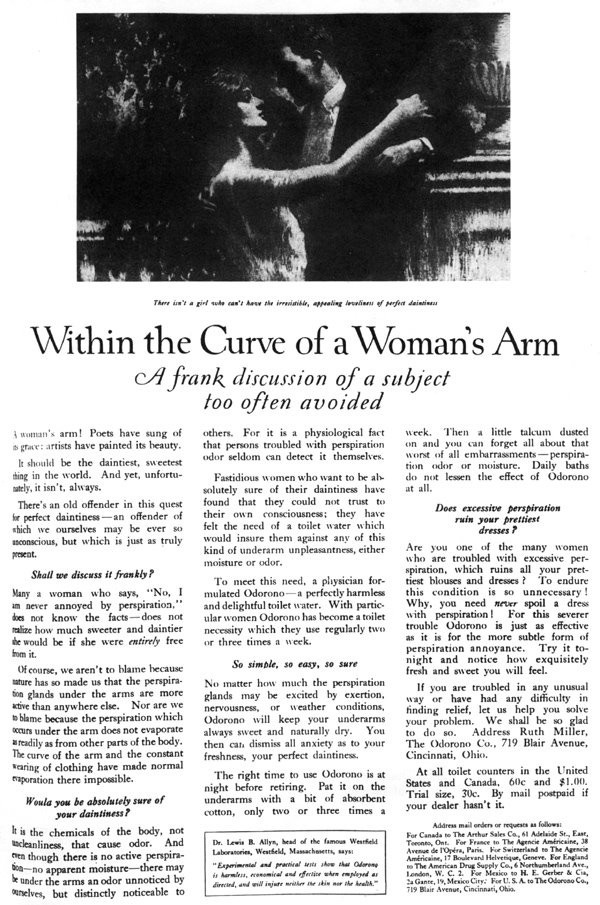
This was serious business for a print ad. This was the genesis of a social issue so bad that men pulled away and your friends talked about it behind your back. It was cruel advertising at its most lethal.
You couldn’t smell yourself. You couldn’t even check.
200 women were so offended by this ad they canceled their subscriptions. But damn if the sales didn’t go up 112 percent. She sold the company in 1929 after a copywriter created an entire category, deodorant, through mass anxiety. They even coined the term “B.O.” in 1919.
The category of stink is now worth more than $18 billion.
LIFEBUOY SMELLED BLOOD
But let’s get back to Lifebuoy.
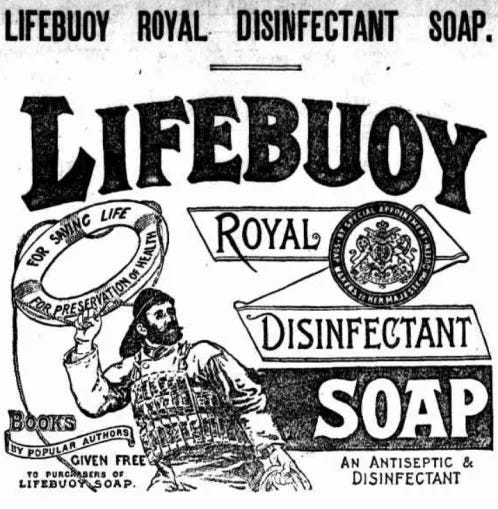
The soap was launched in the UK back in the mid-1890s as Royal Disinfectant Soap. No big deal, just carbolic soap loaded with, yep, actual carbolic acid.
The early ads claimed it protected you from typhoid, cholera and diphtheria and absolutely crushed it with this line, “For Saving Life. For Preservation of Health.”
But those are pretty hard claims to make. The whole carbolic angle gets dropped from the ads and replaced with two genius nothing-words, “health ingredient.”
Then the brand started to campaign on body odor. The earliest ads found are from Australia with the line, “If private thoughts were spoken...” Everyone is judging how bad you stink, buy soap.
Incredible stuff.
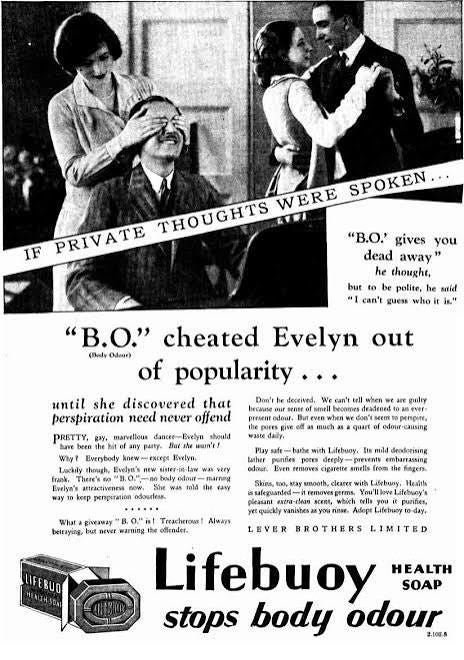
Then they cranked out every anxiety you could have for 20 years and made a sales funnel of smelly fear. Romance: “B.O. cheated Evelyn out of popularity.” The Depression: “B.O. gone... he keeps his job now!” They even ran ads implying people were losing their jobs in the middle of the Great Depression because they smelled.
If you were single? “Jill engaged? Why she must be 32, at least!” And she stunk. Married women? They were rebranded as smelly B.O. widows.
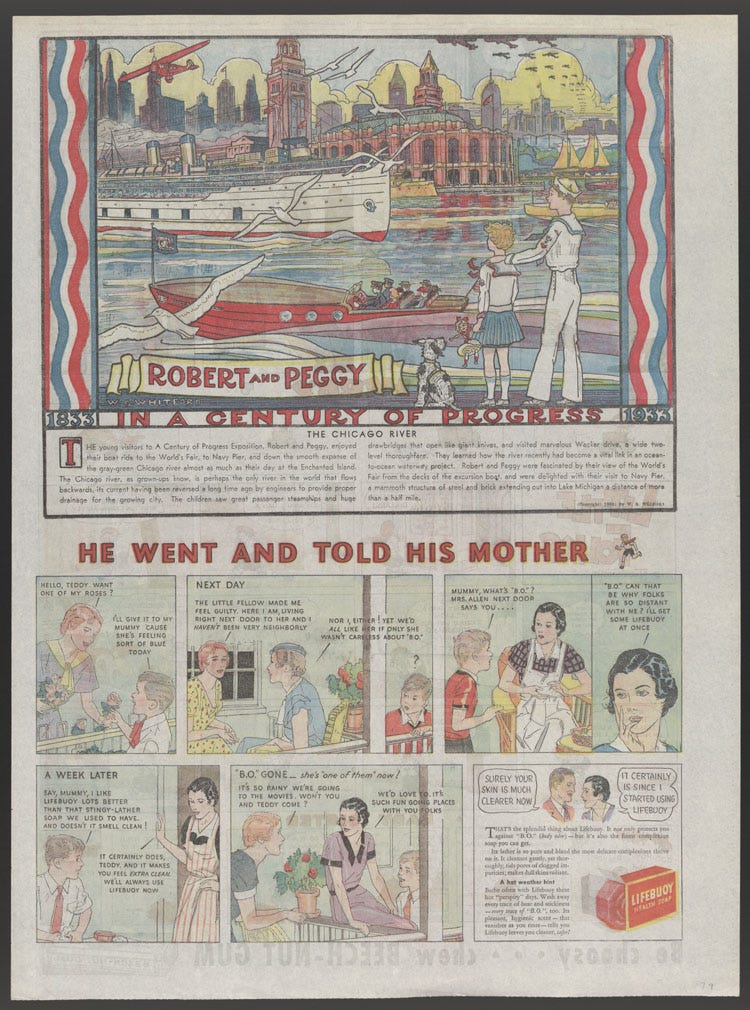
All of them ran the same devilishly simple formula. You’ve got B.O. You can’t smell it. Someone tells you. Lifebuoy saves your marriage, your job, your life.
There was even a 1933 ad where a kid rats out his own mother. Talk about a stinky snitch trap.
THE FOGHORN DID THE REST
But my favourite part of all of this is the radio.
I would have loved to have heard them pitch this in the room. Basically Lifebuoy’s spots all used a comically awesome foghorn that blasted a groaning “Beee-Ohhhh.”
This was a brand-sonic before they became trendy. They industrialized sound of stink thanks to the Sonovox (and yes, I sure did have to look that up).
And this got so embedded into culture that Looney Tunes and MGM used the foghorn B.O. gag for stinky stuff like it was a paid placement in cartoons.
And cementing the idea and sound of B.O. in America from 1930 to 1950 made Lifebuoy the best-selling medicated soap in North America.
But it didn’t last. Perfumed soaps arrived in the category and the B.O. fears wore off a little. Eventually Lifebuoy vanished from shelves. Not before Ralphie gets his mouth washed out with it in A Christmas Story.
This was soap that terrorized generations with that threat. Lifebuoy is gone, but B.O. and threats aer still here doing their job.
PENCILS DOWN
I promised that we’d get back to James Webb Young.
He would go on to write the classic book, A Technique for Producing Ideas. This has been a seminal read for copywriters since 1940.
It’s a tiny book, probably handed out to countless creatives over the years written by the guy who invented manufactured shame.
He taught us not to sell the cure, but sell the whispering.
The same things you see on LinkedIn every week about how your competition is already using AI. Or what they are saying about you behind your back.
That playbook never misses. The technique for making you check your own armpits never goes out of style.
Set your pencils down and pour something to wash the stink off.
COCKTAIL OF THE WEEK: THE SCOFFLAW
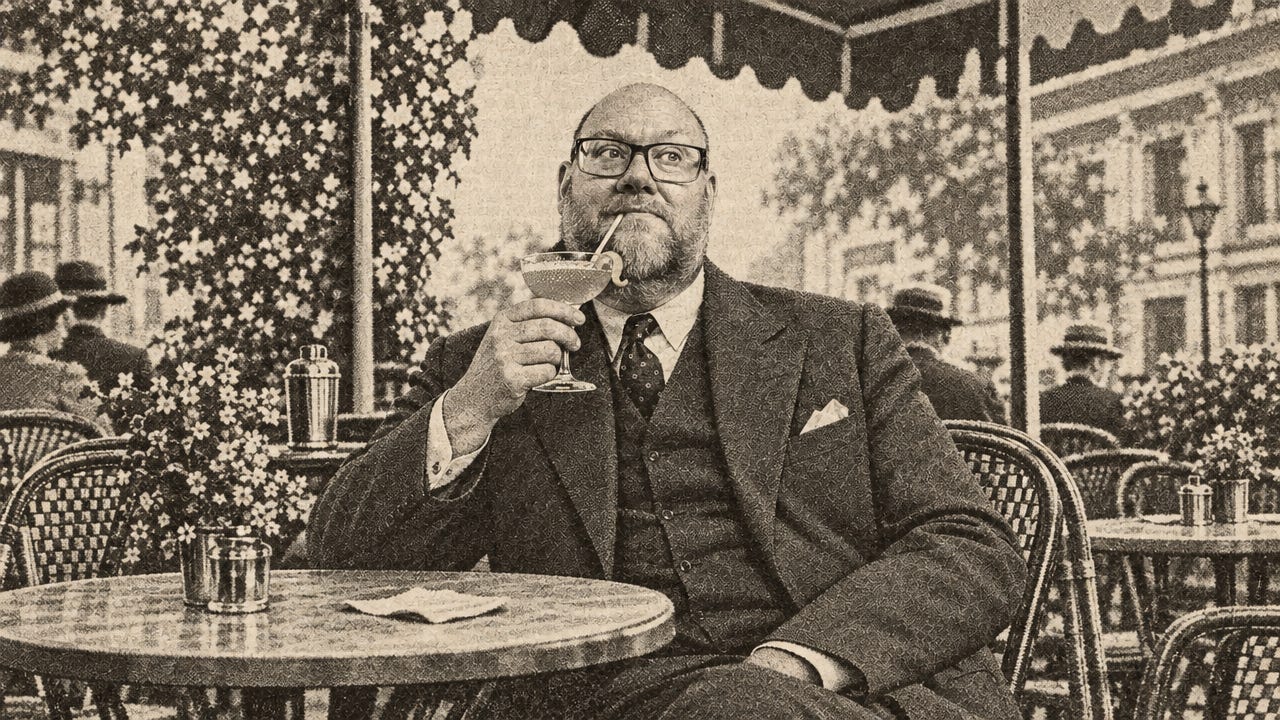
In October of 1923 a filthy rich banker from Quincy, Massachusetts named Delcevare King announced a contest. Now King was VP of the state’s Anti-Saloon League chapter and part of the Watch and Ward Society. This was the guy for sure talking behind your back about your drinking.
He was offering up $200 in gold for a new word to shame illegal drinkers. He was looking for something with the same rhetorical thrill and “”the biting power of ‘scab’ or ‘slacker.’”
He got 25,000 entries.
Some gems that didn’t win are electric: still-whacker, slime-slopper, cellar-sifter, boozlag, hooch-sniper, bottle-yegger and the majestic law-loose-liquor-lover.
The judges chose the word “scofflaw.” That was submitted by two different people who split the gold.
The mockery started immediately.
The New York Times predicted scofflaws “will not be startled nor abashed at being told that they do what they have never tried to conceal.”
Two others launched counter-contests to land an antonym. Then within a few days a bartender named Jock at Harry’s New York Bar in Paris dropped the Scofflaw cocktail on his menu.
Truthfully it may have been invented a few blocks away at Maxim’s. But that’s cocktails.
This cocktail, much like what Young did with deodorant, was to manufacture shame at scale. Young turned that into an $18 billion smell industry. King’s drink just became the rye sour.
But B.O. and scofflaw are both still in the dictionary.
The Scofflaw
1 1/2 oz rye whiskey
1 oz dry vermouth
3/4 oz fresh lemon juice
3/4 oz grenadine
2 dashes orange bitters
Shake with ice, strain into a coupe. Lemon twist. And be smug about the story you now know. And don’t forget:
The Drink Cart is the newsletter version of sitting at a really good bar with someone who thinks too much about advertising and won’t shut up about it. Subscribe to get it on Wednesdays and Fridays.